

The best shower head for most bathrooms is the Kohler Forte. In CNN Underscored’s hands-on testing it beat the field on spray quality, coverage and build, and at 1.75 gallons per minute it uses less water than the 2.5 GPM federal maximum while still feeling strong. But “best for most” is not “best for you” — a low-pressure home needs a different head than a big primary bathroom, and a filtered head is a different purchase from a rain head. The ten picks below cover every type: fixed, handheld, dual, rain and filtered, with a clear note on who each one suits and who should skip it.
This guide is built from the current test roundups and expert consensus — CNN Underscored, Bob Vila’s test panel, Wirecutter’s pick as surfaced by ExpertReviewHQ, and independent roundups — and it fills the gaps those guides leave open: how to tell whether your home’s water pressure is the real problem, the flow-rate rules that decide what you can legally buy, what a filter actually costs you every year, and how to install the head yourself in about fifteen minutes.
Which Type Of Shower Head Fits Your Bathroom?
Five types cover nearly every bathroom. Start here, not with a brand — the type decides the experience, and the brand decides the quality.
| Type | How It Works | Best For | Watch Out For |
|---|---|---|---|
| Fixed | Mounts on the wall arm, stays in place | Most bathrooms, simple replacement | No flexibility for rinsing or cleaning the shower |
| Handheld | On a hose, docks in a holder | Kids, pets, cleaning, limited mobility, low tubs | Needs a secure holder and a hose that reaches |
| Dual or combo | Fixed head plus handheld on one arm | Households that want both, shared bathrooms | Combined flow rules apply in some states |
| Rain | Wide, flat head overhead, gentle fall | Large showers, spa feel, tall ceilings | Needs good pressure and ceiling height; weak in low-pressure homes |
| Filtered | Built-in filter cartridge | Chlorine smell, hard-water scale on fixtures | Ongoing filter cost; does not soften water |
The Quick Decision:
One person, standard shower, no special needs — a fixed head. Kids, pets or anyone who sits to shower — a handheld or a dual combo. A large walk-in shower with good pressure — a rain head. Chlorine smell or heavy scale — a filtered head, but read the filter section below before you buy. Low water pressure — a high-pressure fixed head, and check the pressure section first, because the head may not be the problem.
Flow Rate And The Rules That Limit It
Flow rate is measured in gallons per minute, or GPM. It decides how much water the head delivers, and three different limits apply depending on where you live and what you buy.
| Rule | Maximum Flow | What It Means |
|---|---|---|
| Federal standard (Energy Policy Act 1992) | 2.5 GPM | The legal maximum for any shower head sold in the US |
| EPA WaterSense label | 2.0 GPM | Independently certified heads use 20% less water and must still pass spray-force and coverage tests |
| California Title 20 (since July 2018) | 1.8 GPM | Every shower head sold or installed in California; dual heads count their combined flow |
Two things most buyers miss: first, a lower GPM does not have to mean a weaker shower — WaterSense heads are tested for spray force and coverage at 20, 45 and 80 PSI, so a 1.75 GPM head like the Kohler Forte can feel stronger than a cheap 2.5 GPM head. Second, in California a dual-head setup must stay under 1.8 GPM combined across both heads on one valve, so check the combined rating, not each head separately. The EPA’s WaterSense program is the simplest shortcut: if a head carries the label, it meets the 2.0 GPM limit and the performance tests behind it. You can confirm any model in the EPA’s WaterSense product search.
Low Water Pressure: Check Your Home Before You Buy
Weak pressure is the most common reason people shop for a new shower head — and the head is only sometimes the fix. A high-pressure head helps when the head itself is the bottleneck: clogged nozzles, a restrictive flow limiter, or a head designed for pressure your home does not have. It does not help when the plumbing is the problem: old galvanized pipes, a partly closed main valve, a failing pressure regulator, or a well pump set too low.
Check before you spend: screw a cheap pressure gauge onto an outdoor spigot and read it with no water running elsewhere in the house. Most homes sit between 40 and 60 PSI. Below about 45 PSI, a high-pressure head is worth trying. Below 30 PSI, call a plumber first — a new head will not fix a supply problem, and you may have a regulator or pipe issue worth finding.
The bucket test: hold a one-gallon bucket under the shower with the old head removed and time it. If it fills in under 24 seconds, your supply delivers at least 2.5 GPM and the head is the weak link. If it takes much longer, the supply is the limit and a new head can only do so much. Also check the easy causes first: a clogged head (soak it in vinegar overnight), a kinked hose on a handheld, or a shut-off valve that was never fully reopened after work.
1. Kohler Forte — Best Overall
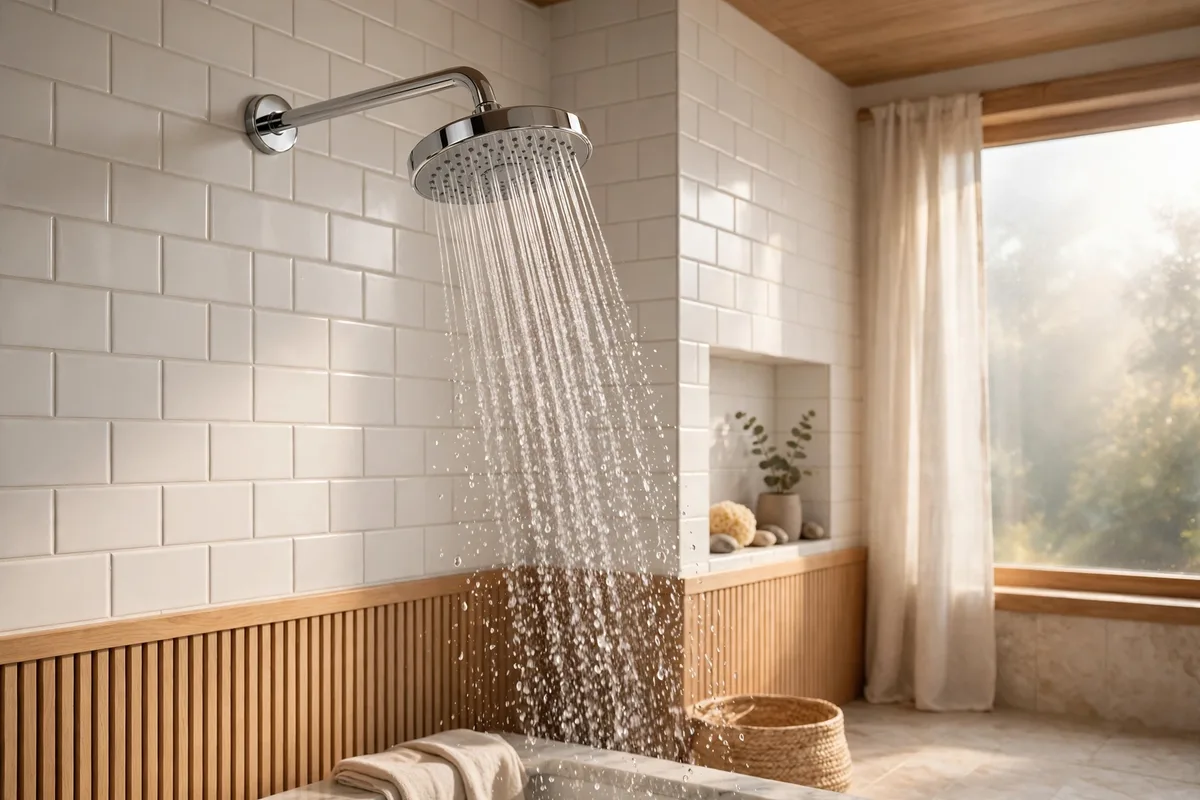
The Kohler Forte is the pick that shows up at the top of more than one test roundup, and for good reason. CNN Underscored’s testers ran it through weeks of daily showers and named it their best overall, praising its even coverage, its spray settings and its solid feel in the hand. At 1.75 GPM it carries the WaterSense label, so it saves water without the thin, needly spray that gives low-flow heads a bad name.
Best for: most bathrooms, and anyone who wants one head that simply works.
Skip it if: you want a rain-style fall or a handheld — this is a fixed head, and it does not try to be anything else. Warranty is one year, which is shorter than some rivals offer, so keep the receipt and register the product.
2. Speakman Hotel Anystream — Best For Low Water Pressure
If your shower feels like a drizzle, this is the head Bob Vila’s test panel rated best for pressure after testing thirteen models across more than a hundred showers. The Anystream design concentrates the flow into a tighter, more forceful spray, which is exactly what a low-pressure home needs — and it is the same style of head many hotels use, for the same reason.
Best for: homes under about 45 PSI, and anyone whose current head feels weak even though the supply is fine.
Skip it if: your pressure is already strong — the concentrated spray can feel harsh at high pressure, and a wider, gentler head will suit you better.

3. Delta 5-Setting — Best Classic Fixed Head
This is the steady, unglamorous pick: Wirecutter’s top choice, surfaced in ExpertReviewHQ’s consensus roundup, and the head that turns up in more American bathrooms than any other on this list. Five spray settings cover the useful range — full spray, massage, and the settings in between — and the design has been refined over so many years that there are no surprises left in it.
Best for: a straight replacement in a standard shower, and buyers who want a proven head rather than a new idea.
Skip it if: you want a rain head or a handheld, or you are chasing the strongest possible spray — the Delta is balanced, not aggressive.

4. Moen Engage Magnetix — Best Dual Combo
The Engage Magnetix pairs a fixed head with a handheld that docks magnetically — pull it off to rinse, snap it back with one hand, no fumbling with a cradle. CNN Underscored’s testers liked the docking system and the pause button, which lets you stop the flow while you lather without touching the main valve. It is the most flexible setup on this list, and the one that suits a shared family bathroom best.
Best for: families, pet owners, and anyone who cleans the shower with the head itself.
Skip it if: you live in California — check the combined flow rating against the 1.8 GPM state limit before you buy any dual setup.

5. Delta HydroRain Dual — Best Dual With Rain
The HydroRain combines a wide rain-style fixed head with a handheld on the same arm, so you get the gentle overhead fall and the practical handheld in one fixture. It is a popular pick in expert roundups, but note one freshness warning from the consensus sources: this model line is being phased out, so check availability and confirm the exact model is still in production before you order.
Best for: a large shower where you want both a rain feel and a handheld.
Skip it if: your shower is small — a wide rain head needs room to fall, and in a tight stall it just soaks the walls.

6. Kohler Awaken Rainhead — Best Rain Shower Head
The Awaken Rainhead is Kohler’s answer to the rain-head question, and Bob Vila’s test panel included its G110 variant among its high-pressure picks. The spray is wide and soft rather than forceful — rain, not a jet — and it suits a large shower with good pressure and enough ceiling height for the head to sit overhead rather than in front of you.
Best for: a spa-style primary bathroom with strong pressure.
Skip it if: your pressure is low or your ceiling is under eight feet — a rain head in a low, weak shower is the most disappointing purchase on this list.

7. BOZYBO 12-Inch Rain Combo — Best Oversize Rain Combo
Twelve inches is the size where a rain head starts to feel like real rain rather than a wide shower, and the BOZYBO pairs that oversize fixed head with a handheld for rinsing. Independent roundups list it as a value option in the oversize category — the look of a luxury rain setup without the luxury price.
Best for: a big walk-in shower where coverage matters more than brand name.
Skip it if: you want a long warranty and a household-name brand behind it — this is a value pick, and the support behind it is thinner than Kohler’s or Moen’s.

8. Sproos! Filtered Handheld — Best Filtered Handheld
The Sproos! is the filtered head that CNN Underscored’s testers actually lived with, and it earns its place as a handheld first and a filter second: comfortable in the hand, easy to dock, and a genuine filter cartridge in the handle. The honest cost is the filter — about $36 every 90 days, or roughly $144 a year — so judge it on the total cost, not the price of the head alone.
Best for: renters and anyone who wants filtered water with the flexibility of a handheld.
Skip it if: you will resent a quarterly subscription-style cost, or you expect the filter to fix hard water — it will not; see the filter section below.

9. Jolie Filtered — Best Filtered Fixed Head
Jolie is the best-known filtered fixed head, and it is also the one experts disagree about most. The consensus roundup is open about the split: lifestyle reviewers love the design and the difference it makes to skin and hair, while lab-focused testers question how much a shower filter can do. Both sides agree on the shape of the product — a well-made fixed head with a replaceable filter — and disagree on how much the filtration matters.
Best for: anyone who dislikes chlorine smell in the shower and likes the design.
Skip it if: you want proven filtration numbers above all else — check the replacement filter price and the brand’s own test data before you decide.
10. Wassa High-Pressure — Best Budget Pick
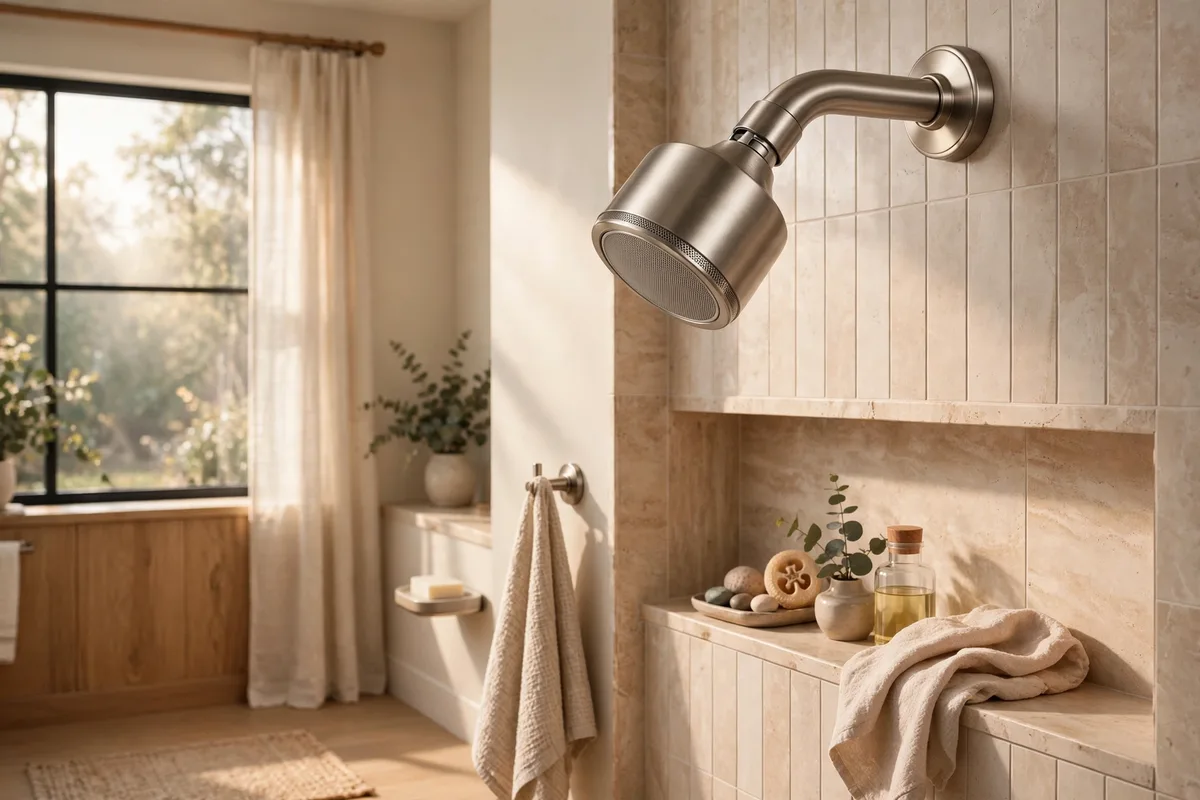
The Wassa is the cheapest head on this list by a wide margin — CNN Underscored’s roundup lists it at $9 to $18, and it still earned a place as their budget pick after a year of testing thirteen models. It is a simple high-pressure fixed head: no filter, no dual setup, no rain fall, just a stronger-feeling spray for very little money.
Best for: a rental, a guest bathroom, or anyone who wants to test whether a high-pressure head helps before spending more.
Skip it if: you want premium materials, a long warranty, or a wide gentle spray — at this price, you are buying function, not finish.

The 10 Picks At A Glance
| Pick | Type | Best For | Key Detail From Testing | Price |
|---|---|---|---|---|
| Kohler Forte | Fixed | Most bathrooms | 1.75 GPM, WaterSense, 1-year warranty | Check retailer listing |
| Speakman Hotel Anystream | Fixed | Low water pressure | Bob Vila’s top-rated head for pressure | Check retailer listing |
| Delta 5-Setting | Fixed | Classic replacement | Wirecutter’s top pick, 5 spray settings | Check retailer listing |
| Moen Engage Magnetix | Dual combo | Families, pets, cleaning | Magnetic docking, pause button | Check retailer listing |
| Delta HydroRain Dual | Dual with rain | Rain feel plus handheld | Model being phased out — check availability | Check retailer listing |
| Kohler Awaken Rainhead | Rain | Spa-style primary bath | Wide, soft rain spray | Check retailer listing |
| BOZYBO 12-Inch Rain Combo | Rain combo | Oversize coverage | 12-inch head plus handheld | Check retailer listing |
| Sproos! Filtered Handheld | Filtered handheld | Filtered water, flexibility | Filter about $36 every 90 days | Check retailer listing |
| Jolie Filtered | Filtered fixed | Chlorine smell, design | Expert opinion split on filtration value | Check retailer listing |
| Wassa High-Pressure | Fixed | Budget, rentals | High-pressure design at $9–$18 | $9–$18, as listed by CNN Underscored |
Prices change constantly, and most roundups quote retailer snapshots rather than fixed prices — so only one price appears in this table, the Wassa’s $9 to $18, because that is the only one stated in a published test roundup. For the rest, check the current retailer listing, and be wary of any guide that quotes an exact price for every head: those numbers are usually out of date by the time you read them.
What A Shower Filter Does — And What It Does Not?
Filtered shower heads are the fastest-growing category on this list, and the most misunderstood. A shower filter is designed to reduce chlorine and sediment — the things you can smell and the grit that marks up fixtures. That is a real benefit if your water smells of chlorine or leaves scale on the glass.
What a shower filter does not do: it does not soften hard water, it does not remove lead or bacteria, and it is not a water purifier. If your problem is hard-water scale on everything in the house, the fix is a water softener, not a shower head. If you are worried about lead, that is a plumbing and filtration question for a professional, not a shower accessory.
The honest economics: a filter is a subscription, not a purchase. The Sproos! filter costs about $36 every 90 days, or roughly $144 a year — more than the head itself over time. Jolie and other filtered heads work the same way, with their own replacement cartridges. Before you buy any filtered head, find the replacement filter price and multiply it by four. If that yearly number surprises you, buy a standard head instead.
How To Install A Shower Head?
Replacing a shower head is a fifteen-minute job and needs no plumber. If you can change a light bulb, you can do this — and if you are replacing a faucet at the same time, our guide to how to replace a faucet uses the same basic skills.
Tools you need: an adjustable wrench, plumber’s thread tape (Teflon tape), an old towel, and a cloth to protect the finish.
Step 1: Remove the old head. Unscrew it by hand, turning counterclockwise. If it is stuck, wrap the nut in a cloth and use the wrench — the cloth stops the wrench marking the chrome.
Step 2: Clean the shower arm threads. Wipe off old tape and mineral build-up with the towel. The threads should be clean and dry before you tape them.
Step 3: Wrap the thread tape. Wind the tape clockwise around the threads, about five or six turns, pulling it snug. Clockwise matters: tape wound the wrong way unwinds as you screw the head on.
Step 4: Screw on the new head. Start by hand so the threads catch straight, then tighten with the wrench for about a quarter turn more. Do not over-tighten — a cracked fitting leaks worse than a loose one.
Step 5: Check for leaks. Turn the water on and watch the connection for a minute. A slow drip usually means the tape needs redoing, not more force. Dry the joint, unscrew, re-tape and try again.
Two compatibility notes: most US shower arms use a standard half-inch fitting, so nearly every head on this list screws straight on. And a rain head usually needs a longer or ceiling-mounted arm to sit high enough — if the head ends up at forehead height, buy the arm before you blame the head.
Shower Heads To Avoid
- Heads with no stated flow rate. If the listing does not say the GPM, the maker is hiding it. A head that cannot state its flow rate cannot be trusted on anything else.
- No-name heads with no warranty information. A shower head lives in hot water and steam every day. If the seller will not stand behind it, you will be buying another one within a year.
- Removing the flow restrictor. It is tempting in a low-pressure home, and it is a bad idea: it voids the WaterSense certification, breaks California’s flow rules, and usually makes the spray worse rather than better by destroying the head’s spray pattern.
- A rain head for a low-pressure home. Rain heads spread a fixed amount of water over a wide face. With weak pressure, the result is a sad drizzle over a large area — the worst of both worlds.
- A filtered head bought without checking the filter price. The head is the cheap part. The filters are the cost, and they repeat every few months for as long as you own it.
- A dual head that breaks your state’s flow limit. In California the combined flow of all heads on one valve must stay under 1.8 GPM. Check the combined rating, not the rating of each head alone.
Frequently Asked Questions
What Is The Best Shower Head Overall
The Kohler Forte. It won CNN Underscored’s best-overall spot after weeks of testing, runs at a water-saving 1.75 GPM, and suits most bathrooms. If your home has low water pressure, the Speakman Hotel Anystream is the better pick; if you want a handheld, look at the Moen Engage Magnetix.
How Do I Know If I Have Low Water Pressure
Screw a pressure gauge onto an outdoor spigot with no other water running. Most homes read 40 to 60 PSI. Below about 45 PSI, a high-pressure head helps; below 30 PSI, call a plumber, because the supply — not the head — is likely the problem. A bucket test also works: with the head removed, a one-gallon bucket that takes longer than 24 seconds to fill means the supply delivers under 2.5 GPM.
Are Filtered Shower Heads Worth It
They are worth it if your water smells of chlorine or leaves heavy scale, and if you accept the ongoing filter cost — about $144 a year for the Sproos!, for example. They are not worth it if you expect softer water or purified water, because a shower filter does neither. Check the replacement filter price before you buy the head.
Can I Install A Shower Head Myself
Yes. Unscrew the old head, clean the threads, wrap thread tape clockwise, screw the new head on by hand and tighten a quarter turn with a wrench, then check for leaks. It takes about fifteen minutes and needs no special tools beyond a wrench and thread tape. Call a plumber only if the shower arm itself is damaged or the fitting will not seal.
What GPM Should A Shower Head Be
The federal maximum is 2.5 GPM, WaterSense-labeled heads run at 2.0 GPM or less, and California limits new shower heads to 1.8 GPM. For most homes, a head between 1.75 and 2.0 GPM with a WaterSense label gives the best balance of feel and water saving — the label also guarantees the head passed spray-force and coverage tests.
The Bottom Line
Buy the type first and the brand second. A fixed head for a standard shower, a handheld or dual for a family bathroom, a rain head for a big shower with strong pressure, and a filtered head only if you have checked the yearly filter cost. The Kohler Forte is the safest single choice, the Speakman Anystream is the fix for weak pressure, and the Wassa is the honest budget buy at $9 to $18. Whichever you choose, check the GPM on the box, confirm it meets your state’s limit, and install it yourself — it is the easiest upgrade in the bathroom. For the official flow-rate standards behind this guide, see the EPA’s WaterSense program, and if you are planning a wider bathroom update, our best kitchen faucet guide covers the same buy-it-once logic for the kitchen.