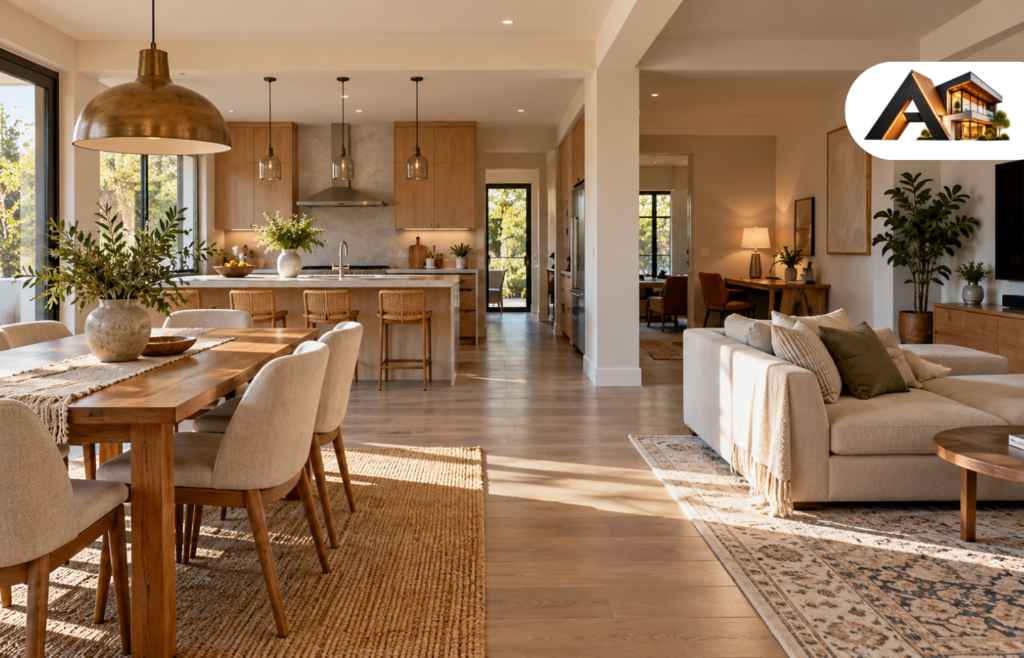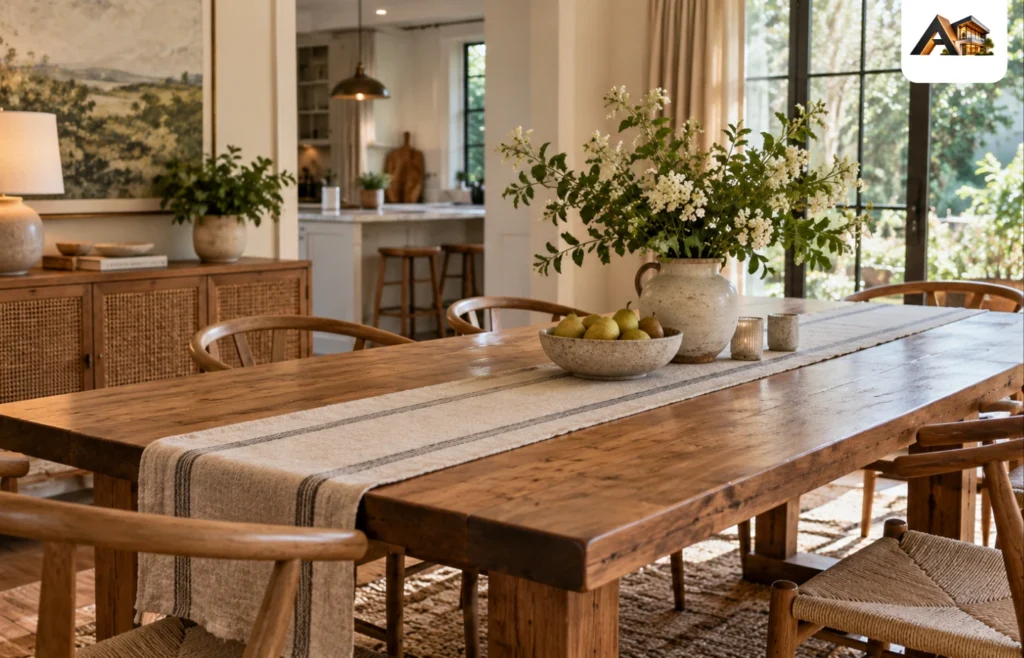
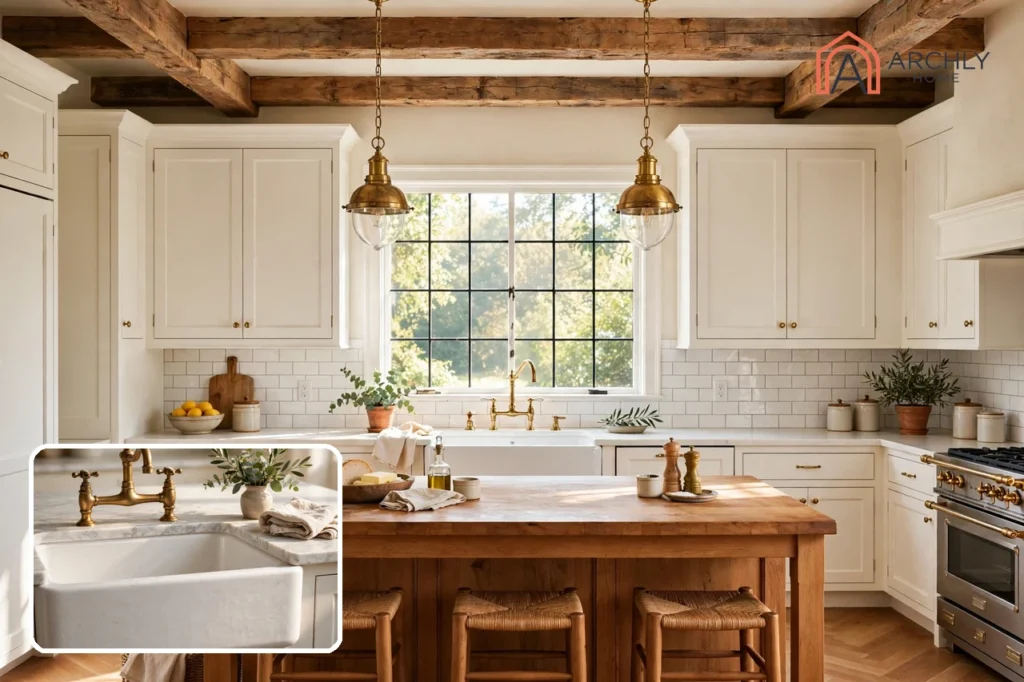
A farmhouse kitchen works when three things are true: the materials are honest, the layout serves the cooking, and nothing in the room is there only to look old. Get those right and the style takes care of itself — white or cream cabinets, warm wood, one strong sink, and a few pieces with real age on them. These 15 ideas cover the whole job, from the sink and the cabinets to the lighting, the floor, and the corners most guides skip.
Three Decisions Before You Buy Anything
Most farmhouse kitchens go wrong before a single thing is bought. Three decisions come first, and they cost nothing to make.
Pick your lane: classic or modern. Classic farmhouse is collected and warm — cream cabinets, beadboard, butcher block, oil-rubbed bronze, pieces that look inherited. Modern farmhouse keeps the same bones and strips the clutter — crisp white, matte black, quartz, fewer uppers, more drawers. Most people land somewhere between the two, and that is fine, but pick your side before you shop: a room that is half classic and half modern usually reads as undecided, not eclectic. The comparison table later in this article lays out the split decision by decision.
Two colors, not five. A farmhouse kitchen holds together on restraint. One color for the perimeter cabinets, one for the island — that is the whole palette. A third color is where kitchens start to look busy, and it is almost always the thing people regret first. Pick your white before anything else and check it against the floor: warm wood next to a cool white can read gray and a little sad.
Buy the sink before the cabinets. An apron-front sink needs a base cabinet built around it, and finding that out after the cabinets are ordered is an expensive lesson. The same rule holds for the range hood and the island: the big fixed pieces get decided first, and everything else is fitted to them. If you are planning the whole house in the style, our guide to modern farmhouse house plans shows how the same thinking shapes the rooms around the kitchen.
Set The Bones First
The sink, the cabinets, and the island decide the temperature of the room. Everything after them is helping those three agree with each other.
1. Start With The Apron-Front Sink
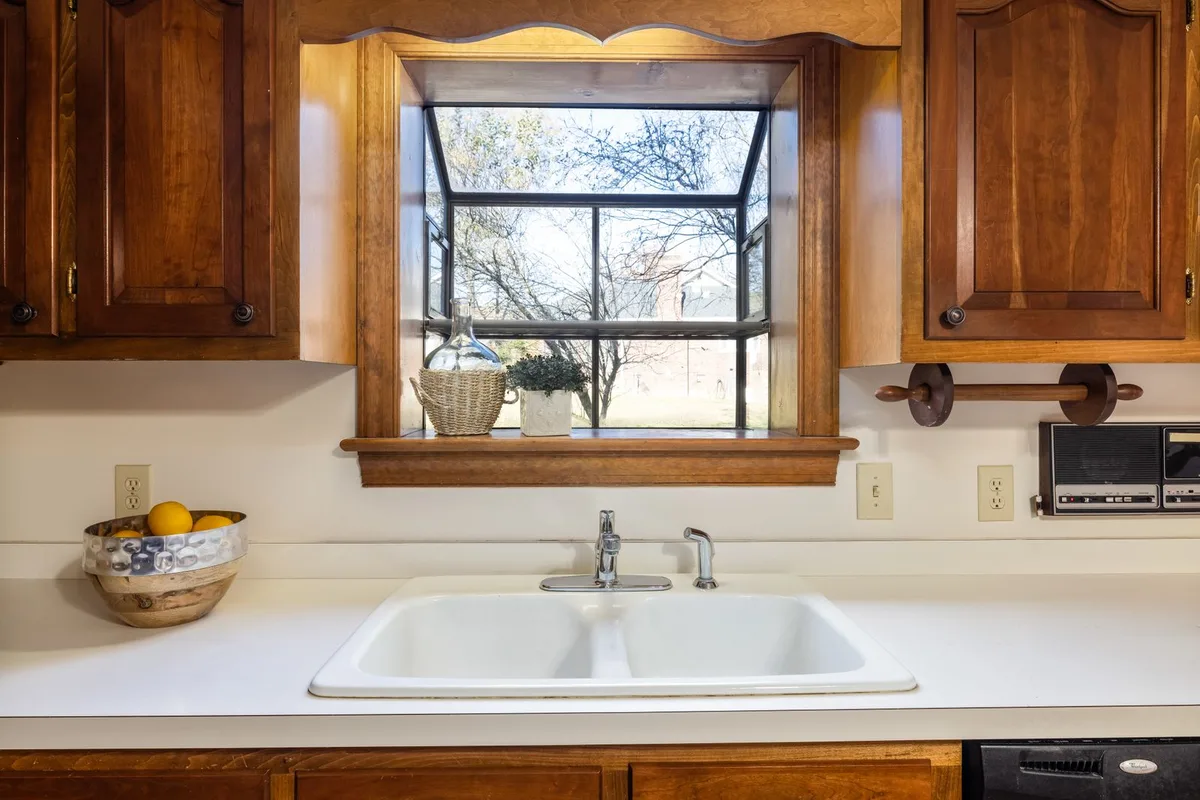
The apron-front sink is the single most recognizable farmhouse element, and it earns the title: the deep basin swallows sheet pans and stock pots, and the front edge brings you a little closer to the work, which means less strain on long washing sessions. Choose the material with your eyes open. Fireclay gives the classic white finish and resists stains, but it is heavy and needs a sturdy cabinet base and careful installation. Stainless apron sinks are easier on the budget — around $700 to $1,500, as working designers report — and they are less fussy if you have kids or a rental. Hammered copper is the third option: warm, and it develops a patina that gets better with age instead of worse.
Tip: pair the sink with a bridge faucet in unlacquered brass or oil-rubbed bronze. It is the one fitting that reads vintage without forcing the whole kitchen into a historic style, and it costs far less than a new cabinet run.
2. Choose Shaker Cabinets — And Paint Them Once, Properly
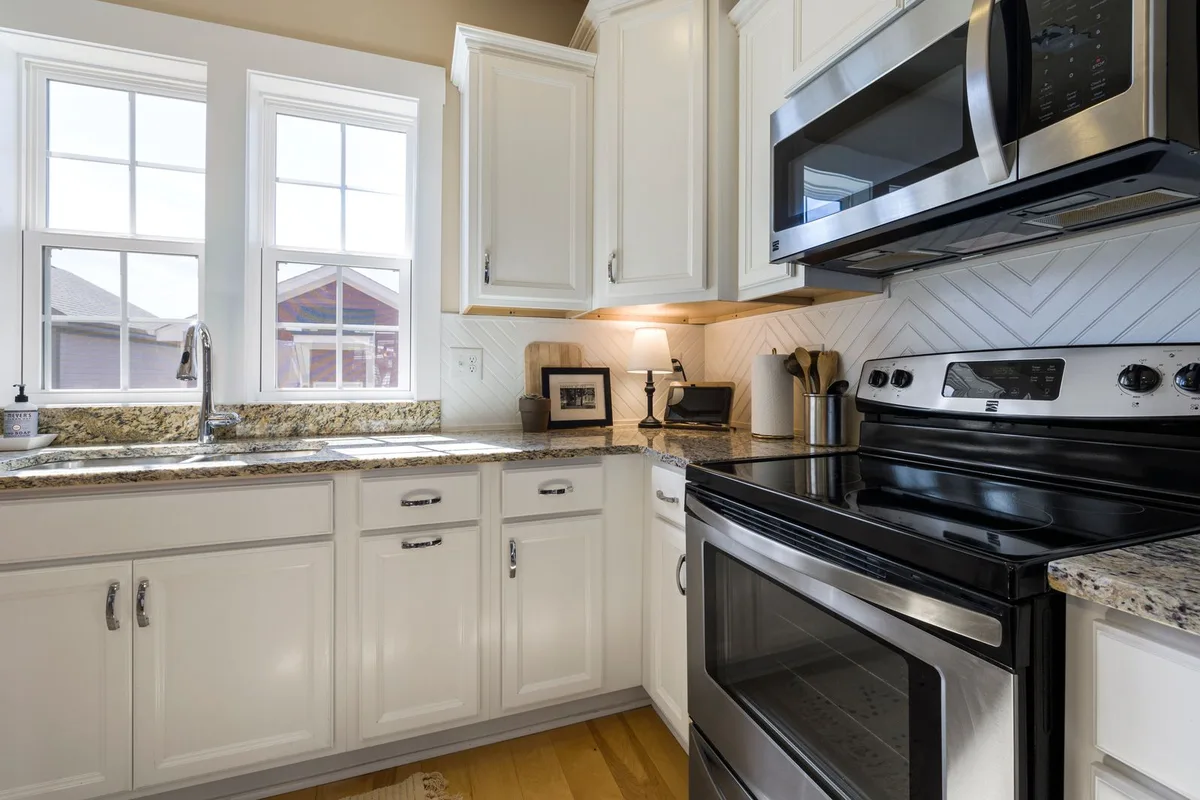
Shaker doors are the reliable farmhouse choice because their simple proportions work with traditional and contemporary hardware alike — and because they survive fashion changes that kill fussier door styles. White and cream are the classics, but muted green, soft blue, warm gray, black, and natural wood all work when the rest of the palette stays restrained. The paint job matters more than the color: strip or sand properly, prime, and use a scrubbable enamel, because kitchen cabinets take daily abuse and a cheap paint job shows it within a year. If the boxes are solid, keep them and change the doors — painting solid honey-oak boxes cream and swapping in simple Shaker doors is the single best-value farmhouse move there is.
Tip: stock Shaker units are reported at roughly $368 to $520 per unit, so a small galley kitchen can be refitted in materials for far less than a full custom order. Price the doors before you price the demolition.
3. Give The Island A Job Before You Give It A Color
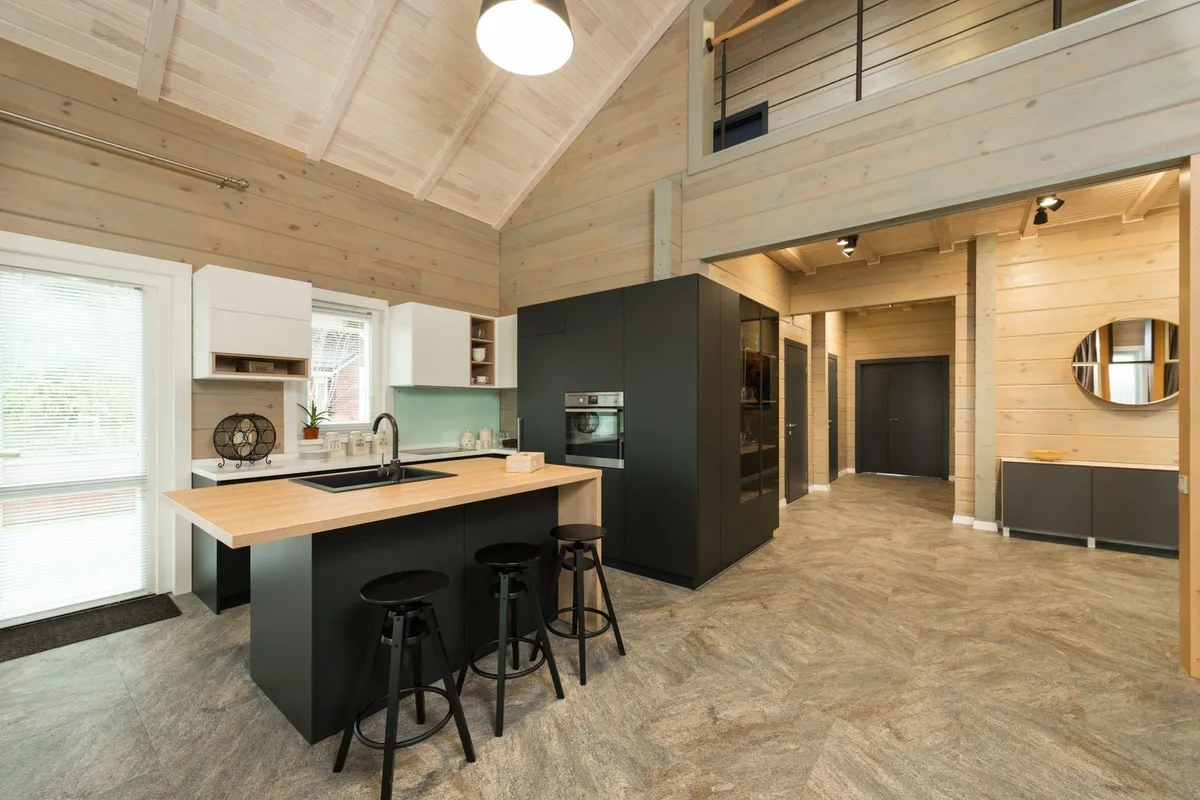
An island is the workhorse of a farmhouse kitchen — prep space, seating, storage, and visual warmth in one piece — but it only works when it is planned around function first. Before choosing a color or a countertop, check the clearances: leave 42 inches of walkway on every side you use, 48 inches if two people regularly cook there. A gorgeous island you have to sidestep is just a very expensive obstacle. Decide what the island must do — seat four, hold the microwave, hide the baking trays — and let that decide its size. Then give it the color: a painted island in soft sage green adds personality without shouting, and it is the best place in the room to take a small risk, because repainting one island is a weekend job and repainting a whole kitchen is not.
Tip: a freestanding island with turned legs and an open lower shelf reads more farmhouse than a built-in block, and a reclaimed wood table can do the same job for less. Our guide to kitchen ideas walks through island layouts, storage, and lighting for the room around it.
Surfaces And Walls That Carry The Style
Cabinets set the tone; surfaces carry it. These five ideas are the big planes your eye lands on — countertop, shelves, walls, backsplash, floor — and each one has a maintenance cost worth knowing before you commit.
4. Warm It Up With A Butcher Block Top
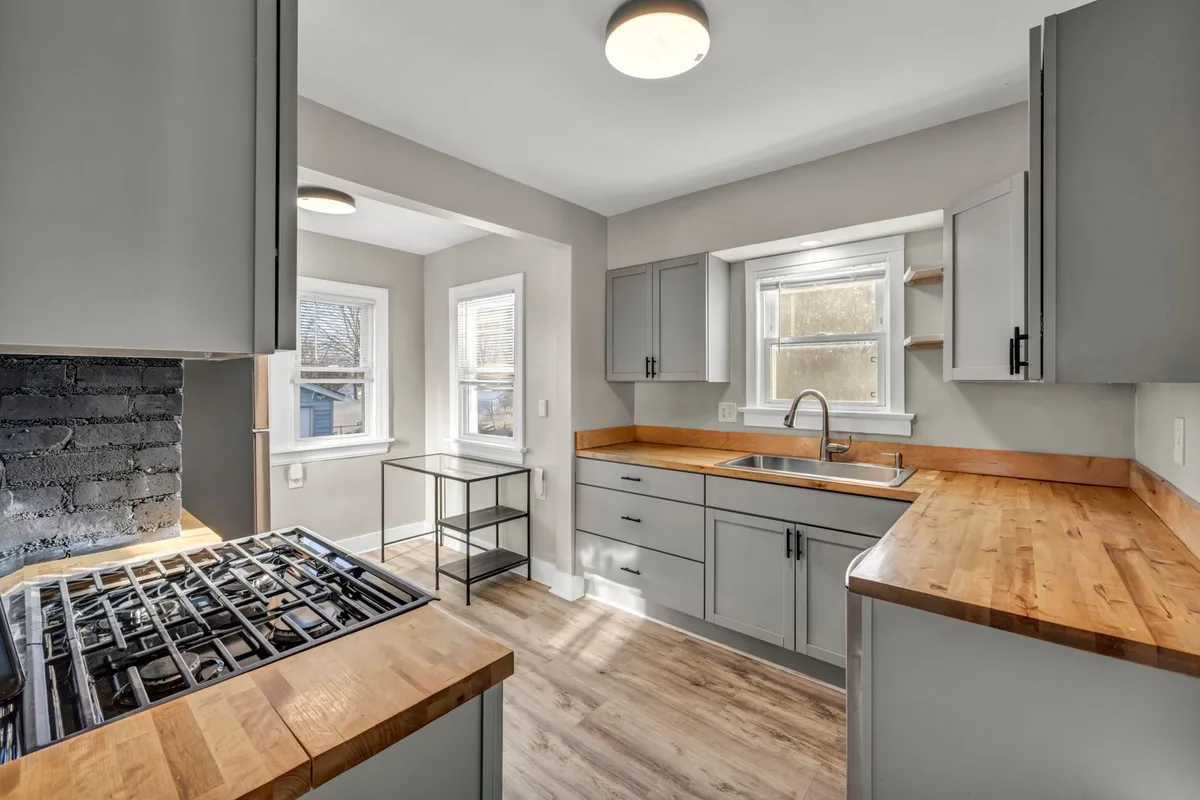
Butcher block brings a warmth stone cannot fake, and it is the fastest way to soften a bright white kitchen. Maple and white oak hold up best; walnut adds depth if the budget stretches. Keep it where it earns its keep — the island or one prep run — and use stone or quartz elsewhere, because a full wood kitchen is a maintenance commitment. The honest trade-off: wood needs oiling, and it will show hot pans and standing water if you are rough with it. That is not a flaw; it is the deal you are making. Butcher block installed yourself is reported at roughly $10 to $25 per square foot, which makes it the most budget-accessible warm material in the room.
Tip: a two-inch maple or oak top with a matte finish reads farmhouse instantly; a glossy finish can look plastic under bright light. Oil it on a schedule, and keep it away from the sink run unless you are happy with patina.
5. Swap One Run Of Uppers For Open Shelving
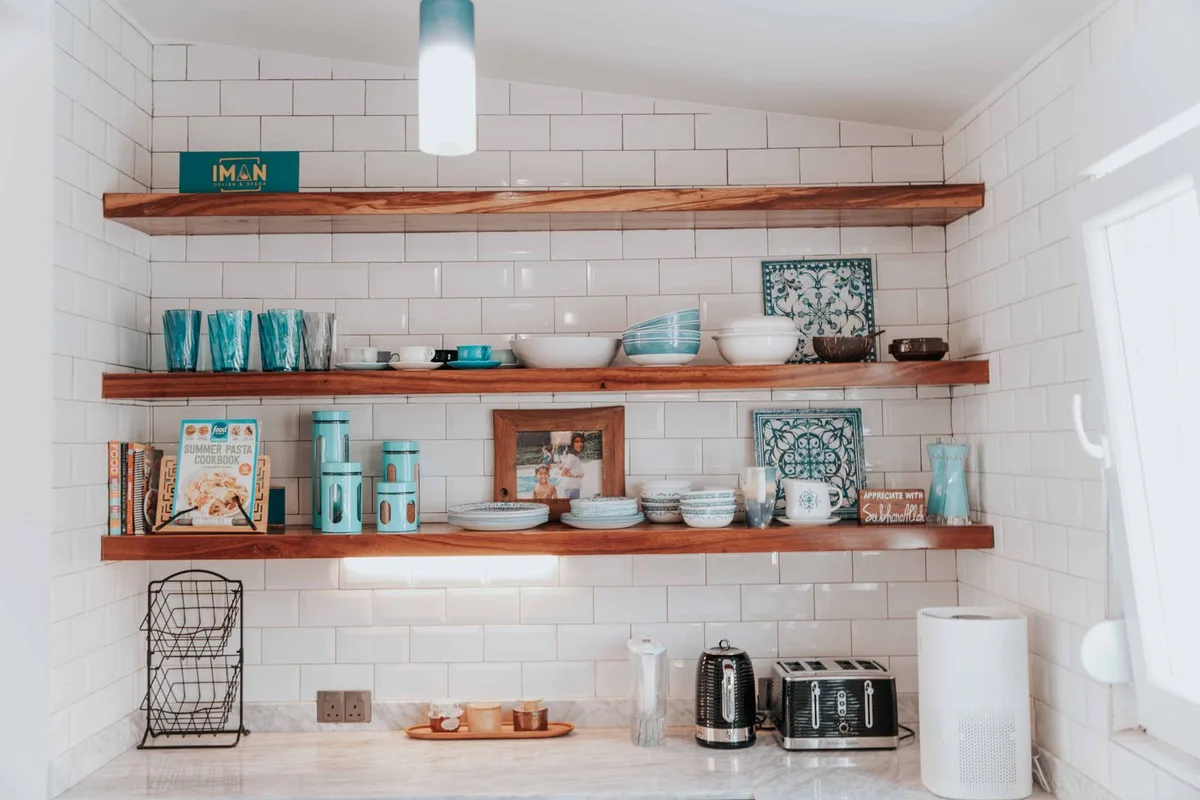
Open shelving is the fastest way to make a farmhouse kitchen feel airy, and the fastest way to make it feel messy. The rule that keeps it on the right side: one run only, and only for the prettiest 20 percent — the ironstone plates, the white dishes, the glass jars you actually use. Everything else stays behind closed doors. Solid wood shelves 10 to 12 inches deep, anchored into studs and finished in a wipeable satin topcoat, hold up best; iron brackets or hidden steel supports keep them honest. Stack by color or shape, not by what fits, and the shelves look intentional instead of accidental.
Tip: try one short run before committing a whole wall. Open shelving photographs beautifully and demands real discipline — a month of living with one shelf tells you whether you are a person who styles shelves or a person who fills them.
6. Use Shiplap And Beadboard Where They Earn It
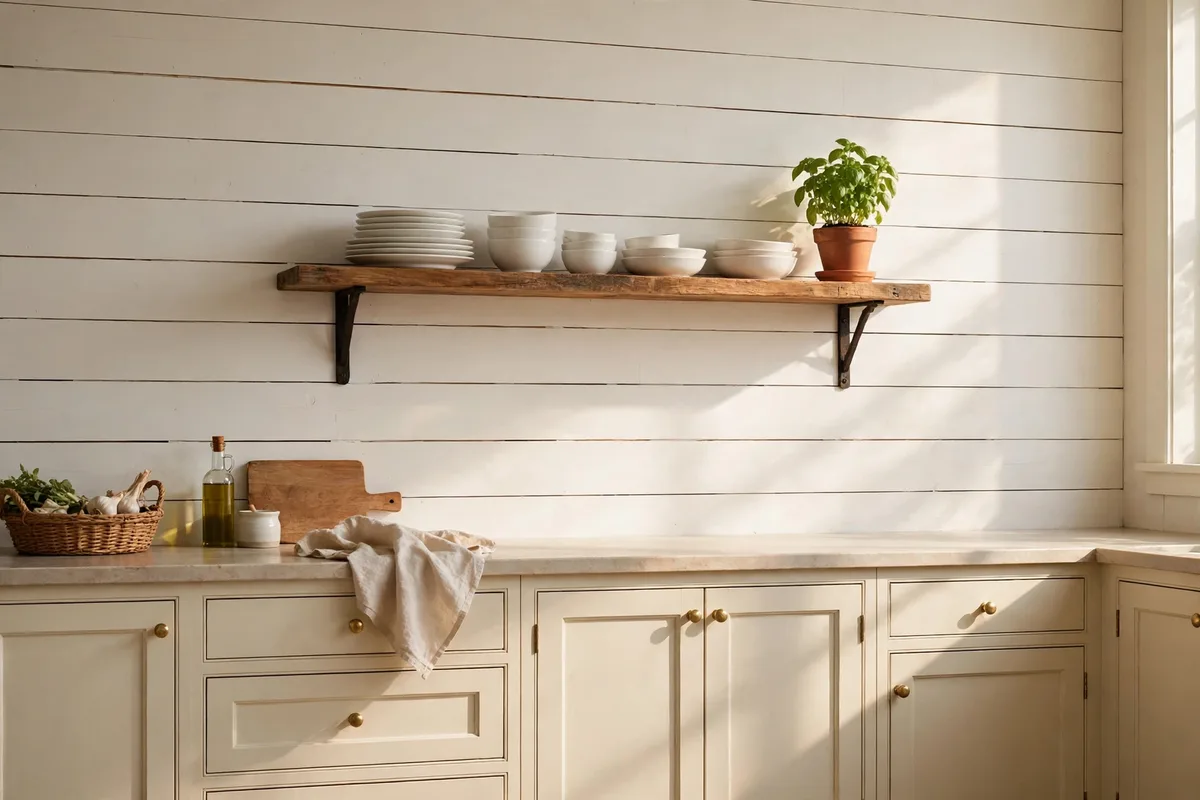
Shiplap and beadboard are the texture of farmhouse style: horizontal boards widen a room, vertical boards lift a low ceiling, and a beadboard-backed glass cabinet adds depth without crowding anything. But placement is everything. Behind a range, shiplap is a bad idea — the joints collect grease and the boards need sealing and scrubbable enamel to survive at all. It belongs on dry wall sections, the island base, a breakfast nook wall, or behind open shelves. Keep the board profile shallow: the deeper the groove, the more dust and grease it catches. Paint it matte or eggshell, never high gloss, which cheapens the look with harsh reflections.
Tip: run beadboard on the lower third of a wall and cap it with a chunky chair rail, instead of covering the whole wall. You get the cottage character for a third of the material and none of the closed-in feeling.
7. Run Subway Tile To The Ceiling Behind The Range
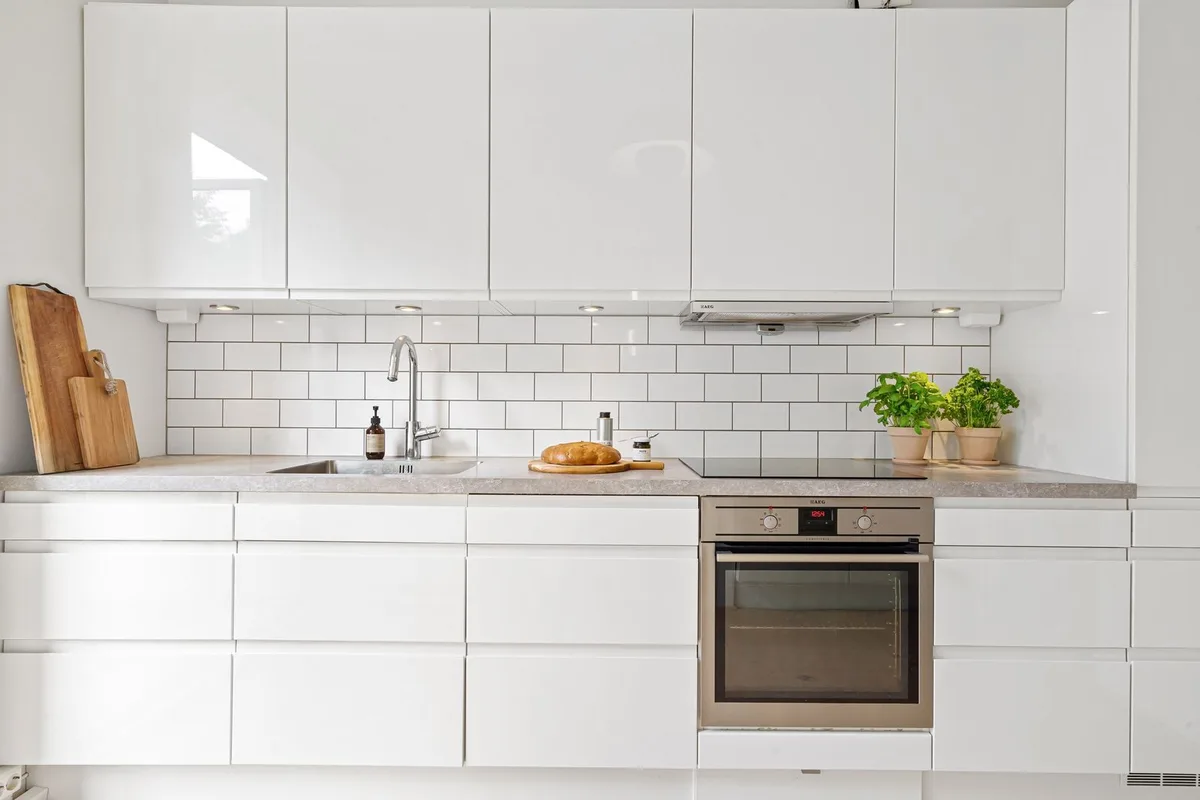
White subway tile is the farmhouse backsplash for a reason: it is clean, cheap, and it lets the wood and the hardware do the talking. The detail most people get wrong is where it stops. Take it all the way to the ceiling behind the cooktop — stopping partway is the fastest way to make a new kitchen look dated. Classic 3-by-6 tile in a running bond suits every layout; a handmade-look tile with slightly irregular edges catches light differently through the day and adds texture without adding color. Dark grout adds definition and hides stains; pale grout needs more cleaning. White subway tile materials are reported at roughly $2 to $15 per square foot, so this is a small-splurge, big-return surface.
Tip: if plain subway feels too safe, run the same tile in a herringbone pattern behind the range only, and keep the rest of the run in a simple bond. One moment of pattern, not a whole wall of it.
8. Lay A Floor That Ages Well

The floor takes more wear than any other surface in the house, so choose it for durability first and looks second. Wide-plank white oak or lightly distressed pine in a matte finish is the farmhouse default: the planks tell a story, hide minor wear, and only look better as they accumulate character. If you want pattern, a black-and-white checkerboard in 12-by-12 or 16-by-16 tiles reads timeless rather than busy — small checks feel frantic, and pale grout means more cleaning. Stone and understated patterned tile also work; high-gloss anything does not, because shiny floors show every footprint and kitchens get a lot of footprints.
Tip: a vintage runner rug in front of the sink warms a hard floor and protects the spot that gets stood on most. Choose a washable one — a kitchen rug that cannot be washed is decoration, not a rug.
The Details That Make It Feel Custom
Once the big surfaces are settled, the details do the work of making the room feel designed rather than assembled. Four of them, done well, beat a dozen done halfway.
9. Hang Wood Beams — Only If The Ceiling Allows
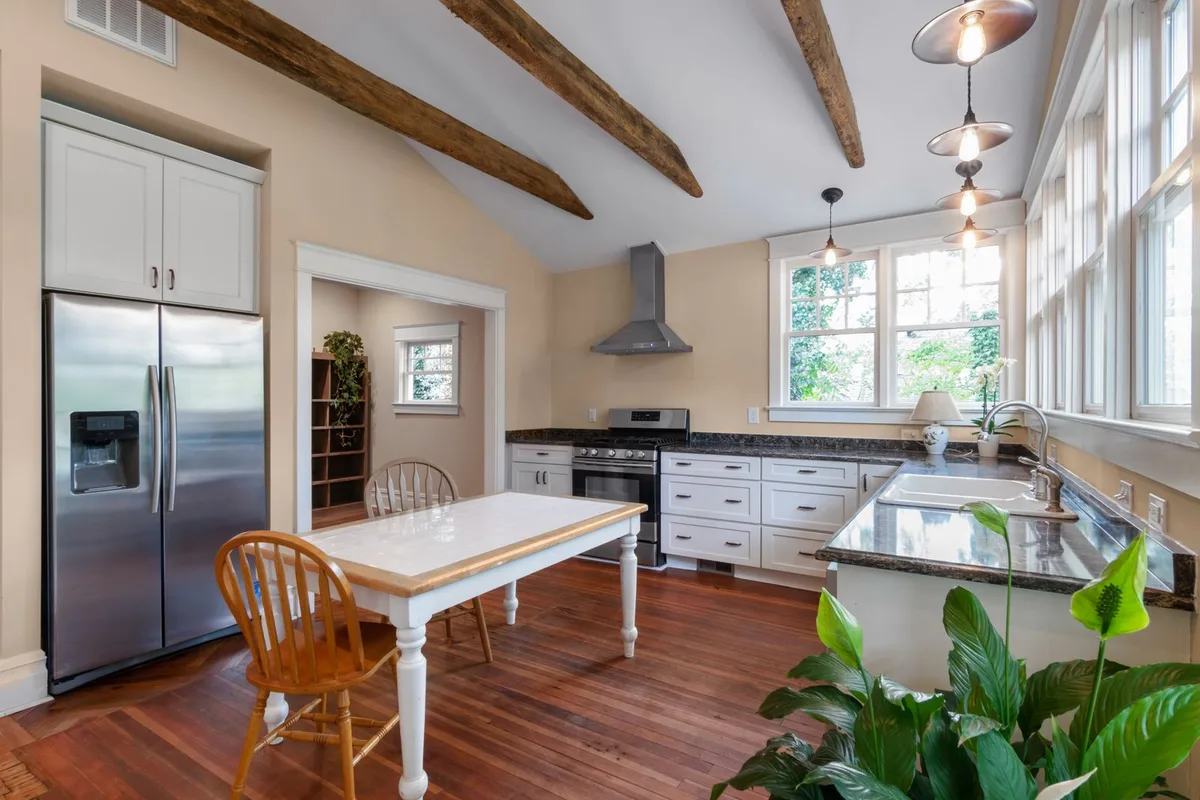
Reclaimed wood ceiling beams add real character, but they are not the move for every house. Under an eight-foot ceiling they make the room feel heavier, not cosier; with height, they root the whole kitchen. Two or three beams are enough — restraint is the trick. You need a few strong gestures, not a barn inside your house. Faux box beams in a lightweight build give the same look for a fraction of the cost and weight, and they are the best budget beam option there is. Match the beam tone to one other wood in the room — the island top, the table, the shelves — so the eye moves naturally instead of stopping at the ceiling.
Tip: if the ceiling is low, skip beams entirely and put the wood lower down — a thick butcher block island top or a reclaimed shelf gives the same warmth without pressing the ceiling down on the room.
10. Choose A Range Hood With Presence
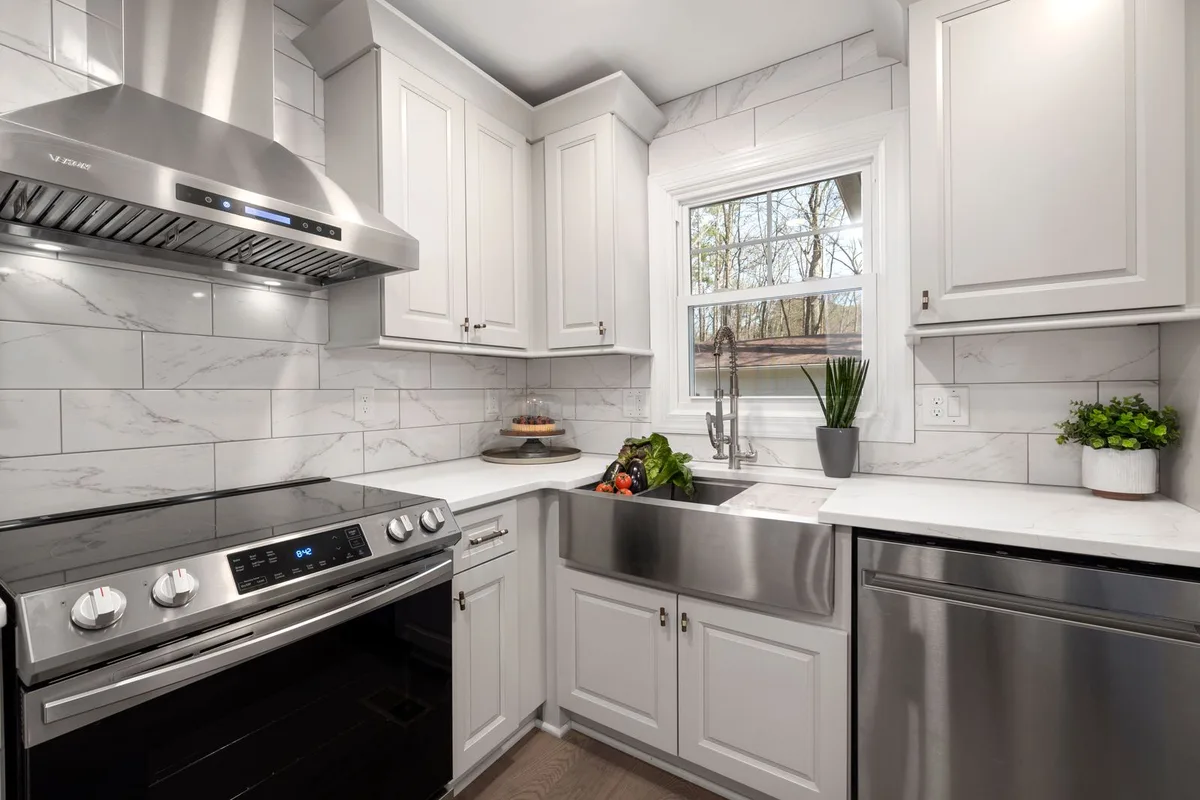
The range hood is the one place in a farmhouse kitchen where a statement is expected, because it sits at eye level in the centre of the cooking wall. A plaster hood with a warm wood trim band is the quiet version: soft against tile or painted cabinets, custom without shouting, and it bridges old and new better than almost any other single detail. A custom wood mantel hood with corbels is the traditional version; hammered copper is the bold one, and it ages with a patina instead of against it. Whatever you choose, keep the shape simple — fancy curves fight the rest of the cabinetry — and make sure the ventilation is ducted outside and sized to the range, not to the look. A beautiful hood that does not clear the air is a sculpture, not a hood.
Tip: plaster needs a skilled installer and is not the cheap route; bad plaster work is obvious from across the room. If the budget is tight, a wood surround built around a standard insert gives most of the effect for far less.
11. Layer The Lighting: Pendants, Task Light, Dimmers
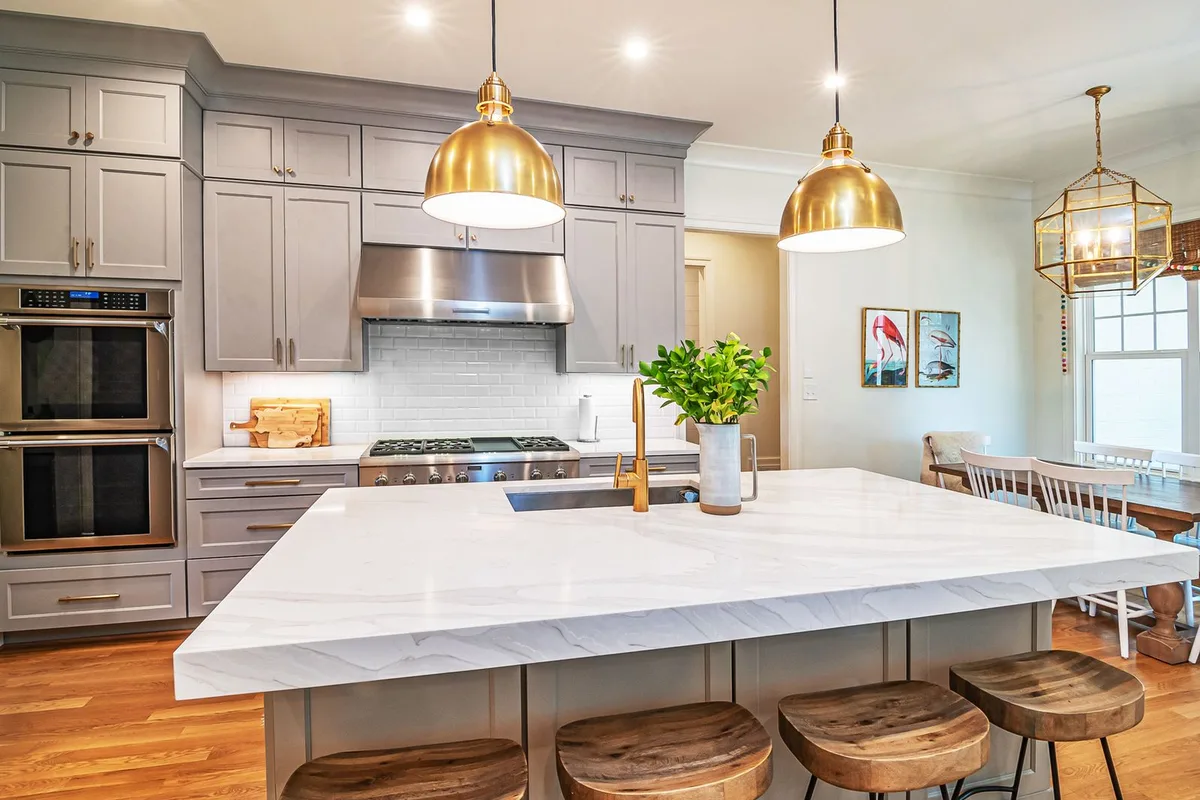
Farmhouse lighting should work for prep and soften at night, and no single fixture does both. Layer three kinds: pendants over the island, task light under the cabinets, and a dimmer on everything. Schoolhouse pendants with milk-glass shades suit the style without turning it into a costume; barn-style metal domes and seeded-glass lanterns are the alternatives. Size matters more than style — 10-to-14-inch shades suit a standard island, hung so the bottom sits 30 to 36 inches above the counter. Under-cabinet strips do the real cooking work: check the light from the position where you prepare food, because a decorative pendant can leave your hands in shadow, and task lighting under the front of the cabinets fixes exactly that.
Tip: put the pendants and the under-cabinet lights on separate switches, and put everything on a dimmer. Farmhouse kitchens are lived in at night as much as by day, and the room should be able to go soft.
12. Fit Hardware Like Jewelry: One Metal, Done Well
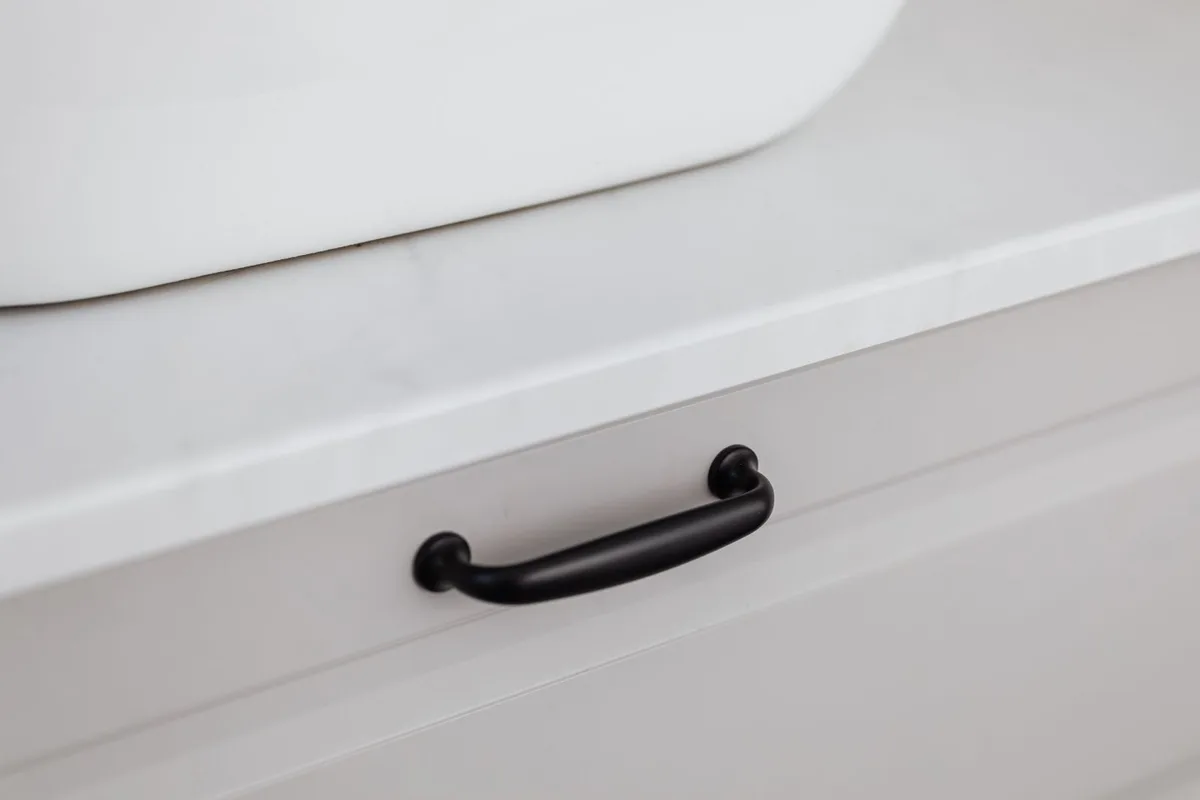
Hardware is the cheapest way to change the whole mood of a kitchen, and the easiest place to create chaos. Pick one metal and commit to it across the faucets, the lighting, and the hardware — matte black, unlacquered brass, oil-rubbed bronze, or brushed nickel — and the room reads intentional. A second metal is allowed only if you are confident mixing; a third is clutter. On the cabinets themselves, cup pulls on drawers and simple knobs on doors strike the right nostalgic note, and matte black hides fingerprints better than shiny black on a kitchen that gets real use. Keep oversized pulls for drawers and pantry doors, and use smaller knobs on upper doors, so the scale stays natural.
Tip: swap the hardware before you commit to repainting anything. It is the lowest-cost test of a new direction, and if the new metal feels wrong, you have spent an afternoon, not a renovation.
Make It Lived-In, Not Staged
A farmhouse kitchen should look assembled slowly, not bought in one order. These last three ideas are the difference between a showroom and a room people actually cook in.
13. Bring In A Freestanding Table Or A Vintage Piece
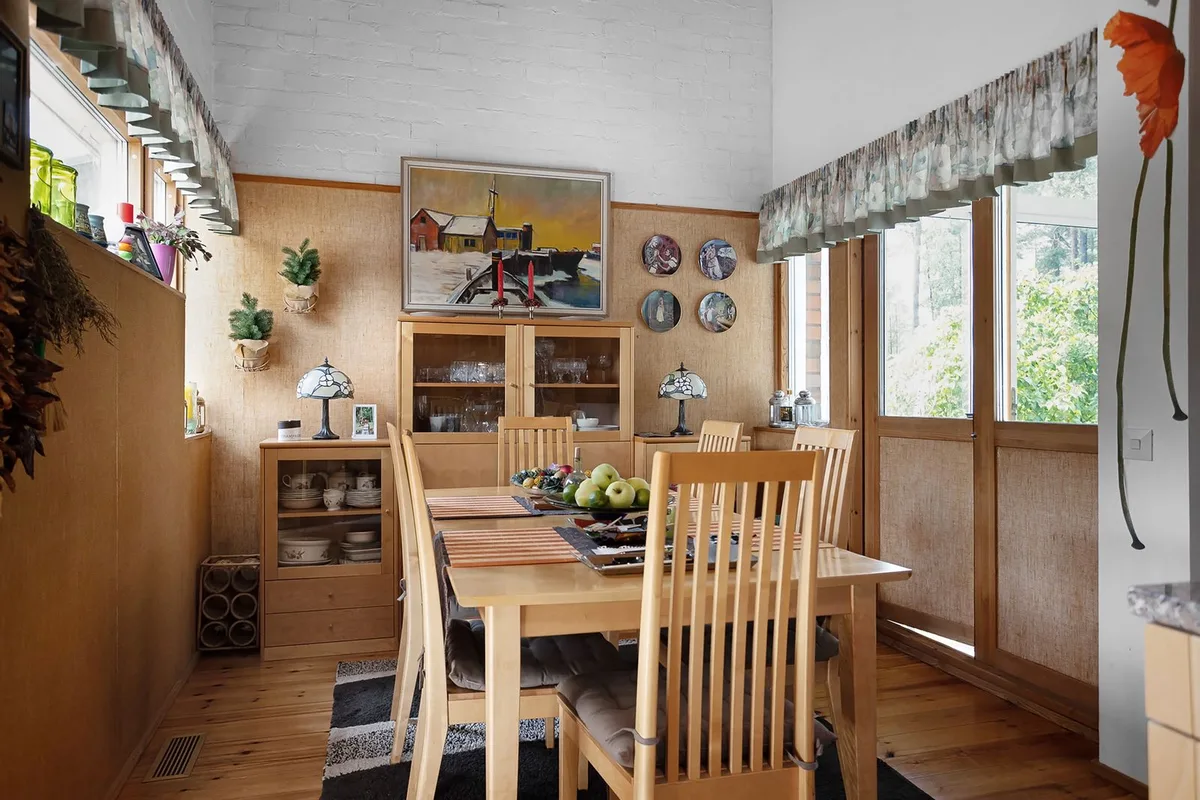
A freestanding wood table gives a kitchen soul in a way a built-in island never quite does. Even with an island in place, a real table nearby makes the room feel like people sit down and stay a while — and it doubles as a homework station, a buffet, and a serving surface. The same logic applies to the rest of the room: a hutch as a coffee corner, a freestanding armoire as a dinnerware cabinet, a repurposed dresser as extra storage. Hunt for pieces with good bones at flea markets and estate sales, and let the wear show — a table that has already survived fifty years of dinners has nothing left to prove. Leave at least 36 inches around the table for circulation, 42 if the kitchen is tight and people are constantly passing through.
Tip: one genuine vintage piece beats five reproduction ones. If everything in the room was bought new to look old, the room knows it, and so will your guests.
14. Add A Barn Door Pantry
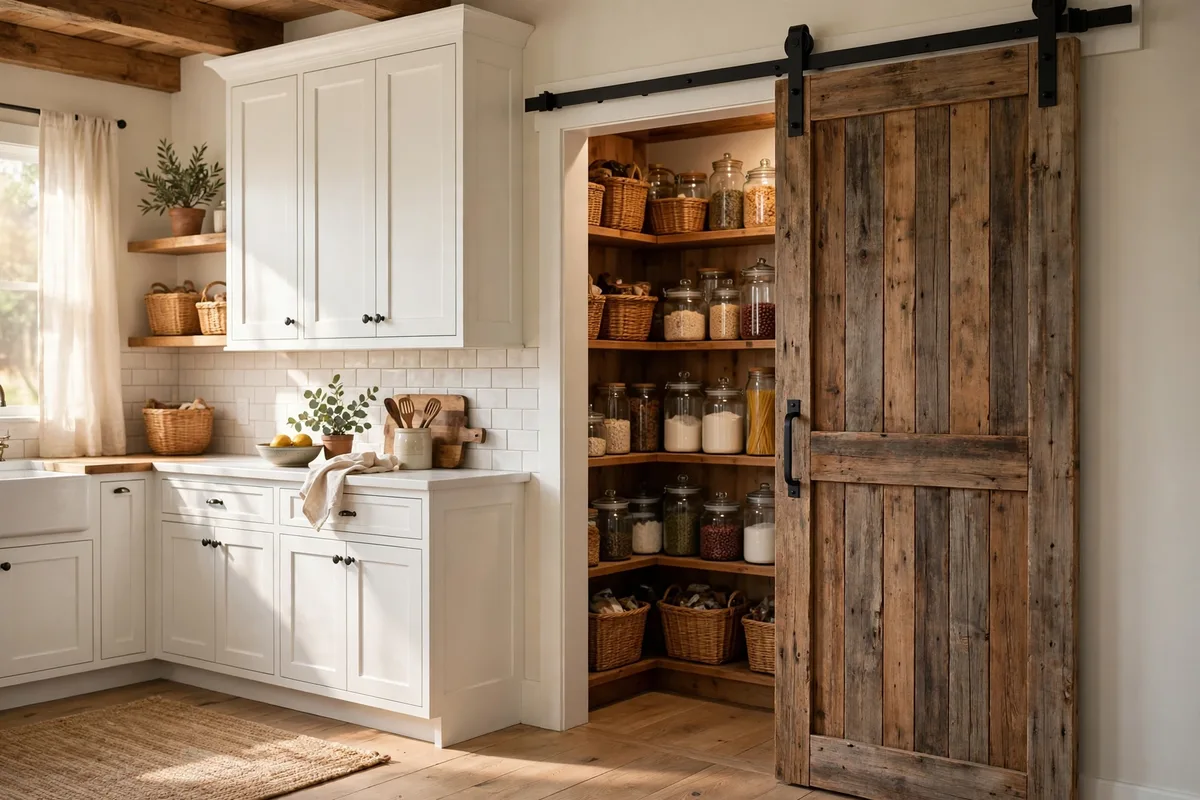
A sliding barn door is the easiest farmhouse gesture that also solves a real problem: it saves the swing space a normal door needs, and it turns the pantry into a feature instead of a cupboard. Mount the track hardware properly — into studs or solid blocking, with enough clearance above the door frame — and choose a solid wood or engineered reclaimed panel, because a lightweight hollow-core door rattles and feels flimsy on a barn track. Behind the door, keep the pantry honest: woven baskets for the things nobody wants on display, clear jars for the dry goods, and a rack on the back of the door for spices. The door gets the attention; the organization inside does the work.
Tip: if a full barn door does not fit the opening, a bifold door, or a simple painted door with black iron hinges, gives most of the character for a smaller commitment.
15. Carve Out A Breakfast Nook
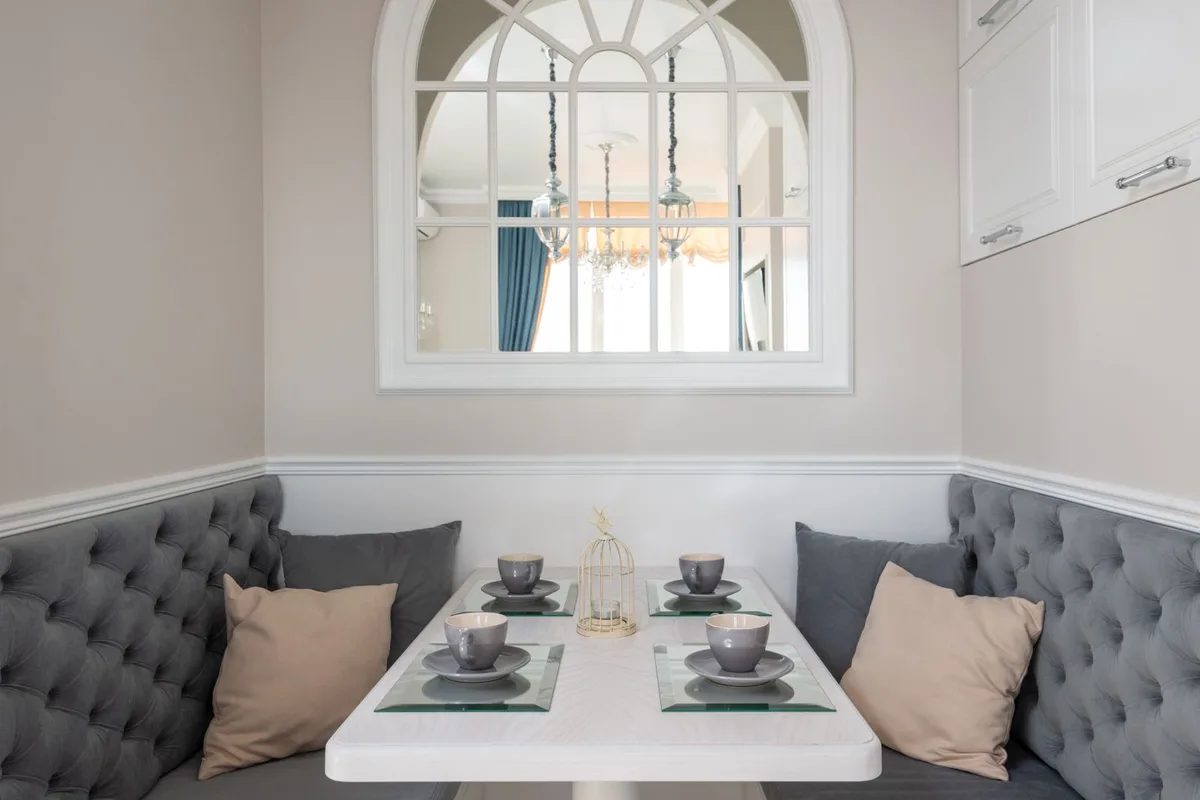
A breakfast nook is the corner of the farmhouse kitchen that earns its keep every single morning. A sunny corner, a window bay, or an underused stretch of wall is all it takes: a built-in bench with storage underneath, a round pedestal table that leaves legroom, and cushions in a durable, washable fabric. Four-inch-thick bench cushions with removable covers survive breakfast spills; shallow two-inch pads flatten within months and defeat the purpose. Layer in a pendant light, a linen cushion or two, and a washable rug under the table, and the nook becomes the spot for homework, game nights, and long coffees — the part of the kitchen people remember.
Tip: build the bench storage first and style it second. A nook that holds table linens, board games, and school bags is used daily; a nook that only looks pretty is sat in once.
Classic Vs Modern Farmhouse: Pick Your Lane
Use this table before you buy anything. The two lanes share the same bones; they split on the details. Pick one column and stay in it for the big decisions — cabinets, counters, sink, and lighting — and borrow from the other column only for small accents.
| Decision | Classic Farmhouse | Modern Farmhouse |
|---|---|---|
| Cabinets | Shaker or beadboard doors, cream, sage, or duck-egg blue; visible hinges a plus | Slim Shaker or flat panel, crisp white or charcoal; fewer uppers, more drawers |
| Countertops | Butcher block, soapstone, or speckled granite that hides crumbs | Quartz in a soft veined pattern, or honed marble if you seal it |
| Sink | White fireclay apron front, or hammered copper for patina | Stainless or matte black apron front, one deep basin |
| Backsplash | Subway tile, tumbled stone, or beadboard, full height | Zellige tile with visible variation, or one slab behind the range |
| Island | Freestanding and furniture-like; turned legs, open lower shelf, worn wood top | Built in, clean overhang for seating, hidden outlets |
| Flooring | Wide-plank pine or hickory, knots, matte finish | White oak in a pale natural tone, or porcelain that reads like limestone |
| Lighting | Barn pendants, seeded-glass lanterns, cast-iron candelabra over the table | Oversized dome pendants, or one long linear fixture over the island |
| Hardware | Cup pulls, simple knobs, oil-rubbed bronze or aged iron | Matte black bar pulls, or unlacquered brass that ages on its own |
| Color rule | Creamy white base, muted sage, buttery yellow, or soft blue accents | Cool white base, black window frames, charcoal accents |
| The rule that matters | Two paint colors maximum, perimeter in one, island in the other | The same — a third color is where kitchens start to look busy |
What It Costs?
Nobody prices a farmhouse kitchen honestly with a single number, because the range is the point: a weekend refresh and a full remodel are both real farmhouse kitchens. Use these reported approximate ranges as a guide, not a quote — they are the figures working designers and retailers report, and they move with your area and your materials.
| Item | Reported Approximate Range |
|---|---|
| Stainless apron-front sink | Around $700 to $1,500 |
| Fireclay apron-front sink, 30-inch | From around $263 |
| Stock Shaker cabinet unit | $368 to $520 per unit |
| Butcher block countertop, DIY-installed | $10 to $25 per square foot |
| White subway tile, materials | $2 to $15 per square foot |
Start in the cheapest band even if you plan a full remodel: paint, hardware, and one open shelf tell you exactly what the expensive version should include. Better Homes & Gardens’ budget kitchen remodeling ideas show the same logic in real rooms — faux wood beams, painted cabinets, and a new apron-front sink doing the work of a far bigger budget.
Farmhouse Kitchen Mistakes To Avoid
- Buying the sink after the cabinets. Apron sinks need a custom base. Order the sink first, build around it.
- Using shiplap behind the range. Grease collects in the joints. Tile belongs there; shiplap belongs on dry walls.
- Opening every upper cabinet. One run of open shelving is airy. A whole wall of it is a display you have to dust and style forever.
- Mixing three or more metals. One metal across fixtures, lighting, and hardware; a second only if you are sure. A third reads as chaos.
- Hanging beams under a low ceiling. Under eight feet, beams press the room down. Put the wood lower — island top, shelves, table.
- Choosing marble and forgetting the sealing. Marble stains from tomatoes and citrus. Seal it every 6 to 12 months or choose quartz and stop worrying.
- Filling the room with reproduction “farmhouse” signs. One genuine vintage piece earns more character than a wall of matching new decor.
- Skipping the dimmers. A kitchen lit only at full brightness is a kitchen nobody lingers in after dinner.
Frequently Asked Questions
How Much Does A Farmhouse Kitchen Cost?
It depends on how far you go. A refresh — paint, hardware, one open shelf, new lighting, textiles — is the cheapest band by far, because it reuses the cabinets and the layout you already have. A mid-range update — a new apron sink, a butcher block island top, a tile backsplash — costs what those pieces cost, so price them from the table above before you commit. A full remodel with new cabinets, counters, and appliances is a different project entirely, and the sink and cabinet prices above are the pieces to price first.
Fireclay, Stainless, Or Copper — Which Apron Sink Should I Choose?
Fireclay for the classic white look and stain resistance, if your cabinet base can carry the weight and your budget allows. Stainless for the easiest budget and the least fuss — around $700 to $1,500 — especially with kids or a rental. Copper for warmth and a patina that improves with age, if you like a living finish that changes over time. Whichever you choose, buy it before the cabinets are built.
How Do I Mix Wood Tones Without Clashing?
Stick to two or three wood tones that are close in warmth — honey oak and maple, walnut and pine — and use a matte finish to tie them together. Match the beam tone to one other wood in the room so the eye has a path. Avoid mixing gray-toned wood with warm-toned wood; that is the combination that looks mismatched rather than collected.
Can I Get The Farmhouse Look In A Small Kitchen?
Yes, and the style actually suits small rooms, because it favors fewer, better things. Use light colors, compact fixtures, and vertical storage; swap one upper run for open shelving instead of the whole wall; choose a movable cart instead of a permanent island when circulation is tight; and limit the rustic accents to two or three strong ones — a sink, a shelf, a light — rather than every motif at once. Closed cabinets often control clutter better than open shelves in a small room.
How Do I Keep A Farmhouse Kitchen From Looking Like A Theme?
Stop at the architecture. Real materials, honest wear, and pieces with a history read as farmhouse; matching signs, themed canisters, and reproduction everything read as a set. Keep the palette to two colors, keep one metal, leave counters mostly clear, and let one genuine vintage piece — a table, a hutch, a set of copper pans — do the talking instead of a dozen small decorations.