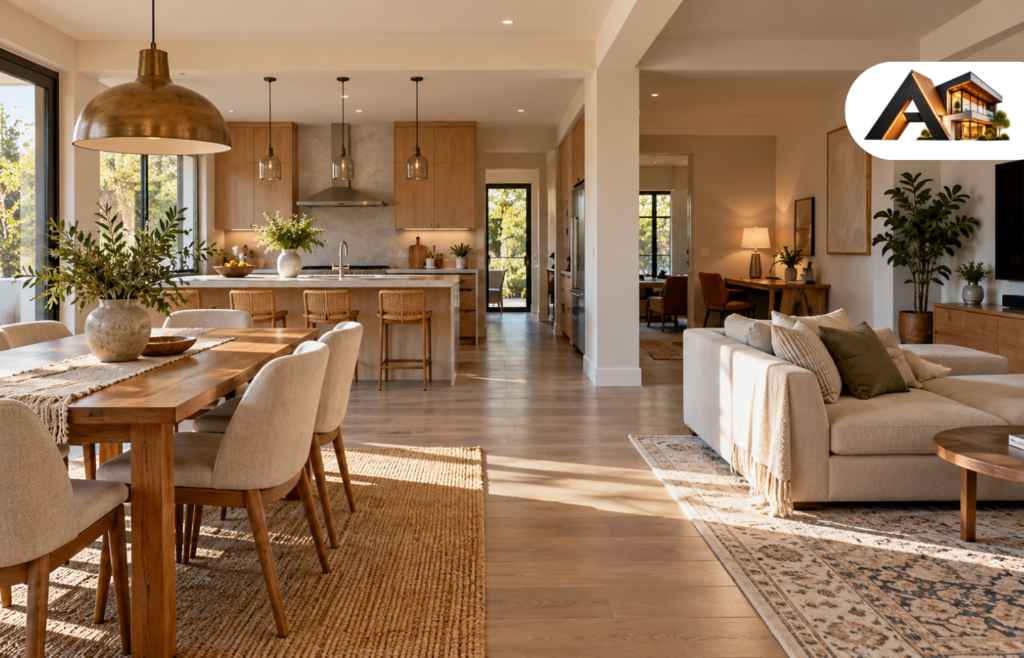
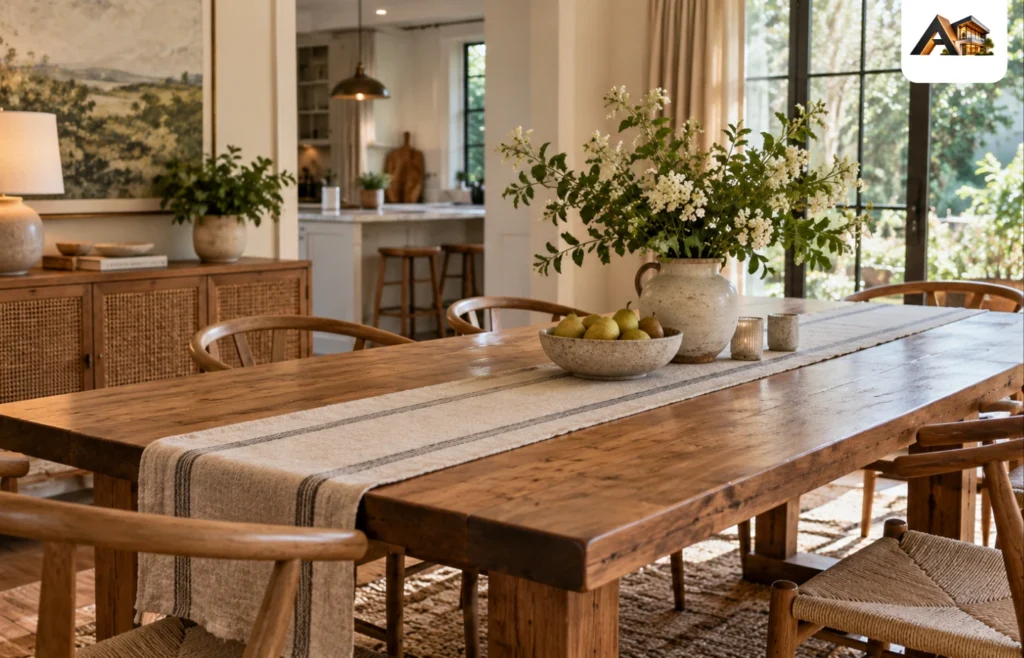
A dining table can look inviting without staying set for a dinner party. A favorite bowl, a washable runner, or a few flowers may be enough to connect it with the room. The useful part is choosing an arrangement that still leaves space for breakfast, shared dishes, homework, and conversation.
For everyday dining table decor, start with one focal point, check it from a seated position, and leave room for the way you actually use the table. Add other pieces only when they improve the arrangement.
These ideas offer different starting points, from simple pottery to colorful linens. Choose the ones that suit your furniture and routine; you don’t need to combine them all.
12 Dining Table Decor Ideas to Try
1. Give a Favorite Serving Bowl a Permanent Place
Look through your serving dishes before buying a centerpiece. A shallow ceramic bowl or an oval platter can give the table a finished appearance between meals, then return to its usual job when needed.
Try a cream bowl on a dark tabletop, or a blue glazed dish against pale wood. The difference in color helps the object stand out without requiring extra accessories.
Leave the bowl empty if you enjoy its shape. Filling every decorative vessel can make a simple arrangement feel unnecessarily busy.
2. Make Fruit Part of the Everyday Display
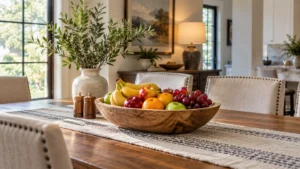
A fruit bowl adds color while keeping something useful within reach. Choose fruit your household regularly eats, and let the arrangement change as it gets used.
Use a bowl intended for food contact, and keep the contents easy to see and check. A modest arrangement is easier to maintain than a deep pile that hides bruised fruit underneath. Food-safe vessels are also recommended in practical centerpiece guidance from Driven by Decor.
For a quieter look, use one type of fruit. For a more relaxed kitchen-dining space, a mixed bowl works just as well.
3. Use a Runner to Introduce a Small Amount of Pattern
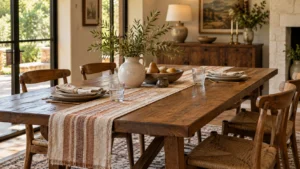
A runner is a manageable way to try stripes, checks, or another pattern without changing the furniture. It also lets much of the tabletop remain visible.
For example, a rust-and-cream stripe can bring warmth to a plain white table. A narrow blue pattern can connect the table with blue details elsewhere in the room.
Check the runner with your everyday dishes in place. Plates and glasses should sit securely rather than straddling thick seams or raised embroidery. Choose a care routine you can maintain; a frequently used table may benefit more from washable fabric than delicate detailing.
4. Create a Centerpiece You Can Move in One Trip
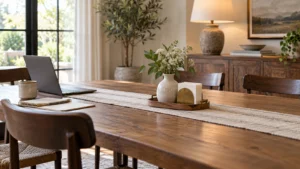
For a table that doubles as a workspace, try a small tray holding a vase and a compact napkin holder. Keep the arrangement light enough to lift comfortably.
Before styling it, decide where the tray will go during meals or homework. An available shelf or sideboard makes this idea much more useful than an arrangement with nowhere to land.
Test the tray fully loaded. Objects that slide or tip when carried need a different arrangement. Check that its underside is clean and suitable for your table’s finish, too.
5. Split a Bouquet Into Smaller Arrangements
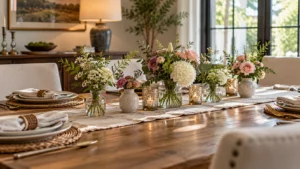
Instead of placing a dense bouquet in the middle, divide a few stems between small, stable vases. This lets you adjust individual pieces around serving dishes or remove just one when space becomes tight.
Small grouped vessels are an established alternative to one large centerpiece, including in designer examples collected by Architectural Digest.
Keep the flowers loose enough that the arrangement doesn’t become a solid screen. Look across the table while seated, and check the view from the end chairs as well.
6. Let an Empty Vase Provide the Shape
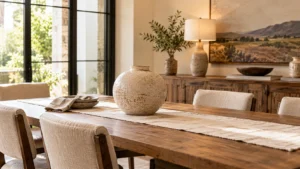
An attractive vase doesn’t always need flowers. A rounded ceramic vessel, a textured pitcher, or a colored glass piece can work on its own.
This approach is useful when you want modern dining table decor without regularly replacing stems or changing water. Choose a shape you enjoy from several angles, since a dining table is usually seen from more than one side.
On a small table, start with a compact piece. A large sculptural vase may look striking between meals but need moving whenever people sit down.
7. Bring in Greenery Where the Light Suits It
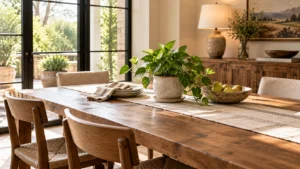
A compact potted plant can soften a table, provided the location suits that particular plant’s light needs. Choose the plant for the conditions first, then select a container that works with the room.
Water it away from the dining surface and let excess water drain before returning it. Check beneath the container regularly rather than assuming the decorative outer pot will keep the tabletop dry.
Fresh, dried, and artificial greenery involve different upkeep. Artificial stems avoid watering but still need dusting; dried arrangements can shed. Choose the option you’re willing to maintain.
8. Add a Gentle Glow With Flameless Candles
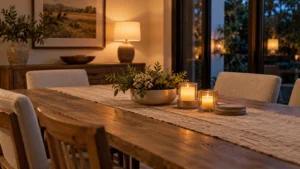
Flameless candles can make evening meals feel more inviting without introducing an open flame among napkins, sleeves, and serving dishes.
Try a simple pair beside a low bowl, or use one compact candle as the only centerpiece on a small table. Check the effect after dark: the color and brightness can feel different from how they look in daylight.
A low holder may be more comfortable to sit across from than a tall lantern. Keep the overall footprint modest so the lighting doesn’t compete with the meal.
9. Let Napkins and Placemats Carry the Color
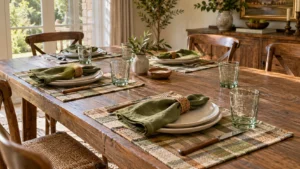
A centerpiece isn’t the only way to decorate a dining table. Plain dishes can look more considered with patterned napkins or placemats in a color drawn from the surrounding room.
Try olive napkins with cream plates, or a subtle checked placemat beneath simple white dinnerware. Repeating a room color through table linens is a straightforward way to connect the setting with existing decor.
Set out all the places you normally use before buying a full set of mats. On compact tables, oversized mats can overlap or leave little room for shared food.
10. Use a Tablecloth for a Bigger Visual Change
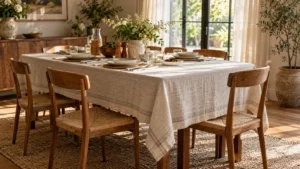
A tablecloth can change the mood of the entire table while keeping the furniture you already own. It’s especially useful when you want a softer surface visually or prefer to cover a worn finish.
Test the fabric against your chairs and flooring. A large pattern may become the room’s strongest feature, while a solid color leaves more attention on the tableware.
Check the drop while someone is seated. Fabric that bunches on laps or catches when chairs move will be frustrating in daily use. Follow the table manufacturer’s care guidance for any protective layer beneath it; decorative fabric alone isn’t reliable protection against heat or spills.
11. Bring Out One Piece With Personal Meaning
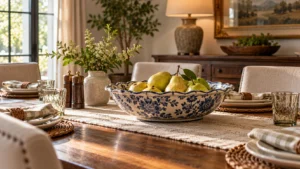
An inherited serving dish, a handmade bowl, or pottery bought on a trip can make the table feel more personal than a collection chosen only to match.
Give the object enough space to be noticed. A patterned dish might sit directly on the tabletop, while a small piece could rest on a plain runner that helps define its place.
Keep fragile or irreplaceable items elsewhere if the table sees energetic children’s meals or frequent projects. Personal decor should fit comfortably into the household.
12. Refresh One Detail With the Season

Seasonal decorating doesn’t require a new collection every few months. Keep the main vessel and change one element: the napkins, the stems, or the color of the runner.
A cream bowl might sit on a pale blue runner in warmer months and a muted burgundy one later in the year. The familiar base keeps the table connected to the room.
Consider storage before adding holiday pieces. A few textiles may be easier to keep and reuse than several bulky centerpieces.
Match the Arrangement to Your Table’s Shape
Table shape provides a useful starting point, but available dining space matters more than following a styling rule. Round tables often suit a compact central arrangement, while longer tables offer room to spread individual elements along the middle.
Table type |
Arrangement to try |
Practical Check |
| Small round table | One compact bowl or vase | Leave comfortable space for every place setting |
| Large round table | A shallow central arrangement | Make sure people can reach shared dishes |
| Rectangular table | A narrow runner or separated small vessels | Leave gaps for serving bowls and trivets |
| Square table | A compact central grouping | Check the view and reach from all four sides |
| Oval table | An elongated bowl or loosely spaced pieces | Keep the narrower ends available for diners |
| Extendable table | A centerpiece with optional extra pieces | Test it with the table both closed and extended |
Avoid buying a centerpiece based only on table length. A long but narrow table may have less usable space down the middle than a shorter, wider one.
For an extendable table, you can keep one everyday arrangement and add a second small element when the leaves are in use. There’s no need to fill the expanded surface from end to end.
Check Your Dining Table Decor With a Real Meal Setup
Before deciding an arrangement works, put out your usual plates, glasses, cutlery, and serving dishes. This gives you a more useful answer than judging an empty tabletop.
Use these checks:
- Sit in each position. Can you see the person opposite without leaning around flowers or objects?
- Place the food where it normally goes. Include space for serving utensils and suitable heat protection.
- Try everyday movements. Reach for a water pitcher and pass a serving bowl.
- Clear and reset the table. Notice whether moving the decor feels manageable.
- Inspect the surface beneath it. Check for moisture, grit, rough bases, or trapped crumbs.
There isn’t one centerpiece height that works for every household. Vase shape, foliage density, chair height, and the people sitting at the table all affect the view. Even a transparent vase can interrupt conversation when it contains a thick arrangement.
If a display works beautifully between meals but needs removing for dinner, that’s fine. The important question is whether moving it fits your routine.
Keep the Look Cohesive Without Buying a Matching Set
Start with one connection to the room: a color, a material, or a shape. You don’t need to repeat all three.
For example, a traditional dark wood table could hold a simple pale bowl, with napkins that pick up a muted green from nearby artwork. A glass table could take on a softer appearance with washable woven-look placemats and a rounded ceramic vase.
Matching furniture is also a perfectly workable starting point. A coordinated table and chair set can support colorful linens, handmade pottery, or a seasonal arrangement without needing replacement.
When the table feels crowded, remove one layer before shopping for another. The tray, runner, placemats, and centerpiece may each look appealing individually but occupy too much space together.
Frequently Asked Questions
Should you leave placemats on the table all the time?
You can if they’re useful and you like the appearance. Lift them regularly to clean and dry the surface underneath, and follow your table’s care instructions. Store them between meals if you prefer a clearer table or use the surface for other activities.
Can a dining table look finished without a centerpiece?
Yes. A clean tabletop, attractive furniture, and coordinated place settings can be enough. In a room with patterned chairs, prominent artwork, or a distinctive light fixture, a bare table can provide a welcome area of visual calm.
How can you decorate a dining table on a small budget?
Start with a serving bowl, pitcher, or vase you already own. Try it on the table before buying anything else. If the arrangement needs another element, choose one useful addition, such as washable napkins or a runner, instead of purchasing a complete display.
Does the centerpiece have to sit exactly in the middle?
No. An off-center arrangement can work when part of the table regularly serves another purpose. Check that it doesn’t crowd one diner or create an awkward reach. For meals with people seated on every side, a central position is often easier to accommodate.
Start With One Arrangement That Fits Your Routine
Choose one dining table decor idea and live with it through ordinary meals before adding more. Notice what you enjoy, what gets moved, and what makes cleaning harder. The arrangement that earns its place is the one that makes the table pleasant to look at and comfortable to use.