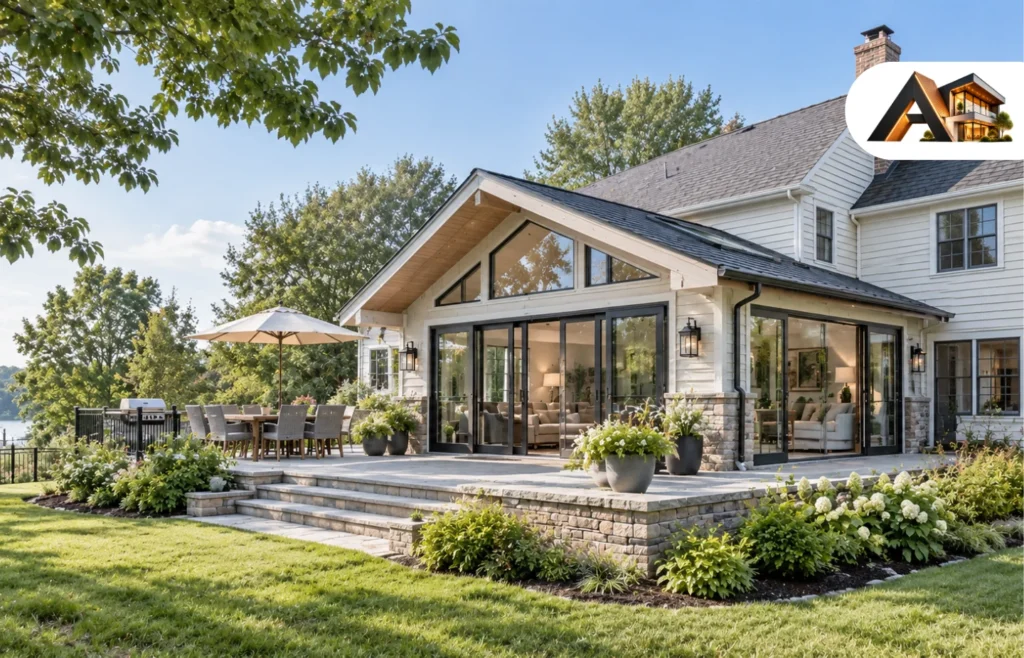

How much does it cost to paint a house exterior? Painting the outside of a house usually costs about $1,800 to $4,500 for a professional job, or roughly $1.50 to $4.00 per square foot of paintable surface. Published national cost guides put the average near $3,178, and a typical 2,000-square-foot home often lands between $3,000 and $10,000 once size, stories, siding, and prep are counted. Those are planning ranges, not quotes. Your real price comes from your own walls: how much surface there is to paint, what condition it is in, how tall the house is, and what your local painters charge.
The single most useful thing to understand before you call anyone is that painters price the paintable wall area, not your home’s floor area. A 2,000-square-foot house does not have 2,000 square feet of siding. Once you grasp that, the quotes start making sense — and the gap between a cheap bid and an expensive one usually turns out to be a gap in prep, coats, or included surfaces, not a gap in honesty.
The Short Answer: What Most Homes Cost?
The table below uses the most commonly published national ranges. They assume a standard professional repaint: washing, scraping loose paint, spot priming, and two finish coats on the body with one coat on the trim.
| Paintable Wall Area | Typical Professional Cost |
|---|---|
| 1,000 sq ft (small home) | $1,500 to $4,000 |
| 1,500 sq ft | $2,250 to $6,000 |
| 2,000 sq ft | $3,000 to $8,000 |
| 2,500 sq ft | $3,750 to $10,000 |
| 3,000 sq ft | $4,500 to $12,000 |
A home in sound condition with a similar colour going over the old one sits near the low end of its row. A home with peeling paint, bare wood, or a big colour change sits near the high end — or above it. Tall or complex homes can pass $12,000 without anything unusual going on; they simply have more wall, more height, and more slow detail work.
Tip: Treat any single national average as a starting point for your budget, never as a price. The only number that counts is a written quote for your house, measured on site.
Paintable Area Is Not Floor Area
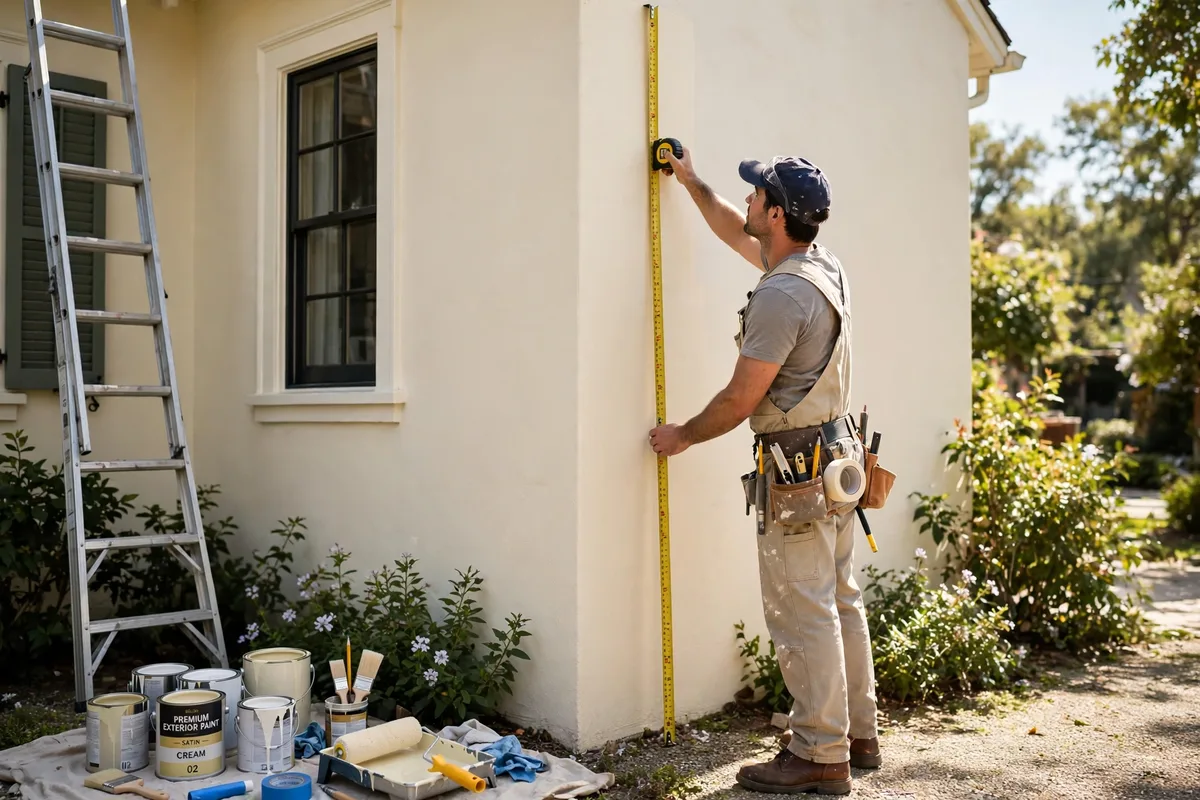
This is where most budgeting mistakes begin. Floor area measures the rooms inside. Paintable area measures the walls outside — and the two rarely match.
A rough way to estimate your own paintable area: walk the perimeter of the house and multiply it by the average wall height, then add the gable triangles (base times height, divided by two) and subtract the doors and windows. A common rule of thumb subtracts about 21 square feet per door and 12 square feet per window. Published guides estimate that a 2,000-square-foot home has roughly 1,700 square feet of paintable surface, but a tall two-story home of the same floor area can have 2,200 to 3,000 square feet of wall once the extra height is counted.
Trim, fascia, soffits, shutters, and doors are often priced separately, either by the linear foot or as their own line items. Ask every painter the same question before you compare numbers: does your square footage mean wall area or floor area, and is the trim included? Two quotes built on different answers cannot be compared at all.
What Goes Into The Bill?: Cost Breakdown
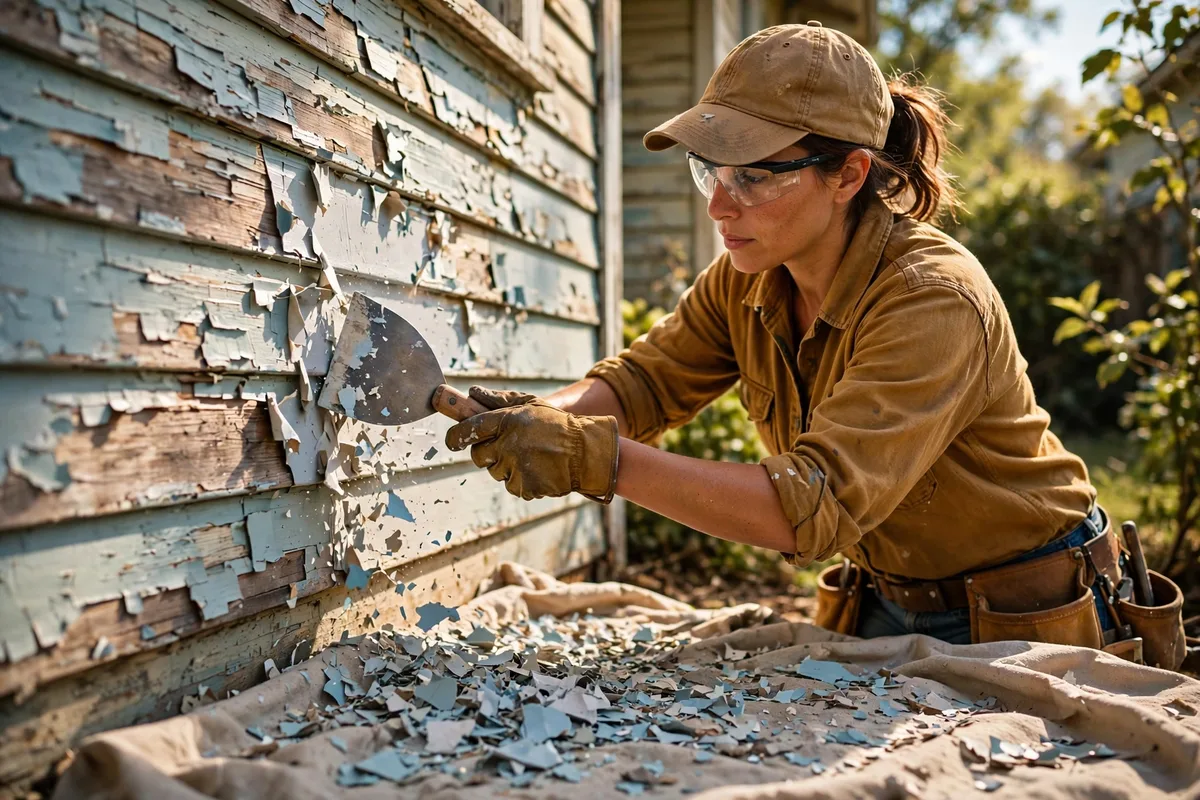
Labour is the big share of an exterior paint job — roughly 70 to 90 percent of the total, according to published guides. The paint itself is the smaller part, which is why buying a cheaper gallon rarely saves much and often costs more later in a shorter repaint cycle.
| Part Of The Job | Typical Share Or Range |
|---|---|
| Labour (prep, painting, cleanup) | About 70% to 90% of the total; roughly $1.00 to $3.50 per sq ft, or $25 to $100 per hour per painter |
| Exterior paint | Roughly $20 to $80 per gallon, depending on the product line |
| Primer | Roughly $15 to $80 per gallon where full priming is needed |
| Prep work (washing, scraping, sanding, caulking) | Roughly $0.50 to $2.50 per sq ft |
| Power washing (if billed separately) | Roughly $240 to $400 |
| Trim, priced by the linear foot | Roughly $1 to $3 per linear foot |
Prep deserves a closer look, because it is where budgets quietly double. Washing, scraping, sanding, caulking, and spot priming routinely take longer than rolling on the finish coats. On a house with sound paint, prep might be a wash and a day of touch-ups. On sun-beaten cedar with peeling paint, the same wall area can take three times the prep hours. That is the main reason two bids on the same house can differ by thousands.
What Moves The Price Up Or Down?
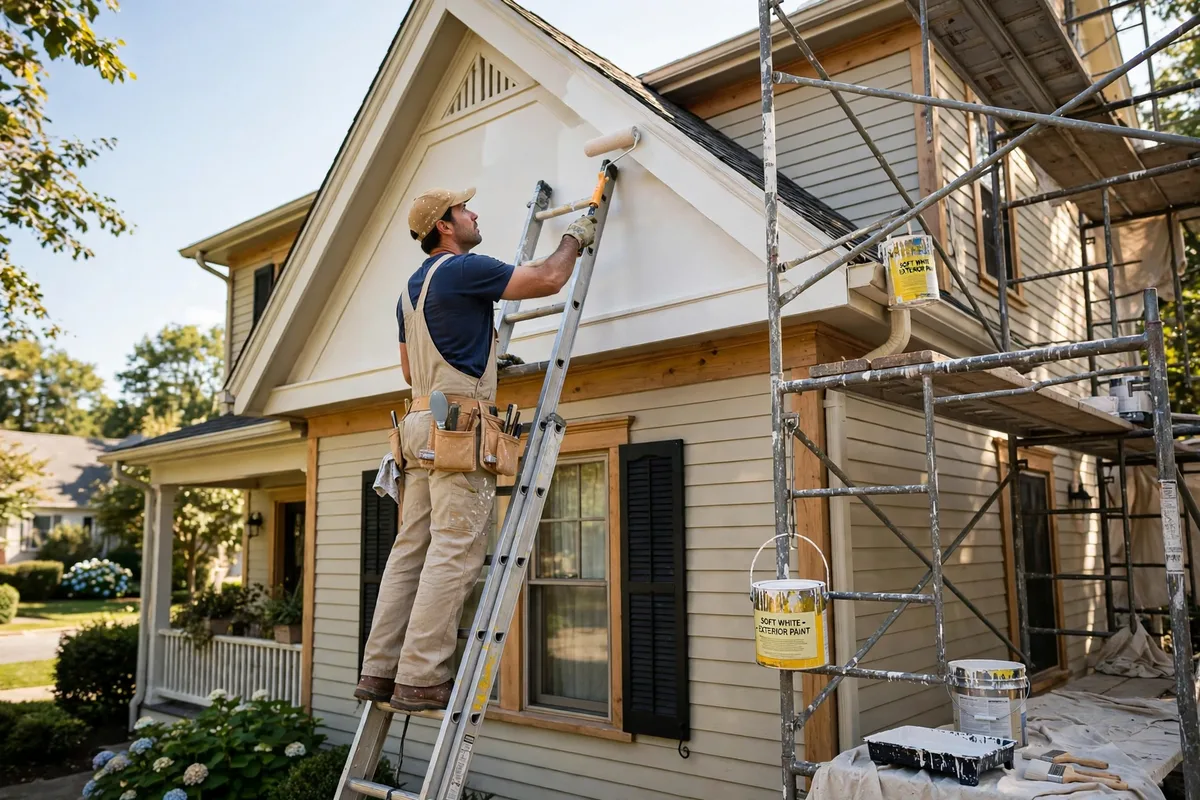
House size and paintable area. More wall means more paint, more time, and more setup. This is the baseline everything else adjusts.
Number of stories. A two-story home can cost up to 50 percent more than a one-story home of similar size, because crews spend more time moving ladders and scaffolding and working with fall protection. Three-story walls and tall gables push the price further still, and a lift rental may be added on the tallest elevations.
Siding material. Smooth vinyl and fiber cement go quickly. Porous stucco, brick, and rough-sawn wood drink more paint and need more hand work. Wood takes the most scraping, repair, and priming of all the common sidings.
Surface condition and prep. Chalking, peeling, flaking, and bare wood all add scraping, sanding, and priming. Rotten fascia, soft window sills, and split caulk joints need carpentry before paint can go on at all.
Paint quality and colour change. A premium exterior paint costs more per gallon but is built to hold colour and resist sun and rain longer. Going from dark brown to pale grey, covering bare wood, or hiding patched repairs can mean a full primer coat plus two finish coats instead of one.
Region and labour market. The same job can run 15 to 30 percent higher in an expensive coastal metro than in a lower-cost region. Published regional averages for a mid-size home run from roughly $2,300 in the Plains to about $4,800 in New England, so local quotes matter more than any national figure.
Trim and details. Trim, fascia, soffits, shutters, doors, and railings eat labour far out of proportion to their square footage. A front door alone is often priced at $125 to $500, and shutters at roughly $50 to $150 a pair. If your home has heavy trim, expect it to show up as its own line.
Cost By Siding Type
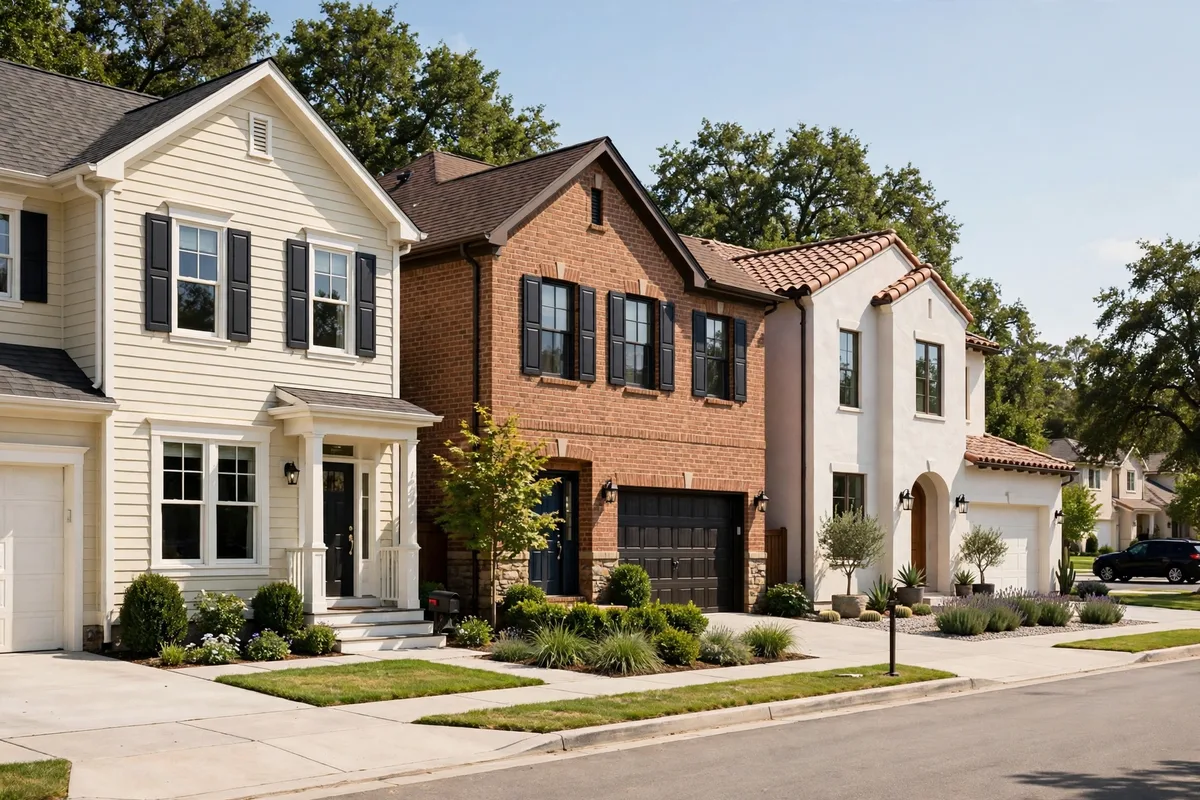
Siding sets both the prep and the paint appetite, so it is worth pricing by material rather than by house size alone.
| Siding Type | Typical Cost Per Sq Ft (Paintable) |
|---|---|
| Vinyl | $1.00 to $3.00 |
| Wood | $1.00 to $3.00, higher with heavy prep |
| Fiber cement | $1.20 to $3.20 |
| Aluminum or steel | $1.50 to $2.50 |
| Stucco | $1.50 to $4.00 |
| Brick | $1.50 to $4.50 |
Brick deserves a pause before you commit. It needs thorough cleaning and usually a masonry primer, because porous brick absorbs the first coat fast. It is also hard to reverse: once brick is painted, going back to bare brick is a major job. Put samples on the wall and live with them for a few days before deciding, and check whether painting voids any siding warranty — some manufacturers exclude painted vinyl, for example.
Tip: Stucco needs about 50 percent more paint than smooth siding, according to published guides. If a stucco quote looks low, check whether the painter allowed enough gallons for two full coats.
Costs That Often Get Left Out
A quote can look reasonable until the exclusions start showing up. Ask about each of these before you sign:
- Wood rot and siding replacement, often found mid-project once paint is scraped back and hidden damage appears. Published guides suggest adding a 10 to 15 percent cushion for problems found once work starts.
- Lead-safe work on pre-1978 homes. In the US, paid firms disturbing paint in pre-1978 housing generally need lead-safe certification, with set-up and containment adding time and cost. Test before scraping.
- Lift or scaffolding rental on tall elevations, sometimes billed separately.
- Detached structures — garages, porches, decks, sheds, and fences are often excluded. A detached garage alone commonly adds $1,500 to $3,000.
- Landscaping removal and restoration, plus protection for plants, walkways, and windows during spraying.
If a bid is far below the others, it has usually left one or more of these out rather than found a cheaper way to do the same work.
How To Read A Painting Quote?
Get at least three written estimates for the same scope, then compare them line by line — not by the bottom number alone. A fair quote spells out:
- Which elevations and surfaces are included — siding, trim, soffits, fascia, doors, shutters, gutters, porch
- The washing and cleaning method
- Scraping, sanding, caulking, and patching, and how much is allowed for
- Spot primer versus full primer, and where each applies
- Paint manufacturer, product line, sheen, and number of coats
- How many colours, and where each one goes
- Protection for plants, windows, and walkways, plus cleanup and paint-chip containment
- Who fixes rot, and at what price per board or per hour
- Start date, duration, warranty, and the change-order process
Red flags: one coat quoted with no primer on bare or weathered wood; no paint brand or product named; no mention of prep on a house with visible peeling; no lead-safe certification for a pre-1978 home. Any of those is a reason to ask questions, not a reason to accept a low price. For a fuller sense of how exterior projects stack up against other big home jobs, our guide to how much a new roof costs uses the same line-by-line way of reading a quote.
Ways To Bring The Cost Down
You do not have to cut prep to save money — cutting prep is what makes a paint job fail early. These moves lower the bill without weakening the finish:
- Get three comparable quotes. Same surfaces, same prep, same coats, same paint line. The spread between them tells you more than any single number.
- Do some prep yourself. Clearing around the house, washing the siding a few days ahead, and sanding loose paint (with lead-safe practices on older homes) can trim labour hours.
- Keep the colour change modest. A similar shade often needs one less coat than a dramatic dark-to-light change.
- Limit the palette. One body colour and one trim colour is faster than three or four.
- Paint in the off-season. Crews are often more flexible on price outside peak months, and a flexible schedule helps too.
- Fix small rot early. A soft sill fixed now is a small carpentry job; left alone, it becomes a painter’s hourly repair mid-project.
- Maintain the finish. A yearly wash and a caulk touch-up stretch the repaint cycle, which is the cheapest saving of all. If you are weighing other outdoor work at the same time, see how much a fence costs before bundling projects into one season.
For a second opinion on the national numbers behind this guide, Angi’s exterior house painting cost guide breaks the same ranges down by size, siding, and region.
DIY Or Hire A Pro?
Painting yourself removes most of the labour cost, which is most of the bill. Published guides put DIY materials and supplies at roughly $500 to $1,200 for a typical home, plus sprayer or ladder rental. The trade-off is time and risk: expect 40 to 80-plus hours on an average home, plus dry weather, plus safe access to every wall.
DIY makes sense when the house is single-story, the siding is in sound condition, the colour change is modest, and you already own or can borrow the basics. It is also a reasonable way to handle a trim-only refresh — a front door and a few shutters are a weekend job, and our front door decor ideas show how much a freshly painted door can change the entry.
Hire a pro when the house is two or three stories, the paint is peeling heavily, there is rot to repair, or the home was built before 1978 and may carry lead paint. Ladder and scaffolding work is where DIY savings turn into hospital visits, and lead-safe scraping is a job for a certified crew. A pro also brings the crew, the sprayer, and the pace to finish between weather windows — a solo painter on a tall house can lose a week to rain.
If you do paint inside as well, the skills overlap but the pricing does not: interior work is measured and prepped differently, and our guide to the best paint for kitchen cabinets covers the product choices that matter most indoors.
How Long Exterior Paint Lasts?
Most exterior paint jobs last about 5 to 10 years, depending on siding, sun exposure, climate, and how well the surface was prepared. Wood usually needs repainting sooner (roughly 3 to 7 years), stucco sits around 5 to 6 years, and painted brick can hold far longer when the masonry stays dry. South- and west-facing walls usually fail first, so check them every couple of years for fading, chalky residue on your hand, hairline cracking, and split caulk joints.
Repainting before the old coat fails badly is cheaper than waiting. Light prep on sound paint costs far less than scraping a house that has been left to peel, and a fresh coat also seals the siding against moisture in the meantime. If the colour itself is the question, our living room paint colors guide is about interiors, but the same rule applies outside: test large samples on the actual wall and look at them in morning and afternoon light before you commit.
Frequently Asked Questions
How Much Does It Cost To Paint A 2,000-Square-Foot House Exterior?
For a typical single-story home in reasonable condition, roughly $3,000 to $10,000, depending on prep, stories, and siding. Published guides list about $1,700 to $5,100 for vinyl siding and $1,700 to $6,800 for wood on a home of that size. A two-story home of the same floor area runs higher, roughly $6,900 to $12,700 in figures cited by This Old House, because of the extra wall area and access time.
How Much Do Painters Charge Per Square Foot For Exteriors?
Most published national guides put professional exterior painting at about $1.50 to $4.00 per square foot of paintable wall area, with wider ranges of $1.50 to $5.00 where prep is heavy or labour is expensive. Always confirm whether the rate is per square foot of wall or of floor area — the two give very different totals.
Is It Cheaper To Paint A House Yourself?
On direct cash cost, yes: you remove the labour, which is most of the bill. But DIY still needs paint, primer, tools, ladder or sprayer rental, and 40 to 80-plus hours of work. The savings narrow fast on tall, large, or weathered homes, and disappear entirely if prep mistakes shorten the life of the finish.
Does An Exterior Painting Quote Include Pressure Washing?
Sometimes. Some painters include washing in prep; others bill it separately at roughly $240 to $400. The same applies to scraping, caulking, and priming, so ask for each one to be named in writing before work begins.
How Often Should You Repaint A House Exterior?
Most homes need it every 5 to 10 years, with wood sooner and painted brick later. Inspect the paint every two years and repaint when you see widespread fading, chalking, cracking, or peeling — waiting until the coating fails badly means heavier prep and a higher bill next time.
A good exterior paint job is mostly preparation with a coat of paint on top. Measure your own walls, get three itemised quotes for the same scope, and judge them by the prep and the product — not by the lowest total. That is how a $3,000 job stays a $3,000 job, instead of becoming a $5,000 surprise halfway through.