
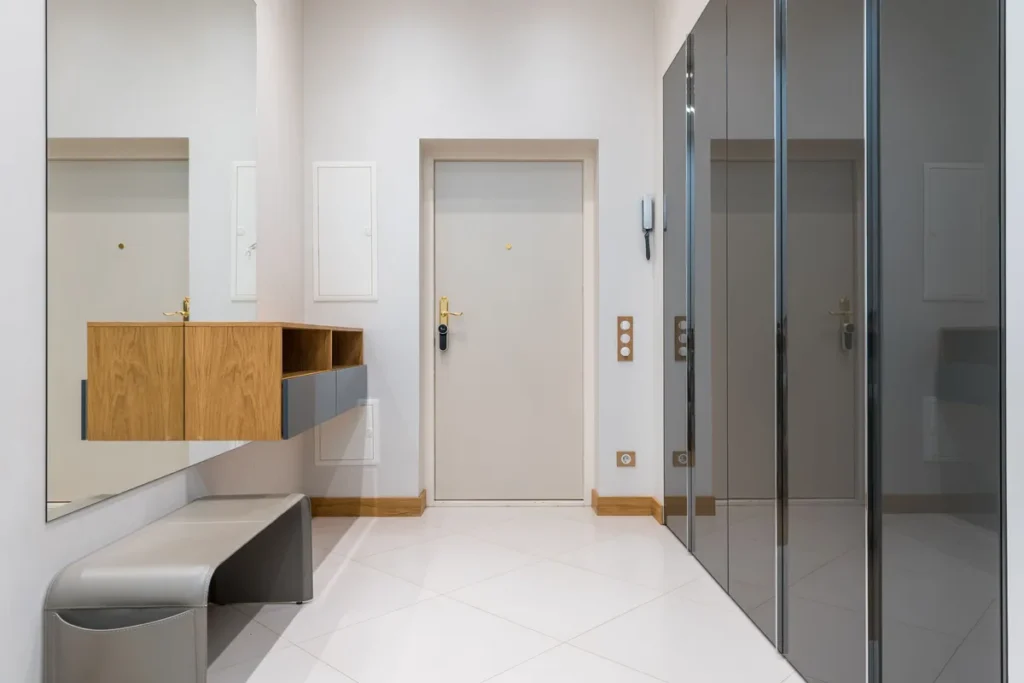
A mudroom earns its keep when shoes stop piling by the door. The trick is not buying more bins. It is giving every pair a home that matches how your household actually lives: the everyday sneakers within easy reach, the muddy boots contained where they cannot spread dirt, and the rarely worn pairs somewhere else entirely. Once each pair has a clear spot, the pile stops forming, because putting shoes away becomes faster than kicking them off into a heap.
This guide walks through the whole decision, from counting what you own to picking between open cubbies, closed drawers, lockers, and wall-mounted racks. It covers boots and wet weather, tight spaces, kids, and the weekly habits that keep the system working after the first tidy-up fades.
Start By Counting Shoes And Measuring Your Space
Before you buy anything, gather every pair that currently lives near the door and count them. Most mudroom mess comes from a simple mismatch: the storage holds fewer pairs than the household actually wears, so the overflow lands on the floor. Count by person, then sort into three groups: daily wear, seasonal or weather-specific pairs, and rarely worn shoes. Daily wear earns the prime spots at grabbing height. Seasonal pairs can sit higher or deeper. Rarely worn shoes do not belong in the mudroom at all; a bedroom closet or a hall cupboard suits them better, and moving them out frees surprising amounts of room.
Then measure. Note the width of the wall you have, the depth you can spare without blocking the walkway, and the height of your tallest boots. A storage unit that looks perfect in a photo fails fast if boots do not fit upright or if a deep bench forces everyone to squeeze past it. Check the door swing too, since a unit placed beside a door that opens inward can block access to half its cubbies. A few minutes with a tape measure prevents the most common mudroom regret: handsome storage that holds everything except the shoes you actually wear.
Open Or Closed Storage: Choose By How Tidy You Need It To Look
Open storage shows everything, which makes grabbing shoes quick and makes it obvious when a pair is missing. Cubbies, open shelves, and slatted racks all fall in this camp. The trade-off is honesty: open storage looks tidy only when every pair is actually in its slot. One lazy evening undoes the look, and dusty shoes stay visible.
Closed storage hides the mess behind doors, drawers, or lift-up bench lids. It suits households that prefer a calm entryway and do not mind opening a door to fetch shoes. The trade-off runs the other way: out of sight can mean out of mind, so pairs migrate back to the floor when the drawer feels like one step too many. Families with young kids often do better with open storage, since a cubby a child can see is a cubby a child will use. Adults who change shoes once a day and value a clean look often prefer closed storage.
Most mudrooms work best with a mix. Keep daily pairs open and visible, and hide the rest — out-of-season shoes, dress shoes, and spares — behind doors or in lidded baskets. That split gives you the speed of open storage where it matters and the calm look of closed storage everywhere else.
Bench Cubbies: The Everyday Workhorse
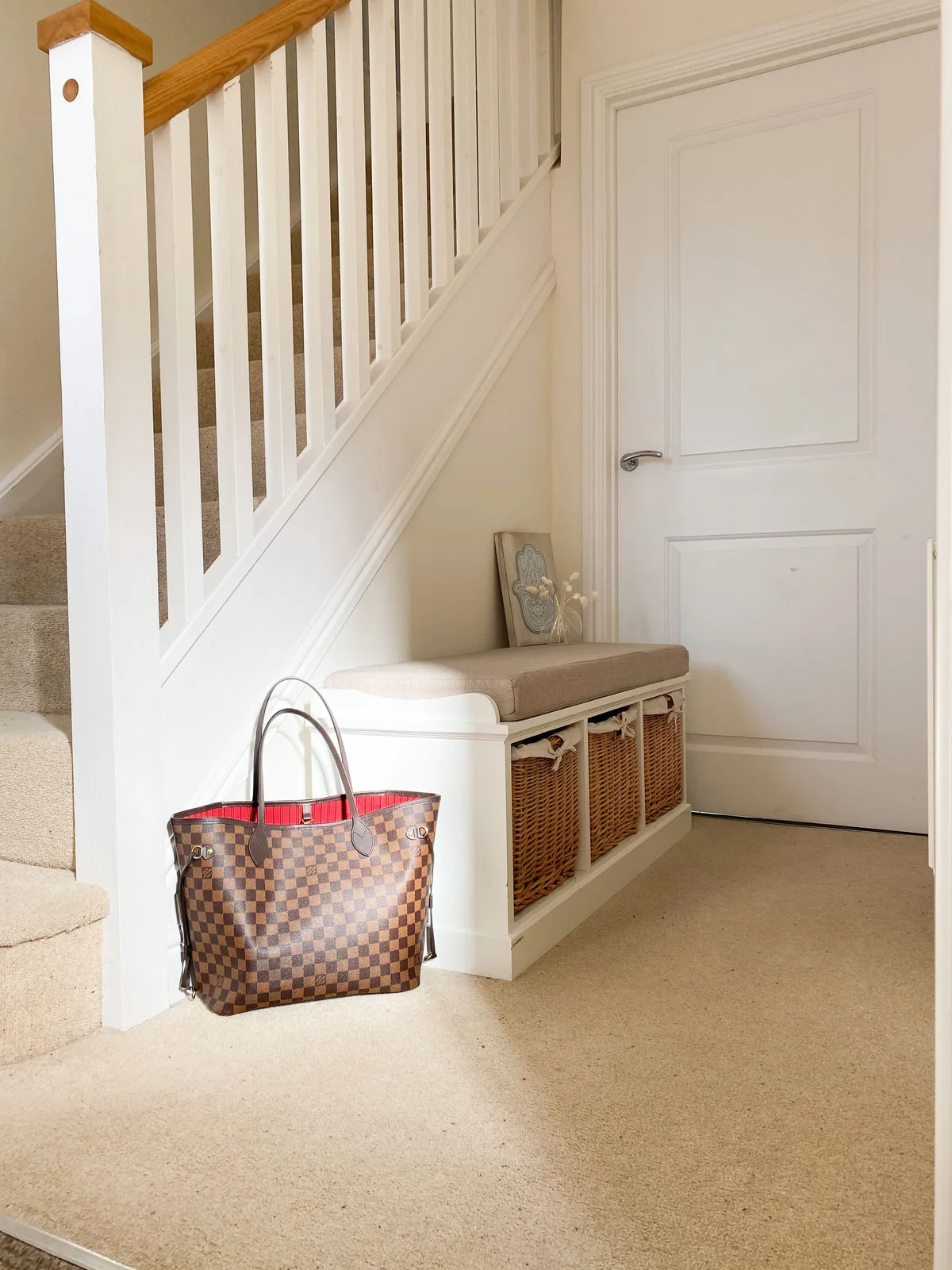
A bench with cubbies underneath is the classic mudroom setup for good reason. It solves two problems at once: somewhere to sit while changing shoes, and a slot for each pair right where you take them off. Shoes go in as you sit down and come out as you stand up, so the routine itself does the organizing. No extra trip across the room, no separate rack to remember.
Cubbies work best when each slot holds one pair. Two pairs per slot sounds efficient until the second pair gets buried and stops being worn. If your bench cubbies are wide, add a simple divider or a small basket inside each one to keep pairs separated. Leave one or two cubbies empty on purpose, for guests or for the pair that comes home muddy and needs to dry before it joins the rest.
Size matters here. A cubby that fits sneakers may swallow a tall boot sideways or not at all, so measure your bulkiest footwear before committing. If boots are a daily reality in your house, reserve the end cubby or a nearby tray for them rather than forcing them into a space built for flat shoes.
Locker-Style Built-Ins For Busy Families
When several people share one mudroom, assigned space ends arguments. Locker-style built-ins give each person a vertical bay: hooks above for a coat and bag, a bench seat in the middle, and shoe cubbies below. Everyone knows their column, and everyone can see at a glance whether their own zone is tidy. Kids especially respond to a space with their name on it, since ownership turns tidying into a habit rather than a chore.
Built-ins make sense when the household is settled and the mudroom layout is unlikely to change, because they are fitted to the wall and sized to the room. They also use height well, stacking coat storage, a shelf for hats and gloves, and shoe space into one tall unit instead of spreading pieces around the room. That vertical thinking is what keeps a busy family mudroom from sprawling across the whole entryway.
For a visual sense of how built-ins combine open cubbies with closed cabinets, This Old House’s guide to mudroom storage ideas shows both approaches in real homes.
Drawers And Tilt-Out Bins For A Calmer Look
Drawers suit mudrooms where the entryway is also a living space, like an open hallway that guests see on arrival. Shoes disappear behind a drawer front, and the room reads as furniture rather than storage. Deep drawers hold several pairs each, while shallow tilt-out bins suit narrow walls where a full drawer cannot open comfortably.
The trick with drawers is labeling the job of each one. One drawer per person works in smaller households; one drawer per shoe type — daily sneakers, work boots, kids’ shoes — works when people share. Without that rule, drawers become the same jumble as the floor, only hidden. Tilt-out bins deserve a special mention for boots and bulky shoes, since their angled opening makes tall footwear easier to pull out than a standard drawer does.
Ventilation is the one thing to watch. Closed drawers trap dampness, so wet shoes should dry in the open boot zone first and only move into a drawer once dry. Lining a drawer with a washable mat protects the wood from grit and makes the occasional clean-out quick: lift the mat, shake it outside, wipe the drawer, done.
Open Shelves And Baskets For Flexible Storage
Open shelves are the most forgiving option, and the easiest to adjust as a household changes. A row of sturdy shelves holds shoes in plain sight, and the spacing can suit sneakers on one shelf and taller boots on another if you leave one shelf taller than the rest. Slatted or wire shelves have a bonus: air moves through them, so shoes dry faster than they do on a solid shelf.
Baskets soften the look of open shelves and hide the pairs you do not need to see. A basket per person, or one basket per shoe type, keeps the shelf tidy even when the shoes inside are not perfectly arranged. Woven baskets suit a warm, natural mudroom; wire or metal bins suit a harder-working space and wipe clean more easily. The mistake to avoid is the giant catch-all basket, where pairs sink to the bottom and the ones you want are always underneath. Smaller baskets that hold a few pairs each stay usable, because you can see and reach everything inside.
Wall-Mounted And Over-The-Door Options For Tight Spaces
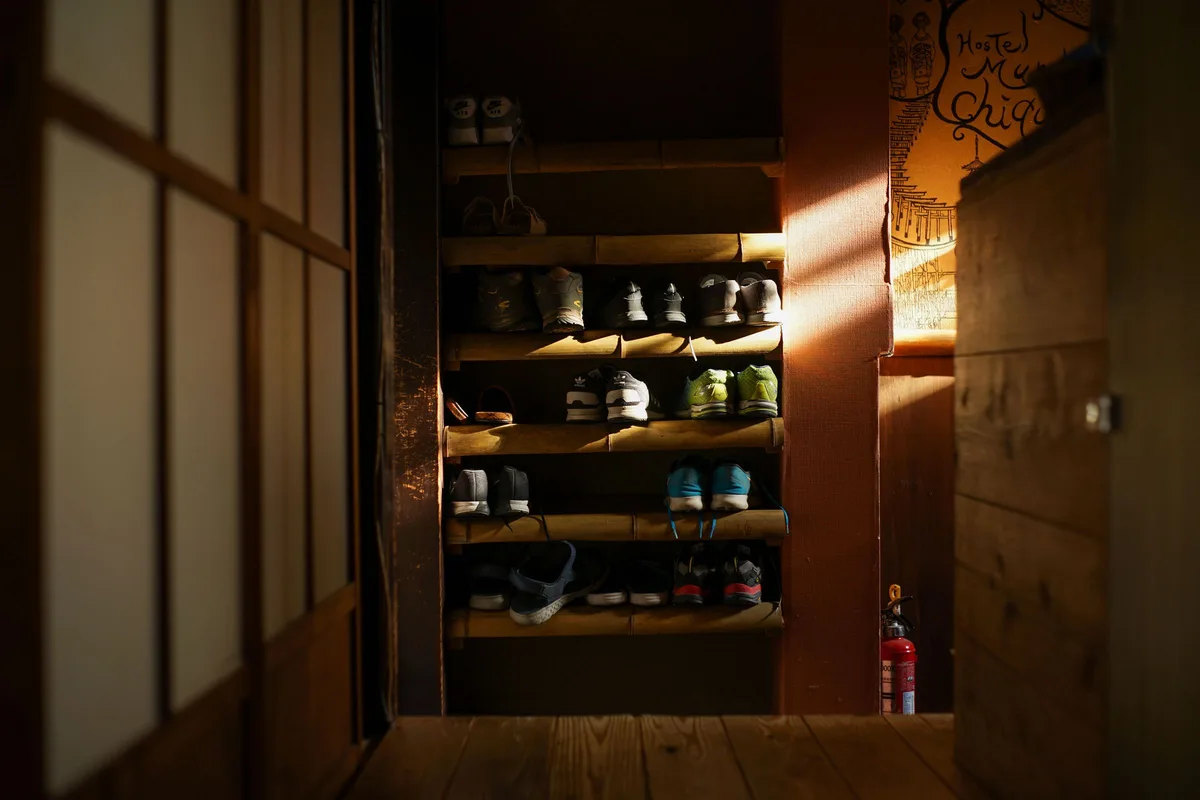
When floor space is gone, the walls are still free. Wall-mounted shoe racks hold pairs vertically or on slim angled shelves, using a strip of wall that would otherwise sit empty. They work particularly well beside the door, in the gap between a door frame and a corner, or above a low bench where a second row of shoes can live at hand height. Because the shoes sit off the floor, cleaning underneath becomes simple, and the room feels less crowded.
Over-the-door organizers are the lowest-commitment option of all. A rack that hooks over the mudroom or closet door adds a row of pockets or bars in seconds, with no tools and no holes. They suit flats and sneakers best; tall boots are too heavy and bulky for most door racks, so keep boots in the floor zone and let the door handle the lighter pairs. One caution: check that the door still closes and latches with the rack in place, and that shoes on the rack do not scrape the wall when the door swings.
Boots And Wet Weather Deserve Their Own Zone
Boots cause most mudroom failures, because they are tall, heavy, muddy, and wet, and they do not fit the storage built for flat shoes. Give them their own zone by the door: a boot tray with a raised edge, a slatted rack that lets water drain, or a waterproof mat under an open shelf. The point of the zone is containment. Mud and meltwater stay on the tray instead of spreading across the floor, and boots dry in the open air rather than stewing inside a closed drawer.
In rainy or snowy climates, add a second tray habit: one tray for boots in use, and space beside it for the pair that just came in soaking. Wet boots need airflow to dry, so avoid stacking them or cramming them into a closed cupboard while damp. A quick wipe of the tray once a week keeps grit from building up and scratching the floor beneath.
Small And Narrow Mudrooms: Make Every Inch Count
A small mudroom does not need less storage; it needs smarter storage. Start with the door wall and the wall beside it, since those are the spots people pass naturally. A slim bench with shoe slots underneath, a row of wall hooks above, and one tall narrow shelf can serve a whole household in a space barely wider than the door itself.
Vertical thinking is everything here. Shoes stacked on two or three levels use the same footprint as shoes on one level, and a tall unit with a small footprint beats a wide unit that eats the walkway. Keep the walkway clear as a hard rule: if you have to sidestep the shoe storage to get through, the storage is too deep, no matter how much it holds. Slim profiles, angled shelves, and wall-mounted racks all help, because they store shoes without pushing into the path.
Kids And Shared Households
Kids’ shoes are small, numerous, and constantly outgrown, which makes them the hardest to store. Low cubbies or baskets at a child’s own height work far better than high shelves they cannot reach, because a child who can reach their slot will use it. One basket per child, or one cubby column per child, keeps pairs from mixing, and a quick sort every few months clears out outgrown sizes before they clog the system.
Shared households, whether roommates or extended family, run on the same principle as families: assigned space beats shared space. When everyone has a defined zone, nobody’s shoes end up in a communal pile, and nobody has to negotiate the floor every morning. Labeling helps here, not as decoration but as a boundary: a name tag on a cubby or basket settles ownership at a glance.
Materials That Survive Mud, Water, And Daily Use
Mudroom shoe storage lives a harder life than bedroom storage, so materials matter. Solid wood looks warm and lasts, but it needs a wipeable finish where wet shoes sit, or dampness will mark it over time. Painted wood or laminate wipes clean easily and suits the boot zone well. Metal racks resist water and hold heavy boots without sagging, though they can feel cold in a cozy entryway; pairing a metal rack with a wooden bench balances durability and warmth.
Wicker and fabric baskets look lovely but struggle with wet shoes, since dampness soaks in and can leave a stale smell. Reserve fabric baskets for dry, everyday pairs, and use plastic, rubber, or metal trays and bins for anything muddy or wet. Whatever the material, a washable liner or mat inside cubbies and drawers is cheap insurance: grit collects on the liner, not on the wood, and cleaning becomes a shake-out rather than a scrub.
Keep The System Working Week After Week
A mudroom system fails slowly, not all at once. One pair left out becomes three, then the floor is a pile again. A short weekly routine stops that slide, and it takes only a few minutes:
- Return stray pairs to their slots and empty the boot tray of grit and water.
- Move any pair that has not been worn in a fortnight to its off-season home.
- Wipe the bench and shelves, and shake out basket liners.
- Check kids’ cubbies for outgrown pairs and single shoes missing their match.
Seasonal resets, four times a year or whenever the weather turns, do the heavier work: swap winter boots for lighter pairs, clear out damaged shoes, and reassign cubbies as kids grow or routines change. The system survives because it is allowed to change, not because it was perfect on day one. The same one-home-per-item thinking that keeps a mudroom calm works across the house — see our guide to bathroom towel storage ideas for how splitting towels by use keeps a small bathroom tidy in the same way.
Mistakes That Undo Good Mudroom Shoe Storage
The most common mistake is buying storage before counting shoes, which leaves the system too small from the start and guarantees overflow. The second is one giant bin for everything, which hides shoes so well that nobody can find the pair they want, so pairs drift back to the floor. The third is forgetting boots: a system designed around sneakers will fail the first rainy week, when tall wet boots have nowhere to go.
Finally, resist filling every slot on day one. A little empty space is not waste; it is room for guests, for a new pair, and for the muddy boots that need to dry before they join the rest. A system with breathing room stays usable, while a system packed to the brim tips back into a pile at the first busy week.
Frequently Asked Questions
How Many Pairs Should Live In The Mudroom?
Keep only what your household wears between laundry or cleaning days, plus one weather pair per person. For most homes, that means one or two daily pairs per person, one pair of boots in wet seasons, and nothing else.
How Do You Store Tall Boots?
Stand tall boots upright in a dedicated zone, either on a boot tray, on a slatted rack, or hung upside down from sturdy pegs. Keep them out of closed drawers while damp, since trapped moisture slows drying and can leave a stale smell. If boots flop over, a boot shaper or a simple rolled insert inside the shaft holds them upright without damaging the material.
Are Open Cubbies Or Closed Drawers Better?
Open cubbies suit households that grab shoes quickly and need to see every pair, especially families with kids. Closed drawers suit entryways where a calm, furniture-like look matters and shoes are fetched once a day. A mix usually wins: daily pairs open at grabbing height, the rest closed away. The right answer depends on your household’s habits, not on which option photographs better.
How Do You Stop Mudroom Shoes From Smelling?
Airflow is the main fix: store shoes where air reaches them, let wet pairs dry fully before they go into closed storage, and rotate pairs so no single pair is worn every day without rest. Washable liners and trays help, since grit and dampness collect on them instead of on wood.
Conclusion
Good mudroom shoe storage is less about finding a clever product and more about matching storage to the shoes your household actually wears. Count the pairs, measure the space, give boots their own wet-weather zone, and choose open storage where speed matters and closed storage where calm matters. Build in a little empty space, keep the weekly routine short, and let the system change with the seasons. Do that, and shoes stop being the first mess you see when you walk in — and start being the easiest thing in the house to put away.