
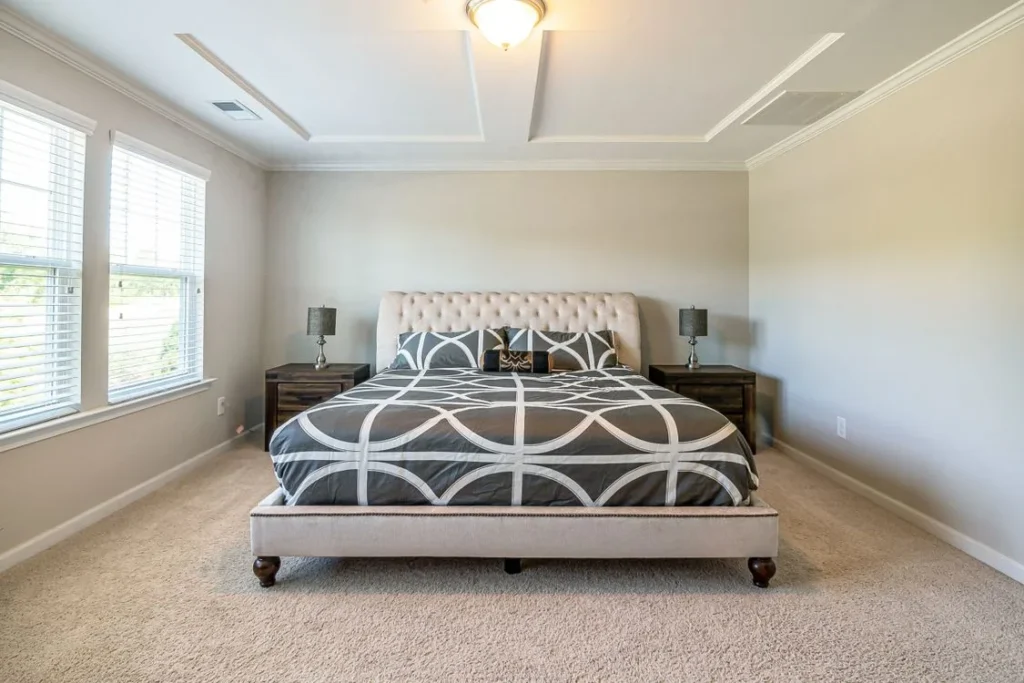
You spend more time looking at a bedroom ceiling than at any other ceiling in the house. It is the last thing you see at night and the first thing you notice in the morning, yet most bedrooms get a flat white ceiling by default, as if nothing interesting could happen overhead. A thoughtful ceiling treatment changes that. It can make a low room feel taller, a plain room feel finished, and a large room feel warm instead of empty, all without moving a single wall.
The trick is matching the idea to the room you actually have. A coffered ceiling needs height to breathe. A dark painted ceiling needs light to balance it. A beam ceiling needs a room that can carry its weight visually. Pick the treatment for your ceiling height, your budget, and the way you use the room, and the ceiling stops being blank space and starts working for the room.
Start With Height, Not With Style
Every bedroom ceiling idea should pass the same first test: how high is the ceiling, and how much of that height can you afford to give up? A standard eight-foot ceiling can carry paint, wallpaper, a ceiling medallion, slim beams, or a shallow tray made with trim, because none of those eat much headroom. A nine-foot or taller ceiling can carry deeper coffers, chunky beams, or a full tray with layered trim, because the room still feels open underneath.
Stand in the room and look up with fresh eyes. Note where the light falls, where the bed sits, and whether the ceiling has slopes, a fan, or a light fixture that will fight with a new treatment. A beam layout that crosses a ceiling fan looks wrong, and a tray that is centred on the room rather than on the bed can feel off-balance in a bedroom, where the bed is the natural focal point. Measure twice, and sketch the layout on paper before buying a single board.
Paint Is The Fastest Ceiling Change
Paint is the cheapest and fastest way to change a bedroom ceiling, and it is often underestimated because it looks too simple to matter. A ceiling painted one or two shades lighter than the walls, in the same colour family, softens the line where wall meets ceiling and makes the room feel taller. A ceiling painted in a soft, warm white instead of stark builder white warms a cold room without any construction at all.
A bolder move is painting the ceiling a deeper colour than the walls, which can make a large bedroom feel cosier and more enclosed, like a tent at night. That works best in rooms with good natural light and light-coloured bedding and furniture to balance the darker overhead plane. In a small, dark bedroom, the same move can feel heavy, so test a large painted sample and live with it for a few days before committing to the whole ceiling. A painted ceiling also pairs well with crown molding, which gives the colour change a clean, finished edge instead of a hard paint line.
Tray Ceilings For Quiet Drama
A tray ceiling is a recessed central panel, usually framed by a step of trim around the edge, that draws the eye upward without shouting. In a bedroom it works because the recess sits over the bed, creating a sense of a canopy without fabric or posts. A single-step tray suits most rooms. A double-step tray, with two levels of trim, suits taller rooms and more formal bedrooms.
The detail that makes a tray ceiling feel finished is the lighting inside it. A hidden strip of warm LED lighting tucked into the tray’s edge washes the recess with a soft glow at night, turning the ceiling into the room’s night light. Keep the light warm and dimmable, so the bedroom can go from bright in the morning to calm at night with the same treatment. Avoid cool, harsh lighting in a tray, which can make the recess look like an office ceiling rather than a bedroom feature.
Coffered Ceilings For Structure And Rhythm
A coffered ceiling is a grid of recessed panels framed by beams, and it gives a bedroom a sense of order and craftsmanship that paint alone cannot. The grid should follow the room’s proportions: square coffers suit square rooms, while rectangular coffers suit long rooms, and the grid should be centred on a feature such as the bed or a chandelier rather than on the room’s exact centre if the two disagree.
Coffers need height, because each beam drops below the ceiling plane. In a room under nine feet, a shallow coffer made with slim trim can still work, but deep, chunky coffers will press down on the room and make it feel smaller. Material choice changes the cost and the look: painted wood or medium-density fibreboard gives a crisp, traditional finish, while stained wood gives warmth and suits rustic or craftsman bedrooms. For a practical look at how a low-profile coffer grid is built, see This Old House’s coffered ceiling guide, which walks through layout, beams, and molding in plain steps.
Beams, Planks, And Natural Texture
Wood beams are the most forgiving ceiling idea, because they suit so many styles. Dark stained beams warm a white bedroom and suit farmhouse and rustic rooms. Whitewashed or painted beams keep the same rhythm while staying light, which suits coastal and Scandinavian bedrooms. Faux beams made from lightweight materials give the same look without the weight of solid timber, which matters in rooms where the ceiling structure cannot carry heavy beams, though any beam work should be fixed securely and checked against the ceiling structure before installation.
Plank ceilings offer a softer version of the same idea. Wide planks running across the ceiling add texture and direction, and they can make a long room feel wider or a wide room feel longer depending on which way the planks run. Tongue-and-groove planks painted white keep the room bright, while natural wood planks add warmth but need good lighting to avoid darkening the room. In a bedroom with a sloped or vaulted ceiling, planks can also soften an awkward angle and make the slope feel intentional rather than accidental.
Wallpaper And Pattern Overhead
Ceiling wallpaper is back in a serious way, and a bedroom is the best room to try it, because the ceiling is viewed from the bed at a comfortable distance. A subtle pattern, such as a soft stripe, a small geometric print, or a grasscloth texture, adds interest without demanding attention. A bold pattern can work as a feature ceiling, but it should be balanced by plain walls and simple bedding, or the room will feel busy from every angle.
The practical points matter as much as the pattern. Ceiling wallpaper needs a smooth, well-prepared surface, or every bump will show. It also needs a pattern that can be matched across the ceiling without obvious seams, so choose a small repeat or a texture that hides joins. If you are unsure, try wallpaper on a tray ceiling recess only, where the framed panel contains the pattern and the surrounding ceiling stays plain.
Lighting That Makes The Ceiling Work Harder
A ceiling treatment without good lighting is only half finished. Layer the light the way you layer the room: a central fixture or chandelier for general light, wall lights or bedside lamps for reading, and cove or strip lighting inside a tray or behind beams for evening glow. A statement fixture, such as a rattan pendant or a simple chandelier, also gives the ceiling a centre point, which matters in rooms where the ceiling treatment itself is plain.
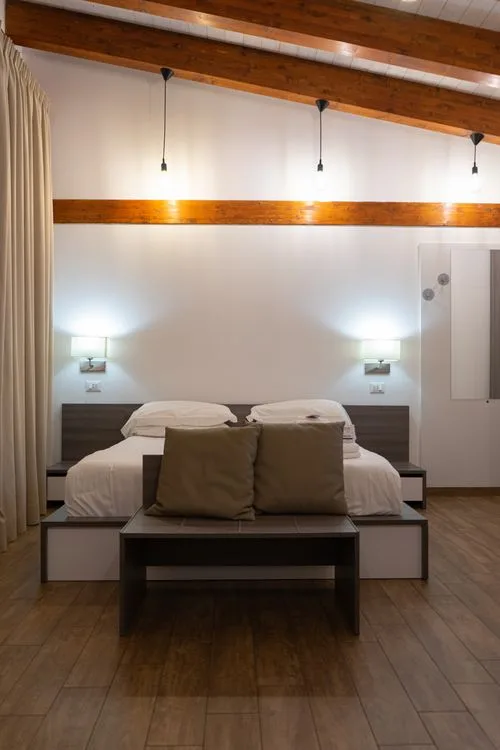
Keep the colour temperature consistent. Mixing warm bedside lamps with cool ceiling lights makes the room feel unsettled, even if nobody can say why. Warm white light suits most bedrooms, and dimmers let one room serve both a bright morning routine and a calm evening wind-down. If the ceiling has beams or coffers, check that the fixture hangs low enough to be seen but high enough to clear doors and tall furniture, and that its light reaches the corners rather than pooling only in the centre.
Choosing By Room Size And Budget
- Small bedrooms: paint, a medallion, slim trim, or a shallow tray, plus warm cove lighting.
- Standard bedrooms: a single-step tray, painted beams, or a plank ceiling, balanced with light walls.
- Large bedrooms: coffers, chunky beams, or a double-step tray, with a statement fixture to anchor the space.
- Low ceilings: keep treatments shallow, colours light, and lighting warm and indirect.
- Tight budgets: paint first, then trim and a medallion, then beams, in that order of cost.
Frequently Asked Questions
Can I Add A Tray Ceiling To An Eight Foot Bedroom?
Yes, if the tray is shallow and built with trim rather than a deep dropped soffit. A slim tray with cove lighting adds shape without stealing headroom, while a deep tray in a low room will feel cramped.
Are Dark Bedroom Ceilings A Good Idea?
They can be, in a large room with good light and light furniture. In a small or dark room, a dark ceiling usually makes the room feel smaller, so test a large sample first and keep the walls and bedding light.
Do Ceiling Beams Need Structural Support?
Real timber beams are heavy and must be fixed to the ceiling structure, not just to plasterboard. Lightweight faux beams are easier to install, but they still need secure fixings. If you are unsure, ask a carpenter to check the ceiling before you start.
The Bottom Line On Bedroom Ceilings
The best bedroom ceiling idea is the one that fits your room’s height, light, and budget, and that you will still like when you wake up under it every morning. Start with paint if you want a quick change, add a tray or beams if you want structure, and finish with lighting that lets the ceiling glow at night. For more room-by-room ideas, see Archly Home’s cozy living room ideas and Archly Home’s interior decorating ideas.