A small backyard can feel like a gift or a puzzle, and the difference is rarely the size. It is whether the yard has a clear job, a place to sit, and enough planting to feel like a garden rather than a leftover strip of grass. Tiny yards fail when they try to do everything at once: a lawn, a patio, a play area, a vegetable patch, and a fire pit, all squeezed into a space that can honestly hold two of them well.
The yards that feel generous do the opposite. They choose one main use, give it a proper home, and let everything else support it. A small dining patio with a green edge feels larger than a yard full of half-sized features. A single comfortable chair in a planted corner feels more inviting than a full furniture set crammed against a fence. Start with how you will actually use the yard, and let the design follow that answer.
Divide The Yard Into Rooms, Not Features
The most useful trick for a small yard is to think in rooms rather than in objects. Instead of listing features, divide the space into two or three zones: a place to sit, a place to plant, and a path that connects them. A low hedge, a change of paving, a trellis, or even a row of tall pots can mark the edge of a zone without building a wall, and the eye reads each zone as its own place, which makes the whole yard feel larger.
Keep the zones honest about their size. A dining zone needs enough room for a table, chairs pulled out, and a comfortable walk around them. A lounging zone needs room for a chair and a small table, not a full sofa set. A planting zone can be as narrow as a raised bed along a fence, as long as it is deep enough for real plants rather than a single row of pots. When a zone is too small for its job, it will sit unused, and an unused zone makes the whole yard feel smaller.
Choose One Main Surface And Keep It Calm
Small yards look bigger when their ground surfaces are simple. One main paving material for the patio, one planting material for the beds, and a lawn or gravel area that is clearly secondary will calm the eye. Mixing three kinds of stone, two kinds of decking, and a patch of artificial grass in one small space chops the yard into fragments, and fragments read as clutter.
Scale matters as much as material. Large paving slabs with fewer joints make a small patio feel wider, because the eye travels across it without stopping. Small, busy paving patterns do the opposite, drawing attention to every joint. The same rule applies to planting: a few large plants in generous pots look more settled than twenty tiny pots scattered across the patio, and they are easier to water and maintain as well.
Go Up Before You Go Out
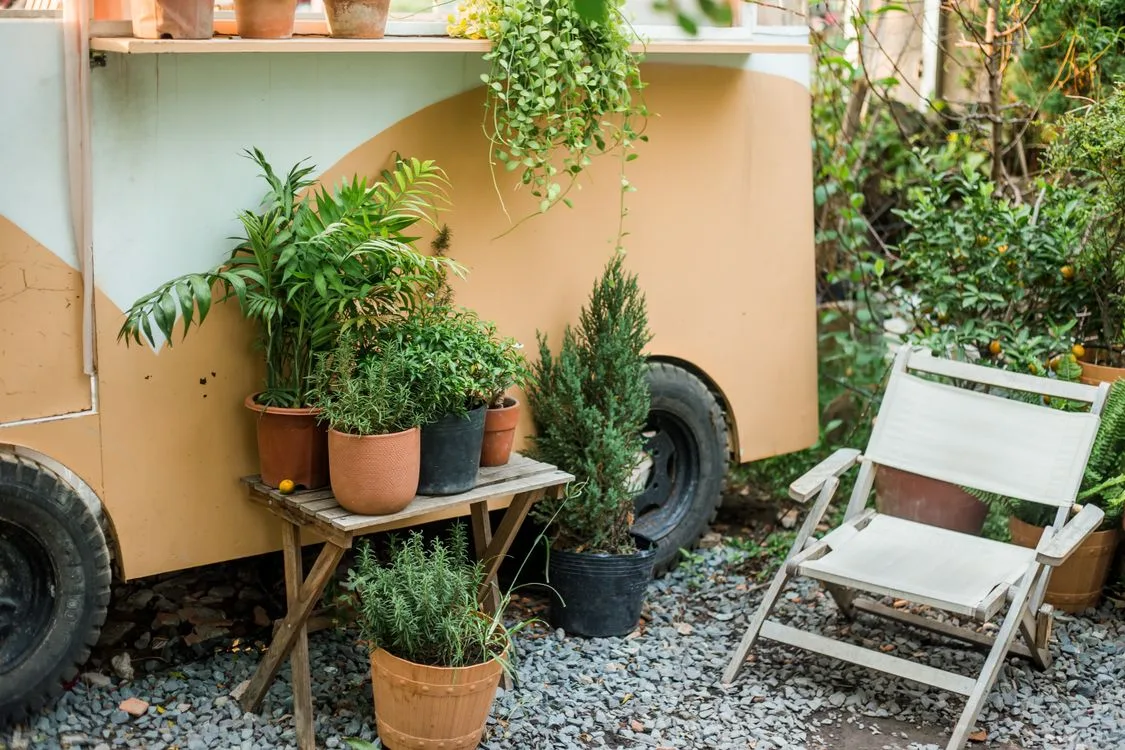
When ground space is short, the walls and fences are the extra garden. Climbing plants on a trellis, a vertical planter on a sunny wall, and hanging baskets at different heights add green without taking a single square foot of patio. Choose climbers that suit your fence and your climate, and give them proper support from the start, because a climber that outgrows a flimsy trellis becomes a maintenance problem rather than a feature.
Vertical planting also solves privacy, which is often the real problem in a small yard. A trellis with a fast-growing climber, a row of tall grasses in planters, or a slatted screen with planting in front of it can block a neighbour’s view without building a solid wall that shades the whole yard. Layer the screen: a fence, then a climber, then a few pots in front, and the boundary feels like a garden edge rather than a barrier.
Furniture That Fits The Yard You Have
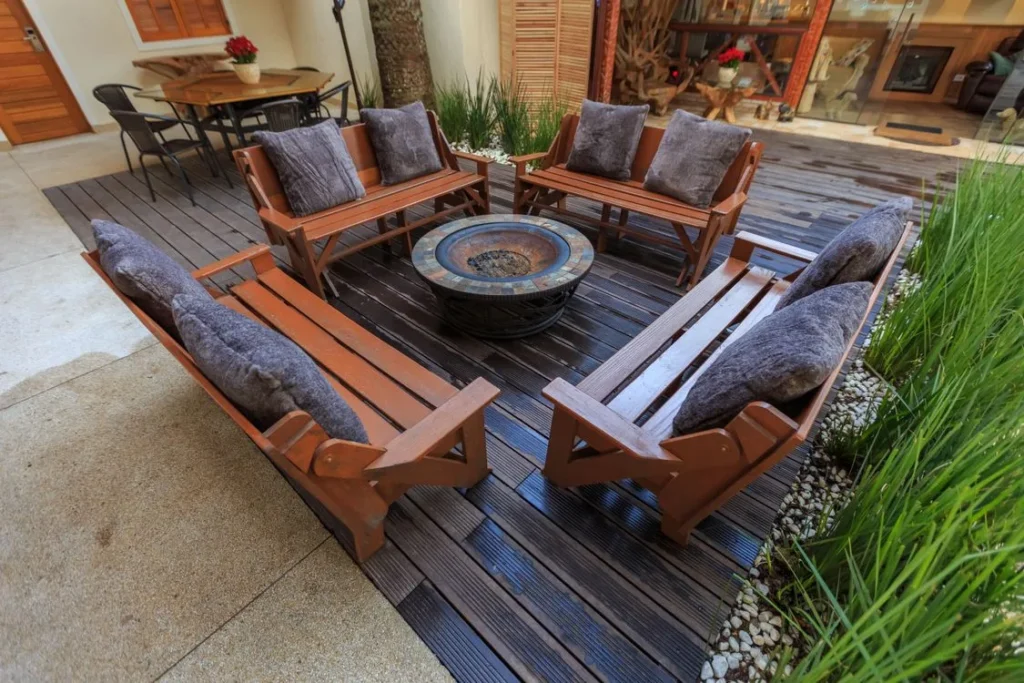
Small-yard furniture should be chosen by measurement, not by catalogue picture. Measure the patio, subtract walking space, and then choose furniture that leaves room to move. A bistro set for two, a bench that doubles as storage, or a folding table that can be put away when the yard is used for play will serve a small yard better than a large dining set that can never be moved.
Look for furniture that does more than one job. A storage bench holds cushions and garden tools. A planter with a built-in seat gives planting and seating in the same footprint. A lightweight chair can be moved into the sun in winter and into the shade in summer, which matters in a small yard where the sunny spot changes through the day. Avoid heavy, fixed furniture that locks the yard into one layout, because small yards need to change with the seasons and with the people using them.
Plant For Layers, Not For Numbers
A small yard planted with one layer of shrubs at fence height looks flat and dull. A yard planted in layers, with ground cover at the front, medium shrubs in the middle, and a small tree or tall climber at the back, looks deep and generous even in a narrow bed. Choose plants that earn their place across more than one season: spring flowers, summer foliage, autumn colour, or winter structure, so the bed never looks empty.
Keep the plant list short and repeat it. Three or four plant types repeated through the yard look intentional and calm, while twenty different plants in a small bed look like a nursery bench. Leave room for plants to grow to their mature size, and resist the urge to fill every gap in the first year. A small yard that is slightly under-planted in year one will look settled in year three, while a yard planted wall to wall on day one will need constant cutting back.
Light, Colour, And The Evening Yard
A small yard that is only used in daylight is only half used. A few well-placed lights, such as a string of warm lights along a fence, a small uplight on a tree, or a lantern on a table, extend the yard into the evening and make it feel like an outdoor room rather than a daytime space. Keep the light warm and low, and light the plants and the seating area rather than flooding the whole yard, which can feel harsh in a small space.
Colour should follow the same restraint as planting. One accent colour repeated in cushions, pots, and a single flowering plant ties the yard together. Too many bright colours competing in a small space make it feel busy, while a calm base of green, stone, and wood with one warm accent feels generous and restful. For more ideas on shaping a small outdoor space, see This Old House’s guide to making a big impact in a small yard, which shows how distinct outdoor rooms can transform even a compact plot.
A Small Yard Checklist
- Pick one main use for the yard and give it the best spot.
- Divide the space into two or three zones with planting, paving, or a trellis.
- Use one main paving material and large slabs to keep the ground calm.
- Plant walls and fences before adding more ground-level features.
- Measure furniture against the patio, leaving real walking space.
- Plant in layers with a short, repeated plant list.
- Add warm, low evening light to the seating area and the plants.
Frequently Asked Questions
Should A Small Backyard Have A Lawn?
Only if you will actually use it. A small lawn that is rarely walked on costs mowing and watering for little return. A patio with planting often serves a small yard better, and a narrow strip of lawn can still work as a green path between zones.
How Do I Make A Narrow Backyard Feel Wider?
Run the design across the yard rather than along it. A path that zigzags, planting beds on both sides, and a focal point placed off-centre all break up the tunnel feeling, while a straight path down the middle with identical beds on each side can make a narrow yard feel even narrower.
What Is The Cheapest Way To Improve A Small Backyard?
Tidy the edges, define one seating area with a rug or a few large pots, and add a climber to the dullest fence. Those three moves cost little, take a weekend, and change how the whole yard feels before any larger work begins.
The Bottom Line On Small Backyards
A small backyard does not need more features. It needs clearer choices: one main use, two or three zones, planting that goes up as well as out, and furniture that fits the space it sits in. Make those choices, and a tiny yard stops feeling like a compromise and starts feeling like a garden. For related outdoor ideas, see Archly Home’s backyard lighting ideas and Archly Home’s porch ideas.