
Neither quartz nor granite wins outright, and that is the honest answer. Quartz wins on maintenance and stain resistance: it never needs sealing, and wine, coffee and oil wipe off a non-porous surface. Granite wins on heat and natural character: you can set a hot pan down without worry, every slab is one of a kind, and entry-level granite usually costs less. At mid-range, the two cost about the same installed, so the decision comes down to how you cook, how much upkeep you accept, and the look you want to live with for the next twenty years.
Pick quartz if you want a low-maintenance surface with a consistent look and you will use trivets. Pick granite if you cook with serious heat, love natural stone, or want the lowest entry price in the premium range. If your kitchen gets strong direct sun or you are planning an outdoor counter, granite is the safer pick. The rest of this guide puts numbers and real habits behind that short answer, so you can decide once and move on.
Quartz Vs Granite Countertops At A Glance
| Factor | Granite | Quartz |
|---|---|---|
| What it is | Natural stone, quarried and cut into slabs | Engineered: about 90% crushed quartz bound with resin |
| Installed cost (2026 U.S.) | $40–$100 per sq ft common; exotics $100–$200+ | $50–$120 per sq ft; premium to $150 |
| Heat | Tolerates hot pans; trivets still a good habit | Resin can scorch or discolor from about 300°F |
| Stains | Resists when sealed; light stones absorb oil sooner | Non-porous; resists most stains without sealing |
| Sealing | Every 1–2 years | Never |
| Scratches | Hard (Mohs 6–7); feldspar is the softest part | Hard (Mohs ~7); resin can mark under force |
| Chips and cracks | Chips at edges; natural fissures can open at thin sections | Slightly more impact-tolerant; no natural fissures |
| Sun and outdoors | UV-stable; one of the best outdoor stones | Resin yellows or fades; most warranties exclude outdoor use |
| Look | Unique; no two slabs match | Consistent; solids, speckles and marble-look veins |
| Daily care | Soap and water; pH-neutral cleaner to protect the sealer | Soap and water; avoid harsh solvents and high heat |
What Quartz And Granite Actually Are?
Everything else about this comparison follows from one fact: granite is rock, quartz is manufactured. Know that, and the heat, sealing and looks differences all make sense.
What Quartz Is?
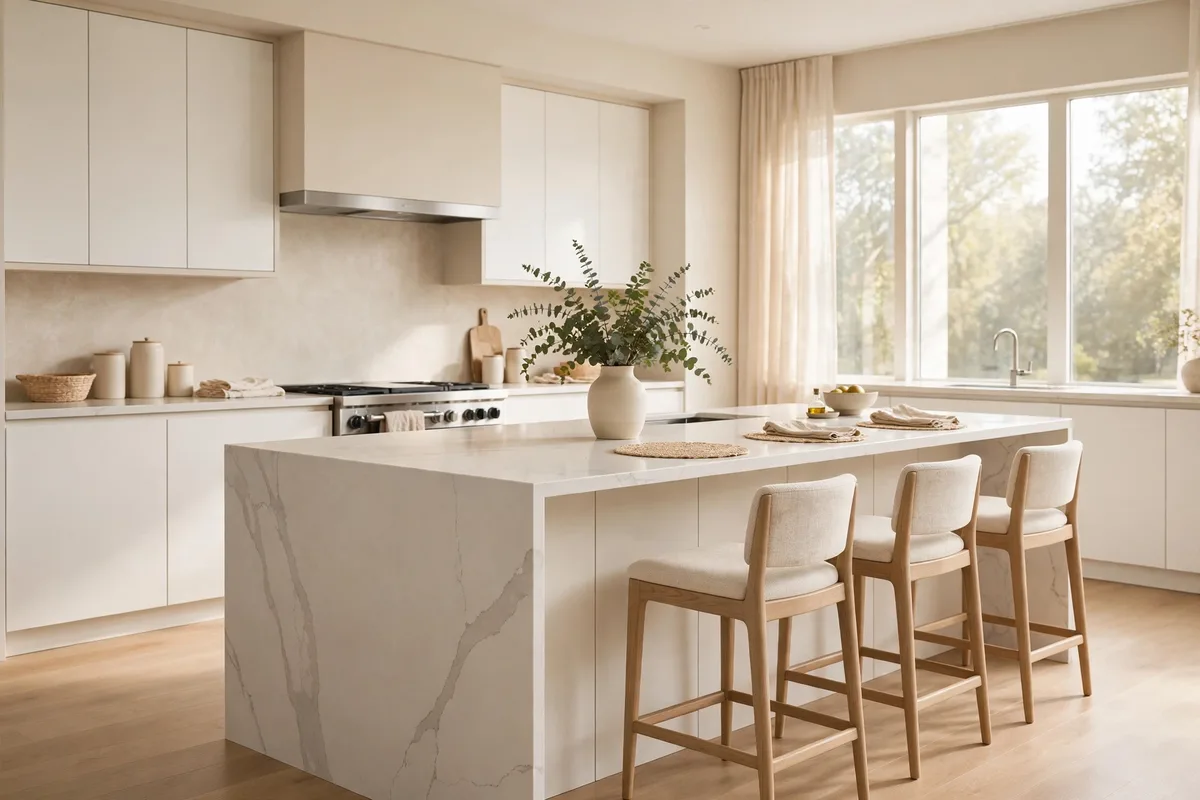
Quartz countertops are engineered stone. Manufacturers crush natural quartz, mix it with pigment and about 7 to 10 percent polymer resin, press the mix under vacuum and vibration, then heat-cure it into slabs. Common brands are Caesarstone, Cambria, Silestone, MSI Q and LX Hausys Viatera. The resin is what makes quartz non-porous and flexible enough to resist chips — and it is also the source of nearly every quartz weakness, because resin softens under heat and breaks down under UV light.
What Granite Is?
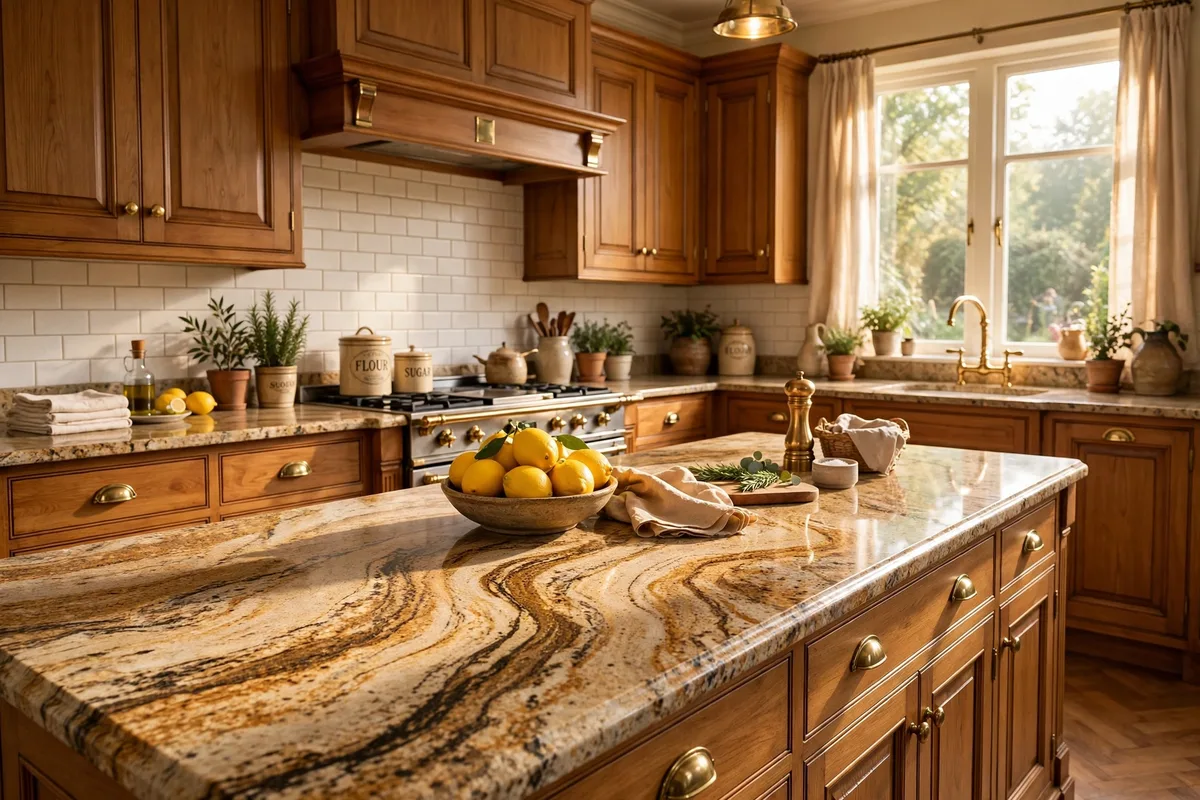
Granite is an igneous rock that cooled slowly from magma deep underground, a mix of quartz, feldspar and mica crystals. Workers quarry it in blocks, then cut and polish those blocks into slabs. Every slab is different, even from the same quarry, and the trade also sells other natural stones as “granite,” including gabbro and gneiss. That variation is the whole point of granite — and the reason you should pick your actual slab instead of ordering from a sample.
Tip: do not confuse quartz with quartzite. Quartzite is a natural metamorphic stone, much harder and usually sealed like granite. It behaves far more like granite than like engineered quartz, and the similar names have steered plenty of buyers wrong.
Cost: What You Pay Now And Over 10 Years?
Upfront, the gap is smaller than most buyers expect. The spread inside each material is far larger than the gap between them, because slab grade, brand, edge profile, cutouts and local labor move the price more than the material name does.
| Tier | Granite (installed, per sq ft) | Quartz (installed, per sq ft) |
|---|---|---|
| Entry | $40–$60 (Level 1 colors like Uba Tuba, Santa Cecilia) | $50–$70 (house and value brands) |
| Mid-range | $60–$85 | $65–$100 (major national brands) |
| Premium | $85–$120 | $90–$150 (Cambria, designer marble-looks, jumbo slabs) |
| Exotic | $120–$200+ (Blue Bahia, Van Gogh and similar) | Rarely above $150 |
A worked example. Take a 40 sq ft kitchen in 3cm stone with one sink cutout and an eased edge. Mid-grade granite at about $70 per sq ft runs roughly $2,800 installed. Mid-grade quartz at about $80 per sq ft runs roughly $3,200. That is a $400 gap on day one — and then the maintenance math starts. Granite needs a penetrating sealer at install and every one to two years after; a bottle of sealer costs $20–$40, and a professional reseal typically runs $100–$300. Over ten years, sealing adds roughly $300–$1,000 depending on whether you do it yourself and how porous your stone is. Quartz needs no sealer at all. Put together, a ten-year total for that same kitchen lands in a similar range for both — roughly $3,100–$3,800 for granite against roughly $3,200 for quartz — which is why cost alone should not decide this for you. Always get at least three local itemized quotes, because high-cost metro areas commonly run 20 to 35 percent above these ranges.
Tip: ask for the installed price, not the material price. A low per-square-foot material quote can grow fast once fabrication, edge details, cutouts, removal of the old counter and installation are added.
Heat Resistance: The Clearest Split
Heat is the one factor with a clear winner, and it is granite. Granite formed at temperatures far above anything a stove produces, so a hot pan straight from the burner does not hurt the stone. Two cautions still apply: sudden, concentrated heat on a cold slab can crack stone at a weak point such as a narrow strip beside a cutout, and some granites have resin-filled pits that can mark. Trivets are a good habit with granite, but a forgotten trivet is rarely a disaster.
Quartz is the weaker of the two here, and this is the most common quartz warranty dispute. Manufacturers such as Caesarstone and Cosentino warn that the resin can discolor or crack at around 300°F (150°C). A pan off the burner, a sheet tray from the oven or a slow cooker running for hours in one spot can leave a permanent white or yellow mark, or a crack from thermal shock — and warranties exclude heat damage. A mug of coffee is far below that threshold and perfectly safe. The risk is cookware straight from the burner or oven, and appliances that give off heat for a long time, like air fryers, toaster ovens and slow cookers.
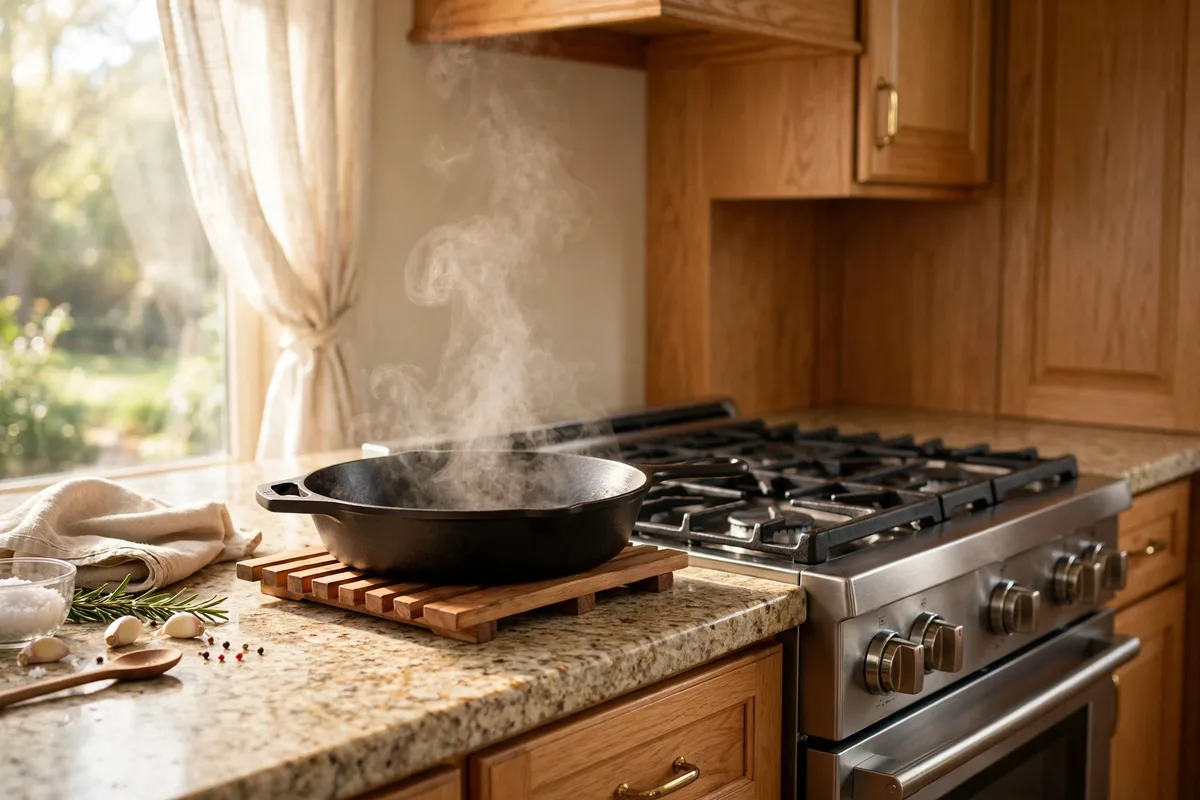
Tip: if you regularly set hot pots directly on the counter and do not want to change the habit, granite forgives that habit and quartz does not. Buy the trivet habit first if you buy quartz — keep one beside the stove, not in a drawer.
Stains, Sealing And Everyday Care
This is where quartz pays back its price. Quartz is effectively non-porous, so wine, coffee, oil and turmeric wipe off with mild soap and water. Two things still mark it: permanent marker, and pigments left for many hours on light colors. Harsh chemicals are the other enemy — high-pH oven cleaner, paint stripper and strong solvents can dull the resin, so check the manufacturer’s care guide before using anything stronger than dish soap.
Granite’s porosity varies a lot. Dense dark stones such as Absolute Black barely absorb anything. Light granites such as Alaska White or Colonial White can darken from oil in minutes if the sealer has worn off. A good penetrating sealer buys one to three years of protection, and most granite stains come out with a poultice. The test takes a minute: put a tablespoon of water on the counter near the sink and wait 10 to 15 minutes. If the stone darkens, reseal. Sealer costs $20 to $40 a bottle and covers a kitchen more than once.

Daily care, side by side. Quartz: soap and water, no sealing, avoid harsh solvents and high heat. Granite: pH-neutral stone cleaner, reseal when water starts to darken the stone. Both: cutting boards for knives, trivets as a habit, wipe spills promptly. Over ten years, granite upkeep usually costs a few hundred dollars more than quartz — real money, but not enough to decide the choice on its own.
Scratches, Chips And Cracks
A steel kitchen knife is about 5.5 on the Mohs scale, softer than both materials, so neither scratches in normal use. Granite’s feldspar crystals (Mohs 6) are the softest part of the slab. In quartz, the resin between grains can take a mark from a hard, sharp object dragged with force. Ceramic knives and diamond jewelry can scratch either. Cutting on either dulls knives, so use a board anyway.
Chips tell a different story. Quartz’s resin gives it a little flex, and it has no natural fissures, so it behaves predictably around cutouts and on thin strips. Granite may carry fissures — natural, healed lines in the crystal structure that are not cracks but can open under stress at narrow sections or during transport. Repairs favor granite: a chip in speckled granite fills with tinted epoxy and disappears into the pattern, while a chip in a solid white quartz or on a crisp marble-look vein is harder to hide. Typical chip repair runs $100 to $300 for either. Both can chip at the edges when hit with a heavy pot, especially on sharp square edges — an eased or rounded profile holds up better on either material.
Looks: Natural Drama Vs Predictable Control
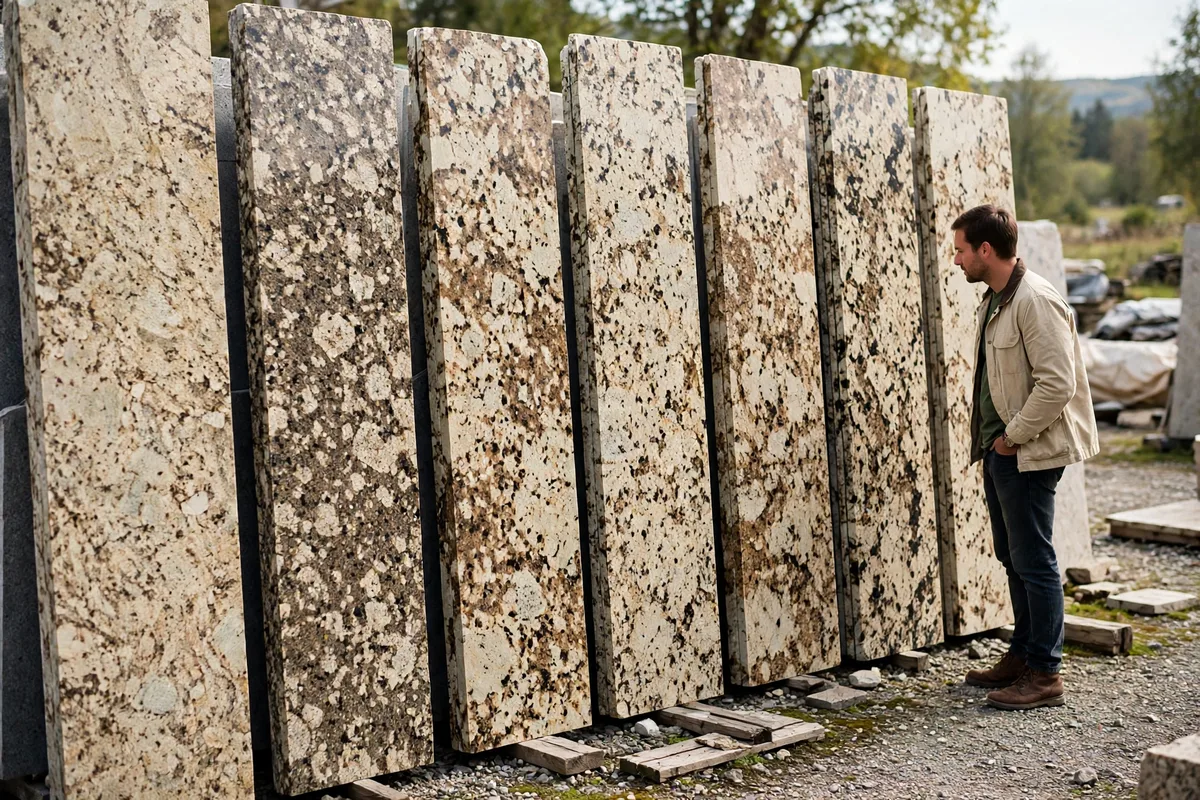
This is often the real decision, and it is personal. Granite shows natural crystals, flecks and movement, and no two slabs match. You pick the actual slab, so plan to visit the yard and look at full slabs under kitchen-like light — a small sample can look very different from the full piece. Granite has the widest range of dark and colorful stones, while its whites vary slab to slab and can lean warm or cool. That variation suits traditional, rustic and classic kitchens, and it pairs beautifully with warm wood cabinetry. If a farmhouse look is the goal, our farmhouse kitchen ideas show how natural stone carries that style.
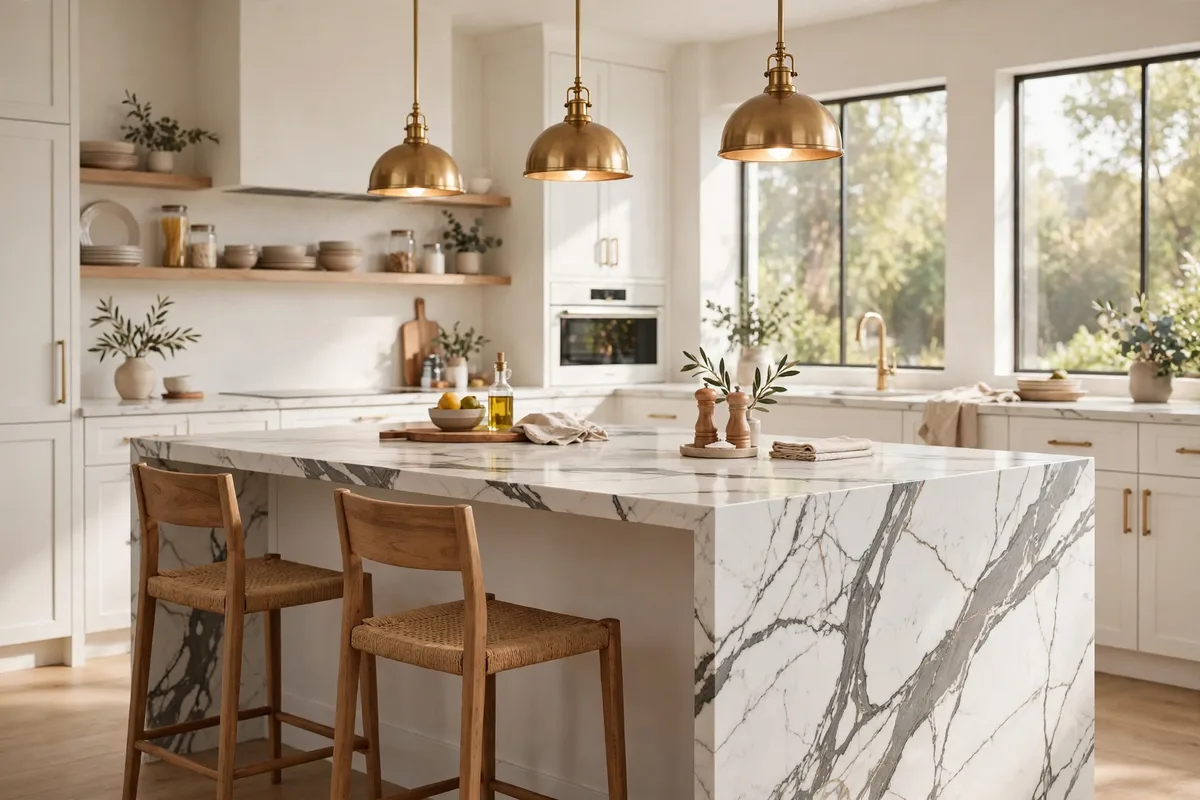
Quartz gives predictable color from a sample, solid whites and grays that granite cannot match, and marble-look veining that stays consistent from slab to slab. That consistency is why designers like it for white kitchens and large projects, and why it works so well in modern, minimal and transitional kitchens. On budget marble-look quartz, the vein pattern can repeat from slab to slab, and some slabs have veins only on the face that fade at a profiled edge — so look at full slabs for big jobs, just as you would with granite.
Thickness, Edges And Seams: The Details Buyers Miss
The material choice gets all the attention, but thickness, edge and seams decide how the counter actually looks and holds up in your kitchen.
Thickness. Most kitchens use 3cm stone (about 1¼ inches). Thinner 2cm slabs need a plywood build-up underneath and can look thin at the edge unless a laminated edge is added. If the quote does not state the thickness, ask — a low quote is sometimes a thin slab.
Edge profile. An eased edge (slightly rounded) is the practical default: it resists chips better than a sharp square edge and wipes clean easily. Ogee and waterfall edges look luxurious and cost more to fabricate; a mitered edge on quartz can mimic a thick slab but adds fabrication cost fast.
Seams. Quartz jumbo slabs (about 63 × 126 inches and larger) can cover a long island with no seam. Granite sizes vary by block, and a typical kitchen gets two to three granite seams. Seams hide better in busy granite patterns and in solid quartz colors; marble-look quartz needs a vein-matching plan, or the seam will cut straight through the pattern. Ask the fabricator where the seams will fall on your layout before you sign — once the stone is cut, the seam plan is fixed.
Sunlight, Outdoors And Bathrooms
Sunlight. The resin in quartz breaks down under UV. Near a south- or west-facing window, some light colors yellow slightly over the years, and most brands void the warranty outdoors (a few sell specific outdoor lines). Granite is UV-stable and is one of the best outdoor countertop stones. If your kitchen has large south-facing windows or a skylight, granite is the safer long-term pick.
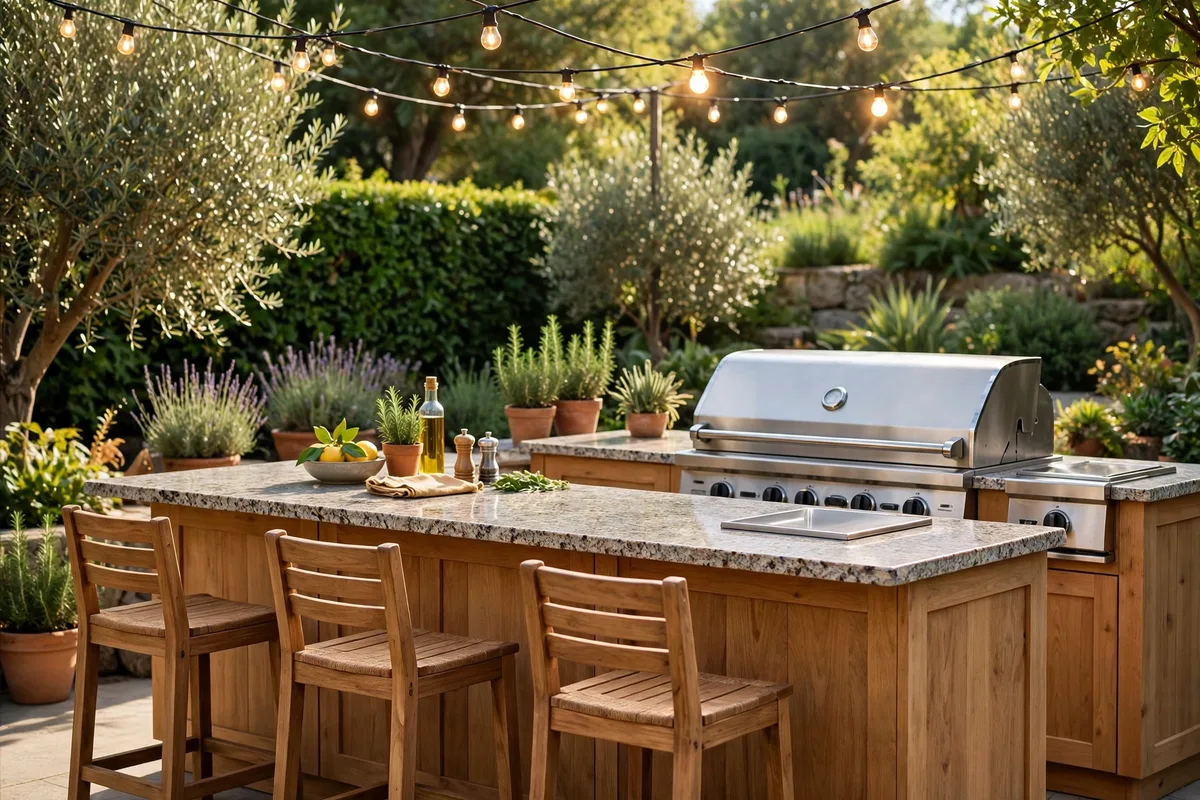
Outdoors. For an uncovered or sun-exposed outdoor kitchen, choose granite. Quartz may discolor from prolonged UV exposure, and the warranty usually excludes it. Granite handles heat, sun and weather without complaint — one more reason it shows up on barbecue islands and poolside bars.
Bathrooms. Quartz is often the better bathroom pick: it is non-porous, never needs sealing, and handles splashes around the sink without a second thought. Granite works in bathrooms too, but it needs the same sealing routine as in the kitchen, and a small vanity rarely justifies the upkeep. For a small project like a vanity, ask about remnants — fabricators often sell offcuts of both materials for far less per square foot.
Lifespan, Repairs And Warranties
With proper care, both materials last for decades — granite commonly 30 to 50 years or more, quartz 25 to 30 years or longer. Quartz guarantees uniform performance across its lifetime, while granite needs periodic maintenance to keep its protective seal. Neither material is a short-term surface.
Read the warranty before you buy. Many quartz brands offer a limited lifetime warranty, but heat damage is the standard exclusion — the resin scorch that ruins a quartz counter is the damage the warranty does not cover. Granite warranties typically cover manufacturing and installation defects, not stains on unsealed stone or cracks from impact. Ask the fabricator, in writing, what is covered and what voids it, and keep that paper with your remodel file.
A note on fabrication dust. Cutting and grinding engineered stone releases fine silica dust, and engineered quartz typically contains far more silica than granite. That is a fabrication hazard, not a homeowner one: an installed countertop releases no silica dust in normal use. Australia banned engineered stone from July 2024, and U.S. regulators have tightened dust controls in fabrication shops. If you choose quartz, it is reasonable to ask the fabricator how they control dust — wet cutting and ventilation are the standard answers.
Resale Value: What Buyers Actually Notice?
No study separates the resale value of granite from quartz. Remodeling cost reports bundle countertops into whole kitchen projects, so no figure isolates one material. In listings, “granite or quartz” is read as one quality signal, and agent surveys commonly put the perceived added value of either premium countertop at roughly $3,000–$7,000 for a typical kitchen. What moves buyers more is a neutral color and good condition. A bold, polarizing granite or a trendy quartz pattern can narrow the buyer pool either way, and regional taste matters — granite still carries stronger recognition in markets where it was the standard upgrade for decades, while quartz has momentum with younger buyers in coastal and urban markets. The honest rule: either material supports resale in a kitchen that otherwise shows well. Choose the one you will enjoy living with, in a color you will not tire of.
Quartz Vs Quartzite: Do Not Mix Them Up?
The names look alike and the confusion is expensive. Quartz is engineered — crushed quartz bound with resin, non-porous, no sealing, heat-sensitive. Quartzite is a natural metamorphic stone, made almost entirely of the mineral quartz, very hard, usually sealed like granite, and resistant to everyday acids. Real quartzite does not etch from lemon juice or vinegar; marble does, and some stones sold as “quartzite” turn out to be marble. Two quick tests on a sample settle it: real quartzite scratches glass easily, and lemon juice left on it for about 15 minutes leaves no dull spot. If a stone described as quartzite etches, it is most likely marble — and it needs marble-level care.
How To Decide?: Match The Stone To Your Kitchen
Forget “which is better” and ask which fits your kitchen. Run through these four questions and the answer usually picks itself.
How do you cook? If you regularly pull hot pans out of the oven and set them down without thinking, granite forgives that habit. If you cook with acidic ingredients and worry about etching and stains, quartz is calmer to live with. Serious cooks who move fast in the kitchen lean granite; busy families who want to wipe and walk away lean quartz.
How much upkeep will you actually do? Quartz is the set-and-forget surface — no sealing, no special cleaners, ever. Granite asks for a 20-minute reseal once a year or two and a pH-neutral cleaner. Be honest about which household you are. A sealing routine you will not do is a stain waiting to happen.
What does your kitchen look like? Warm, traditional or transitional kitchens with wood-toned cabinets suit granite’s natural character. Contemporary, minimal or Scandinavian kitchens with strict color control suit quartz. If you are planning a full remodel and still choosing the style, our kitchen remodel ideas can help you settle the direction first — the countertop follows the kitchen, not the other way round.
Where does the counter sit? Strong direct sun, a south-facing window wall or an outdoor kitchen points to granite. A bathroom vanity or a long run that must match slab to slab points to quartz. And if your kitchen is small, consistency matters more — a uniform quartz across a compact run makes the space feel calm, as our small kitchen ideas show.
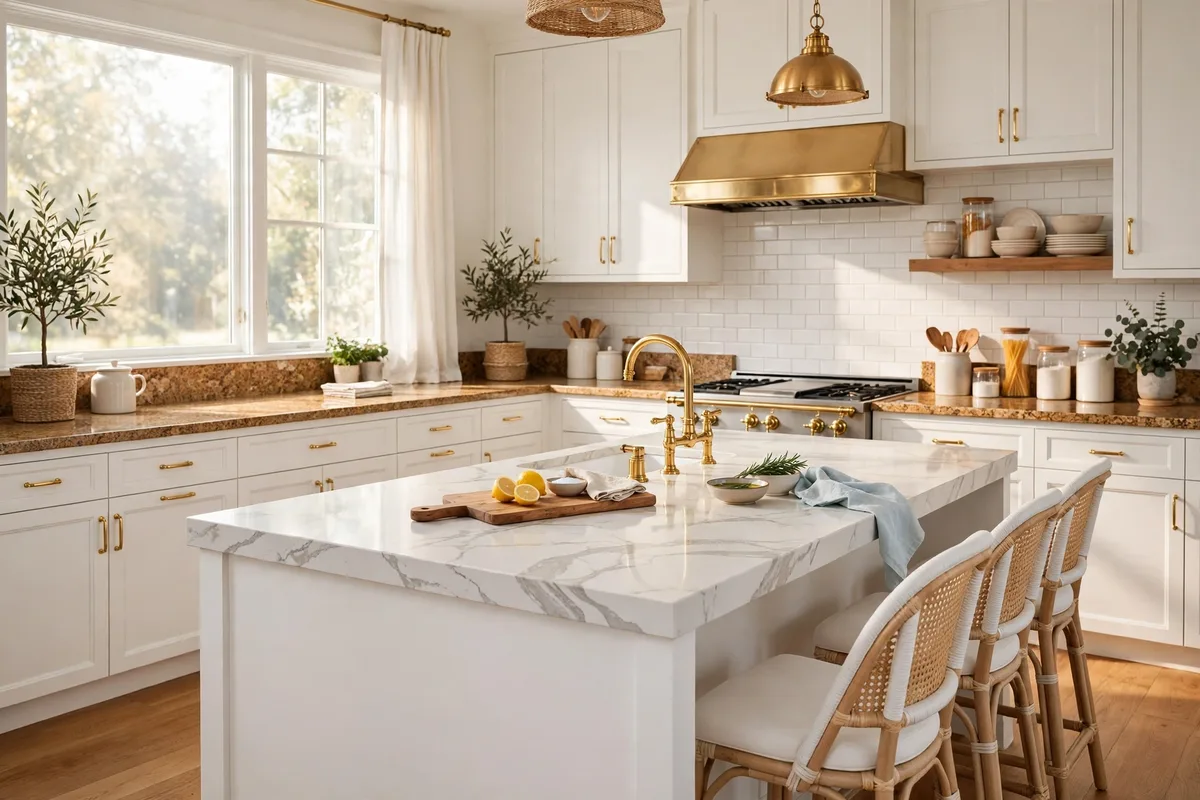
Tip: you can mix them. Some kitchens put granite on the range run and quartz on the island, or the other way round. Keep the colors deliberately different so it reads as a choice, not a mismatch — and price both on the same quote so you can see the real gap before deciding.
Before You Buy: A Short Checklist
- See full slabs of both in person, under kitchen-like light, with your cabinet door and flooring samples beside them. The slab you choose matters more than the material category.
- Do the water test on granite. A tablespoon of water, 10 to 15 minutes. If the stone darkens, it needs sealing — and that tells you how porous your slab is.
- Get three itemized quotes. All-in pricing with cutouts, edge profiles, installation and removal — not just a per-square-foot material price. Pricing varies 20 to 40 percent between shops in the same market.
- Ask where the seams fall on your layout, and how marble-look veins will be matched across them.
- Read the warranty’s exclusions, especially heat damage on quartz and stain coverage on granite. Get the coverage in writing.
- Check the thickness on the quote — 3cm is the standard; 2cm needs build-up underneath.
- Plan the trivet habit now if you buy quartz. One good trivet beside the stove beats a repair bill later.
For a deeper look at how countertops fit into the whole material decision, This Old House’s kitchen countertop options guide compares granite and quartz alongside the other common materials, with the same trade-offs laid out side by side.
Frequently Asked Questions
Which Is Better For A Kitchen, Quartz Or Granite?
Neither is better for everyone. Granite handles heat better and has natural patterns; quartz needs no sealing and has consistent color. Your cooking habits, the upkeep you will actually do, and the look you want decide it. At mid-range, the installed cost is close enough that price should not be the deciding factor.
Can You Put Hot Pans On Quartz Countertops?
You should not. Quartz can handle brief contact with warm items, but sustained heat above roughly 300°F damages the resin binders and can cause permanent discoloration or cracking — and the warranty excludes it. Always use trivets or hot pads. Granite handles heat far more forgivingly, though even granite benefits from trivet use over the long term.
Does Granite Need To Be Sealed?
Yes, in most cases. Most granite benefits from sealing at installation and resealing periodically, often every one to two years. Some dense, dark granites absorb very little, and a water-drop test tells you when to reseal: if water darkens the stone within 10 to 15 minutes, the seal has worn. Quartz never needs sealing.
Does Quartz Stain?
Quartz resists stains well because it is non-porous, but strong solvents, permanent markers and heat can mark the resin. Wine, coffee and oil wipe off with mild soap and water if you catch them promptly. Granite resists stains when sealed, but light, porous stones can absorb oil quickly once the sealer wears off.
Do Granite Countertops Emit Radon?
Some granites contain trace uranium, and the EPA considers granite countertops a minor radon source compared with soil gas entering through a foundation. Most scientific research finds the amount very low and not a significant health risk. A home radon test settles the question for your house, and quartz countertops do not emit radon at all.