
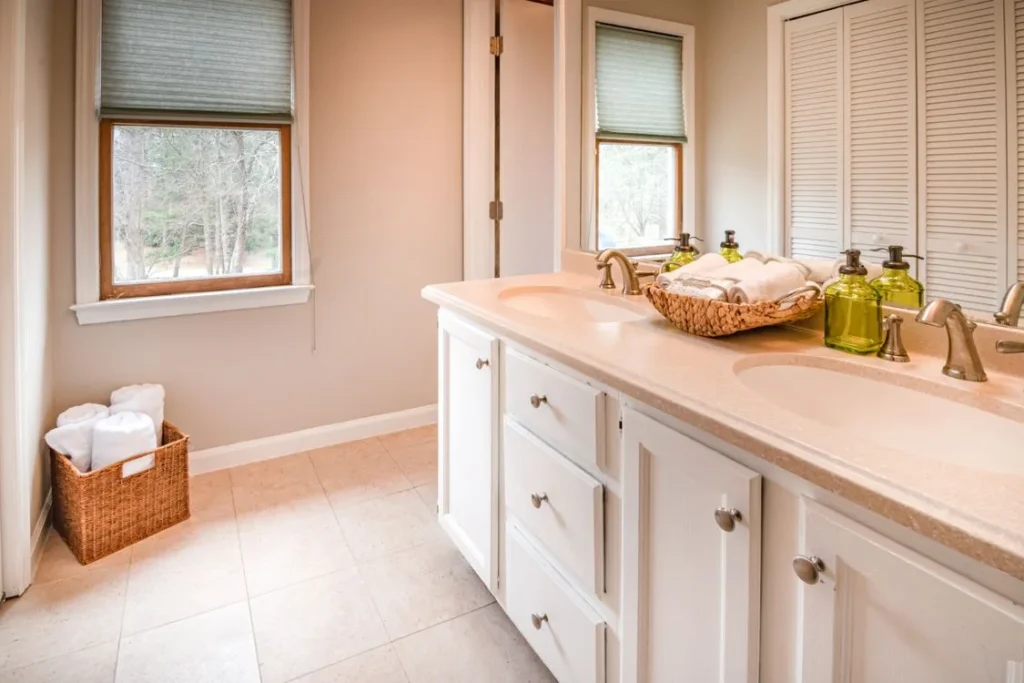
The cabinet under the sink is the most wasted storage in most homes. It holds cleaning sprays, a few cloths, and whatever else gets pushed in and forgotten, while the pipes in the middle make every shelf awkward and every box hard to reach. Yet it is also some of the most useful space in the house, sitting exactly where cleaning supplies, dish soap, and bathroom essentials are needed most. The trick is not to buy a single clever organiser and hope it fixes everything. It is to organise around the pipes, in zones, so that everything in the cabinet can be reached without moving everything else.
Start by emptying the cabinet completely. This is not a tidying tip for its own sake; you cannot plan around pipes you cannot see, and most under-sink cabinets contain items that belong elsewhere, duplicates bought because the first one could not be found, and products that are empty or long expired. Clear it, clean it, measure the usable space around the pipes, and only then decide what goes back.
Work Around The Pipes, Not Against Them
Pipes are the reason under-sink storage fails, so plan for them first. Measure the height, width, and depth of the clear space on each side of the pipes, and note where the drain, the water lines, and any garbage disposal or filter sit. A shelf that spans the full cabinet will not fit, and a tall bin placed over a pipe will tip or block access when a plumber needs it.
The most useful solutions are the ones that leave the pipes alone. Stackable bins on either side of the pipes create two usable columns where one awkward space used to be. A narrow, U-shaped organiser that fits around the drain uses the space at the back of the cabinet without blocking the pipes. A pull-out drawer on one side, sized to the clear width beside the pipes, brings the back of the cabinet to you instead of forcing you to reach past bottles and boxes. Whatever you choose, leave the pipes accessible: a leak or a blockage is hard enough to deal with without first removing a fixed shelf.
Protect the cabinet floor as well. A waterproof tray or a simple plastic liner under the cleaning supplies catches drips and small leaks before they damage the wood. This is a small, cheap addition that saves a much larger repair, and it makes cleaning the cabinet a matter of lifting out a tray rather than scrubbing a stained base.
Zone The Cabinet By How Often Things Are Used
Once the pipes are accounted for, organise by frequency, not by category alone. The items you reach for every day — dish soap, a sponge, hand soap in a bathroom — belong at the front, at hand height, where they can be grabbed without moving anything. Items used weekly, such as a bathroom cleaner or a dishwasher treatment, belong just behind them. Items used rarely, such as a drain cleaner kept for emergencies or a spare filter, belong at the back or in a higher, less accessible spot.
This zoning matters because under-sink cabinets are deep and dark. Anything stored at the back without a system will be forgotten, and anything stored in front of something else will be moved aside and never put back. Pull-out bins and small turntables help here, because they bring the back of the cabinet forward. A turntable in a corner of the cabinet, or a narrow pull-out beside the pipes, can turn a forgotten zone into a usable one, provided it is sized to the clear space and does not collide with the pipes when it moves.
Label the bins if the household shares the cabinet. A simple label — “daily,” “weekly,” “spares” — is enough, and it stops the cabinet drifting back into a single jumble within a month. The goal is not a showroom cabinet. It is a cabinet where the next person to open it can find what they need without emptying it first.
Kitchen Under Sink Storage Ideas
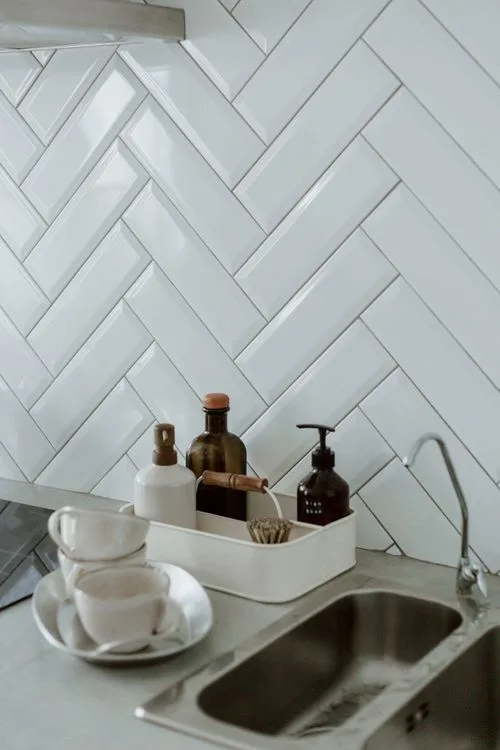
A kitchen sink cabinet usually holds dish soap, sponges, bin bags, cleaning sprays, and often a small bin or a recycling caddy. The mistake is to store all of these in one large, open space where bottles fall over and small items disappear behind large ones.
A practical kitchen layout uses the door and the sides. A rack or a small caddy on the inside of the cabinet door holds sponges, brushes, and dish soap at the front, where they are used most. Stackable bins on either side of the pipes hold cleaning sprays upright, grouped by use, so a bottle can be pulled out without toppling its neighbours. A roll of bin bags, stored vertically in a tall, narrow bin, is easier to grab than a flat pack buried under bottles. The same under-sink shelf idea appears in IKEA’s small-kitchen storage guide, which pairs stackable boxes for cleaning supplies with a recycling bin under the sink.
If the cabinet also holds a small waste bin, give it a defined spot — a pull-out bin on one side, or a small bin that sits in front of the pipes where it can be lifted out easily. A bin that drifts around the cabinet will block access to everything else, so fixing its position, even with a simple tray, keeps the whole cabinet usable. For related bathroom storage thinking, Archly Home’s guide to bathroom towel storage ideas shows the same zone-and-reach principle applied to a different small space.
Bathroom Under Sink Storage Ideas
A bathroom sink cabinet faces a different problem: many small items — toiletries, medicines, hair tools, cleaning products — in a space that is often smaller and damper than a kitchen cabinet. The same principles apply, but the containers need to be smaller and more contained.
Small, lidded bins work better than open baskets in a bathroom, because they keep small bottles upright and prevent them spilling into each other. Group by person or by routine where the cabinet is shared: one bin per person, or one bin for daily toiletries and one for cleaning products, keeps the cabinet from becoming a single mixed pile. Hair tools, which are long and awkward, suit a tall, narrow holder or a heat-resistant pouch hung on the door, rather than lying across the top of everything else.
Keep medicines and anything that must stay dry in a sealed container, away from the pipes, and check the cabinet for damp regularly. A bathroom cabinet that smells musty or shows water marks around the pipes needs attention before it needs new organisers: fix the leak or the condensation first, then organise the space.
Small Cabinets And Awkward Shapes
Not every under-sink cabinet is a standard rectangle. Pedestal sinks have no cabinet at all, corner sinks have triangular space, and older cabinets may have a centre post or an unusually low drain. Each of these needs a different approach, and forcing a standard organiser into an awkward cabinet will waste more space than it saves.
For a pedestal sink, a small freestanding shelf unit or a narrow caddy beside the sink often works better than trying to build storage around the pedestal itself. For a corner cabinet, a turntable or a small pull-out that follows the cabinet’s shape can make the deep corner reachable. For a cabinet with a centre post, treat each side as its own small cabinet, with its own bins, rather than trying to span the post with a single shelf.
The test for any awkward cabinet is the same: can you reach everything in it without removing something else first? If the answer is no, the organiser is the wrong shape for the cabinet, however well it is reviewed online. Measure first, buy second, and return anything that collides with the pipes or the door.
What Not To Store Under The Sink
Some things do not belong under a sink, however tempting the empty space looks. Avoid storing anything that would be damaged by damp, such as paper towels in bulk, cardboard boxes, or anything that must stay perfectly dry. Avoid storing heavy items high up in the cabinet, where they can fall on the pipes or on your hands when you reach in. And avoid storing hazardous products where children can reach them, even in a cabinet with a child lock, if a safer, higher spot exists elsewhere.
Also, do not let the under-sink cabinet become the household’s overflow drawer. Once it holds items that belong in another room — spare light bulbs, a toolbox, a bag of odds and ends — it stops being useful for the sink’s own supplies. Keep the cabinet for what is used at that sink, and find a proper home for everything else.
Frequently Asked Questions
How Do I Organise Under A Sink With Pipes In The Way?
Measure the clear space on each side of the pipes and organise in columns, not across the full cabinet. Use stackable bins beside the pipes, a U-shaped organiser around the drain, or a narrow pull-out on one side, and always leave the pipes accessible for maintenance.
What Is The Best Organiser For A Small Under Sink Cabinet?
A small pull-out bin or a narrow stackable bin that fits the clear width beside the pipes usually beats a large, fixed shelf. In a very small cabinet, a door rack for daily items plus one or two small bins for the rest will use the space better than a single large organiser.
Should I Use A Shelf Under The Sink?
Only if it fits around the pipes without blocking them and without making the back of the cabinet unreachable. A shelf that spans the full cabinet often creates a dark, forgotten layer underneath it. Adjustable, short shelves on either side of the pipes are usually more useful than one long shelf.
Under-sink storage is not about buying the perfect organiser. It is about seeing the pipes clearly, zoning by how often things are used, and choosing containers that fit the space you actually have. Do that, and the cabinet under the sink stops being the place where things disappear — and starts being the place where the right bottle is exactly where your hand expects it.