Zucchini is one of the easiest vegetables a beginner can grow — and one of the most generous. Sow the seeds in warm soil, give the plants sun, space, and steady water, and a single plant can keep a household in fresh squash all summer. The first fruit usually appears about 45 to 60 days after sowing, and from then on the plant sets new fruit every few days.
The trick is not getting the plant to grow. It grows fast on its own. The trick is getting it to grow well: warm soil at sowing, enough room for those big leaves, water at the roots, and a harvest routine that picks the fruit while it is still small and tender. Miss the harvest for a few days and a perfect 7-inch zucchini turns into a woody club nobody wants to eat.
This guide walks the whole journey in order, from choosing a variety to picking the fruit, for in-ground beds and raised beds. Follow the steps one by one and you will know exactly what to do — and what to watch for — at every stage.
Before You Start: What Zucchini Needs To Thrive
Zucchini is a warm-season crop, and almost everything about growing it comes back to four simple needs. Get these four right and the rest is maintenance.
Warmth. Zucchini will not germinate or grow in cold soil. The seeds need soil of at least 60°F to sprout, and they sprout fastest when the soil is 70°F or warmer. A cold snap after planting can stall a young plant for weeks, so patience in spring pays better than an early start.
Sun. Full sun means at least six hours of direct light a day, and eight or more is better. A shady corner gives you big leaves and very little fruit, so pick the sunniest spot you have.
Food and water. Zucchini is a heavy feeder with a big appetite. Rich soil, compost at planting, and steady water through the season are what turn a small plant into a heavy producer. Uneven watering is behind most of the problems beginners meet, from misshapen fruit to blossom end rot.
Space. A bush zucchini plant spreads 3 to 4 feet across, and a vining type spreads further still. Crowded plants shade each other, trap damp air between the leaves, and invite powdery mildew. Give each plant its full space and the plant will repay you with airflow, light, and fruit you can actually reach.
If you are planning your first vegetable patch from scratch, our guide to starting a vegetable garden covers choosing the site and laying out the beds before you plant anything.
Step 1: Pick The Right Variety For Your Space
Start with the seed packet, because the variety decides how much room the plant needs and how it behaves all season. Zucchini comes in two growth habits: bush types and vining types.
Bush types grow as a compact mound about 3 to 4 feet across and suit most home gardens, raised beds, and smaller plots. Black Beauty is the classic dark-green bush zucchini — reliable, productive, and easy to find — and it is the variety most beginners should start with. Gold Rush is a bright yellow bush type that is easier to spot among the leaves before it grows too big. Eight Ball grows round, compact fruit and suits tighter spaces.
Vining types send out long runners that can spread 6 feet or more. They give a bigger harvest per plant but need room to roam or a strong trellis to climb. Costata Romanesco is an Italian heirloom with ribbed skin and a flavour many gardeners rate above the standard types, and it is worth trying once you have a season of bush zucchini behind you.
Tip: in a humid climate, look for a disease-resistant hybrid such as Dunja — it holds up better against powdery mildew late in the season. And if you want to save seeds for next year, choose an open-pollinated variety like Black Beauty; hybrids will not grow true from saved seed.
One or two plants are plenty for most households. A single healthy plant can produce 6 to 10 pounds of fruit across the season, and three plants will outpace most families very quickly. Plant fewer than you think you need — you can always sow a second round later.
Step 2: Choose A Sunny, Sheltered Spot

Zucchini needs at least six hours of direct sun a day, and eight hours is better for heavy fruiting. Walk your garden in the morning and again in the afternoon before you decide: the spot that looks sunny at noon may sit in the shade of a fence or a tree by three o’clock. The sunniest, most open part of the vegetable garden is the right place.
Shelter matters almost as much as sun. Zucchini depends on bees to move pollen between its male and female flowers, and a spot that is constantly windy makes that work harder for the insects. A fence, a hedge, or the sheltered side of the house helps, as long as it does not cast shade on the bed. Planting near flowers and herbs also brings more pollinators into the patch, which means more fruit sets.
Tip: keep the bed easy to reach. You will be walking out to it every two or three days at harvest time, carrying a knife and a basket, so a spot you pass every day beats a far corner you forget about. A bed beside a path is worth more than a bed with slightly better soil at the back of the garden.
Step 3: Decide Between In-Ground And Raised Beds

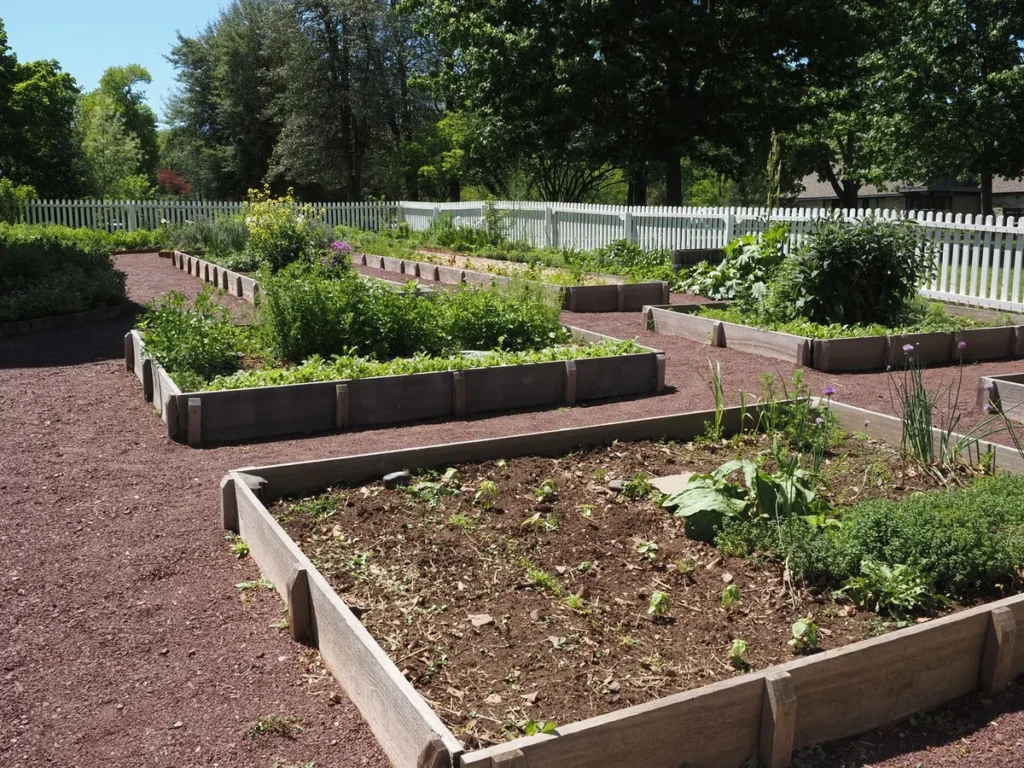
Zucchini grows well in the ground and in a raised bed. Both work; the right choice depends on your soil and your back.
| In-Ground Bed | Raised Bed | |
|---|---|---|
| Best for | Good native soil, larger gardens, vining types | Heavy clay or poor soil, small gardens, easier access |
| Soil | Improve what is there with compost | Fill with a garden soil and compost mix |
| Drainage | Slower — mound the soil into hills if it stays wet | Drains fast — water more often in hot weather |
| Warm-up | Warms slowly in spring | Warms faster, so you can sow a little earlier |
| Cost | Almost nothing | Timber or materials for the frame |
If your soil drains well and holds together in a crumbly handful, dig in the ground. If it is heavy clay that stays wet, or thin soil over rock, a raised bed filled with good soil and compost gives the roots a far better start. Raised beds also warm faster in spring, which matters for a heat-loving crop — and they are easier on the knees at harvest time.
Tip: containers are a third option, but they are a different game — a single plant needs a pot at least 24 inches across and 12 inches deep, daily watering in summer, and hand pollination more often than not. If you grow in pots, our guide to growing tomatoes in containers covers the container routine — big pots, fast-draining mix, and regular feeding — that applies to zucchini too.
Step 4: Prepare Rich, Well-Drained Soil

Zucchini is a heavy feeder, so the soil needs to be rich before the seeds go in — not after. Work 2 to 3 inches of finished compost or well-rotted manure into the top 8 inches of the bed a week or two before sowing. Compost feeds the plant, holds moisture, and loosens the soil so the roots can spread.
The soil should drain well but hold moisture: squeeze a handful and it should hold together briefly, then crumble apart. If water pools on the surface after rain, drainage is too slow — build the planting spots up into low mounds 6 to 12 inches high, which warm faster in spring and keep the roots out of standing water. If the soil is sandy and dries out fast, extra compost helps it hold water longer.
Aim for a soil pH between 6.0 and 7.0, slightly acidic to neutral. Most garden soil sits in that range already; a simple soil test will tell you if yours is far off. The University of Minnesota Extension puts the best range for vine crops at 6.0 to 6.5, and notes that most gardeners can grow squash successfully even in neutral or slightly alkaline soil.
Tip: do not use fresh manure. It can carry harmful bacteria and brings weed seeds with it. Finished compost or well-rotted manure is the safe choice, worked in before planting rather than piled against the stems later.
Step 5: Wait For Warm Soil Before You Sow

This is the step beginners rush — and the one that causes the most failures. Zucchini is a warm-season crop, and its seeds will not germinate in cold soil. Sow too early and the seeds sit in cold, damp ground, rot, or sprout into stunted seedlings that never catch up.
Wait until all danger of frost has passed and the soil has warmed to at least 60°F. A soil thermometer pushed 2 inches into the bed in mid-morning gives you a real reading — far more reliable than the calendar. University of Minnesota Extension advises sowing once the soil reaches at least 70°F at that depth, which in most regions means late spring. Seeds germinate in 5 to 7 days in warm soil, and the first flowers usually appear about 35 to 45 days after planting.
If you want a head start, black plastic mulch laid over the bed a week or two before sowing warms the soil faster, and a row cover over the seedlings holds the warmth in on cold nights. Just remember to remove the cover once the flowers open — bees need to reach the blooms, and a covered plant cannot be pollinated.
Tip: when in doubt, wait a week. A zucchini sown into warm soil overtakes one sown a week earlier into cold soil within days, because warm soil means fast germination and strong early growth.
Step 6: Sow Seeds Directly In The Garden

Direct sowing is the simplest and usually the best way to grow zucchini. The seeds are large, they germinate fast in warm soil, and the plants dislike being moved — so starting them where they will grow avoids transplant shock altogether.
Sow each seed about 1 inch deep. You can sow in rows or in hills: for rows, space the sowing spots 2 to 3 feet apart, with rows 3 to 4 feet apart. For hills, make a low mound 6 to 12 inches high and 12 to 24 inches across, and sow 3 to 4 seeds in each hill, spacing the hills 3 to 6 feet apart. Sow 2 to 3 seeds per spot and thin to the strongest seedling later — the spare seeds are insurance against a seed that never sprouts.
Water the bed well after sowing and keep the soil evenly moist until the seedlings appear. In warm soil they usually emerge within a week. Mark each spot with a label so you do not mistake the seedlings for weeds when they come up.
If your season is short, you can start seeds indoors 2 to 4 weeks before the last frost date, in individual 3- to 4-inch pots filled with seed-starting mix — one or two seeds per pot, 1 inch deep. Zucchini seedlings grow fast, so do not start them any earlier or they will outgrow their pots before it is safe to plant them out. Harden them off for a few days first, then transplant gently, keeping the root ball intact, on the same warm-soil rule as direct sowing.
Tip: for a longer harvest, sow a second round two to three weeks after the first. The first plants peak for four to six weeks and then tire; the second sowing takes over just as the first slows down.
Step 7: Thin The Seedlings And Give Them Room

Once the seedlings have two or three true leaves, thin each spot down to the strongest single plant — or two per hill if you planted in hills. Cut the spare seedlings off at soil level with scissors rather than pulling them out, so you do not disturb the roots of the plant you are keeping.
This step feels wasteful the first time you do it, and it is the one most beginners skip. Do not skip it. A zucchini plant spreads 3 to 4 feet across, and two plants crowded into one spot compete for light, water, and food, trap damp air between their leaves, and invite powdery mildew. One plant with its full space will out-yield two cramped plants every time.
Give bush types 2 to 3 feet of space in every direction, and vining types 3 to 4 feet — more if you are not trellising them. If you are growing a vining type up a trellis, put the trellis in place at planting time. Trying to fit one around a mature plant later means broken leaves and snapped stems.
Tip: the thinned seedlings are edible — the young leaves and stems can go into a stir-fry — but even if you compost them, the thinning itself is the point. Space is what keeps the plant healthy for the whole season.
Step 8: Water Deeply At The Base, Then Mulch

Zucchini is thirsty, especially once the fruit starts forming, and it wants steady water rather than feast and famine. Aim for about 1 to 2 inches of water a week from rain and irrigation combined, delivered slowly enough to soak the soil about 6 inches deep. A deep soak once or twice a week beats a light sprinkle every day, because it encourages the roots to grow down instead of staying at the surface.
Water at the base of the plant, in the morning, so any splashes on the leaves dry quickly. A soaker hose or drip line does this job well and keeps the foliage dry. Overhead watering wets the leaves and is the single biggest driver of powdery mildew later in the season. Plants in raised beds dry out faster than plants in the ground, so check them more often in hot weather.
Once the seedlings are a few inches tall, spread a 2- to 3-inch layer of mulch — straw, shredded leaves, or wood chips — around the base of each plant. Mulch holds moisture in the soil, keeps the soil temperature steady, suppresses weeds, and stops soil splashing onto the lower leaves, which is how many diseases reach the plant. Keep the mulch an inch or two back from the stem so it does not trap dampness against it.
Tip: uneven watering is behind more zucchini problems than any pest. A plant that goes dry and then gets soaked hard is the one that grows misshapen fruit and blossom end rot. Steady, even moisture from flowering onward is worth more than any fertiliser.
Step 9: Feed A Heavy Feeder At The Right Time

If you worked compost into the bed before sowing, the plants have a good start — but zucchini eats heavily all season, and a plant in full fruit needs more than the soil alone can give. About six weeks after planting, side-dress with a balanced fertiliser or a handful of compost scratched lightly into the soil around the plant and watered in.
Once the flowers appear, ease off the nitrogen. Too much nitrogen at that stage grows a big leafy plant with very little fruit — lots of leaves, no zucchini. A fertiliser with more phosphorus and potassium at flowering helps the plant put its energy into fruit instead. Pale or weak-looking foliage is usually a sign the plant needs a feed; a liquid feed such as fish emulsion gives a quick boost without burning the roots.
Tip: feed the soil, not the leaves, and water the fertiliser in well. A plant that is fed little and often — compost at planting, one side-dress at six weeks, and a light feed when fruiting starts — stays productive far longer than one given a single heavy dose.
Step 10: Help Pollination Along

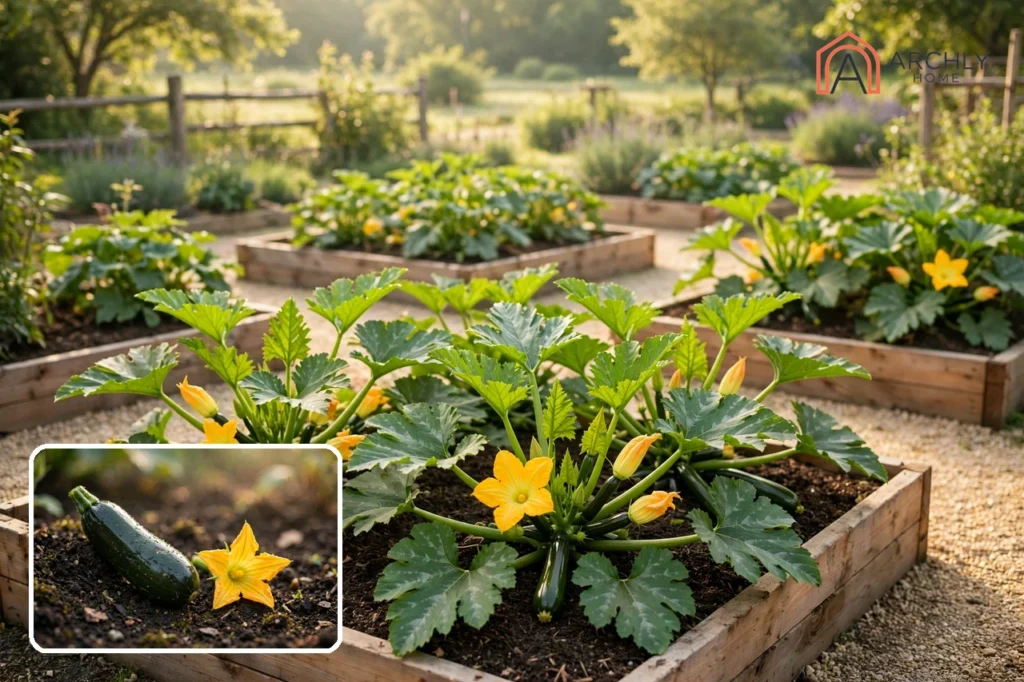
Zucchini carries two kinds of flower, and knowing the difference solves the most common beginner mystery: flowers, but no fruit. The male flowers open first, on long thin stems, and there are a lot of them. They drop on their own after a day or two, and that is completely normal. The female flowers come a week or two later, each one sitting on a small swelling at the base — that swelling is the future fruit.
A bee has to carry pollen from a male flower to a female flower, and each female flower is only open for a single morning. If the bees do not visit, the little fruit yellows, shrivels from the blossom end, and drops off. Cool, wet weather keeps bees away, and so does spraying insecticide during bloom — avoid spraying anything while the flowers are open.
If you are not seeing pollinators, hand-pollinate. Pick a male flower in the morning, strip its petals back, and touch the pollen-covered centre gently against the centre of an open female flower. It takes a minute, and it works. Do it for a week and the fruit set usually catches up as the bees find the planting. Growing flowers and herbs near the bed brings more pollinators in over the season, which is the better long-term fix.
Tip: learn to tell pollination failure from blossom end rot. A fruit that never grows and drops while still small is usually poor pollination. A fruit that grows but develops a sunken, dark patch at the flower end is blossom end rot — a calcium-uptake problem caused by uneven watering, not a missing bee. Steady water and mulch prevent it; a bag of lime does not fix it once the fruit is already affected.
Step 11: Harvest Small And Often

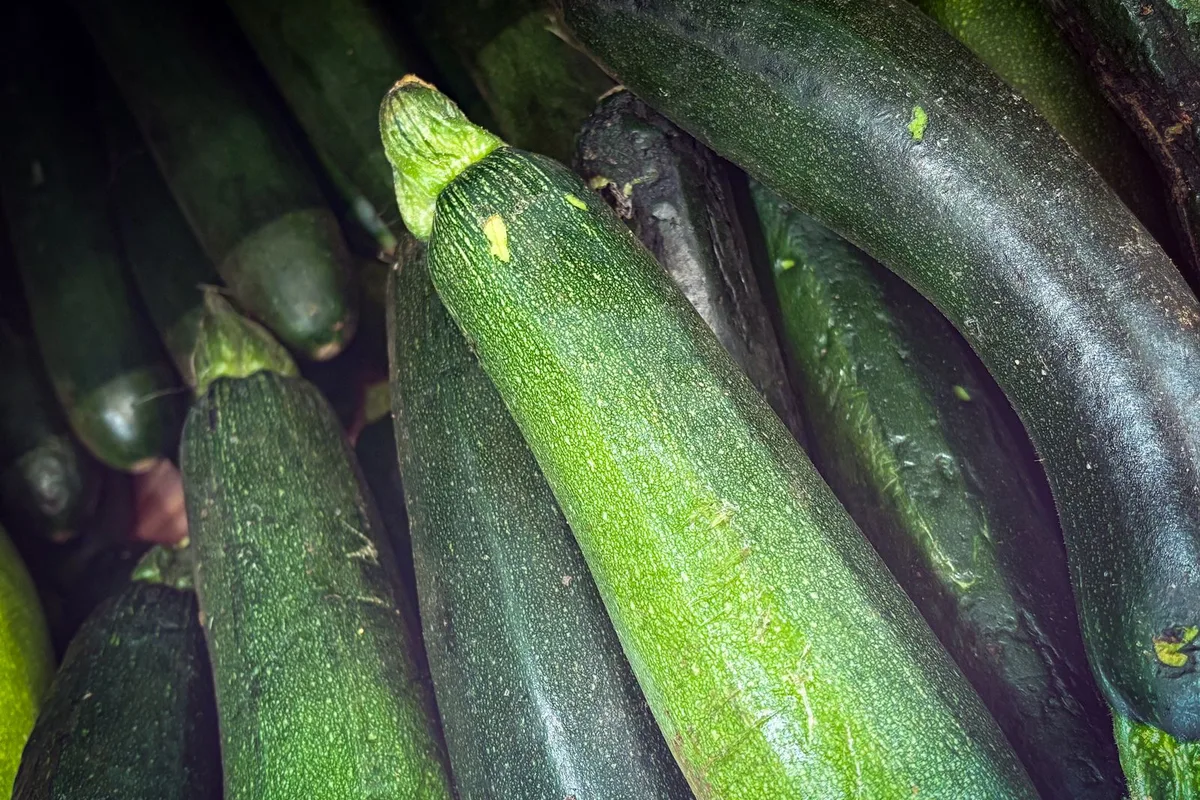
Harvest when the fruit is 6 to 8 inches long, firm, and slightly glossy — that is when the flesh is tender, the seeds are tiny, and the flavour is at its best. Leave it longer and the skin toughens, the seeds harden, and the taste fades. In peak summer heat a fruit can grow several inches in a single day, so check the plants every two or three days and look under the big leaves, where the best ones hide.
Cut the fruit off with a sharp knife, leaving about an inch of stem attached. Do not pull or twist — that can damage the plant’s crown and tear the stem. Picking regularly tells the plant to keep producing: a plant holding one oversized fruit slows down and stops setting new ones, while the same plant harvested at 6 inches redirects its energy into the next set of flowers within days.
Most varieties start bearing about 45 to 60 days after sowing, and the first fruit is usually ready about a week after the flower opens. From then on, expect new fruit every few days through the season until frost or disease ends it. At the end of the season, harvest everything before the first frost — the plants and the fruit will not survive a cold spell.
Tip: if one giant zucchini is hiding under the leaves — and there usually is one — harvest it even if you will not eat it. Leaving it on the vine costs you the next several fruits. And when the glut arrives, as it will, the flowers are edible too: pick male flowers the day they open and use them as salad toppers or stuffed and fried.
Common Zucchini Problems And Quick Fixes
Most zucchini problems follow a pattern. Match the symptom before reaching for a treatment.
| Symptom | Most Likely Cause | Fix |
|---|---|---|
| White powder on the upper leaves, mid to late summer | Powdery mildew | Remove the worst leaves, improve airflow, water at the base, choose a resistant variety next season |
| Plant wilts overnight, with sawdust-like frass at the stem base | Squash vine borer | Slice the stem lengthwise to find and remove the grub, mound moist soil over the cut so it can re-root, use row covers early next season |
| Small fruit forms, then yellows and drops | Poor pollination or drought stress | Hand-pollinate in the morning, check soil moisture, keep watering steady |
| Fruit grows but the blossom end turns dark and sunken | Blossom end rot from uneven watering | Water consistently so the plant can take up calcium, mulch to hold moisture |
| Clusters of grey-brown bugs under the leaves | Squash bugs | Check leaf undersides twice a week, scrape off the copper-coloured egg clusters, knock adults into soapy water |
| Leaves look ragged and chewed | Cucumber beetles | Row covers early in the season, hand-pick beetles, keep the bed weeded |
Powdery mildew is the disease that ends most seasons. By late summer almost every zucchini plant carries some of the white dusting on its leaves, and the plant slows down — but it usually keeps producing, so do not pull a plant just because its leaves look dusty. Remove the worst leaves, keep watering at the base, and let the plant finish the season. Rotate the crop next year: do not plant zucchini, or any squash relative, in the same spot two seasons running.
Conclusion
Growing zucchini is mostly a matter of timing and routine. Wait for warm soil, give each plant its space, water at the base, feed it while it fruits, and walk the row every couple of days with a knife. The plant does the rest — and it does it so generously that the real problem, in most gardens, is keeping up with the harvest rather than getting one.
Start with one or two plants and a variety that suits your space. The first small, glossy fruit you cut at 6 inches will tell you everything the seed packet promised was true.
Frequently Asked Questions
How Many Zucchini Plants Do I Need?
One or two plants are plenty for most households. A single healthy plant can produce 6 to 10 pounds of fruit across the season, and three plants will outpace most families very quickly. Start with two — one for insurance, one for the kitchen — and sow a second round a few weeks later if you want a longer season.
Why Does My Zucchini Plant Have Flowers But No Fruit?
The first flowers are almost always male, and they drop on their own — that is normal. Female flowers appear a week or two later, and each one needs a bee to visit on the single morning it is open. If the bees are not coming, hand-pollinate with a male flower in the morning. If the little fruit forms and then yellows and drops, that is poor pollination too. Steady water, no spraying during bloom, and flowers nearby to attract bees all help.
Should I Start Zucchini Indoors Or Sow Directly?
Direct sowing is best for most gardeners: the seeds are large, they germinate in 5 to 7 days in warm soil, and the plants dislike being moved. Start indoors only if your season is short — 2 to 4 weeks before the last frost, in individual pots, and transplant gently once the soil is warm. Never start them earlier than that, or they outgrow their pots before it is safe to plant them out.
When Is Zucchini Ready To Pick?
Pick when the fruit is 6 to 8 inches long, firm, and slightly glossy. Most varieties reach that size about 45 to 60 days after sowing, and the fruit is usually ready about a week after the flower opens. Check every two or three days at peak season, cut with a knife, and leave about an inch of stem attached.
What Do I Do With Too Much Zucchini?
Harvest small and often — that is the first fix, because a plant picked regularly keeps producing manageable fruit instead of clubs. Use the glut fresh in stir-fries, grilling, and baking, share it with neighbours, or freeze it: blanch sliced zucchini and freeze it for up to three months. The flowers are edible too, picked the day they open.