A bathroom floor has a harder job than almost any other floor in the house. It gets splashed every morning, steamed up after every shower, and walked on with wet feet. A floor picked for looks alone can turn slippery, stained, or swollen within a year.
That does not mean you have to settle for a plain floor. It means the order of decisions matters. Water handling comes first, grip comes second, and only then do colour, pattern, and price get a real say. Once those first two are settled, the range of good-looking bathroom flooring ideas is much wider than most people expect, from classic white tile to warm wood-look planks and raw, modern concrete.
How To Choose A Bathroom Floor Before You Fall For A Sample
Start with the room you have, not the sample in your hand. A powder room that rarely sees a splash is a very different job from a family bathroom used by children or a small ensuite where water reaches every corner.
Ask four questions before you shortlist anything. How much direct water will the floor get? Who will walk on it? How much cleaning and resealing are you prepared to keep up with? And what is underneath the floor now, including its height, level, and condition? A thick tile over an uneven subfloor, or a new floor that raises the threshold awkwardly at the door, can create more trouble than the material itself ever would.
Put Water Resistance First, And Read The Fine Print
Waterproof, water-resistant, and splash-proof are not the same thing, and the label on the box is only part of the story. A tile itself may shrug off water while its grout lines absorb it. A vinyl plank may have a waterproof core while water still finds its way through unsealed edges, gaps around the toilet base, or a poorly finished threshold.
For a bathroom, think of the floor as a system: the surface, the joints, the edges, the drain area, and the layer underneath. That is why professional installation matters more here than in a bedroom or living room. This article gives general information only. Structural work, plumbing changes, and waterproofing, especially in showers and wet rooms, should be handled by a qualified professional. Nothing here should be read as code compliance or as a substitute for local requirements.
Grip Matters More Than Finish
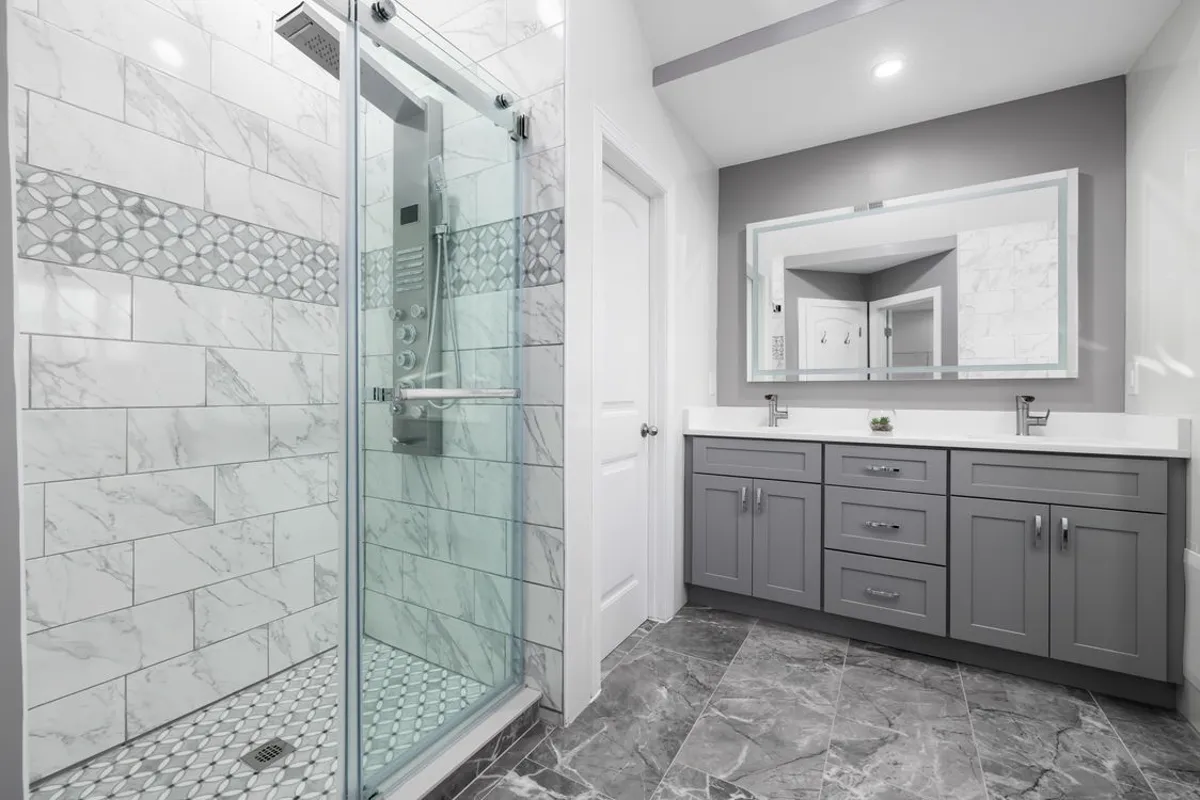
A glossy floor can look clean and bright in daylight and still be treacherous with wet feet. Matte, textured, honed, and sandy-feeling surfaces usually grip better than polished ones. Small tiles help too, because the extra grout lines give bare feet more to hold on to, which is one reason small mosaics remain popular for shower floors.
When you shop for tile, look for its slip-resistance rating. A dynamic coefficient of friction (DCOF) value of 0.42 or higher when wet is a commonly cited benchmark for level interior floors that get wet.
Grout, Joints, And Cleaning Are Part Of The Choice
Some floors look low-maintenance until you count the grout. Large-format tiles mean fewer grout lines and faster mopping, but they also show an uneven subfloor more readily and can be harder to cut around fixtures. Small tiles hide awkward corners better and grip better, yet they ask for more grout cleaning over time.
Sheet flooring has the fewest joints of all, which is a real advantage in a wet room. Click-together planks sit in the middle: easy to fit and replace in places, but every joint is a place water can test.
Underfloor Heating Changes The Shortlist
Cold tile is the most common complaint about bathroom floors, and underfloor heating is the most common fix. Tile and stone conduct heat well, which makes them natural partners for a heated floor. Vinyl and engineered wood can work with some heating systems, but not all of them, and temperature limits and installation methods vary by product.
Check heating compatibility for the exact product you plan to buy, not just the material family.
Make A Small Bathroom Feel Larger With The Floor
In a small bathroom, the floor can either chop the room up or quietly stretch it. Larger tiles with grout in a colour close to the tile tend to read as one calm surface. Running planks or rectangular tiles in the same direction as the longest wall can draw the eye forward. A pale, even floor also bounces more light around, which helps a windowless bathroom feel less closed in.
Avoid a busy border or a sharp floor-to-wall contrast in a very small room unless that contrast is the deliberate feature you want. Keep the floor calm, then let a mirror or vanity do the talking.
Porcelain And Ceramic Tile: The Reliable Classic
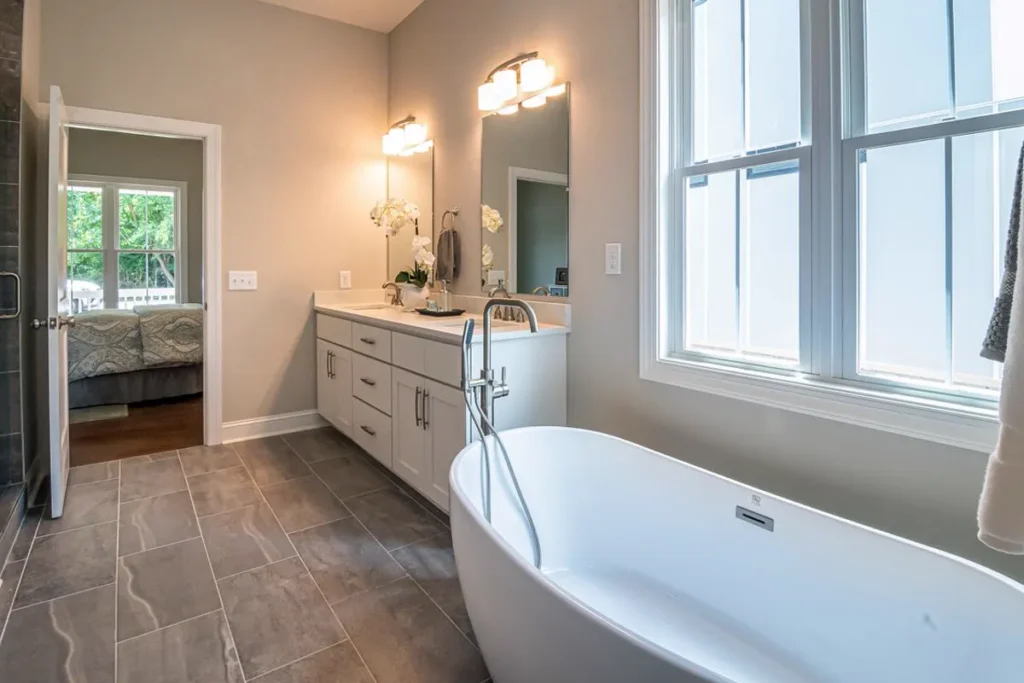
Porcelain and ceramic tiles remain the default bathroom choice for good reasons. They handle water well, come in an enormous range of colours, sizes, and patterns, and suit almost any style, from a farmhouse bathroom to a sharp modern ensuite. Porcelain is denser and less porous than standard ceramic, which makes it a stronger pick for floors that take daily splashes and heavy use. Ceramic is usually easier to cut and often cheaper, and it works well in lighter-use bathrooms such as a guest powder room.
Both can imitate other surfaces convincingly. Wood-look porcelain gives you plank lines and grain without the moisture worries of real wood, and stone-look porcelain gives you marble veining without real marble’s sealing schedule.
The trade-offs are comfort and upkeep. Tile feels hard and cold underfoot, so a bath mat or heated floor is worth planning in from the start. Grout needs regular cleaning, and a cracked tile is harder to replace than a single vinyl plank. Still, for daily splashes, tile is hard to beat on durability.
Natural Stone: Beautiful, Heavy, And Honest About Upkeep
Marble, slate, travertine, and granite each bring something no manufactured tile can copy exactly. Every slab is different, the veining and tone shift from tile to tile, and the floor gains a depth that makes a bathroom feel considered rather than assembled. Slate, with its natural texture, also offers better wet grip than polished marble, which is worth weighing if slip safety matters to you.
Stone asks for more in return. Most stone is porous and needs sealing, then resealing on a schedule that depends on the stone and finish. Polished stone can be slippery when wet, while honed finishes grip better but may need more frequent sealing. Strong cleaners can mark some stones, so cleaning has to stay gentle.
Stone is also heavy, and laying it well is skilled work. For a main bathroom you plan to enjoy for years, that cost and care can be worth it. For a rental refresh, it is usually more commitment than the project needs.
Luxury Vinyl: Warm, Quiet, And Forgiving
Luxury vinyl plank and luxury vinyl tile have changed what a budget bathroom floor can look like. The better products imitate wood and stone closely, feel softer and warmer underfoot than tile, and run quieter, which matters in a bathroom next to a bedroom. Many have a waterproof core, and installation is often simpler than tile, which keeps labour costs down.
Sheet vinyl deserves a separate mention. Where planks and tiles have joints, a well-fitted sheet has almost none, which makes it one of the most practical choices for a wet room. Its drawback is appearance, and a deep cut can be hard to repair without replacing a larger section.
With planks, read the product details carefully. A waterproof core does not make every edge and cut-out waterproof, and the floor still needs sealing around the bath, shower, and toilet. A thicker wear layer also stands up better to grit and daily cleaning.
Laminate Alternatives: Know The Wet-Area Limits Before You Buy
Laminate is often confused with vinyl, and the confusion causes real damage. Traditional laminate has a fibreboard core that swells when it absorbs water, and once it swells, it does not recover. Even a product marketed as water-resistant laminate is not the same as a waterproof floor. It may cope with an occasional splash in a dry powder room, but it is a poor match for a bathroom with a shower, a bath used daily, or any history of leaks.
Some newer waterproof laminate-style products use a different core and sealed joints, and they perform better than older laminate. Even then, treat the manufacturer’s bathroom approval, joint sealing instructions, and warranty terms as the deciding evidence, not the word waterproof on the front of the box. If the product is not explicitly approved for full bathrooms, or if the warranty excludes wet areas, believe the warranty.
For most bathrooms, vinyl or tile gives you the same warm look with far less risk.
Concrete: Raw, Modern, And Not For Every Home
A polished or stained concrete floor suits a modern or industrial bathroom beautifully. It is hard-wearing, easy to wipe clean, and can be coloured, stained, or textured to suit the room. In a home already built on a concrete slab, it can also be one of the more affordable ways to get a distinctive floor, since the base is already there.
Concrete is cold and very hard, like tile, and a smooth polished finish can be slippery when wet. A light texture in the finish helps with grip and is worth specifying before the work starts, because it is much harder to add afterwards. Concrete also needs periodic sealing, and finishing a new slab well is skilled work, not a weekend job.
Concrete suits a ground-floor bathroom or wet room best. Upstairs, weight, structure, and plumbing access need professional advice first.
Wood-Look Options: Warmth Without Pretending Water Does Not Matter
Engineered wood is the most realistic option if you insist on a genuine wood surface, because its layered construction moves less with humidity than solid wood. It still needs a well-ventilated bathroom, prompt attention to spills, and a finish kept in good condition. It is not a good match for a children’s bathroom or wet room. Solid hardwood is best avoided in bathrooms altogether, since prolonged moisture can warp it even with a protective finish.
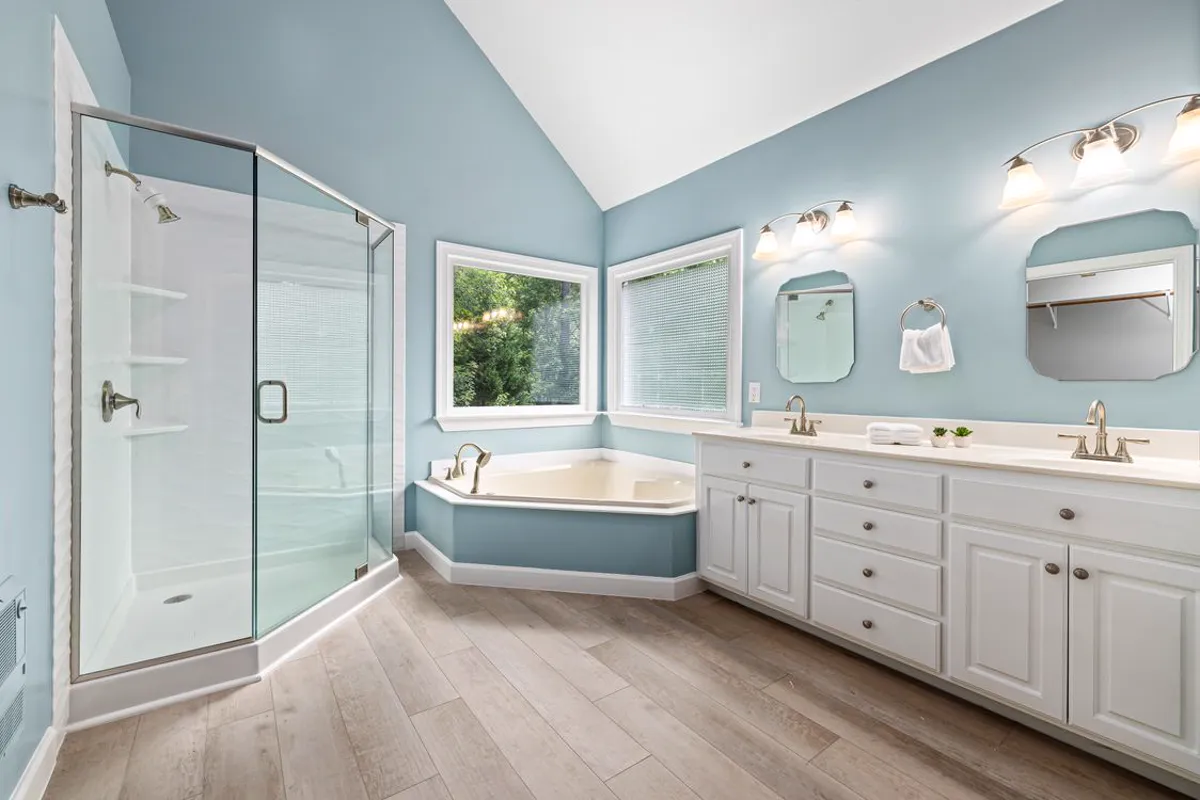
Wood-look porcelain and wood-look vinyl solve most of that tension, giving you the colour and grain of wood while handling water far better. Start with those two, and only move to engineered wood if a real wood surface matters more than the extra care.
Cork feels warm and slightly cushioned, and suits a low-traffic adult bathroom, but it still needs sealing and protection from standing water.
Bathroom Flooring Compared At A Glance
| Material | Water Handling | Grip | Upkeep | Best For |
|---|---|---|---|---|
| Porcelain tile | Excellent | Good with matte or textured finish | Low, plus grout cleaning | Busy family bathrooms |
| Ceramic tile | Very good | Good with matte or textured finish | Low to moderate | Guest and powder rooms |
| Natural stone | Good when sealed | Varies by finish | Higher, needs resealing | Long-term main bathrooms |
| Luxury vinyl plank | Very good with sealed edges | Moderate to good | Low | Budget and comfort-first rooms |
| Sheet vinyl | Excellent, fewest joints | Moderate to good | Low | Wet rooms and children’s bathrooms |
| Laminate alternatives | Limited, check approval | Moderate | Moderate, joint care | Dry powder rooms only |
| Concrete | Very good when sealed | Needs texture for grip | Moderate, resealing | Modern ground-floor bathrooms |
| Engineered wood | Limited, needs care | Moderate | Higher | Dry, well-ventilated adult bathrooms |
Use this table as a starting filter, not a final verdict. Two porcelain tiles can behave very differently depending on finish.
Budget Guidance: Where To Spend And Where To Save
Material prices vary widely by brand, finish, and region, and labour, subfloor preparation, and waterproofing can change the total as much as the floor itself. As a rough guide, think in bands: basic ceramic tile and sheet vinyl at the lower end, luxury vinyl and standard porcelain in the middle, and natural stone and high-end porcelain at the higher end. Installation often costs more for tile and stone than for click-together vinyl.
Spend where water can cause damage: a sound subfloor, sealed edges around fixtures, and good grout or joint treatment. A simple, well-laid tile will outlast a fashionable pattern laid badly.
If the budget is tight, choose the best water handling you can afford, keep the layout simple to reduce cutting and waste, and put leftover budget toward a heated mat or a better bath mat rather than a pricier finish. For a fuller comparison of the main materials, see This Old House’s guide to bathroom flooring options
Care And Cleaning That Keeps The Floor Looking New
Most bathroom floors fail through neglect. Grit scratches vinyl and dulls stone, soap scum hardens on grout, and a small leak under a vanity quietly tests every joint.
A simple routine covers most materials:
- Sweep or vacuum first, so grit is not dragged across the floor during mopping.
- Mop with a mild, pH-neutral cleaner and clean water, then let the floor dry rather than leaving it damp.
- Clean grout regularly with a gentle brush, and reseal grout and stone when water stops beading or the surface starts to stain more easily.
- Wipe up spills and splashes promptly, especially around the bath, shower, and toilet base.
- Avoid harsh abrasives and strong acidic cleaners on stone, and check the manufacturer’s care guide before using a steam mop on vinyl or wood-look floors.
If a tile cracks or a joint opens, fix it early. Left for months, it can let water reach the subfloor.
Once the floor itself is sorted, the rest of the room still needs to work around it — for ideas on keeping towels close at hand in the same bathroom, see Archly Home’s guide to bathroom towel storage ideas.
Frequently Asked Questions
What Is The Most Waterproof Bathroom Flooring?
Porcelain tile and sheet vinyl are among the strongest performers, because porcelain absorbs very little water and sheet vinyl has very few joints. Even so, grout, edges, drains, and the layer beneath the surface all have to be handled properly, especially in showers and wet rooms.
Can You Put Laminate Flooring In A Bathroom?
Traditional laminate is a poor choice for most bathrooms because its core swells when it absorbs water. Only use a newer product if it is explicitly approved for full bathrooms and its warranty covers that use. When in doubt, tile or luxury vinyl is safer.
Is Tile Too Cold For A Bathroom Floor?
Tile and stone do feel cold, particularly on winter mornings. Underfloor heating solves most of that complaint, and tile conducts heat well. If heating is not in the budget, a thick bath mat makes a noticeable difference.
How Do You Make A Bathroom Floor Less Slippery?
Choose a matte or textured finish, consider smaller tiles with more grout lines in wet zones, keep the floor free of soap residue, and use a bath mat where you step out of the shower or bath.
Pick The Floor You Will Still Like In Five Years
The best bathroom flooring idea is not the most dramatic sample in the showroom. It is the one that still looks good after hundreds of showers, still grips when feet are wet, and still fits the way you clean. Start with water and grip, be honest about upkeep, and let style work within those limits.