A gardening table earns its place the moment potting stops happening on the ground, on a borrowed patio chair, or on a surface that was never meant to get muddy. A good one gives you a steady place to stand, room to spread out, and somewhere sensible for the pots, soil, and tools that otherwise end up scattered across the yard. The best choice is rarely the biggest or the most elaborate bench on display. It is the one that suits the way you actually garden, the space you actually have, and the weather it will actually face.
What A Gardening Table Is And What It Is Not
In this guide, a gardening table means a potting bench or garden work table. It is a working surface built for messy, practical jobs: filling pots, repotting plants, sowing seeds, dividing perennials, trimming roots, and sorting cuttings. Most designs stand at a comfortable working height, include open or closed storage below, and often add a shelf, hooks, or a raised back for small tools.
That distinction matters when you shop, because the same search phrase can surface very different products. A dining table or patio eating table is made for meals, chairs, and a clear, clean top. A gardening table is made for soil, water, and weight. Its surface should tolerate damp potting mix, a dropped terracotta pot, and a watering can knocked over in a hurry. If a table looks too precious to spill soil on, it will probably spend its life as decoration while the real potting still happens somewhere inconvenient.
A gardening table can still look good in the garden. The point is simply to judge it first as a workstation and second as a piece of garden furniture. A bench that looks charming but wobbles under a bag of potting mix, or has nowhere to put a trowel, will frustrate you every time you use it.
The Main Types Of Gardening Tables
Start with the shape of your gardening life, not with a product photo. A gardener who starts dozens of seedlings needs a different setup from someone who repots a few houseplants each spring, and a balcony gardener needs something different again.
Open Potting Benches
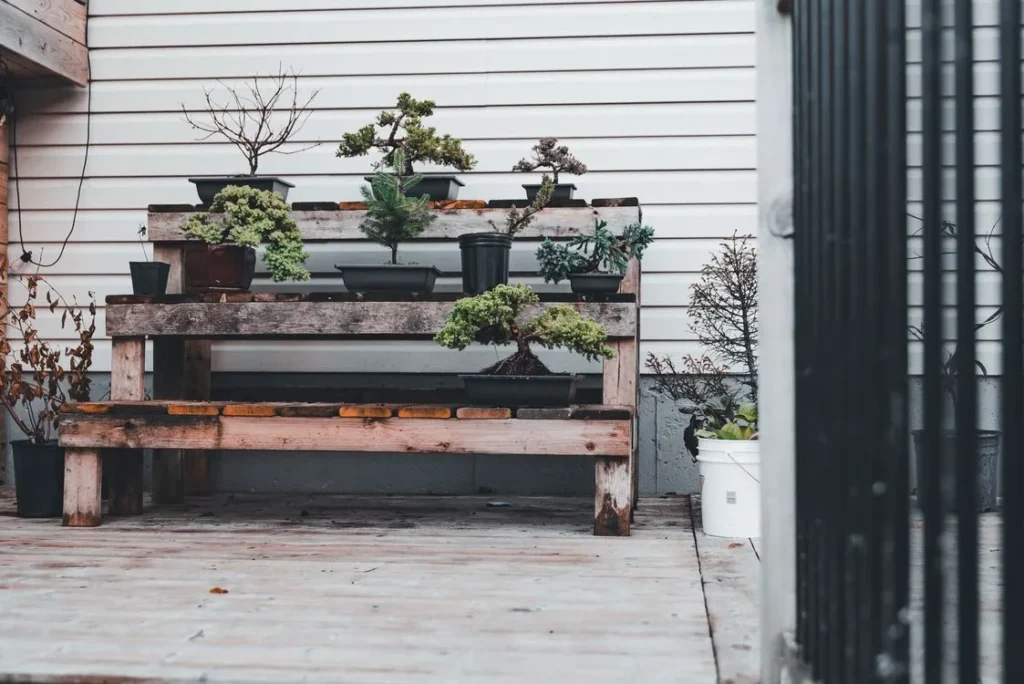
An open bench is the simplest and often the most useful design. It has a flat work surface, an open lower shelf, and little else getting in the way. Soil falls through slats or brushes off easily, large pots fit without fuss, and you can see everything at a glance. Open benches suit gardeners who like to keep tools in a nearby shed or carry a tool tote to the bench, and who want maximum elbow room for trays and plants.
The trade-off is exposure. Small items can blow away, seed packets get damp in a shower, and everything on the lower shelf is visible. If your bench will sit in an open, windy spot, plan for a lidded box or a small basket for the bits that matter most.
Benches With Shelves And Cabinets
A bench with shelves, drawers, or a cabinet keeps the workstation self-contained. Hand tools, twine, labels, gloves, and small pots can live right where you work, which cuts down on trips back indoors. An upper shelf is handy for plants waiting to be potted, while a closed cabinet hides bags, buckets, and anything you would rather not look at all day.
Closed storage needs a little more thought, though. Drawers that fill with damp soil become stiff and unpleasant, and a cabinet with no airflow can stay damp inside. Look for drawers you can lift out and empty, doors that close properly, and shelves tall enough for the pots you actually own. Storage only helps if it fits your supplies without a daily wrestling match.
Foldable And Compact Tables
A foldable or compact table is a strong option for a small patio, balcony, or a garden where space changes with the seasons. Fold it out for a weekend of repotting, then tuck it away when the patio needs to host guests. Many compact designs still offer a lower shelf or a hanging rail, so they are far more useful than a plain folding table.
The compromise is stability and capacity. A light, folding frame will not carry the same load as a heavy fixed bench, and a narrow top can feel cramped once a tray, a soil bag, and three pots are all competing for room. Before choosing a compact model, picture your busiest potting session, not your quietest one, and check that the folded size genuinely fits its storage spot.
Greenhouse And Indoor Work Tables
A bench inside a greenhouse, sunroom, or garage faces different demands. It may not need to resist rain, but it will deal with humidity, spilled water, and constant use during seed-starting season. A smooth, easy-to-clean top matters here, as does a surface that will not stain the first time wet compost sits on it. Mesh or slatted tops can help water drain away, while a solid top is better if you work with fine seed or small cuttings that would slip through gaps.
Indoor benches also need to respect the room around them. A bench near a door should not block the path when trays are stacked on it, and a bench under a window should leave room for plants to move in and out without knocking stems against the frame.
Built-In And DIY Workstations
Some gardeners prefer a bench built into a shed wall, along a fence, or as part of a larger garden storage area. A built-in workstation can use an awkward corner well, match the height of the person who uses it most, and include exactly the shelves and hooks that person wants. It can also be a satisfying weekend project for someone comfortable with basic woodworking.
The risk with a custom build is locking in a design before you know how you work. If you are still learning your routine, a freestanding bench is easier to move, adjust, or replace. A built-in bench makes most sense once you know where you like to stand, what you reach for first, and how much mess you tend to make.
Choosing The Right Material For Your Climate And Habits
Material decides how a gardening table looks after a few seasons, how much care it asks for, and how it handles wet soil. There is no single best material, only a best match for your climate and your tolerance for maintenance.
Wood is warm, sturdy, and easy to repair, and a wooden potting bench suits most traditional gardens. Cedar and other naturally durable woods handle outdoor conditions better than soft, untreated timber, but any wooden bench left outside will benefit from periodic cleaning and a suitable outdoor finish. Wood can stain, absorb water, and develop rough patches if neglected, so it suits gardeners who do not mind a little seasonal upkeep in exchange for a natural look.
Metal benches, often made from steel or aluminum with a protective coating, are strong, easy to wipe down, and well suited to a clean, modern garden. A metal top shrugs off wet soil and is easy to hose down, which is a real advantage during heavy repotting sessions. The things to watch are rust at joints and scratches in the coating, especially where the bench sits in constant damp or near salty air. Dry the surface after heavy watering, and touch up damage before it spreads.
Plastic and composite benches are light, weather-resistant, and low maintenance. They will not rot, they clean easily, and they can be a sensible choice for a damp climate or a bench that must be moved often. The downside is character and, sometimes, sturdiness: a lightweight plastic bench may flex under heavy pots, and cheaper designs can look out of place in a mature garden. Look for thick, well-braced panels rather than thin, hollow-feeling tops.
Whatever material you choose, check the joints. A bench lives a hard life, with wet weight, repeated lifting, and temperature changes pulling at every connection. Solid fixings, braced legs, and a frame that does not twist when you lean on a corner matter more than a decorative finish.
| Material | Strengths | Watch Out For | Best Suited To |
|---|---|---|---|
| Wood | Warm look, sturdy, repairable | Needs periodic sealing and cleaning; can stain | Traditional gardens and gardeners happy with seasonal care |
| Metal | Strong, easy to clean, modern look | Coating damage can lead to rust | Wet work, tidy gardens, and frequent hosing down |
| Plastic Or Composite | Light, weather-resistant, low maintenance | Can flex under heavy loads; varies in quality | Damp climates, small spaces, and benches that move often |
Getting The Size And Height Right
Height is the detail that decides whether a gardening table feels helpful or tiring. A surface close to kitchen-counter height lets most people work standing up without hunching over pots or reaching upward to see inside them. If you are taller or shorter than average, or if you share the bench with someone of a very different height, that standard height may not be ideal, so test the height in person when you can. Stand at the bench, hold a pot in front of you, and notice whether your shoulders stay relaxed and you can see into the pot without bending your neck.
Width matters just as much. A generous top lets you keep a soil bag open on one side, a tray in the middle, and finished pots on the other, without constantly shuffling things around. A narrow bench can still work well if you treat it as a single-task station and keep bulk supplies on the shelf below or on a nearby surface. Depth is easy to overlook: a very deep bench forces you to reach, while a shallow one leaves no room for a tray behind the pot you are filling. A comfortable reach, with tools within easy arm’s length, keeps the work flowing.
Before you buy, measure the spot, not just the bench. Leave room to stand comfortably, step back with a tray in your hands, and open any doors or drawers fully. Measure gates and paths too, if the bench must travel from delivery point to garden. A bench that fits the catalogue photo but not the side gate becomes a problem before it ever holds a plant.
Where To Place A Gardening Table
Placement can make an ordinary bench feel effortless or turn a good bench into a chore. The most useful spot is usually close to where the work ends up: near raised beds, the greenhouse door, or the containers you tend most often. That shortens every trip with a heavy pot and makes it more likely you will use the bench for quick jobs, not just big weekend sessions.
Look for level ground. A bench that rocks on uneven soil will spill mix at the worst moment, so a patio slab, compacted gravel pad, or deck boards make a steadier base than soft lawn. Shelter helps too. A wall, fence, or overhang breaks wind, keeps sudden rain off seed packets, and stops lightweight pots from blowing over. Full, harsh afternoon sun can dry out seedlings left on the bench and make the surface uncomfortably hot, so dappled shade or a spot that catches morning light often works better for working comfort and for plants waiting their turn.
Water access is the quiet deal-maker. A bench near an outdoor tap, or within easy reach of a watering can refill point, saves countless trips. If plumbing a sink into the bench is not practical, a simple bucket and a nearby hose still keep the workflow tidy. Finally, think about mess. Potting creates soil on the ground, and a bench placed where spilled mix can be swept up easily will stay pleasant to use. A spot over gravel or paving is far more forgiving than one over a prized lawn.
Storage That Actually Stays Organized
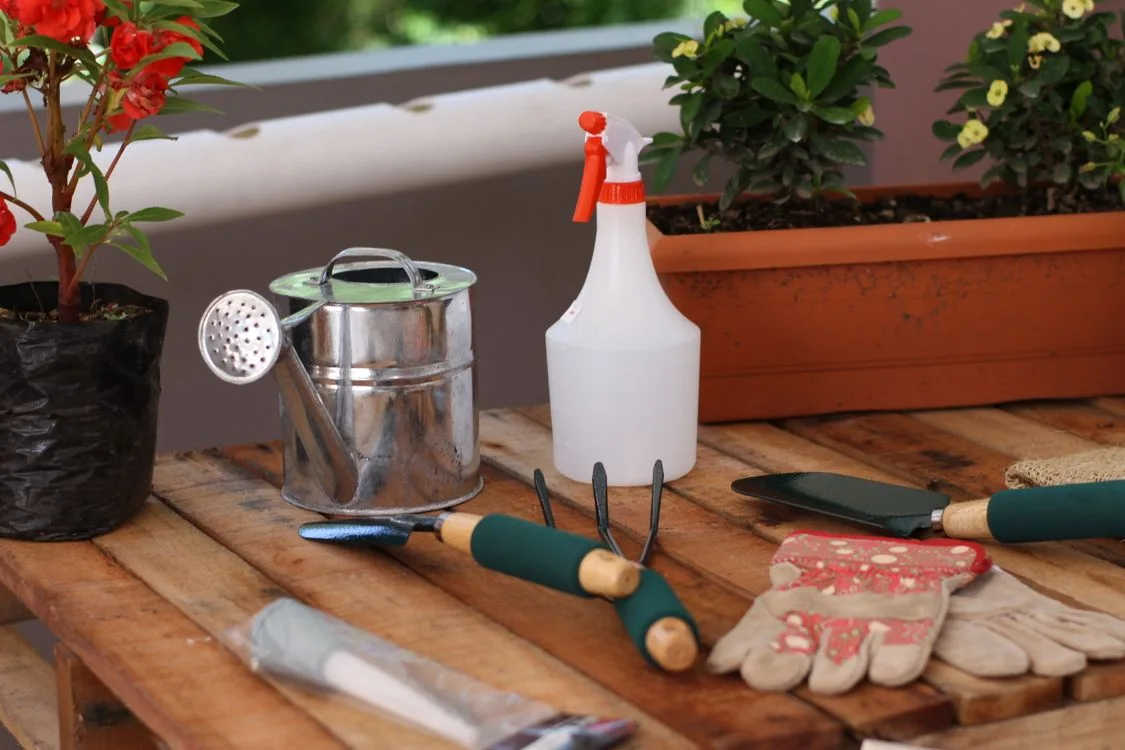
A gardening table works best when everything has a home and the work surface stays clear. Start by sorting supplies into groups you reach for together: potting tools, ties and labels, seeds, pots and trays, and soil amendments. Then give each group a container that suits it. Open pots or jars work well for trowels and scissors, a lidded box protects seed packets from damp, and a sturdy crate keeps empty pots from toppling across the shelf.
Keep daily tools at hand height and heavy items low. Soil bags belong on a lower shelf or on the ground beside the bench, not balanced on an upper shelf where they must be lifted down. Small, easily lost items belong in containers, not loose on a shelf where wind or a bump sends them scattering. Hooks on the back or side of the bench are excellent for gloves, aprons, and twine, as long as they do not snag sleeves or block the work surface.
A simple end-of-session habit keeps the system working: brush soil off the top, return tools to their spots, and put open seed packets away. Five minutes at the end of a potting session prevents the slow slide into a bench that is technically full of storage but practically unusable because nothing can be found.
Setting Up A Practical Potting Workflow
A good workflow turns a gardening table from a storage unit into a proper workstation. Think of the bench in zones, working from one side to the other: supplies in, potting in the middle, finished plants out. Soil and empty pots start on one side, the main surface stays clear for filling and firming, and newly potted plants move to a tray or shelf on the other side to be watered and carried away. That left-to-right (or right-to-left, if that feels natural) flow stops finished pots from getting knocked over by the next empty one.
Seed starting is where a bench really proves its worth, because it gathers all the small, fiddly pieces in one place. Keep trays, labels, and a scoop together, moisten mix before filling pots, and label each pot as you sow rather than trusting memory at the end of a long session. For a refresher on seed-starting supplies and growing media, the University of Maryland Extension guide to starting vegetable seeds indoors explains containers and potting mix in clear, practical detail.
Once plants are potted, they need somewhere sensible to go next. That is where the garden itself takes over. If you grow in raised beds, our guide to how to fill a garden bed walks through layering and filling so transplants settle in well. A cedar garden bed pairs naturally with a wooden potting bench, giving you a durable, attractive growing space close to your workstation. Keeping the bench near the beds closes the loop: pot, carry a short distance, plant, and return for the next tray.
Looking After Your Table Through The Seasons
A gardening table does not need fuss, but it does need regular attention. Brush off soil after use, because damp mix left on a surface invites staining and, on wood, softens the finish over time. Wipe or hose down the top when it gets muddy, and check joints and screws a few times a year, tightening anything that has loosened under heavy use. Small repairs made early keep a bench solid; ignored wobbles tend to get worse, especially on a bench that is moved often.
Seasonal care depends on material and climate. Wooden benches benefit from cleaning and a fresh outdoor finish when the surface starts to look dry or grey. Metal benches should be dried after wet sessions and checked for chips in the coating. Plastic benches mostly need a good wash and a check that feet and braces are still firm. In harsh winters, a cover or a sheltered spot protects any bench, and moving lightweight items indoors prevents them from becoming brittle or waterlogged.
At the end of the growing season, empty drawers, shake out trays, and store seed packets somewhere dry. A bench cleared and cleaned in autumn is far more inviting in spring than one still holding last season’s soil, broken pots, and damp gloves.
Common Mistakes To Avoid
- Choosing a bench for looks alone, without checking stability, height, and storage.
- Buying a top too small for a tray, a soil bag, and a pot at the same time.
- Placing the bench far from water, beds, or a level, sheltered spot.
- Storing heavy soil bags up high, where they are awkward and unsafe to lift down.
- Leaving seed packets, labels, and paper items exposed to rain and wind.
- Ignoring small wobbles, loose screws, or coating damage until they become structural problems.
- Treating a dining table as a potting bench, then wondering why it stains, wobbles, or stays muddy.
Frequently Asked Questions
Is A Gardening Table The Same As An Outdoor Dining Table?
No. A gardening table is a workstation built for soil, water, and heavy pots, with storage and a durable, easy-to-clean surface. An outdoor dining table is built for meals and seating, with a clean top meant to stay clear. Using one for the other’s job usually ends with a stained dining table or a cramped, unstable potting setup.
Can A Gardening Table Stay Outside All Year?
Many can, provided the material suits your climate and the bench gets basic care. Wood needs periodic sealing, metal needs coating checks, and any bench benefits from shelter or a cover in harsh weather. In very wet or freezing winters, moving small items indoors and covering the bench will extend its life noticeably.
What Should I Put On A Small Gardening Table?
Prioritize the few things you use every time: a trowel, gloves, labels, a scoop, and one tray. Keep bulk soil and spare pots on a lower shelf or nearby, and resist filling the top with decorative items. A small bench works best as a single-task station, with everything else within one step.
Do I Need A Sink On A Potting Bench?
Not necessarily. A built-in sink is convenient for washing roots and hands, but it adds plumbing, weight, and cost. For most home gardeners, a bucket of water and a nearby tap do the same job well. Choose a sink only if you wash produce or roots at the bench often enough to justify it.
A Simple Way To Choose
If you are still deciding, work through these questions in order. First, where will the bench live, and how much level, sheltered space is truly available? Second, what jobs will it handle most often: seed starting, repotting, general tidying, or all three? Third, which material fits your climate and the amount of upkeep you will honestly do? Fourth, does the height let you work without hunching, and does the top fit a tray and a pot at once? A bench that answers those four questions well will serve you far better than a larger, fancier model that answers none of them.
A gardening table is a small investment in how gardening feels day to day. Chosen well and placed thoughtfully, it turns potting from a scramble into a calm, organized part of the garden routine, and it keeps the mess where it belongs: on a surface built for it, close to the plants it serves.