A bare deck is a platform. A decorated deck is a room — one that just happens to have sky for a ceiling. The difference isn’t money or square footage. It’s a handful of decisions made in the right order: what the space is for, where people will sit, how it will feel after dark, and what softens the hard edges of boards and railings.
Most decks go wrong in the same quiet way. Furniture arrives before anyone has thought about how the space will actually be used, so a dining set lands where nobody eats, or a deep sofa swallows a deck that only ever hosts morning coffee. Start with use, not shopping, and the rest falls into place.
Start With How You Actually Use The Deck
Before buying anything, spend a week noticing the deck you already have. Where does the sun land at breakfast, and where does it beat down at four in the afternoon? Which corner catches a breeze, and which one feels overlooked by the neighbors? Where does everyone naturally drift when they step outside?
The answers divide most decks into one or two jobs, not five. A deck built for slow mornings needs a couple of comfortable chairs, a small table at elbow height, and a spot for a book and a mug. A deck built for evening meals needs a table people can linger at, chairs that don’t punish anyone after an hour, and light that flatters food and faces. A deck built for larger gatherings needs flexible seating that can be pulled together or pushed apart.
Write down the one job that matters most, then the second. Everything you buy should serve one of those two. Anything that serves neither is decoration looking for a reason to exist, and on a deck, it usually just gets in the way of a walkway.
Think Of The Deck Like A Room
Interior designers talk about floors, walls, and ceilings, and a deck has all three — just in outdoor form. Treating them as a set is the fastest way to make a deck feel finished instead of furnished.
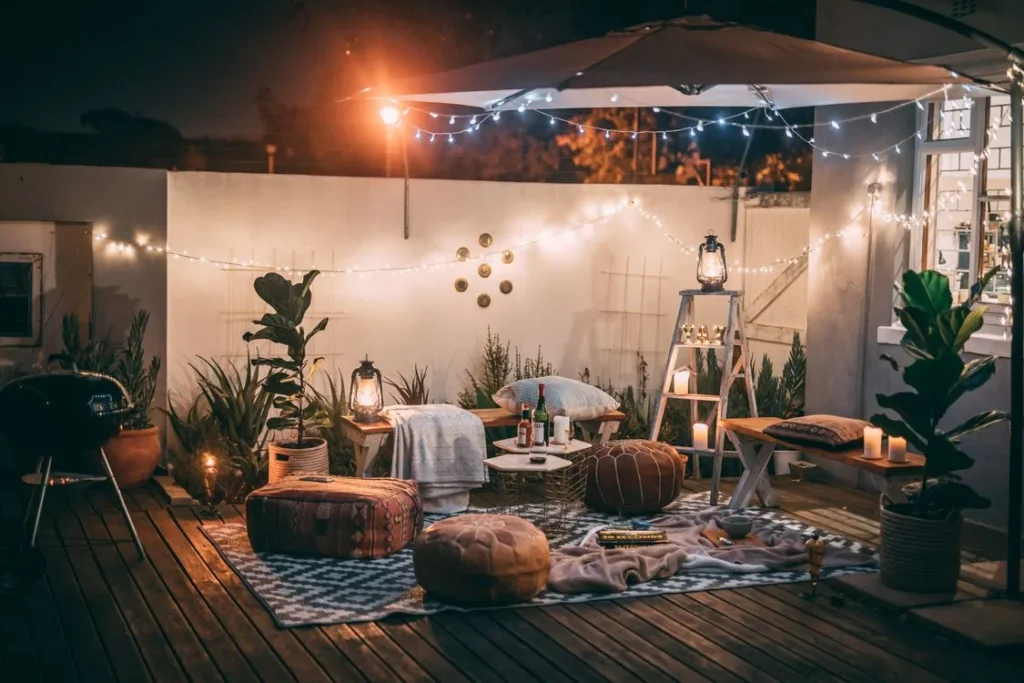
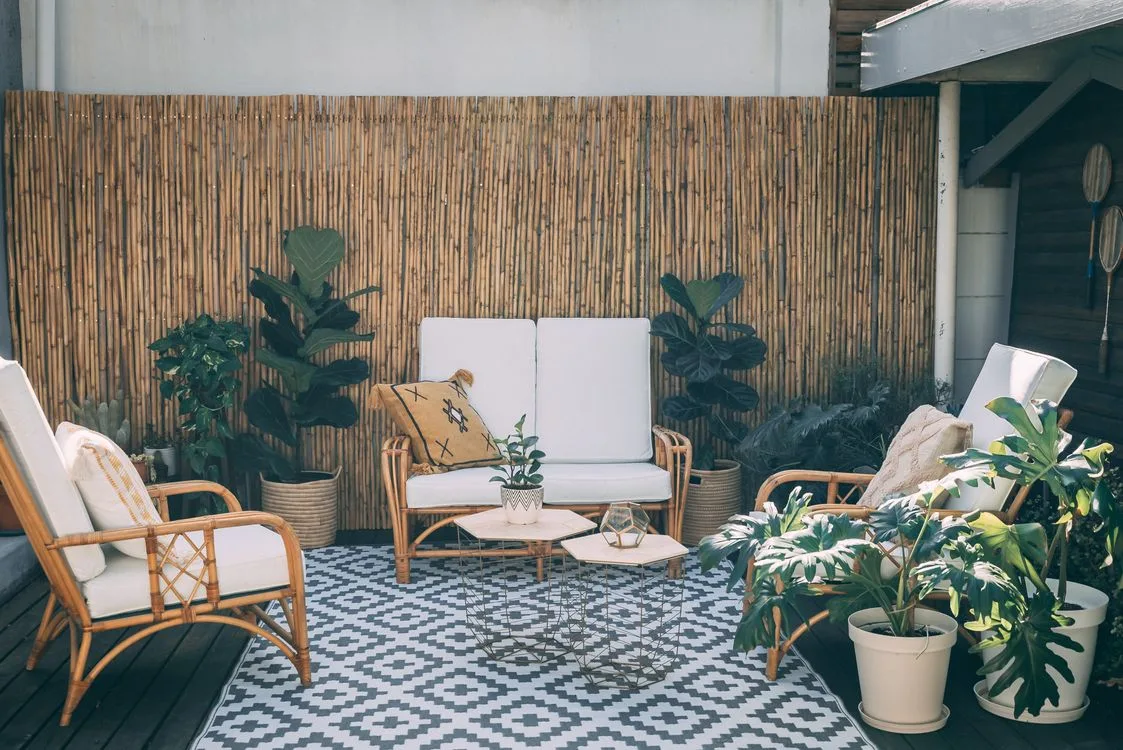
The floor is the decking itself, and an outdoor rug is what turns a stretch of boards into a defined sitting area. Choose a rug large enough that the front legs of every seat in the group rest on it; a rug that floats in the middle of a seating group, touching nothing, looks stranded. Flat-weave or polypropylene rugs handle rain and hose-downs better than thick pile, and lighter colors stay cooler under bare feet.
The walls are the railings, the house wall, and whatever screens off the neighbors. Railings dressed with planters, a low bench running along one edge, or a row of tall pots can make the boundary feel intentional rather than bare. Against the house wall, a single piece of outdoor art, a mirror rated for exterior use, or a trellis with a climbing plant gives the eye somewhere to rest.
The ceiling is whatever sits overhead — open sky, a pergola, a shade sail, or a retractable canopy. Even a partial overhead structure changes the feeling of a deck completely, because it gives the space a sense of enclosure and a place to hang light. If no structure is possible, a large cantilever umbrella over the main seating group does much of the same work.
Choose Furniture That Fits The Space, Not The Catalog
Deck furniture fails most often on scale. A deep, low lounge set photographed on a sprawling showroom deck can devour a modest backyard deck, leaving no room to walk around it, let alone pull out a chair. Measure first, then shop with those numbers in hand — and leave at least enough room to walk comfortably around every piece.
On a small deck, the best furniture often does two jobs. A storage bench holds cushions and doubles as seating. A bistro set seats two for coffee and folds away when the deck needs to be a walkway. A narrow console against the railing can hold drinks and plants without claiming floor space. Built-in benches along a railing are worth considering too, since they seat several people without the bulk of individual chairs, and they leave the middle of the deck open.
On a larger deck, resist the urge to fill it. One generous seating group, arranged for conversation with chairs facing each other rather than lined up against the railing, feels more inviting than furniture scattered to every corner. Leave one stretch of deck deliberately empty. It reads as breathing room, and it gives kids, dogs, and guests somewhere to stand without blocking a path.
Whatever the size, buy for weather before looks. Frames and fabrics rated for outdoor use, cushions with removable covers that can be washed, and pieces light enough to move when the sun shifts will outlast prettier options that fade, rust, or mildew after a single season.
Layer The Light So Evenings Work Too
A deck with a single bright light mounted on the house wall is lit, but it isn’t inviting. Evening comfort comes from layers: a soft overhead glow, a few points of light at table height, and low light marking steps and edges for safety.
String lights are the easiest overhead layer. Draped from the house to a post, along a pergola, or between freestanding poles, they cast a warm wash that makes the whole deck feel like a room after sunset. Lanterns and candles on tables add a second, lower layer that flatters faces and makes conversation easier. Small lights on steps and posts are the practical layer — they keep footing safe without turning the evening into daylight.
Keep the color of the light warm rather than stark white, and keep the brightest fixtures off the seating area itself. Light aimed at a plant, a wall, or the railing gives atmosphere; light aimed straight at seated guests gives glare. For more detail on choosing fixtures and placement, see our guide to backyard lighting ideas.
Bring In Plants Without Turning The Deck Into A Greenhouse
Plants are what separate a deck from a balcony. They soften hard lines, add color at eye level, and make a wooden platform feel like part of the garden rather than an addition bolted onto the house. The trick is grouping, not quantity. Three pots of different heights clustered near a seating area look deliberate; a dozen small pots scattered along every edge look like clutter waiting to be tripped over.
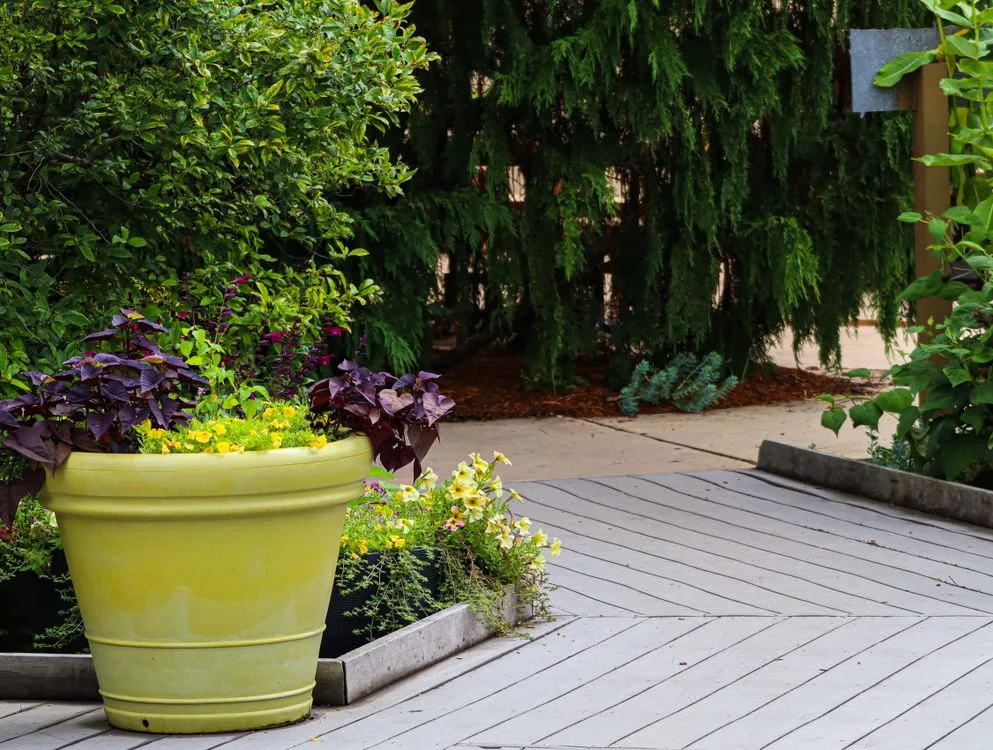
Think in heights. Tall plants in large containers anchor corners and screen views. Medium plants fill the middle ground beside chairs and benches. Trailing plants in railing planters or hanging baskets draw the eye upward and leave floor space free. A single material or color family for the pots — terracotta, dark ceramic, or galvanized metal — keeps a mixed collection of plants looking coherent.
Herbs earn their place on a deck more than most plants, since they reward use as well as looks. Rosemary, mint, and basil in pots near the door or the grill are easy to reach, fragrant when brushed, and forgiving of a missed watering. Just keep mint in its own pot, since it spreads aggressively and will take over a shared container if given the chance.
Add Shade And Shelter For The Hottest Hours
A deck nobody can use at midday is a deck that only works for half the year. Shade is what turns it into a daytime room, and the right kind depends on how permanent you want it to be.
A pergola gives dappled shade and a structure for lights and climbing plants, and it changes the architecture of the deck itself — for structural inspiration, This Old House’s deck design ideas show how pergolas, railings, and built-ins can shape an outdoor space. A shade sail is lighter and cheaper, and its angled fabric adds a modern line overhead, though it needs solid anchor points and a plan for heavy wind. A cantilever umbrella is the most flexible option: it can be moved as the sun moves, folded away in a storm, and sized to the seating group rather than the whole deck.
Whatever you choose, shade the seating, not the whole deck. A fully shaded deck can feel dark and damp; a shaded seating area with sun elsewhere on the boards feels balanced and gives everyone a choice.
Make It Comfortable In Every Season
Comfort on a deck is mostly about textiles and storage. Outdoor cushions with thick, quick-drying fill make hard furniture sit-able for hours, and a couple of throws in a weatherproof box or storage bench extend the season into cool evenings. When the throws have a home on the deck itself, people actually use them; when they’re stored in the garage, they stay there.
Warmth extends the season further. A portable fire table designed for deck use, or a freestanding patio heater, can make a crisp evening genuinely pleasant — but check the manufacturer’s guidance and any local rules first, since open flames and wood decking are a combination that deserves caution rather than improvisation.
Seasonal swaps keep the deck feeling fresh without a full redecorate. Cushion covers in a different color, a new set of lantern candles, or a few pots swapped for whatever is in season can change the whole mood of the space in an afternoon, for far less than new furniture.
Deck Versus Porch: A Quick Distinction
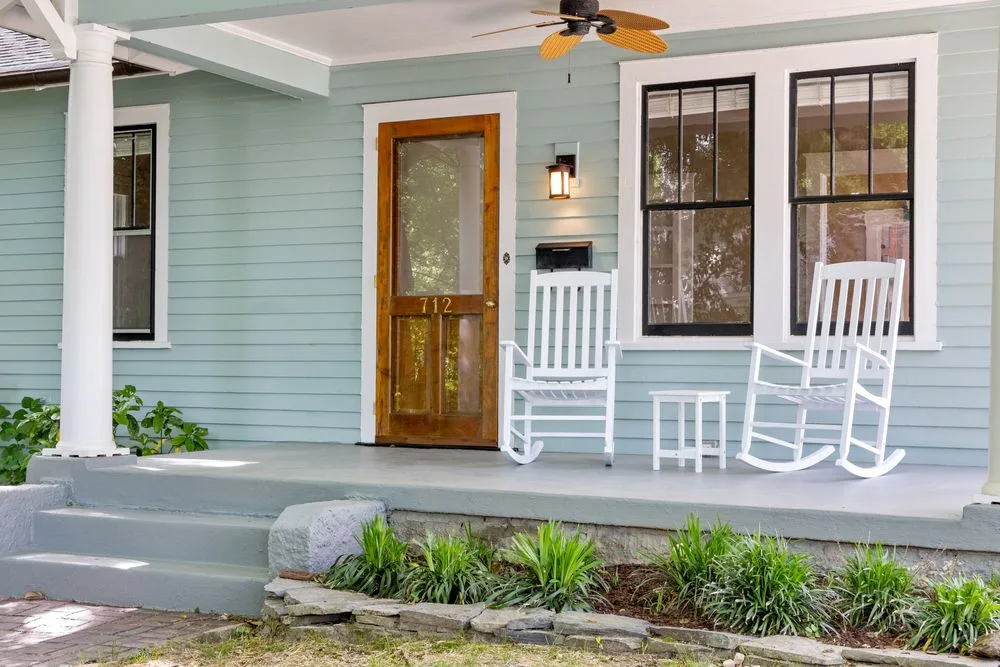
Decks and porches get confused often, and the confusion matters when you’re decorating. A porch is typically covered, attached to the front of the house, and sheltered by a roof — its decorating leans on that shelter, with swings, rocking chairs, and furnishings that rarely face driving rain. A deck is usually open to the sky, often at the back of the house, and built as a raised platform over the yard. Everything on it faces the weather directly, so materials, drainage, and shade matter more, and the decorating has to work harder to create the sense of enclosure a porch gets for free.
If your home has both, let them do different jobs. The porch can be the sheltered sitting spot; the deck can be the sunny, open-air room for meals, gatherings, and long evenings. Our porch ideas cover the covered side of that divide in more detail.
Small Deck Decorating Ideas That Actually Work
Small decks punish vague decorating more than large ones do, because every piece is a larger share of the space. The rules that matter most are: choose fewer, better pieces; keep the floor visible; and let the railing and walls do work the floor can’t.
A folding bistro set, a wall-mounted fold-down table, or a narrow bench against the railing can seat two without claiming the middle of the deck. Light colors for cushions and rugs make a tight space feel less crowded, and a single tall plant in a corner draws the eye up instead of letting it stop at the railing. Avoid a rug that covers nearly the whole deck — on a small deck, a rug should define the seating spot, not carpet the platform.
Vertical space is a small deck’s best friend. Railing planters, a trellis on the house wall, and hanging baskets add greenery and color without taking a single square foot of floor. The same goes for lighting: string lights overhead and a lantern on the table light the space without a floor lamp competing for room.
Keep It Looking Good With A Simple Routine
A decorated deck stays inviting only if it stays clean, and the routine doesn’t need to be elaborate. Sweep leaves and debris off the boards regularly so they don’t stain or hold moisture against the wood. Hose down the rug and wipe furniture frames a few times a season. Bring cushions inside during long rainy stretches or store them in a deck box, since even outdoor fabric lasts longer when it’s not permanently wet.
Once a year, look at the deck the way a guest would: check for wobbly railings, boards that have lifted, and lights that have burned out. Small fixes made early keep the space safe and keep the decorating — which is, after all, the part everyone notices — looking like it belongs on a deck that’s cared for.
A comfortable deck isn’t finished in a weekend, and it doesn’t need to be. Start with how you use it, get the seating right, add light and plants, and let the space grow into its role one season at a time. The best decks aren’t the most decorated ones. They’re the ones people actually go out and sit on.
Frequently Asked Questions
Can I Put An Outdoor Rug Directly On A Wood Deck?
Yes, provided the rug can breathe and dry. Choose a rug made for outdoor use, and lift it occasionally to sweep underneath and let the boards dry after rain. A rug that traps moisture against wood for months can stain the boards or encourage mildew, so avoid heavy, non-breathable rugs left in place all season.
What Should I Buy First If My Deck Decorating Budget Is Small?
Start with seating and light. A comfortable place to sit and a string of warm lights transform a bare deck more than any number of small accessories, and both can be bought modestly and upgraded later. Plants come next, since a few pots change the feeling of the space for very little money.
How Do I Keep Outdoor Cushions From Getting Ruined By Rain?
Choose cushions with quick-drying fill and removable, washable covers, and give them a home: a storage bench or deck box on the deck itself. Bringing cushions in during extended wet weather, or at least standing them on edge so water drains, will extend their life noticeably.