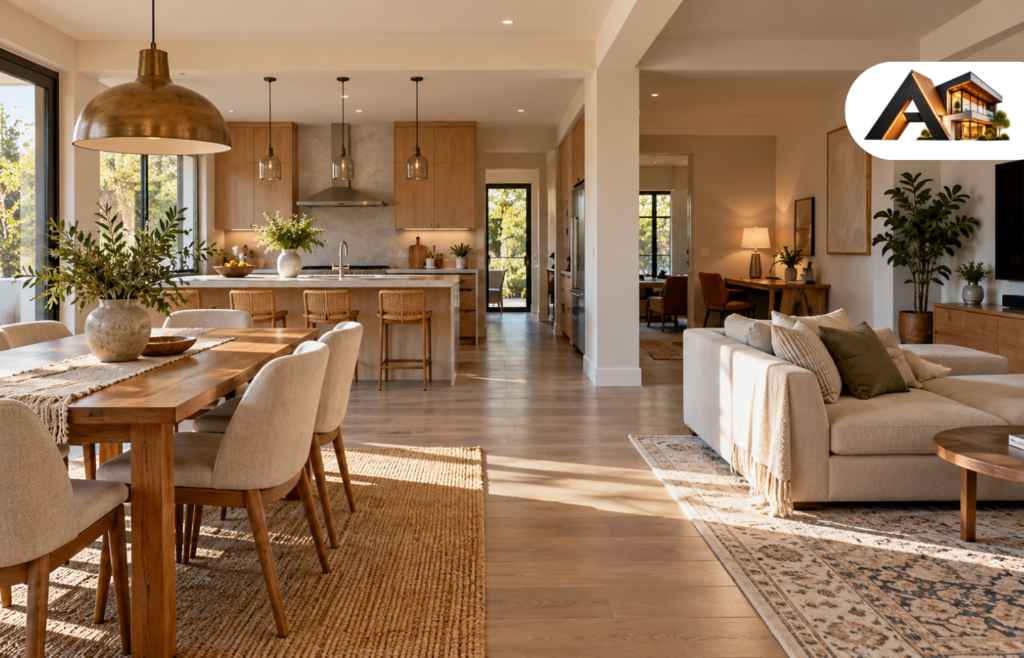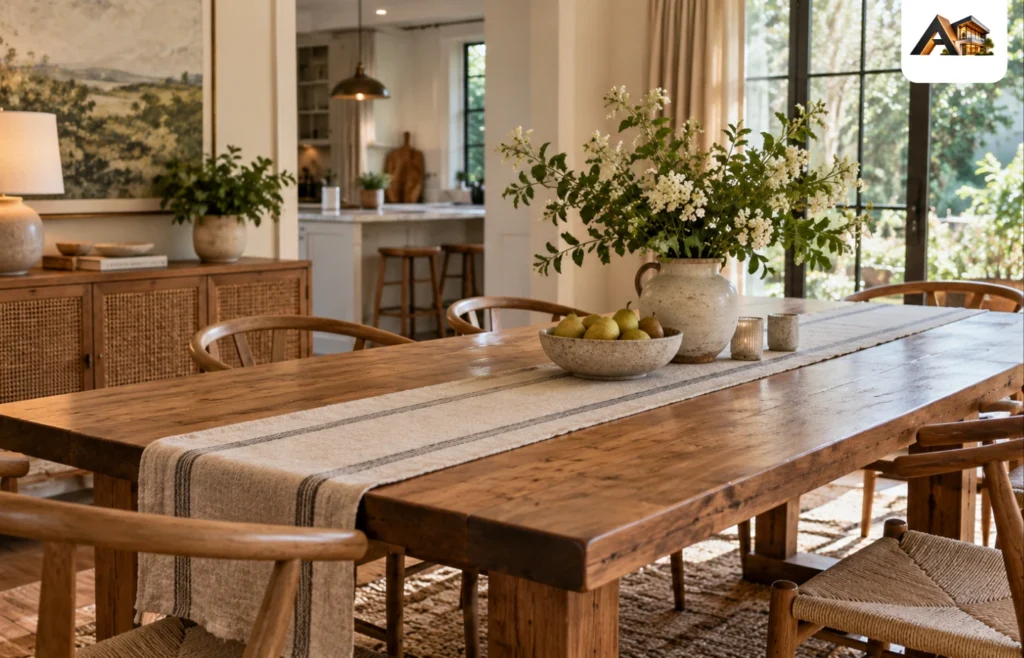
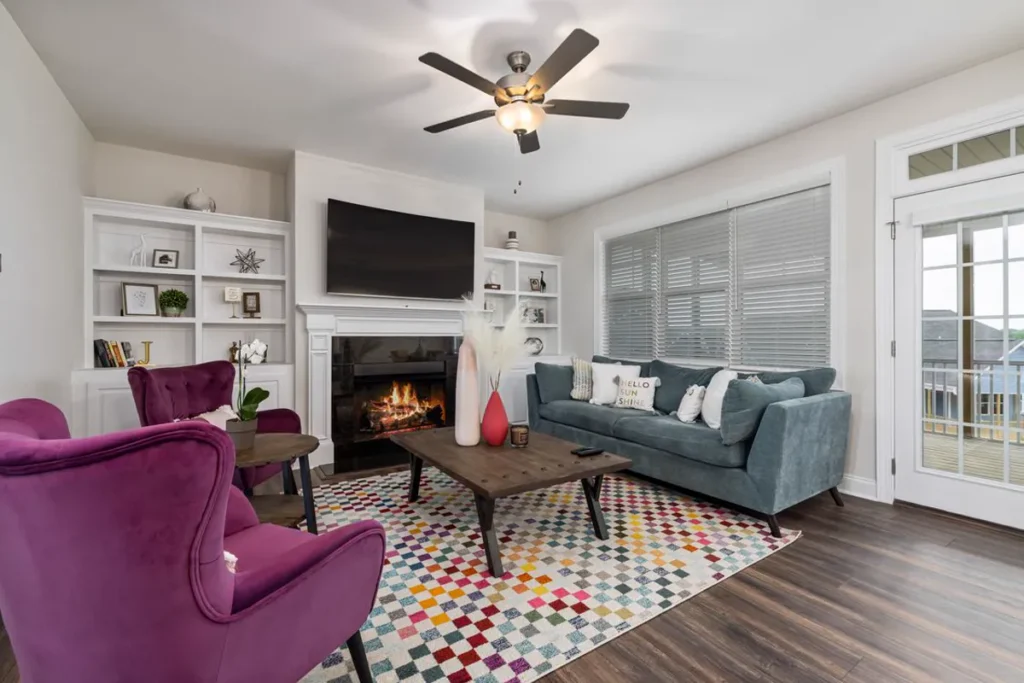
A finished room rarely comes from one dramatic purchase. More often, it comes from a handful of small decisions working together: light that falls where you actually sit, colours that relate to each other, textures that stop a room feeling flat, and furniture placed for real life rather than for a photograph. That is why two rooms with similar sofas can feel completely different. One has been arranged; the other has simply been filled.
This guide takes a whole-home approach. Instead of chasing a single style, it starts with the principles that make any room feel settled, then moves into practical changes for walls, textiles, lighting, furniture and small spaces.
Start With The Five Principles That Make A Room Feel Finished
Before buying anything, stand in the doorway and look at the room as a visitor would. Most unfinished rooms fail on the same few points, and most of them cost nothing to notice. Light, colour, texture, scale and a focal point do the quiet work in every good interior. Get those five right and the details start to fall into place on their own.
Let Light Do The Heavy Lifting
Light changes everything else in a room. A warm, well-placed lamp can make a plain wall look inviting, while a single harsh ceiling light can flatten even expensive furniture. Start by noticing where daylight enters during the hours you use the room most. Keep those paths as clear as you can, and avoid heavy window coverings that block light all day for the sake of a look you only notice at night.
Choose Colour Before You Choose Objects
Colour is easier to plan than to fix afterwards. Pick a calm base for the largest surfaces — walls, a sofa, a rug — and then choose one or two accent colours for cushions, throws, art and smaller pieces. The accents should appear more than once, but they do not need to appear everywhere. A deep green cushion, a plant and a single framed print in a similar tone will connect a room far better than ten unrelated bright objects scattered around it.
Mix Texture So Flat Rooms Gain Depth
A room in a single colour can still feel rich if its textures vary. Think of the difference between a smooth leather chair, a woven throw, a rough ceramic vase and a soft wool rug in the same space. Each surface catches light differently, so the eye keeps moving without needing bold patterns or bright colours to stay interested.
Get Scale Right Before You Add More
Scale means choosing pieces that fit the room, not just pieces you like. A large sofa can anchor a generous living room beautifully, but the same sofa in a compact room will block walkways and make everything else feel squeezed. Similarly, a tiny rug under a large seating arrangement will make the whole group look disconnected, even if the rug itself is attractive.
Give Every Room One Clear Focal Point
Every room needs a place for the eye to land first. It might be a fireplace, a large window, a piece of art, a well-styled bookshelf or a distinctive headboard. Without a focal point, the eye wanders and the room can feel restless, even when every individual piece is attractive.
Walls That Work Without Overwhelming The Room
Walls set the mood of a home more quietly than any single piece of furniture. You do not need to fill every blank wall, and in fact, a little empty space helps the pieces you do hang stand out. Start with the wall you see first when you enter the room, and make that one work hardest.
Art works best when it is sized to its wall. One large piece above a sofa usually looks calmer than a cluster of small frames spread thinly across a wide wall. Hang art so its centre sits roughly at eye level for someone standing in the room, and keep the gap between grouped frames small and even, so the group reads as one composition rather than a collection of separate pictures. If you are unsure, lay the arrangement on the floor first and step back to judge it before making holes in the wall.
Paint is another powerful wall tool, and it does not have to mean repainting a whole house. A single accent wall in a deeper shade can give a room depth, especially behind a bed, a sofa or a dining table. Lighter walls, on the other hand, bounce light around and help adjoining rooms feel connected, which matters in smaller homes where rooms flow into each other. Either way, the wall colour should relate to the furniture and textiles already in the room, not fight them for attention.
For the room-by-room version of this same wall-art and scale advice, see Archly Home’s guide to bedroom wall decor ideas.
Textiles That Soften A Room In One Afternoon
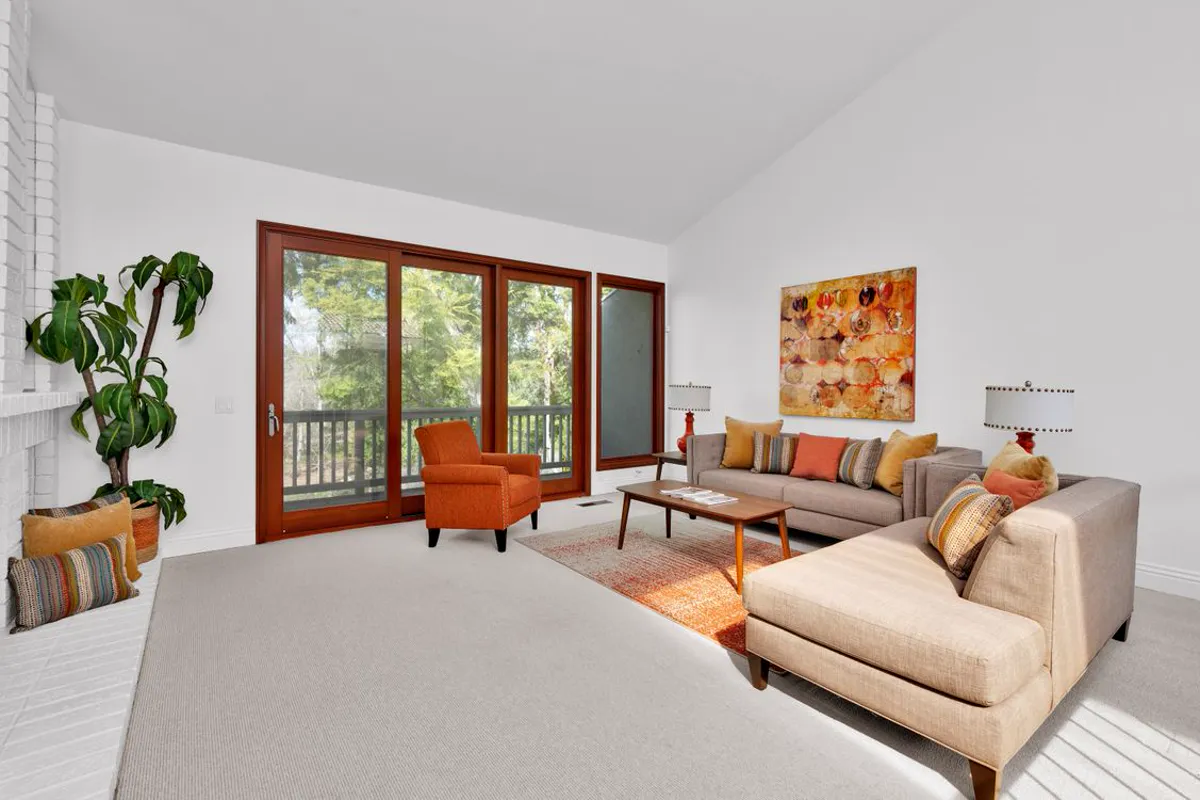
Few changes transform a room as quickly as textiles. Cushions, throws, rugs and window coverings add softness, colour and warmth, and they can be changed with the seasons without touching the furniture. They are also the easiest place to correct a room that feels too hard, too plain or too cold.
Start with the rug, because it grounds the seating area. In a living room, the rug should be large enough that at least the front legs of the sofa and chairs sit on it. A rug that floats in the middle of the floor, touching nothing, tends to make the seating look scattered. Choose a material that suits how the room is used: a flat, durable weave for a busy family room, something softer and thicker where you walk barefoot in the morning.
Cushions and throws work best in odd, restrained groups rather than matching sets. Two or three cushions in related colours and different textures will look more collected than six identical ones. A throw draped over one arm of a sofa, rather than folded perfectly across the whole seat, looks inviting rather than staged. In bedrooms, the same idea applies: a couple of layers on the bed, a soft throw and pillows you actually use, will feel more comfortable than a towering display you have to remove every night.
Lighting That Changes How A Room Feels After Dark
Daylight flatters almost any room, so the real test of decorating is how a home feels after dark. Good evening lighting is rarely about brightness alone. It is about where light falls, how warm it feels, and whether the room has pools of light that draw you into different corners.
Think in three layers. General lighting gives the room its overall glow, task lighting helps you read, cook or work, and accent lighting highlights something worth noticing, such as art, a plant or a shelf. Most rooms need at least two of these layers, and living rooms usually benefit from all three. A dimmer, where it can be fitted safely, is one of the most useful additions, because it lets the same room shift from practical daytime use to relaxed evening use.
Placement matters as much as the fitting itself. Put a reading light beside a chair, not behind it, so you are not sitting in your own shadow. Light a dark hallway corner with a small table lamp or wall light instead of leaving it as a gap between brighter rooms. In a dining area, a pendant hung over the table creates a natural gathering point, while a lamp on a sideboard keeps the rest of the room from falling into darkness around it. Small, thoughtful lights beat one large, glaring one almost every time.
Furniture Arrangement That Makes Conversation Easy
Furniture arrangement is decorating at its most practical. A beautiful room that is awkward to sit in will not stay beautiful for long, because people will avoid the seats that feel exposed or cramped. The simplest test is to sit in every seat and ask whether you can talk comfortably to someone else, reach a surface for a drink, and get up without disturbing everyone.
In a living room, arrange seating around a shared centre — a coffee table, a rug or a fireplace — rather than lining every piece against the walls. Pulling a sofa even a short distance away from the wall can make a room feel larger, because it creates a sense of depth and a clear path behind it. Leave enough space between the sofa and the coffee table to walk through comfortably, and keep side tables within easy reach of each seat. A room arranged for conversation will almost always look better than a room arranged for maximum floor space alone.
Dining areas benefit from the same thinking. A table that is too large for its room makes every meal feel cramped, while a table with generous space around it invites people to linger. If the room is tight, a round table often works better than a rectangular one, because it softens circulation and lets everyone see each other. In bedrooms, keep the path to the bed clear on at least one side, and avoid placing a large wardrobe where it blocks light from the window.
Small Rooms That Feel Larger Without A Renovation
Small rooms do not need to be decorated minimally to feel spacious. They need to be decorated deliberately, with fewer, better-chosen pieces and a clear sense of order. The aim is not to make a small room look empty, but to make it feel easy to move through and pleasant to spend time in.
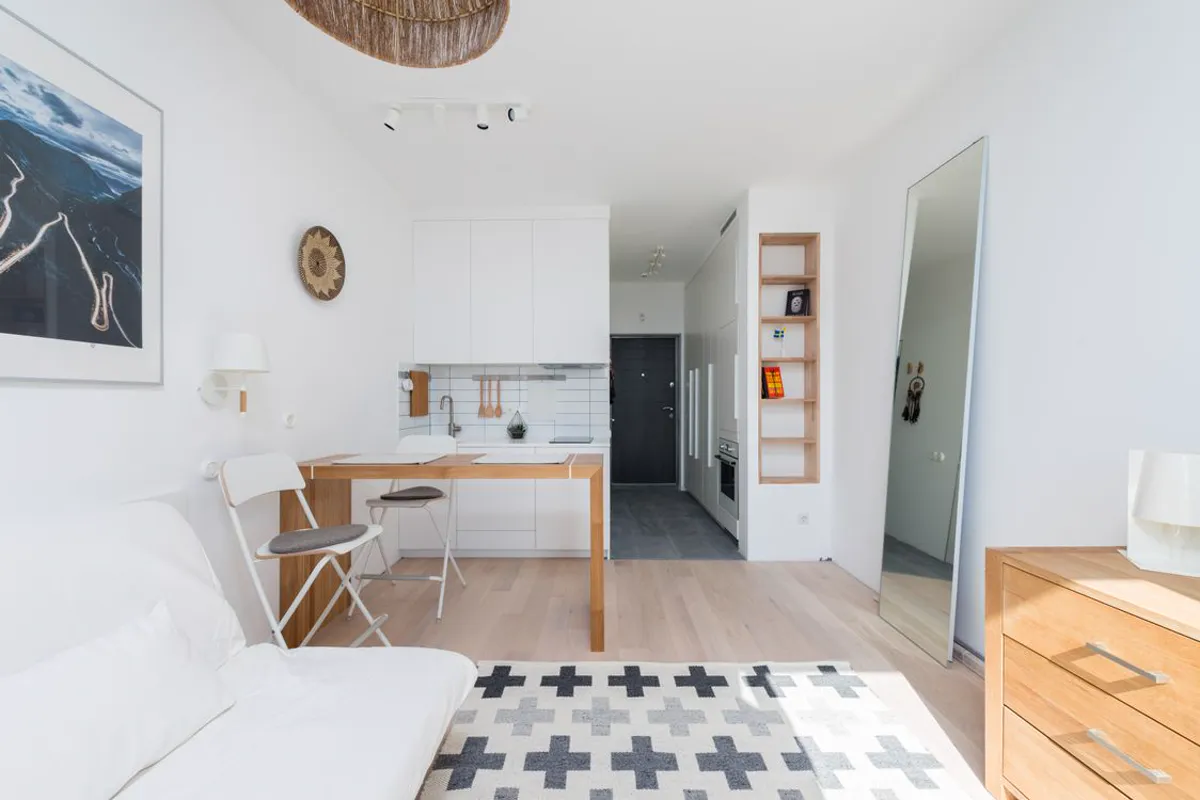
Furniture with visible legs, open bases and lighter frames tends to feel less heavy in a small room than solid, floor-hugging pieces. A sofa raised slightly off the floor, a glass or slim-legged coffee table, and wall-mounted shelves instead of a bulky bookcase all preserve a sense of air. Storage should be planned, not added as an afterthought: a basket for throws, a lidded ottoman for clutter, and a single tall shelf for books will keep surfaces clearer than several small storage pieces scattered around.
Mirrors and vertical lines also help, when they are used with restraint. One large mirror, leaning or hung where it reflects a pleasant view or a light source, can double the sense of depth in a room. Tall curtains, a vertical piece of art or a slim floor lamp can draw the eye upward and make a low ceiling feel less pressing. The key is one or two of these tricks, not all of them at once, or the room starts to feel like a set of techniques rather than a home.
Budget-First Changes With The Biggest Visual Payoff
Decorating on a budget is less about spending little on everything and more about spending first where the eye goes. Paint, lighting, textiles and decluttering usually change a room more than a new piece of furniture, and they can be done one room at a time without disrupting the whole house.
Start by removing what does not belong. Take everything off shelves and surfaces, then put back only what you like or use. Many rooms look instantly calmer after this step alone, because the pieces that remain finally have room to be seen. Next, look at lighting: a new lampshade, a warmer bulb in an existing lamp, or a small lamp in a dark corner can change the evening mood of a room for very little cost.
After that, textiles and paint give the most visible return. A fresh rug, new cushion covers or a coat of paint on one wall can reset a room’s colour story without replacing furniture. If furniture itself needs attention, small updates often help more than replacement: new handles on a chest of drawers, a refinished wooden chair, or a re-covered cushion can make an old piece feel intentional again. For broader inspiration on low-cost professional tips, see the guide from This Old House.
Common Decorating Mistakes To Avoid
Most decorating mistakes are not about taste. They are about proportion, light or too many competing ideas at once. Watch for these common traps, and a room will usually correct itself with a small adjustment rather than a complete redo.
- Hanging art too high or too small for its wall, so it floats disconnected from the furniture below it.
- Pushing every piece of furniture against the walls, which can make a room feel like a waiting area rather than a living space.
- Using only one overhead light, leaving corners dark and the room flat in the evening.
- Choosing a rug that is too small for the seating area, so the furniture looks scattered.
- Filling every surface and wall, leaving the eye nowhere to rest.
- Mixing too many unrelated colours, patterns and finishes without a calm base to hold them together.
- Buying furniture before measuring doorways, walkways and the room itself.
If a room feels wrong but you cannot name why, check these points first. Often, moving one piece, changing one light or removing a few objects will reveal what the room was missing all along.
Frequently Asked Questions
How Do I Start Decorating A Room With No Clear Style?
Start with how you use the room, not with a style label. Note what you do there, what time of day you use it most, and what bothers you about it now. Choose a calm base colour and one accent you genuinely like, then add pieces that serve a real purpose. A style will usually emerge from those choices, and it will suit your life better than a style copied wholesale from a photograph.
What Is The Easiest Way To Make A Room Look More Expensive?
Focus on light, scale and editing. Use layered lighting in the evening, choose art and rugs sized properly for the room, and remove anything that does not earn its place. A tidy, well-lit room with a few quality textures — linen, wood, wool, ceramic — tends to read as more expensive than a crowded room full of decorative objects, however much they cost.
How Many Colours Should One Room Have?
A practical starting point is one calm base, one or two supporting neutrals, and one or two accents. That gives enough variety to feel interesting without becoming chaotic. The accents can repeat in cushions, art, a throw or a plant pot, so the room feels connected. If you love colour, let one room be bolder and keep the rooms next to it calmer, so the home as a whole still feels balanced.
A Home That Feels Finished, Not Just Furnished
A finished home is not a perfect home. It is a home where light falls kindly, colours relate to each other, textures invite touch, furniture supports conversation, and every room has a clear place for the eye to rest. You do not need to change everything at once to reach that feeling.
Decorate in stages, live with each change, and trust what the room tells you. The most satisfying interiors are rarely the ones with the most objects. They are the ones where every piece has a reason to be there, and where the people who live in the home feel at ease the moment they walk in.