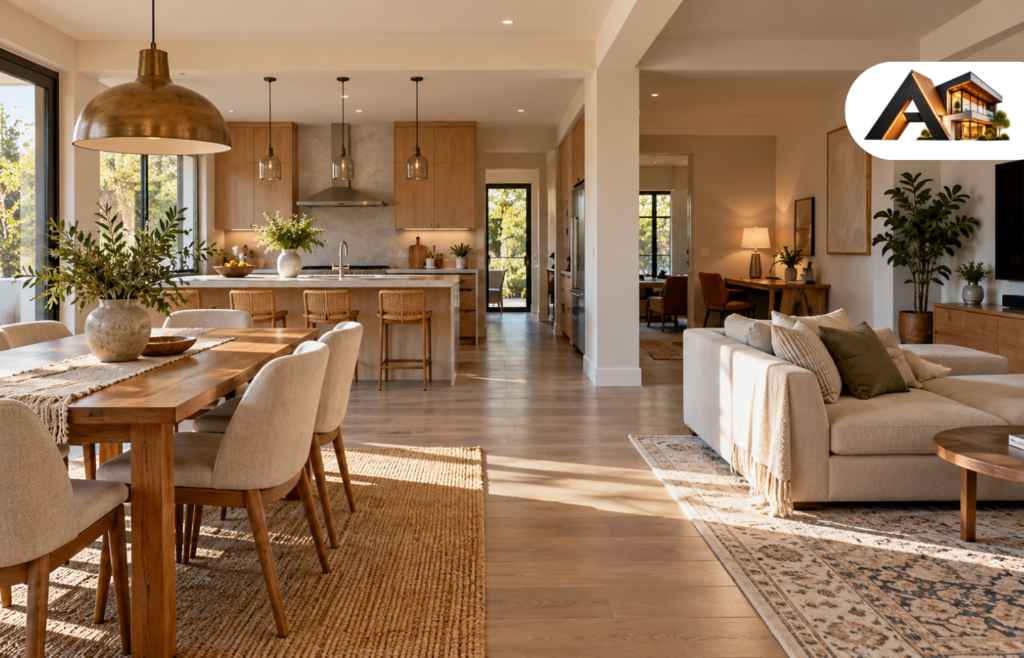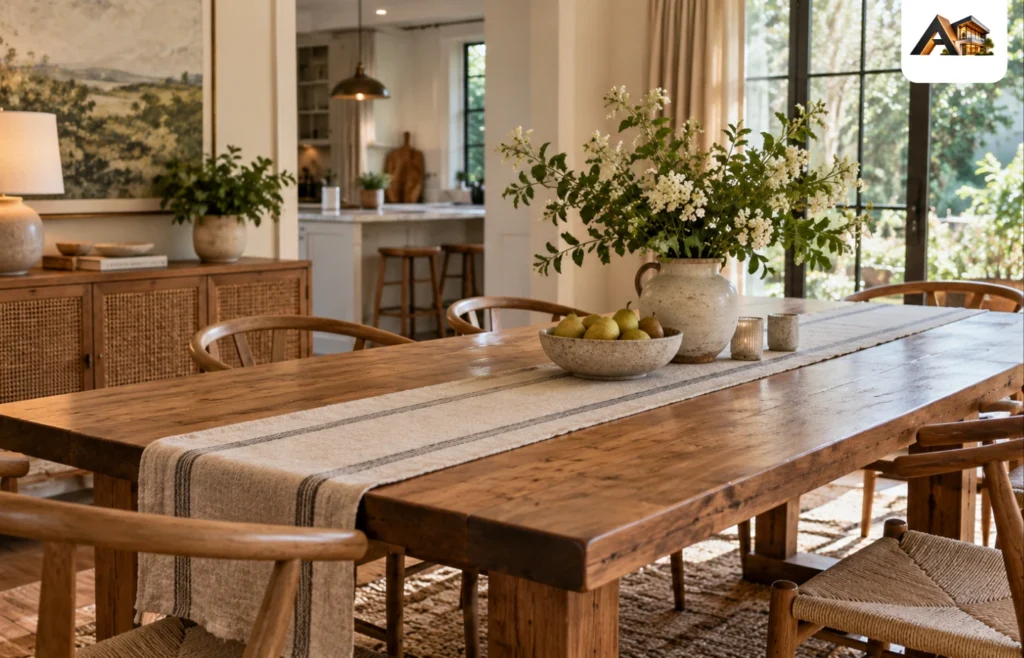

The best shower tile ideas start with a simple truth: the tile is the biggest surface in the room, so it sets the whole bathroom’s mood before the fixtures or the paint get a say. A good choice makes a small shower feel open, a plain bathroom feel finished, and a daily routine feel a little more considered. A bad one is expensive to undo, because tile sits on top of the waterproofing, the pan, and the plumbing — changing it means tearing it out.
So choose in the right order. First the material and the layout, then the look. The twelve ideas below follow that order, and each one tells you where it works best, what to pair it with, and what to watch out for.
Five Choices To Make Before You Pick A Tile
Before you fall in love with a color, settle five practical decisions. They take an evening of thinking and they stop most shower mistakes before they happen.
- Material: Porcelain is the safest all-round choice. It is dense, resists water and stains, and comes in almost every look, from marble to wood. Glazed ceramic suits walls and usually costs less. Natural stone is beautiful but needs sealing and gentle cleaners. Glass works best as an accent, not a whole shower.
- Walls Versus Floors: Walls can take almost any size, but floors have a different job. Shower floors need grip when wet, so small tile or a textured finish is the practical pick. Many of the best showers use large tile on the walls and a mosaic on the floor.
- Grout: Grout changes the look as much as the tile. Matching grout keeps the surface calm. Contrasting grout turns the pattern into the feature. Dark grout hides soap marks better than bright white, and stain-resistant grout costs more but stays cleaner for years.
- Waterproofing: Tile does not waterproof a shower. The membrane or waterproof board behind it does. Ask your installer how the shower is waterproofed before you discuss tile at all, because a beautiful tile over poor waterproofing is a leak waiting to happen.
- Slip Resistance: For the floor, look for a wet slip rating. A common benchmark is a wet DCOF of 0.42 or higher, and smaller tiles add grip through their extra grout lines.
Keep those five in mind as you work through the list. Every idea below answers one of them.
1. Classic White Subway Tile, Stacked Straight

The classic, done the modern way. White subway tile has survived every trend cycle because it is bright, affordable, and easy to live with. The fresh move is to stack it straight instead of offsetting it in the usual brick pattern. Straight rows read cleaner and more architectural, and they suit a modern bathroom in a way the brick layout sometimes does not.
Pair it with dark grout if you want the grid to become the feature, or matching white grout if you want the walls to disappear and the fixtures to take over. Matte black or brushed brass fittings both work against white subway, and a clear glass panel keeps the tile visible from the rest of the room.
Tip: In a small shower, run the same white subway tile from the floor to the ceiling. Removing the line where tile meets paint makes the whole room feel taller.
2. Large-Format Porcelain, Floor To Ceiling

Fewer grout lines, calmer walls, easier cleaning. Large-format porcelain — 12 by 24 inches and bigger — covers a shower wall in a handful of pieces, so there is far less grout to scrub and the surface reads as one continuous plane. In a small bathroom, that unbroken surface is one of the most reliable ways to make the room feel larger.
This is also the look to choose if you want a spa feel without a spa budget. Soft white, warm greige, or pale gray slabs keep the drama in the scale rather than the color, and they pair with almost any fixture finish. Just know that large tile needs flat walls and careful installation. Uneven backing shows up as lippage, where one tile edge sits higher than its neighbor, so this is a job for an experienced installer rather than a first DIY project.
Tip: Match the grout color to the tile. A near-invisible joint is what makes large-format tile look like stone slabs instead of oversized squares.
3. Marble-Look Porcelain Without The Sealing

The marble look, without the marble maintenance. Real marble in a shower is gorgeous and genuinely high-maintenance: it needs regular sealing, it can stain, and acidic cleaners can etch it. Marble-look porcelain solves all of that. The printing has become so good that from a normal viewing distance, most people cannot tell the difference.
Look for tiles with natural variation in the veining rather than a repeating digital print. Calacatta-style patterns with bold gray or gold veins make a statement wall, while softer Carrara-style veining suits a whole shower. Pair it with polished nickel for a classic feel or matte black for a sharper, more modern one.
Tip: Use marble-look tile on the back wall only and keep the side walls plain. You get the luxury focal point at half the cost and none of the visual noise.
4. Handmade-Look Zellige Tile That Catches The Light
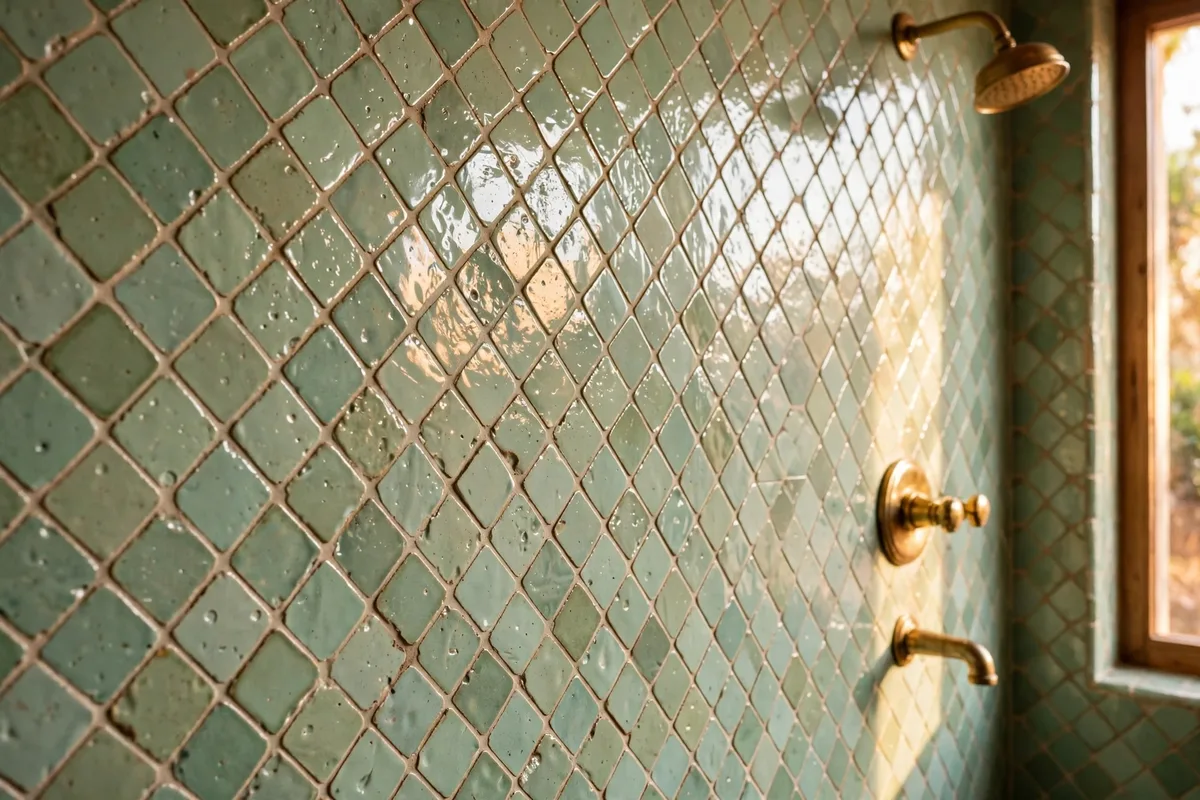
A surface that looks alive. Zellige tiles are hand-glazed clay tiles from the Moroccan tile-making tradition, and every tile is slightly different. The glaze pools unevenly, the edges vary, and the surface catches light in ways a flat factory tile never does. In a shower, that variation turns a plain wall into something worth looking at every morning.
White and off-white are the most forgiving choices, and they work in almost any bathroom. Sage green, dusty blue, and terracotta are the bolder options, and they suit a single wall or a niche better than a whole enclosure. If real zellige is outside the budget, zellige-look ceramic gives a very similar effect for less money, and it is easier to install because the tiles are a consistent thickness.
Tip: Keep the rest of the bathroom quiet. One zellige wall with plain floors and simple fixtures looks deliberate. Zellige everywhere looks busy.
5. Hexagon Tile On The Floor For Grip

The floor tile that works as hard as it looks. Hexagon tile is one of the few choices that is both decorative and practical on a shower floor. Small hexagons follow the slope to the drain without awkward cuts, and their many grout lines give real traction under wet feet.
Scale changes the character completely. A large white hex on the wall reads modern and geometric. A small black or white hex on the floor reads vintage and intricate. A two-tone black-and-white hex floor is a classic move that still looks current, especially with plain white walls above it.
Tip: If you use hexagon tile on the floor, keep the walls simple. A busy floor and a busy wall fight each other, and the floor should win because it is the one doing the safety work.
6. Penny Round Mosaic Underfoot

Small circles, serious grip, timeless charm. Penny rounds are small circular tiles, usually about an inch across, set on mesh sheets. On a shower floor they are both beautiful and practical: the round shape follows the slope to the drain gracefully, and the sheer number of grout lines gives excellent traction.
White or light gray reads clean and spa-like. Black makes a bold floor that contrasts beautifully with white walls. Copper or gold penny rounds give a vintage-luxe feel that suits a traditional bathroom. Whatever color you choose, use a larger, simpler tile on the walls so the penny floor has room to be the star.
Tip: Penny rounds come on mesh-backed sheets, so installation is faster than it looks. The trade-off is more grout to keep clean, so seal it well and expect a quick scrub now and then.
7. One Bold Color Wall, The Rest Quiet

Color works best when it has somewhere to land. A shower wrapped in one saturated color — deep green, navy, terracotta, dusty blue — can be the most memorable room in the house. The trick is restraint. Put the bold tile on one wall, usually the back wall you face when you step in, and keep the other walls, the floor, and the ceiling calm and neutral.
Glossy glazed tile in a deep color reflects light and makes the color feel richer, while matte tile in the same shade reads softer and more modern. Warm brass or brushed nickel fixtures flatter green and blue tile, and a wooden vanity or teak bench keeps a bold shower from feeling cold.
Tip: Test the color with a few sample tiles taped to the wall and look at them morning and evening. Bathroom light changes through the day, and a green that glows at noon can look muddy under warm evening bulbs.
8. Herringbone Accent Behind The Showerhead
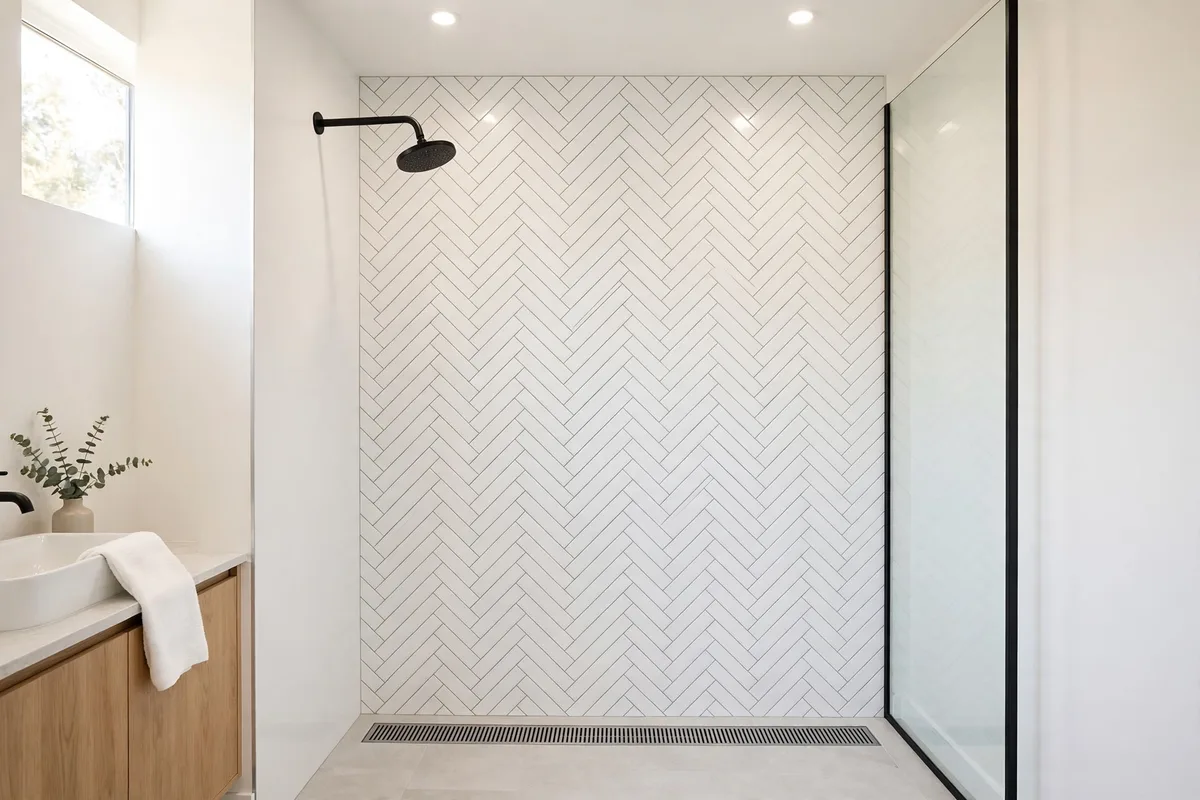
One wall of movement, the rest calm. Herringbone is a zigzag layout that adds energy to any tile, but tiling a whole shower in it gets expensive and visually busy. Used on a single wall — the one behind the showerhead, or the one opposite the entrance — it becomes a focal point without overwhelming the room.
Classic white subway tile in herringbone is one of the most cost-effective ways to get a high-end look, and it works in traditional and modern bathrooms alike. Marble mosaic or stacked stone in herringbone gives the same layout a more textural, organic feel. Run the pattern vertically if you want the space to feel taller.
Tip: Budget extra tile and extra labor for herringbone. The angled cuts produce more waste than a straight layout, and a good installer is worth paying for here.
9. Wood-Look Porcelain For Warmth

The warmth of wood, none of the worry. Real wood and daily water do not mix, but wood-look porcelain gives you the planked, natural aesthetic with no warping, rotting, or mold concerns. It is porcelain underneath, so it handles a wet shower exactly like any other porcelain tile.
Install the planks vertically on one accent wall for a striking effect. The vertical lines draw the eye upward and make the ceiling feel higher. In warm brown tones against white or cream walls, it feels like a Scandinavian spa. In a lighter driftwood tone, it leans coastal. Keep the other walls plain so the wood-look wall reads as a deliberate feature, not a leftover.
Tip: Check the slip rating before using wood-look tile on the shower floor, and choose a textured or matte finish there. The glossy version belongs on walls.
10. Patterned Tile Inside The Niche
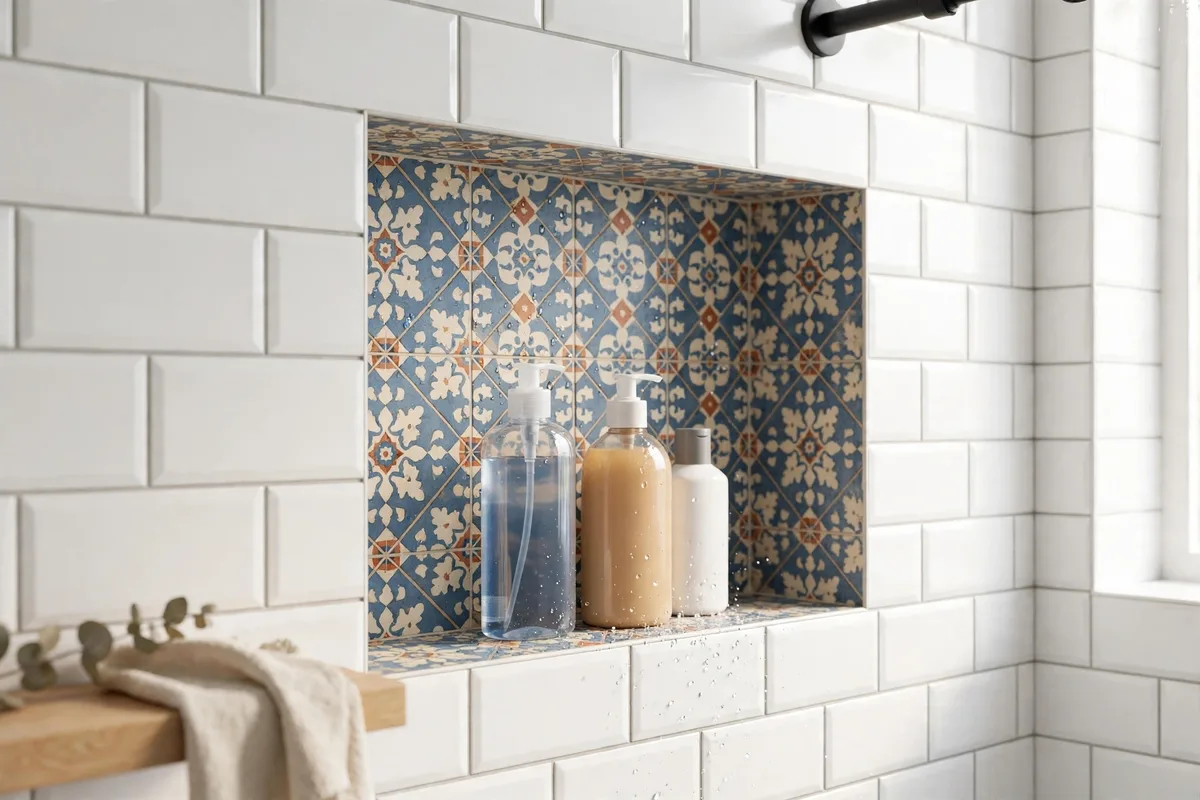
The smallest surface, the biggest personality. A recessed shower niche is where bottles live, and it is also the easiest place to use a bold tile without committing to it across the whole shower. A patterned encaustic-style tile, a bright mosaic, or a contrasting color inside the niche turns a practical shelf into a design detail.
This works because the niche is small. A pattern that would overwhelm a full wall feels just right in a space the size of a shoebox. Line the back of the niche in the accent tile and keep the sides in the main wall tile, so the pattern reads as a framed picture rather than a random patch.
Tip: Plan the niche before the tile goes up. Its edges should land on full tiles or clean grout lines, its base should slope slightly toward the shower so water drains, and it should sit out of the direct spray so products do not get soaked every day.
11. Black And White Checkerboard, Retro Without The Dated Feel

A century-old pattern that still looks current. Checkerboard tile has been in bathrooms since the 1920s, and it keeps coming back because the contrast is so clean. In a shower, it works best as a floor or a single accent wall, paired with plain white wall tile and simple fixtures.
Scale is what keeps it from looking dated. Small 2-inch tiles read retro and intricate. Large 12-inch tiles read modern and graphic. A checkerboard in two different finishes — matte in one color, gloss in the other — adds texture to the contrast and looks especially current. Matte black fixtures and a frameless glass panel complete the look.
Tip: If the checkerboard is on the floor, keep the grout lines crisp and the walls plain. The pattern is doing enough work on its own.
12. Pebble Stone Floor For A Spa Finish

The closest thing to a spa you can stand on. A pebble stone floor is the most sensory choice on this list. Smooth river stones underfoot while water runs over them turn an ordinary shower into a small daily ritual, and the many small stones give natural traction on a wet floor.
Pebble tile comes in mesh-backed sheets, so installation is more approachable than it looks. Stick with neutral stone colors — ivory, light gray, tan, brown — and pair the pebble floor with large, flat tiles on the walls so the design stays grounded. Sealing matters here more than with flat tile, because grout between stones can collect soap and mineral buildup, so plan on a periodic reseal and an occasional scrub with a stiff brush.
Tip: Feel the pebbles before you commit. Some are smooth and flat, others are rounder and more uneven. The flatter the stone, the more comfortable it is under bare feet every day.
How To Mix Tile Without Making A Mess
If you remember one rule from this whole guide, make it this one: change only one thing at a time. A white shower wall with a patterned floor works. A patterned wall, a patterned floor, and a third tile on the vanity usually does not. Pick your star — the color, the pattern, or the texture — and let everything else support it.
Samples help more than photos. Order full-size samples of your top two or three tiles, tape them to the shower wall, and live with them for a few days. Look at them in morning light and evening light, wet and dry. Tile always looks different in your bathroom than it did in the showroom, and a sample costs far less than a retiling.
And if your shower is small, remember that the simplest choices do the most work. Large, light tiles with matching grout, tile run to the ceiling, and a clear glass panel instead of a curtain will open up a tight shower more reliably than any bold pattern. Save the drama for one wall, one niche, or the floor, and let the rest of the room breathe. For more on planning the room around the shower, see our guide to bathroom flooring ideas, and if the fixtures need attention too, our pick of the best shower head pairs well with any tile on this list.
A Short Close
Shower tile is one of the few renovation choices you touch every single day, so it deserves more thought than a quick showroom visit. Start with the material and the floor, get the waterproofing and grout right, and then pick the look that makes you happy to step in each morning. Whether that is a quiet white subway wall or a deep green accent, the right tile turns a functional box into the best-feeling room in the house.
Frequently Asked Questions About Shower Tile Ideas
What Is The Best Tile For A Shower Floor?
Small, slip-resistant porcelain or stone mosaic is the best choice for most shower floors. The extra grout lines give traction, and the small size follows the slope to the drain. A curbless shower with a linear drain can take larger tile with a textured finish, but a standard shower with a center drain should stick with mosaic.
Are Large Or Small Tiles Better In A Shower?
Large tiles work best on shower walls, where they mean fewer grout lines to clean and a calmer look. Small tiles work best on shower floors, where they grip better and follow the slope. Most well-designed showers use both: large tile on the walls and a mosaic on the floor.
Is Porcelain Or Ceramic Tile Better For A Shower?
Porcelain is the better choice for most showers because it is denser, resists water and stains, and suits both walls and floors. Ceramic is a good budget option for shower walls, where it does not face foot traffic. Natural stone looks beautiful but needs sealing and more upkeep, so it suits a feature wall better than a whole shower.
How Much Does It Cost To Tile A Shower?
Tile is only part of the cost of a tile shower. The tile itself can run from a few dollars per square foot for basic ceramic to far more for handmade or natural stone, and the total depends on the pan, the glass, the fixtures, and the labor. Patterned layouts like herringbone cost more in both tile and labor because of the extra cutting and waste. Get an itemized quote that separates tile, labor, and waterproofing before you commit. If the whole bathroom is part of the project, our breakdown of how much a bathroom remodel costs puts the shower in context.
Can I Mix Different Shower Tiles In One Shower?
Yes, and most good showers do. The rule is to change only one variable at a time: different sizes of the same tile, different colors of the same shape, or one patterned tile against plain ones. Two or three tile styles can work together, but they need to share a color, a material, or a finish so the shower reads as one design. For more visual inspiration from a premium source, The Spruce’s walk-in shower tile ideas show how designers mix tile, color, and layout in real bathrooms.