
The best sunroom furniture ideas start with the room, not the shop. A sunroom is the brightest room in the house and the hardest on furniture. The same glass that fills it with light also fades fabrics, heats surfaces, and swings the temperature between morning and afternoon. That is why sunroom furniture deserves its own thinking: the prettiest indoor sofa in the shop can look tired within a season if it was never meant for a glass room.
The short answer is simple. Match the furniture to the room’s real conditions first — whether it is heated, how much direct sun it gets, and what the room is actually for — then choose pieces that handle sun and humidity without giving up comfort. The twelve ideas below follow that order, from the one big decision to the finishing pieces.
Three Decisions Before You Buy Anything
Before you spend on a single piece, settle three decisions. They take a day of watching the room, and they save you from buying twice.
- Room Type: A three-season room that is not heated needs outdoor-ready frames and washable cushions. A four-season room with heating and cooling can take living-room comfort, as long as the fabric still handles direct sun. A glass-roofed solarium needs fade resistance and low sightlines above all.
- Exposure Zones: Watch where the sun falls through the day. Furniture beside the glass lives in direct sun; pieces against the interior wall live in filtered light. Put the hard-wearing pieces in the bright zone and keep delicate textiles and bookshelves toward the wall.
- Material First, Style Second: The frame and the fabric decide how long a piece lasts in a glass room. Choose those first, then pick the style you like within them. A beautiful chair in the wrong material is a short-lived chair.
Keep those three in mind as you work through the list. Every idea below answers one of them.
1. Match The Furniture To Your Room Type First
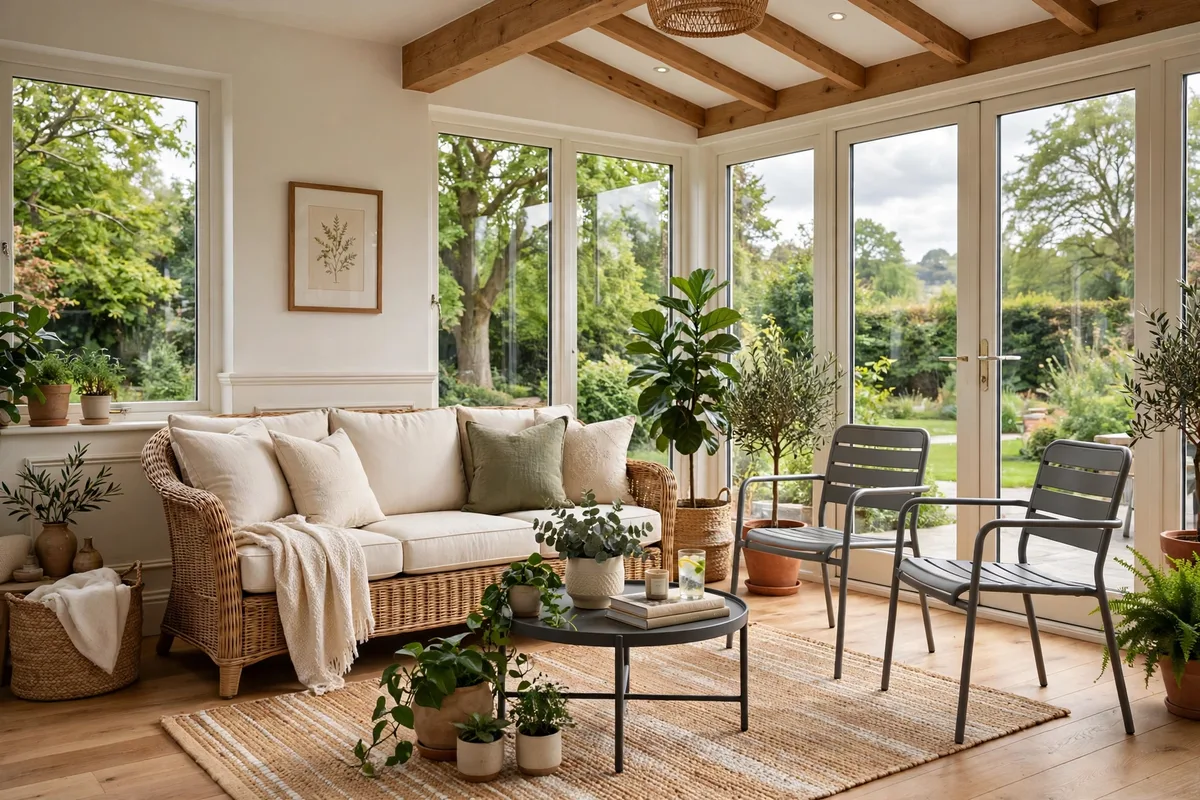
The same sofa can be perfect in one sunroom and a mistake in another. Start with how the room is heated and cooled, because that decides everything else. A three-season room with open windows and big temperature swings needs outdoor-ready frames, washable cushions, and materials that tolerate humidity. A four-season room that shares the house heating can focus on comfort, with performance fabric handling the sun.
For a three-season room, lean toward powder-coated aluminum or all-weather wicker frames with removable, washable cushion covers. For a four-season room, a deep modular sofa in teak or aluminum with durable cushions gives you living-room comfort without ignoring the light. For a solarium with glass overhead, keep the furniture low and pale, so it does not block the view or soak up heat.
Tip: If your room sits between two types, furnish for its least controlled condition, not its mildest day. The furniture has to survive the hottest afternoon and the coldest snap, not just a pleasant spring morning.
2. Start With A Rattan Or Wicker Sectional
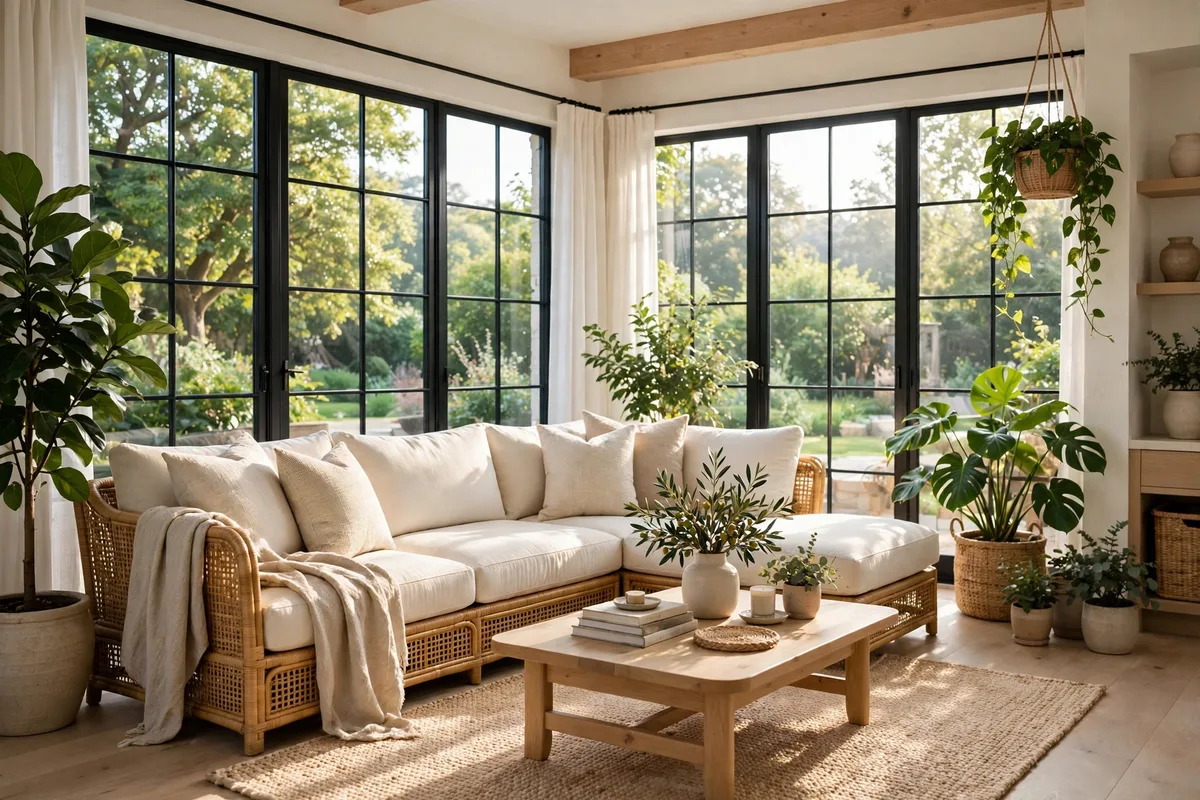
If one piece belongs in almost every sunroom, it is a rattan sectional. Rattan and its close relative wicker are practically made for glass rooms: light enough to rearrange, woven enough to breathe, and at home beside plants and big windows in a way that heavy upholstered furniture never is.
Choose synthetic rattan over natural rattan when the room is not climate-controlled, because it handles humidity and sun far better and will not dry out and split. Look for thick, removable cushions in a solution-dyed fabric — the colour is built into the fibre rather than printed on the surface, so it holds up far longer under strong light. A modular configuration helps too, since you can reshape the sectional to fit the room instead of forcing the room around it.
Tip: Keep the frame in a neutral tone — natural, dark brown, or black — and change the look with cushion covers instead. The frame lasts for years; the covers are the cheap, easy swap.
3. Pick A Loveseat When The Room Is Small
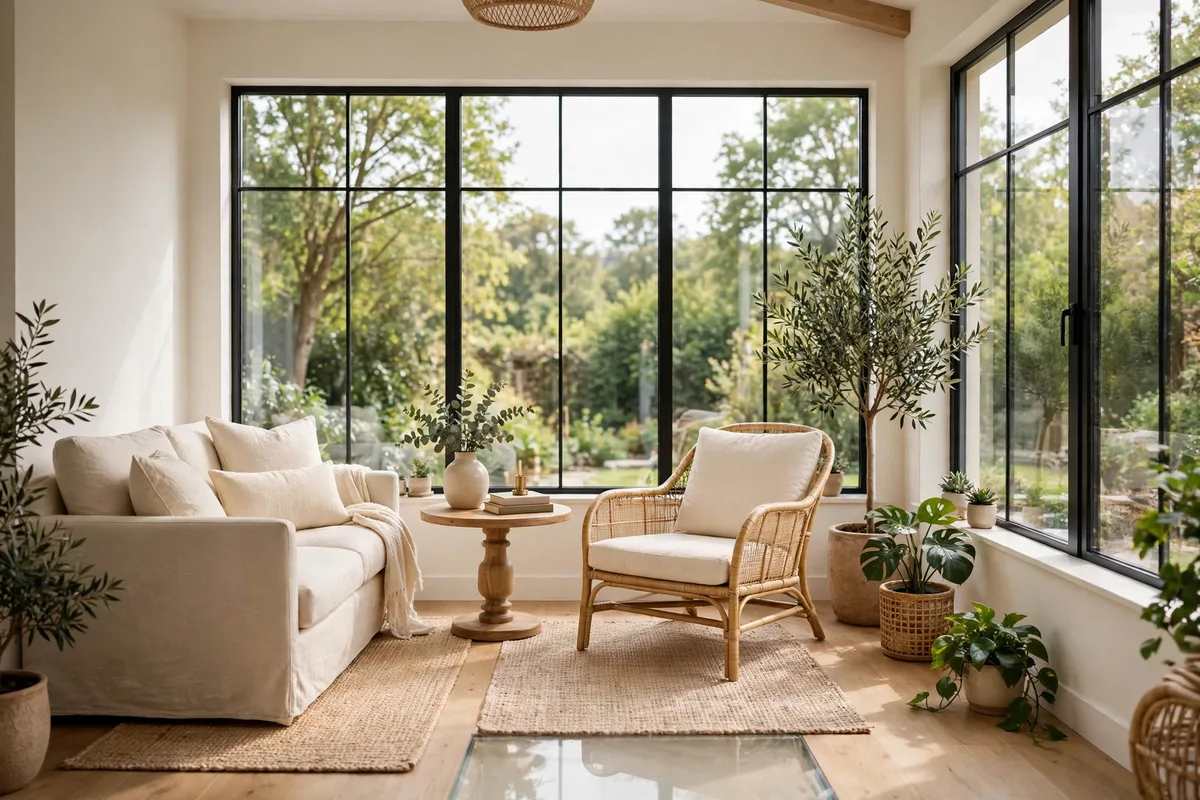
A full sofa is the wrong answer for a small sunroom. In a room under about 150 square feet, a loveseat around 50 to 60 inches wide and 32 to 38 inches deep seats two comfortably and still leaves room to walk, open a window, and reach the plants. A sofa in the same room eats the floor and blocks the view that made the room worth having.
Pair the loveseat with one lounge chair and a small side table rather than a second sofa. Two chairs angled toward each other with a round side table between them make a better conversation spot than a sofa pressed against the glass, and the round table leaves a walkable curve instead of a sharp corner.
Keep the main walkway clear — 30 to 36 inches from door to door, or door to the far window wall — and measure it before you buy. If the leftover depth after the path is only about 30 inches, choose two chairs over a loveseat. Our porch ideas use the same measure-first habit for tight outdoor rooms.
4. Add A Daybed Or Chaise For Slow Afternoons
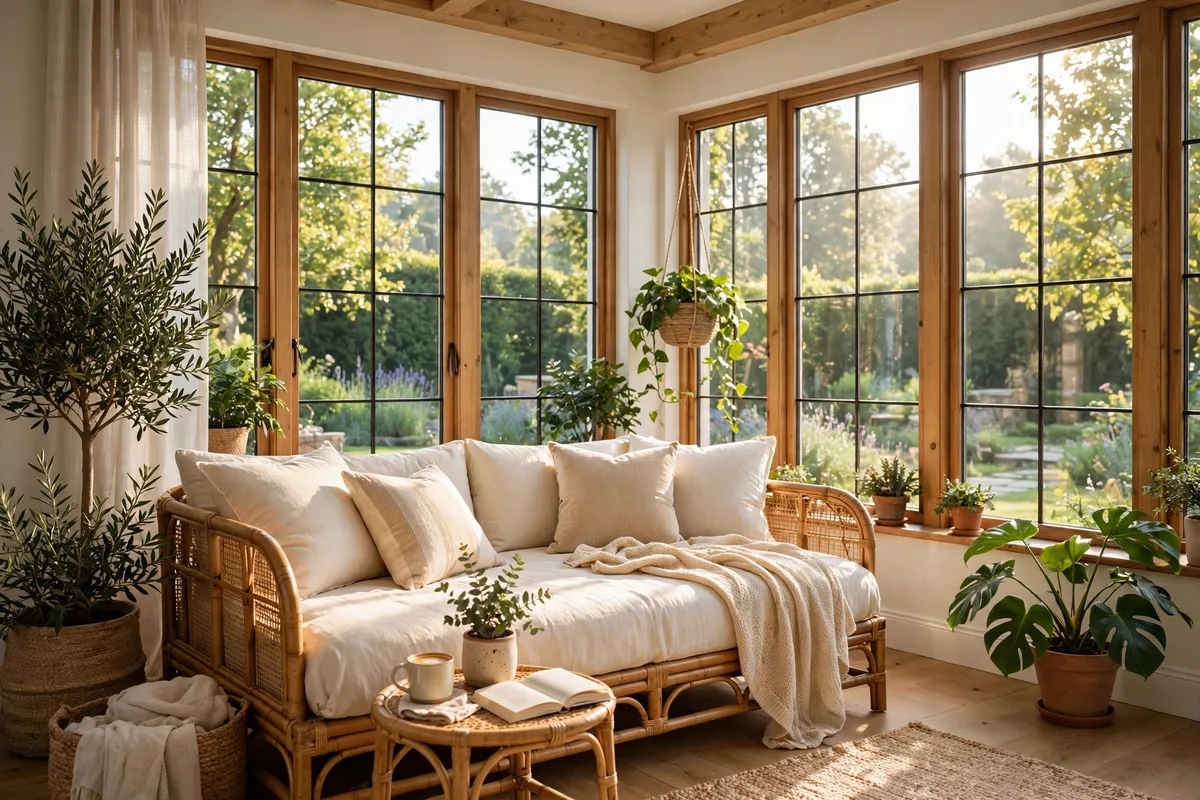
A daybed changes what the room is for. An armchair invites you to sit for a while; a daybed invites you to stay for the afternoon, book in hand, with the garden in view. It turns the sunroom from a pass-through space into a retreat.
A rattan or metal-framed daybed with a thick, water-resistant mattress works best in a glass room, and a chaise lounge with an adjustable back does double duty as both seating and lounging. Place it where the morning light is soft rather than in the harshest afternoon glare, and layer it with outdoor-rated cushions and a lightweight throw in soft cream, sage, or terracotta.
Tip: Check the footprint before you fall for the idea. A daybed needs a long, clear wall, and it should never block a door or an operable window. If the room is narrow, a chaise along the window wall fits better than a full daybed.
5. Choose Swivel Chairs That Follow The Sun
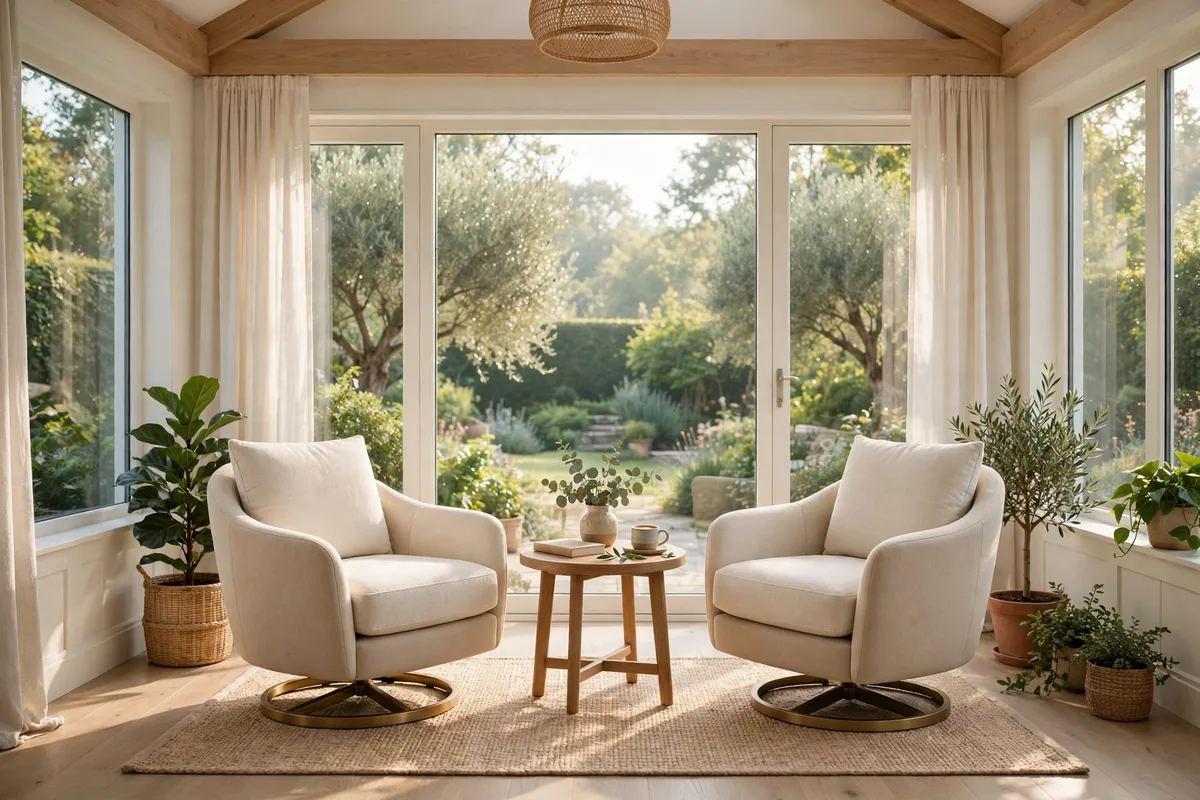
The sun moves, and your chairs should move with it. Swivel chairs are one of the most useful pieces in a sunroom, because you can turn toward the morning light, swing around to face the room for conversation, or rotate away from the glare at three in the afternoon — all without dragging furniture across the floor.
Look for a comfortable seat with a supportive back and a cushion in an outdoor-rated or solution-dyed fabric. Barrel chairs with rounded backs feel enveloping, rocking chairs suit a porch-style room, and a wingback in performance fabric gives a slightly more formal, library-like feel. Two swivel chairs opposite a small sofa make a conversation group that works from every angle.
Tip: Leave about 18 inches between a chair and the coffee table, and a few inches behind the chair for the swivel to turn freely. A chair that cannot rotate because the wall is behind it is just an ordinary chair in a sunny room.
6. Build In A Bench Along The Glass
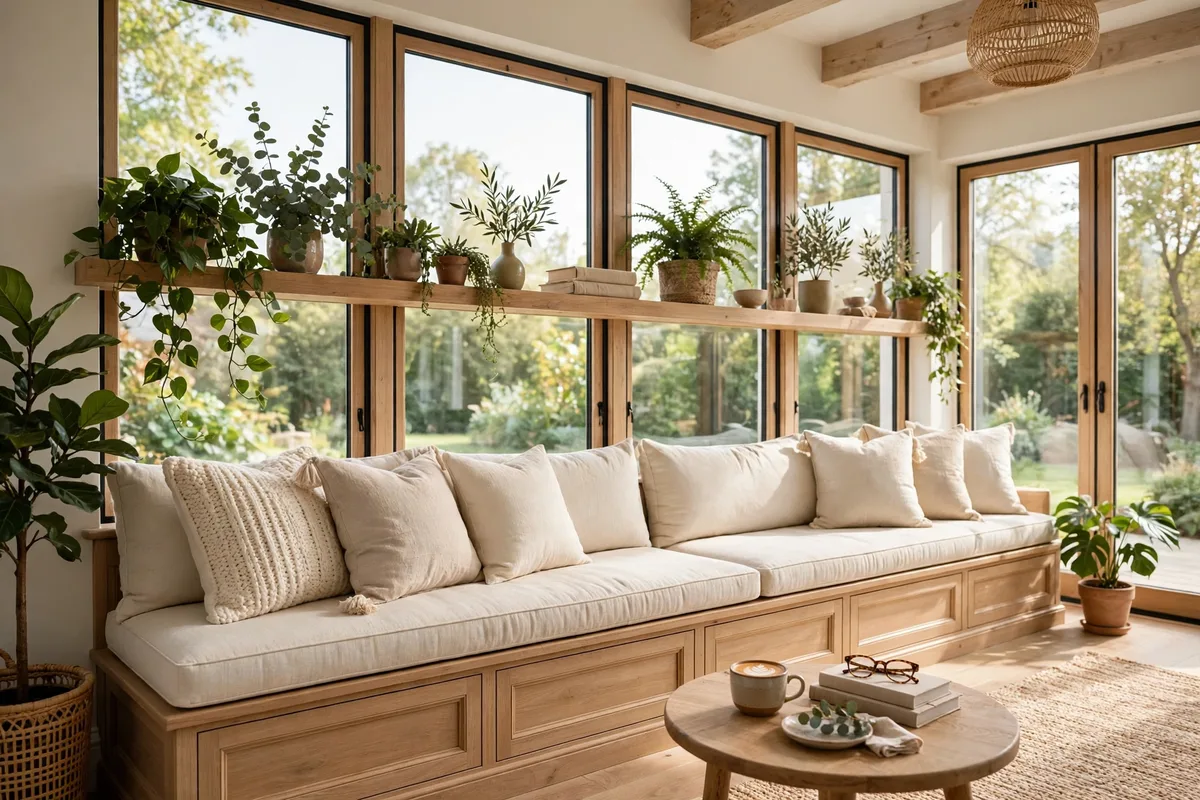
Window-lined walls are the sunroom’s biggest wasted opportunity. A built-in bench along one wall turns that dead space into the best seat in the room, and it does it without eating floor space the way freestanding furniture does.
Design the bench with a hinged top and you gain deep storage for blankets, cushions, and gardening supplies — the clutter that otherwise collects in a glass room. Upholster it in a durable, wipeable fabric so it handles kids, pets, and damp swimwear without complaint, and keep the cushions in a pale, sun-tolerant colour so fading shows less over time.
A bench also creates a natural shelf above it for plants, books, or trailing greenery, which softens the hard lines of all that glass. In a small sunroom this one piece can replace both a sofa and a storage cabinet, which is why it earns its place early in the plan.
7. Set Up A Dining Table For Sunny Meals
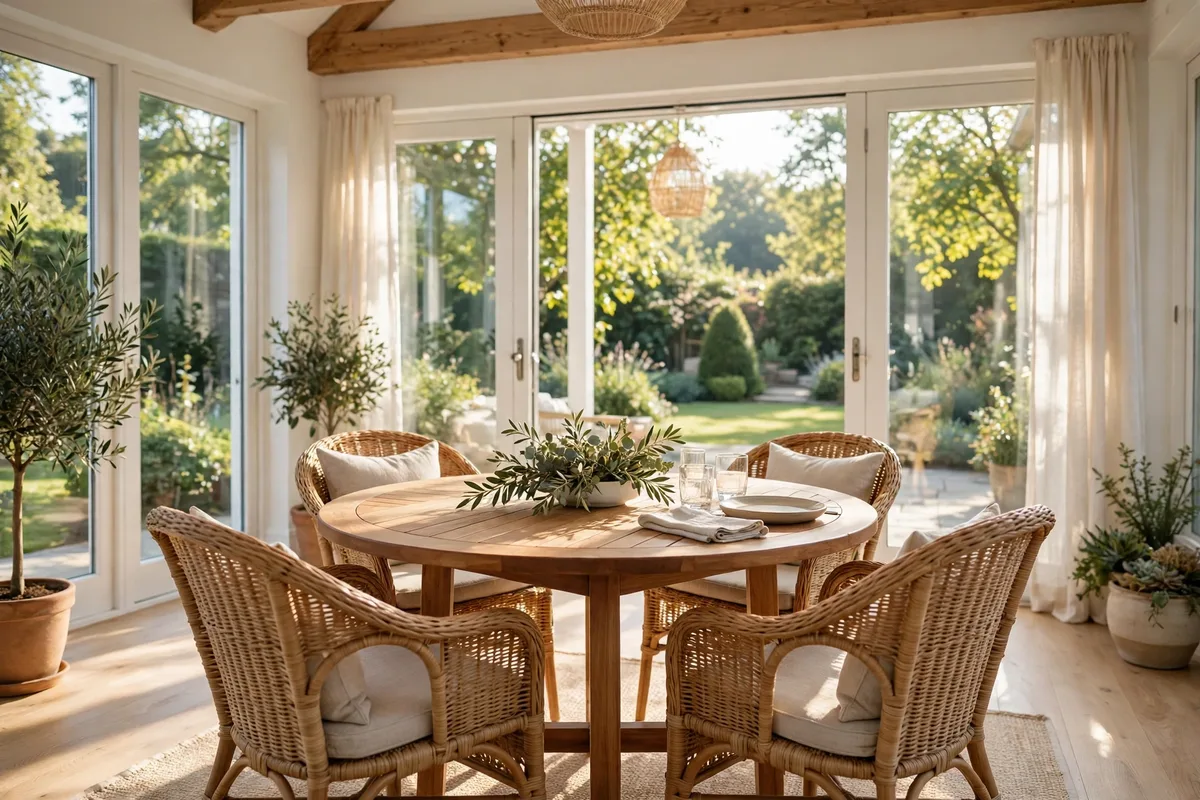
Breakfast in a sunroom is the room’s best argument for itself. A dining table and chairs turn the brightest room in the house into the most-used one — morning coffee, weekend lunches, and quiet dinners with the garden fading outside the glass.
A round or oval table suits a sunroom best, because it keeps the flow easy in a room full of glass and leaves no sharp corner to catch a hip. Teak, powder-coated aluminum, or tempered glass make the most practical tabletops, since they handle sun and the occasional damp cloth without complaint. Four to six seats is the sweet spot; a larger set turns the room into a banquet hall and crowds the windows.
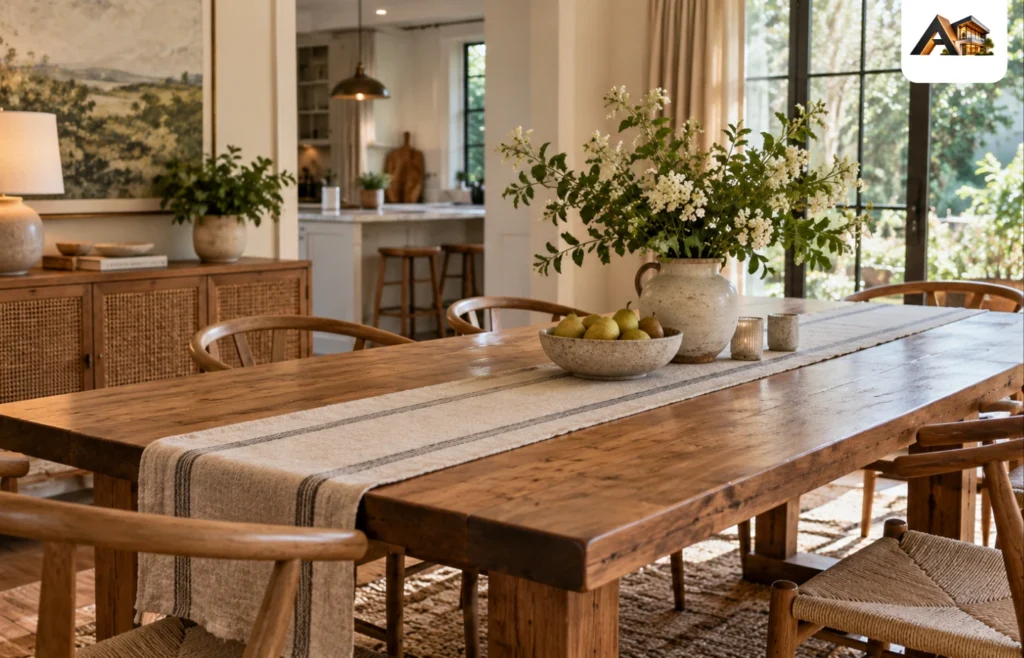
Tip: Keep the centrepiece simple and the seat cushions washable. A low bowl of greenery and a linen runner are all the table needs, and both come off in seconds when the table has to work for something else.
8. Let One Storage Ottoman Do Three Jobs
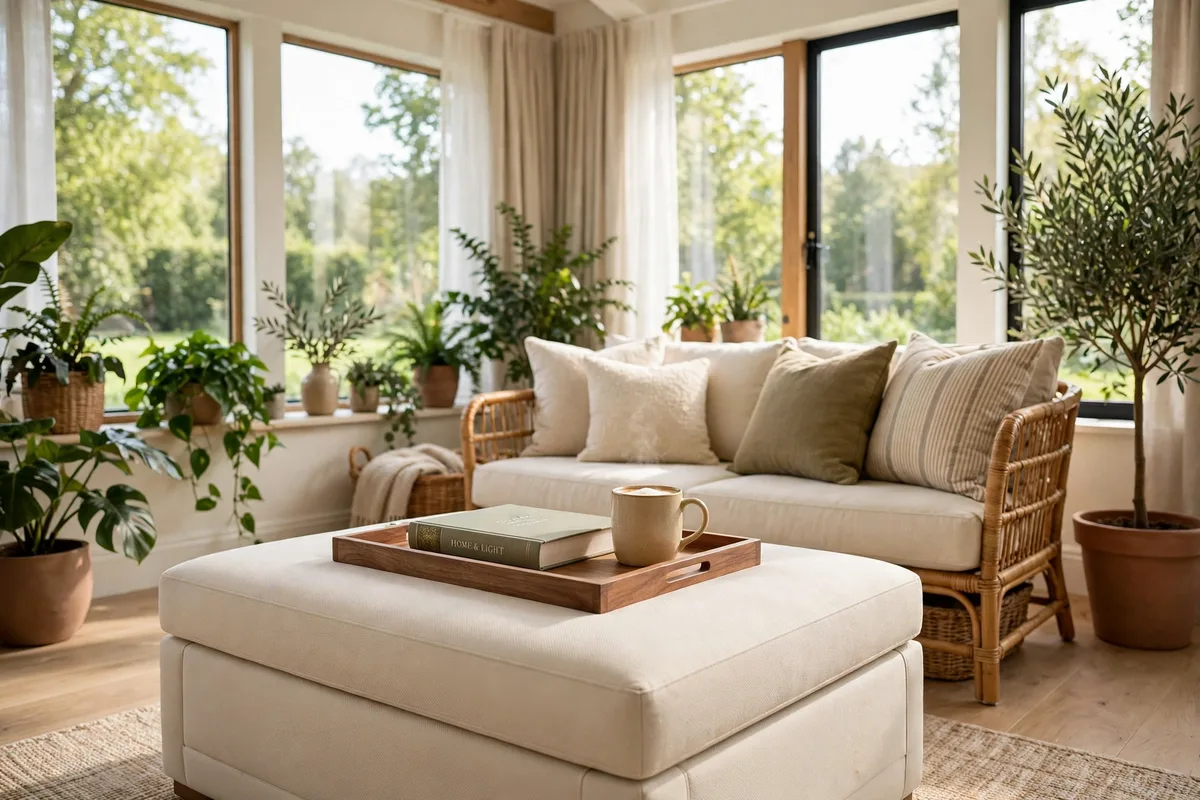
Small sunrooms punish single-purpose furniture. A storage ottoman earns its footprint three ways at once: a footrest for reading, an extra seat when guests arrive, and a blanket box that keeps the room tidy. Put a tray on top and it becomes a side table too.
Choose one in a durable outdoor fabric with a firm, flat top, so the tray sits steady and the ottoman can take a book, a mug, or a laptop without wobbling. Keep it light enough to move with one hand — the whole point is that it shifts around the room as the day changes, from the reading chair in the morning to the sofa in the evening.
Tip: Buy the ottoman in the same fabric family as the sofa cushions, not a matching set. One shared colour or texture ties the pieces together without making the room look like it arrived in a single delivery.
9. Anchor The Seating With An Indoor-Outdoor Rug
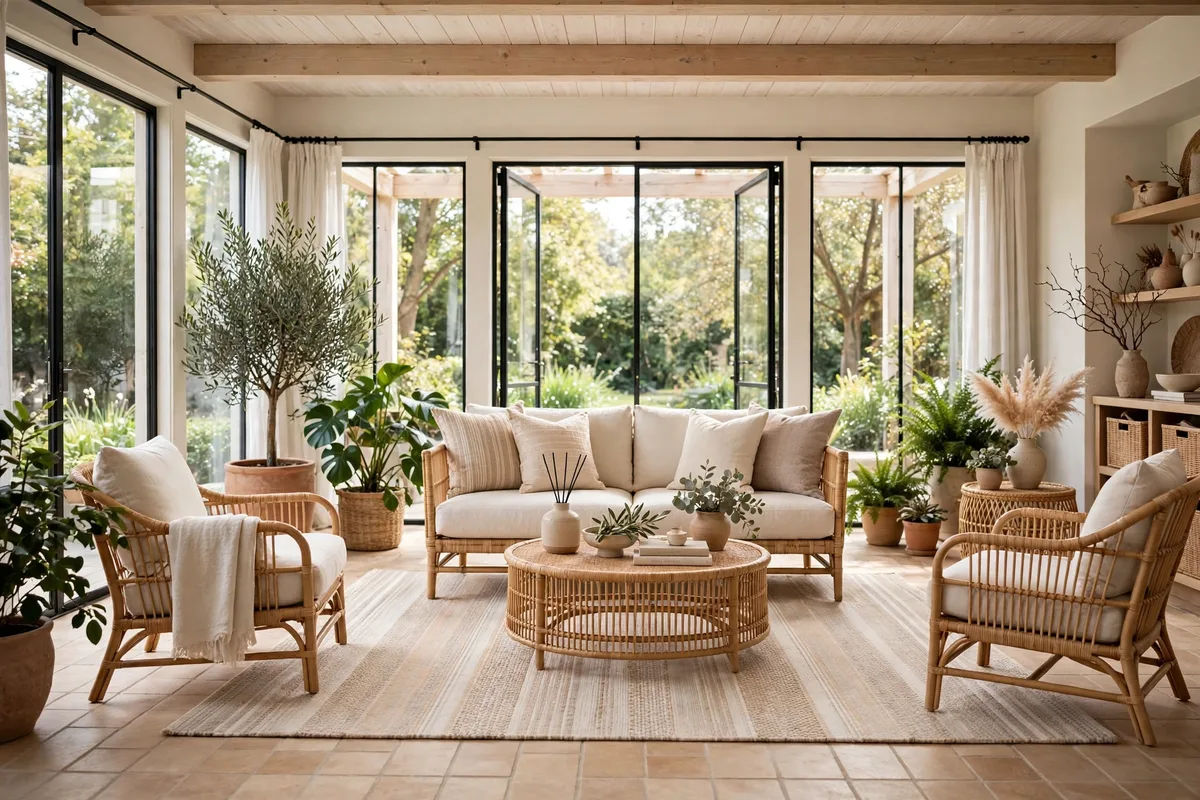
A rug is what turns a collection of furniture into a room. In a sunroom it also does practical work: it warms tile or wood floors underfoot, softens the echo of a glass box, and marks where the seating group lives so the rest of the floor stays clear for walking and watering plants.
Choose polypropylene or another synthetic fibre, in a flat weave or low pile that handles moisture, sunlight, and foot traffic without fading. Size it so it sits under the front legs of the sofa and chairs, extending a little past the group on each side — too small and the room looks unfinished, too large and it creeps under the doors and window cranks.
Tip: A round jute or flatweave rug works especially well in a compact sunroom, because the curved edge improves traffic flow and leaves no corner to catch a foot. Keep the pattern quiet so it does not compete with the garden view outside the glass.
10. Add A Swing Chair As The Statement Piece
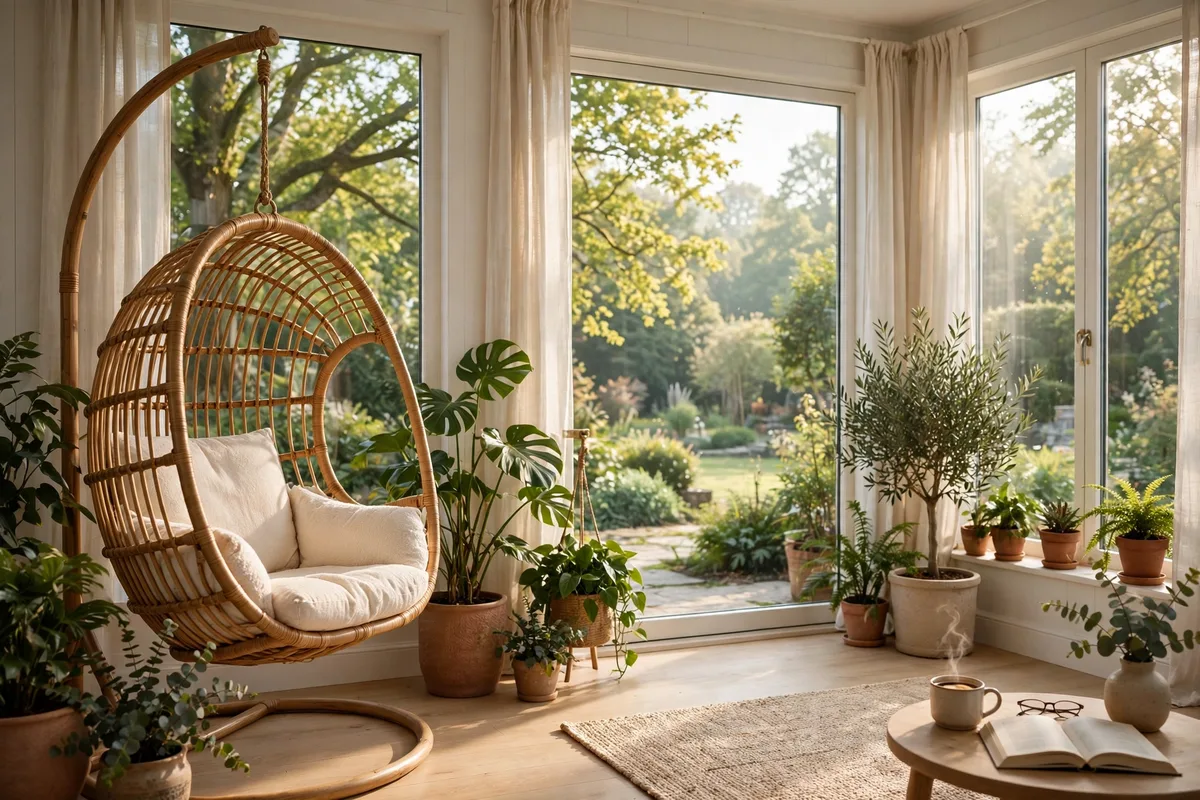
One playful piece makes the room feel like a destination. A hanging swing chair — a rattan egg chair, a macramé seat, or a simple rope-and-wood swing — adds movement and character that no ordinary armchair can match. It is the seat everyone walks toward first.
A freestanding frame is the safest choice in most homes, because it needs no ceiling work at all. If you want to hang it from the ceiling, check the ceiling’s load-bearing capacity first and have the fixing assessed by a qualified professional when in doubt; a beam that looks solid is not always rated for a swinging load. Hang it where it catches the view but not the harshest afternoon sun, and leave a clear arc around it so it can sway without hitting a plant stand or a side table.
Tip: One statement piece is enough. If the swing chair is the star, keep the rest of the seating calm and simple, and let the chair carry the room’s personality on its own.
11. Give Plants Their Own Furniture
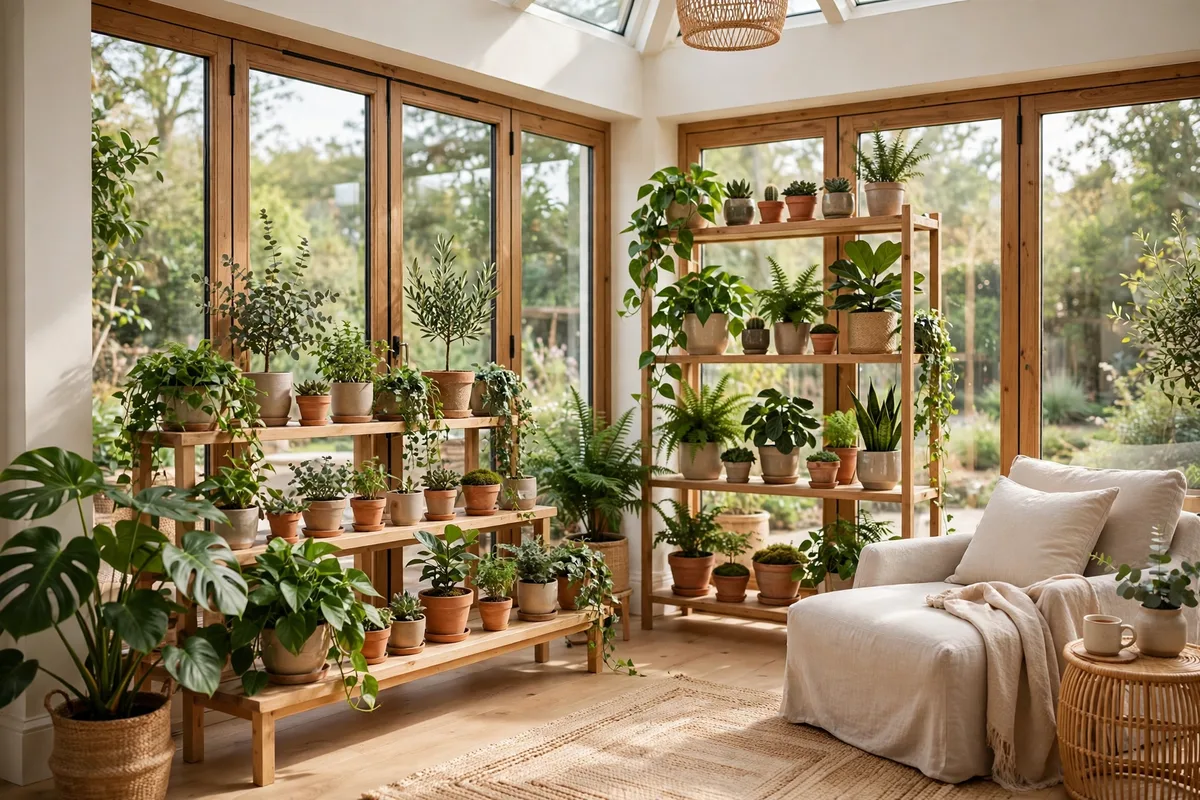
A sunroom without plants is only doing half its job. The blurred line between indoors and out is what makes the room special, and plants are what make that line real. But plants need furniture of their own, or they end up crowded on the floor and in the way.
A tiered plant stand in a corner turns an empty spot into a green focal point with almost no effort. Open shelving at different heights lets plants share space with books and a few objects, while a potting bench along one wall is useful in gardening season and decorative the rest of the year. Hanging planters from exposed beams keep trailing greenery overhead and the floor clear.
Tip: Choose stands and shelves in wood or powder-coated metal, and leave breathing room around the planters for watering and cleaning. Raised legs and movable side tables make the whole arrangement easier to live with than a row of pots sitting directly on the floor. If you grow herbs indoors, our growing herbs indoors guide covers which ones handle bright glass rooms best.
12. Set Up A Reading Nook Or Desk In The Bright Corner
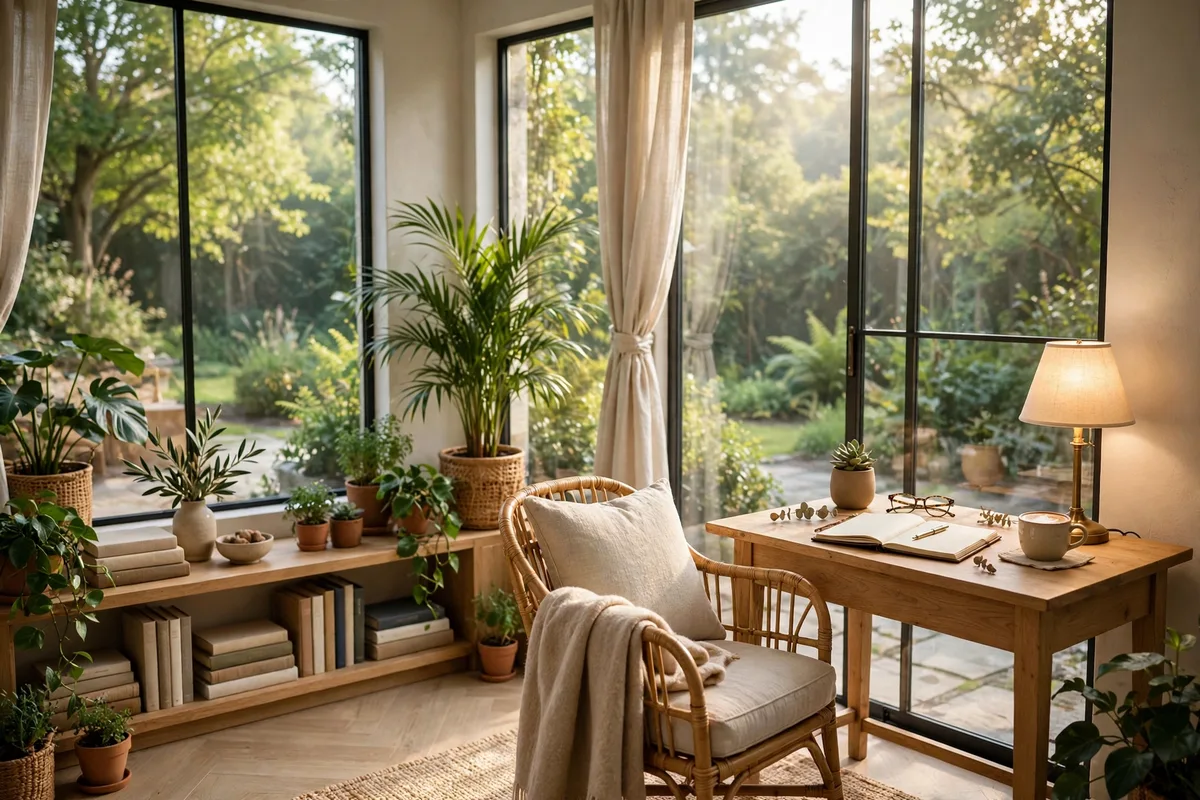
The sunrooms that get used every day are the ones with a purpose. A small desk facing the garden, or a reading chair with a side table and a lamp, gives you a reason to walk into the room with intention instead of wandering through it.
Keep the desk small and simple — a narrow writing desk or a slim trestle table — and position it so direct sun never falls across the screen or into your eyes. A comfortable chair that looks as good as it sits, a low bookshelf or magazine rack nearby, and a plant or a rug edge to separate the nook from the main seating area are all the division the corner needs.
Add a lamp for overcast days, because even a glass-rich room needs layered light after dark. And keep the work corner’s chair in the same material family as the rest of the room, so the nook reads as part of the sunroom rather than an office that wandered in. For a fuller home office in a bright room, see our home office ideas.
A Room That Earns Its Light
The best sunroom furniture is not the most expensive furniture, or the prettiest in the shop. It is the furniture that still looks good and feels comfortable after a summer of strong sun and a winter of cold snaps — the pieces chosen for the room’s real conditions, sized to its real footprint, and arranged around the way you actually spend time there.
Start with the room type, anchor the room with seating that can handle the light, and let the smaller pieces do double duty. The Spruce’s gallery of 46 sunroom ideas is a useful place to browse finished rooms once your own plan is set — borrow the feeling, not the shopping list, and build the room around your light, your space, and your mornings.
Frequently Asked Questions
What Is The Best Furniture For A Sunroom?
Furniture with outdoor-ready frames and fade-resistant cushions, matched to the room type. Three-season rooms need all-weather wicker or powder-coated aluminum with washable covers; four-season rooms can take deeper, living-room-style seating as long as the fabric is solution-dyed and sun-tolerant.
Can I Put Regular Indoor Furniture In A Sunroom?
You can, in a climate-controlled four-season room where direct sun is managed with shades or treated glass. In an unheated three-season room, a solarium, or a room that gets hours of direct sun, standard indoor furniture wears faster — fabrics fade, wood moves with humidity, and cushions hold moisture. Keep pieces you already own out of direct sun and rotate them seasonally.
How Do You Arrange Furniture In A Small Sunroom?
Measure first and plan the walkways before the furniture: 30 to 36 inches for the main path, about 18 inches between the sofa and the coffee table. Put the largest piece against the longest solid wall rather than in front of the windows, use multifunctional pieces like a storage ottoman, and keep the centre open.
What Fabric Holds Up Best In A Sunroom?
Solution-dyed acrylic and solution-dyed olefin hold colour best under strong light, because the pigment runs through the fibre instead of sitting on the surface. Look for removable, washable covers and a stated lightfastness rating, and rotate loose cushions twice a year so the sun does not fade one side faster than the other.