
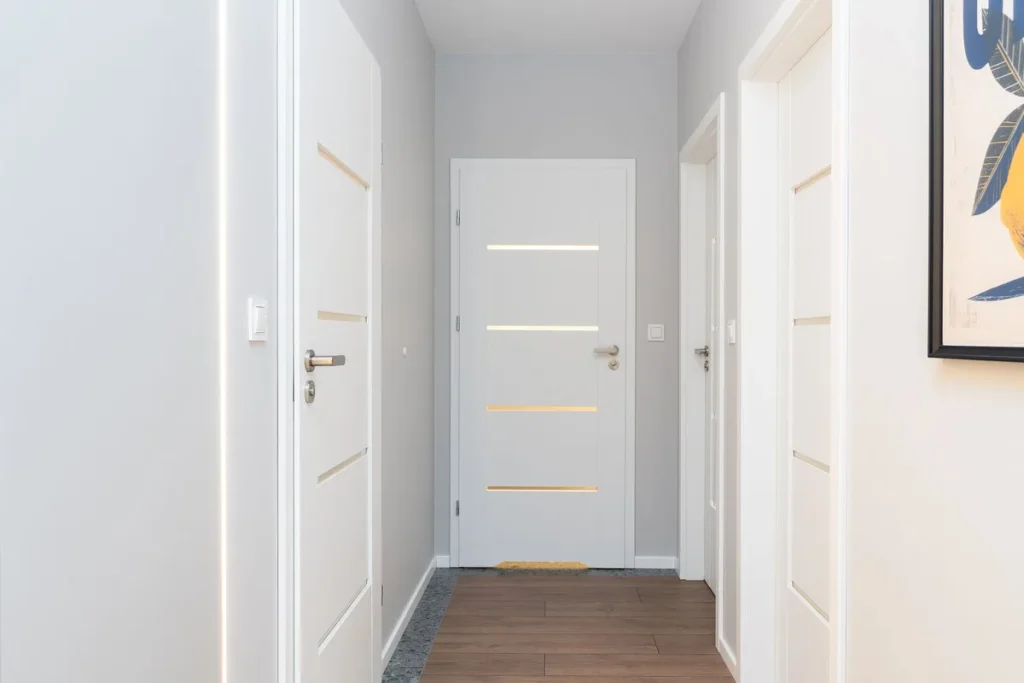
A squeaky door is a small problem with an outsized effect: it wakes a sleeping baby and announces every midnight trip to the kitchen. The good news is that most squeaks come from one simple cause — dry metal rubbing on dry metal inside a hinge — and most are fixed in under half an hour with tools you probably already own.
This guide works through the problem in the order that actually solves it. First, find out whether the noise comes from a hinge, the latch, or the frame, since each needs a different fix. Then start with the simplest repair and move to more involved ones only if the squeak survives. Nothing here requires taking the door off its frame.
What Makes A Door Squeak In The First Place
A door hinge is two metal leaves joined by a pin, and the pin turns inside a series of short tubes called knuckles every time the door swings. When that joint is clean and lightly lubricated, the movement is silent. When the lubricant dries out, dust works its way in, or rust forms on the pin, the metal surfaces drag against each other — and that drag is the squeak you hear.
Age, use, and moisture make it worse. A bedroom door opened dozens of times a day wears through lubricant faster than a guest-room door opened twice a month, and hinges on bathroom and exterior doors corrode faster. A rusty hinge will often keep squeaking after a quick spray, because the rough surface keeps grinding until it is cleaned properly.
Not every door noise is a hinge, though — a latch, a sagging door, or a shifted frame can all sound similar, and lubricant only fixes the hinge. That is why diagnosis comes before the repair.
Find The Real Source Before You Fix Anything
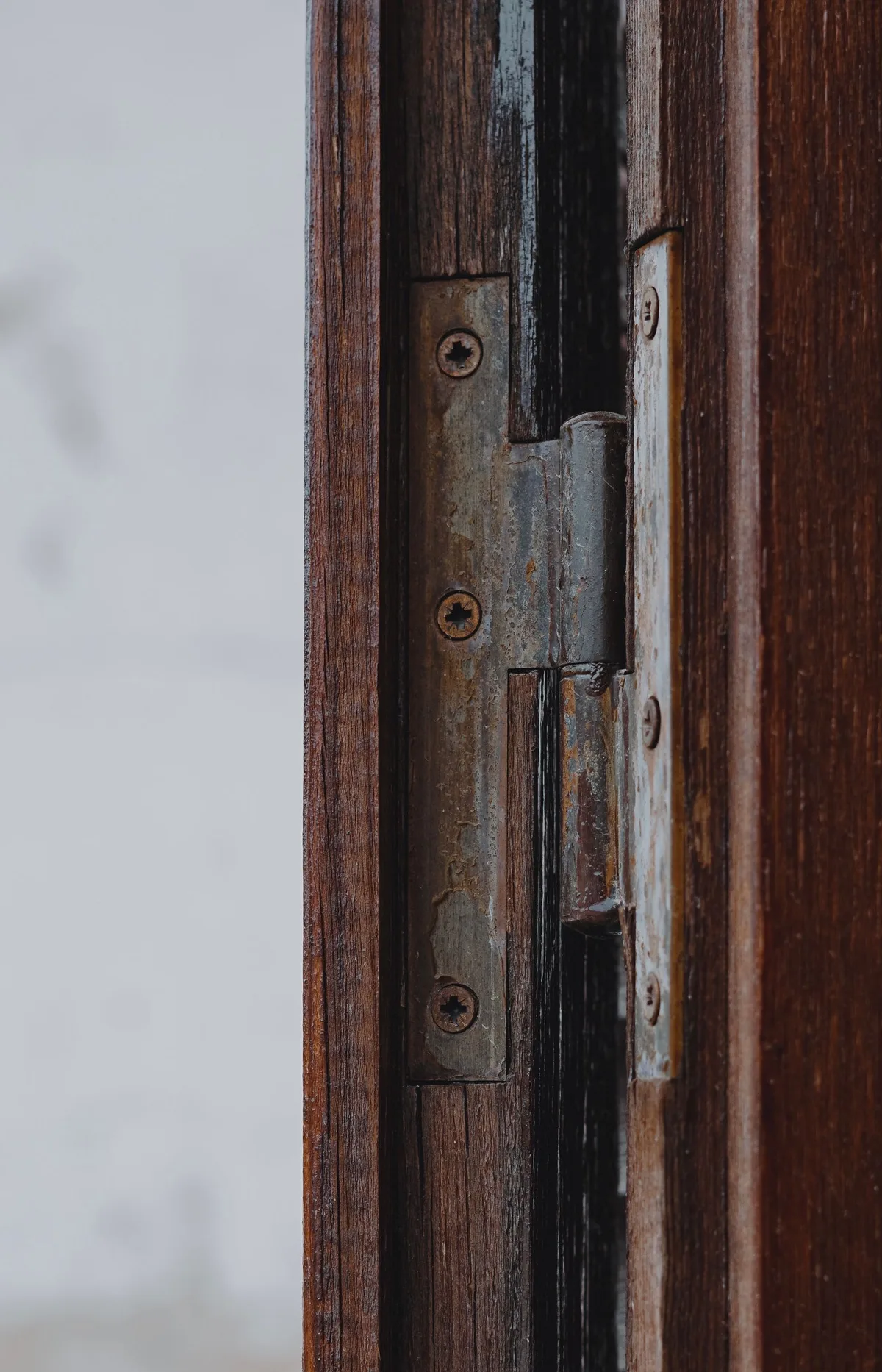
Spend two minutes here and avoid lubricating a hinge that was never the problem: open and close the door slowly and listen for exactly where the sound starts and stops.
Start with the hinges. Press a fingertip lightly on each hinge in turn while moving the door with your other hand; a noisy hinge often betrays itself through faint vibration as well as sound. Most interior doors have three hinges, and the squeak usually comes from just one — most often the top, which carries the most weight.
Next, check the latch: hold the handle so the bolt stays retracted and swing the door. If the noise disappears, the latch or strike plate is the source, not the hinges.
Then look at the frame. Close the door slowly and watch the gap all the way around; it should be roughly even. If the door rubs on one side, sticks, or will not latch without a push, it has sagged or shifted, and the squeak is a symptom of that movement rather than a dry hinge. Also watch whether the door drops as it opens — a dipping door hangs on loose or worn hinges, and no oil will hold it up.
Tools And Supplies You Will Need
Most squeaky-door repairs need very little. Gather these before you start:
- A hammer and a large nail or nail set for tapping hinge pins upward
- A flat-head screwdriver
- Clean rags or paper towels
- A lubricant: white lithium grease, silicone spray, or light machine oil (see the comparison below)
- Fine steel wool or a soft brush for cleaning rusty pins
- Wooden toothpicks or golf tees and wood glue, for stripped screw holes
- A pencil, for a dry graphite trick in a pinch
- A doorstop or wedge to keep the door steady
If you plan to replace a hinge, add a matching replacement and a drill for pilot holes.
Fix 1: Lubricate The Hinges Without Removing Anything
Try this first. It takes a few minutes, needs no disassembly, and solves most ordinary squeaks — the ones caused by a hinge that has simply dried out.
Close the door and protect the floor with a rag, because even a careful application can drip. If your lubricant has a straw attachment, use it: aim at the top of the hinge knuckles, where the pin disappears into the joint, and give a short burst. With oil rather than spray, place a few drops in the same spot. Then open and close the door slowly, ten or so times, to work the lubricant down into the joint, and wipe away any excess — pooled lubricant collects dust and turns into the grime that causes the next squeak. Work one hinge at a time, starting with the noisy one, and test after each; if the squeak fades but does not vanish, repeat once more.
A note on what not to reach for: penetrating sprays made to free rusted bolts are solvents, not lasting lubricants. They quiet a hinge for a few days, then evaporate and leave the joint drier than before, so the squeak returns louder. They can free a stuck pin, but they are not the fix — and neither is cooking oil, which turns sticky over time.
If this silences the door, you are done — though it is worth checking the other hinges, since hinges of the same age often start squeaking one after another.
Fix 2: Remove, Clean, And Lubricate The Hinge Pins
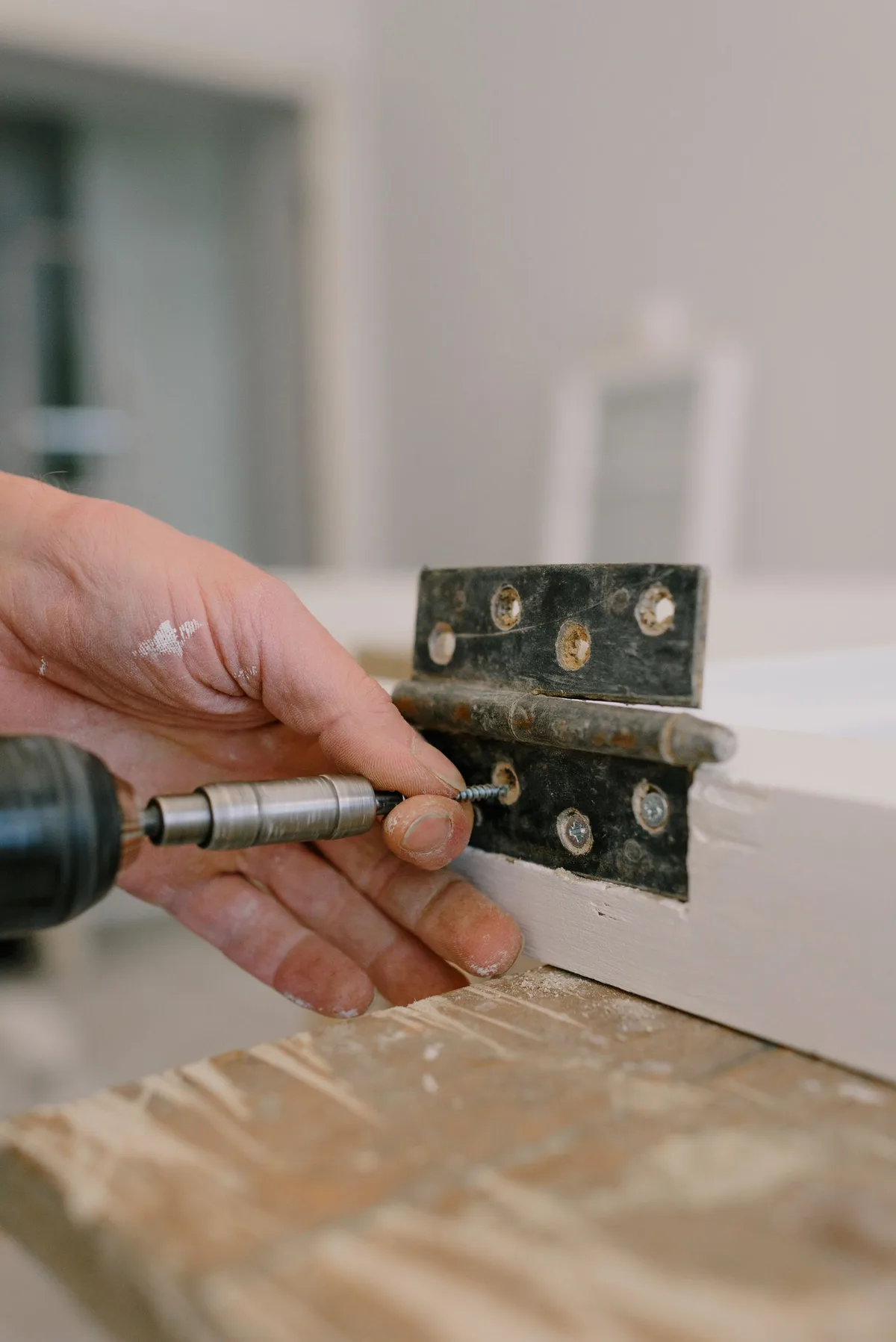
When a spray from outside cannot reach the problem — a rusty pin, old dried grease, or a knuckle that is simply too dry inside — take the pin out and do the job properly. This is still a beginner-level repair, and the fix that lasts longest.
Work on one hinge at a time; the others hold the door’s weight. Close the door and wedge a doorstop or folded rag under the outer edge. Then tap the pin upward from below with a large nail or nail set and a hammer until the head rises clear of the hinge, scoring any paint around the head first so it does not chip, and pull the pin out by hand or with pliers.
A healthy pin is smooth and clean; a squeaky one is often dull, streaked with grime, or rough with rust. Wipe it down, rub rust or stubborn buildup gently with fine steel wool until smooth, and clean inside the knuckles too — a small brush or rolled rag reaches in — because grit left inside will undo your work. Then coat the pin thinly and evenly: white lithium grease clings to metal and lasts, while light machine oil also works well, and excess grease only squeezes out and attracts dust. With no lubricant to hand, a soft pencil rubbed firmly on the pin deposits graphite, which works as a stopgap. Slide the pin back in, tap it home, swing the door ten or so times to spread the lubricant, and wipe away excess. Repeat for any other noisy hinge. Done properly, this fix lasts, because it removes the cause rather than masking it.
Fix 3: Tighten Loose Hinges And Repair Stripped Screw Holes
Sometimes the squeak is not about lubrication at all. A hinge that has worked loose lets the door shift a fraction of an inch every time it moves, grinding the hinge and straining the screws. You can often spot it: a hinge leaf sitting slightly proud of its recess, or screws that turn without tightening.
Check every screw on both leaves of every hinge, door side and frame side, and tighten anything loose. Do not over-tighten — a screw driven too hard in soft wood can strip the hole and make things worse. Snug is enough.
A screw that spins freely without gripping has stripped its hole, and it cannot be tightened until the hole is repaired. Remove the screw, push two or three toothpicks dipped in wood glue into the hole (a wooden golf tee works for a larger hole), trim them flush, and let the glue dry. Then drive the screw back in, where it will grip the new wood firmly and stop the shifting that caused the noise.
If a top hinge screw keeps stripping out, the frame itself may be pulling away; replacing one frame-side top-hinge screw with a longer one that reaches the wall stud pulls the frame tight and often cures a sagging, squeaking door.
Fix 4: Deal With A Sagging Or Rubbing Door
A rubbing door sounds different from a dry hinge — more of a groan or scrape — and lubricant will not fix a door physically touching the frame.
First, find where it rubs: press a strip of paper between door and frame at several points and see where it drags. The rub point tells you which hinge is letting the door drop — sticking at the top on the handle side usually means a sagged top hinge, while dragging along the bottom suggests a loose bottom hinge or a settled frame.
Tighten the hinges and repair any stripped holes as described above, and retest. If the door still rubs, a hinge leaf may be slightly bent from years of carrying the door’s weight. One remedy is to swap the top and bottom hinges: the bottom hinge has carried less strain and is usually straighter, so it performs better in the top position where the load is greatest. Remove one hinge at a time, keep the door supported, and refit each in the other’s place.
If the rub is small and the hinges are sound, a thin cardboard shim behind a hinge leaf can nudge the alignment back — behind the bottom hinge leaf moves the top of the door away from the frame on the handle side, and vice versa. Work in small adjustments and test after each one.
Doors also swell in humidity and shrink as air dries, so a seasonal rub may be moisture, not mechanical failure. If it appears every summer and vanishes in winter, check for swelling before altering hinges, and seal any bare wood exposed by sanding.
Fix 5: Replace A Worn Or Bent Hinge
When cleaning, lubricating, and tightening all fail, the hinge itself may be worn out: a pin that wobbles loosely in clean knuckles, knuckles bent or cracked, or a twisted leaf. Worn parts no longer fit tightly enough to run quietly, and no lubricant changes that.
Replacing a hinge is straightforward, but support the door first — wedge it firmly or have someone hold it — and replace one hinge at a time, never all at once. Unscrew the old hinge and take it with you when buying a replacement so size, screw pattern, and finish match; a same-looking hinge in a different size will not sit in the existing recesses. Position the new hinge in the old recesses, mark misaligned screw holes, and drill small pilot holes before driving screws, so they do not split the wood.
Refit, test the swing, and lubricate the new hinge lightly before calling the job done — a new hinge that starts life lubricated stays quiet far longer than one installed dry. If only one of three hinges is worn, replacing just that one is fine — but check the other two for the same wear.
Choosing The Right Lubricant For Door Hinges
The wrong lubricant is the most common reason a squeak returns weeks after a repair:
| Lubricant | Best For | Lasting Power | Watch Out For |
|---|---|---|---|
| White lithium grease | Long-term lubrication, especially after pin removal | Long — clings to metal, resists drying out | Messy if over-applied; wipe excess |
| Silicone spray | Quick no-disassembly fix | Medium — needs reapplying sooner than grease | Overspray on floors and paintwork |
| Light machine oil | Precision application on exposed pins | Medium — effective, thinner than grease | Can drip; use a few drops only |
| Dry graphite powder | Hinges where wet lubricant would attract dust | Medium — clean and dry | Messy black dust if spilled |
| Penetrating spray | Freeing a stuck or rusted pin only | Short — evaporates, leaves the joint dry | Not a lasting lubricant; squeak returns |
For most homes, the rule is simple: spray for a quick fix, grease for a lasting one. White lithium grease after a proper pin cleaning keeps a door quiet the longest, and it is the one to reach for when a spray fix keeps wearing off. This Old House’s guide covers the same progression, with video: How To Quiet A Squeaky Door.
When To Call A Professional
Most squeaky doors are a do-it-yourself job, but a few situations belong to a carpenter or door specialist. This article gives general information only, not professional advice on structural problems.
Call a professional if the door frame itself is warped, cracked, or visibly out of square, or if the wall around the frame shows cracking or movement. Those signs point to settling or structural shifts that hinge adjustments cannot correct, and forcing a door to fit a damaged frame can make things worse. The same applies if the door is very heavy — a solid-core, fire-rated, or large exterior door — and removing its hinges feels unsafe, or if several repairs have failed and the squeak keeps returning: a persistent squeak after lubrication, tightening, and hinge replacement usually means the frame or the door itself is the problem, and a professional can measure what is out of alignment rather than guessing. Antique doors, doors with unusual or concealed hinges, and doors that are part of a fire or security assembly are also worth handing over, since the wrong repair on those can damage something irreplaceable or compromise a safety feature.
How To Keep Doors Quiet After The Fix
The single most useful habit is a quick hinge check once or twice a year: swing each door, listen, and give any hinge that sounds dry a few drops of oil before it starts squeaking in earnest. Catching a hinge early means you rarely need to remove a pin at all.
Keep hinges clean, since dust and grime work into the joint over time — on exterior and bathroom doors, where moisture accelerates rust, a clean and lightly lubricated hinge resists corrosion far better than one left to accumulate grit. Avoid slamming doors, which loosens screws and bends hinge leaves, and fix a loose screw the week you notice it: a screw just starting to loosen is a thirty-second tightening job, while the same screw left for a year becomes a stripped hole needing glue and toothpicks.
Once the door swings silently again, it is worth looking at the entry with fresh eyes. A well-maintained door is half of a welcoming entry, and our guide to front door decor ideas covers the other half — wreaths, planters, lighting, and hardware.
Conclusion
Fixing a squeaky door means working in order: diagnose first, then try the simplest fix, and move to more involved repairs only if the noise survives. Most doors go quiet with a few drops of lubricant or a cleaned and greased pin. Loose screws and stripped holes come next, sagging and rubbing after that, and hinge replacement only when the hardware itself is worn out. Knowing when to call a professional is part of doing the job well. Diagnose properly, keep the lubricant light and the screws snug, and the door that woke the house will go back to doing its job unnoticed, which is exactly what a good door should do.
Frequently Asked Question
Can I Fix A Squeaky Door In A Rental Without Changing The Hardware?
Yes, and this is exactly where the no-disassembly fixes shine. A spray or oil application to the hinge knuckles changes nothing permanently and usually silences the door, and cleaning and re-lubricating a pin is also reversible, since you are putting the same pin back. Avoid drilling, shimming, or replacing hinges in a rental unless the landlord agrees — those change the door, while lubrication only maintains it.