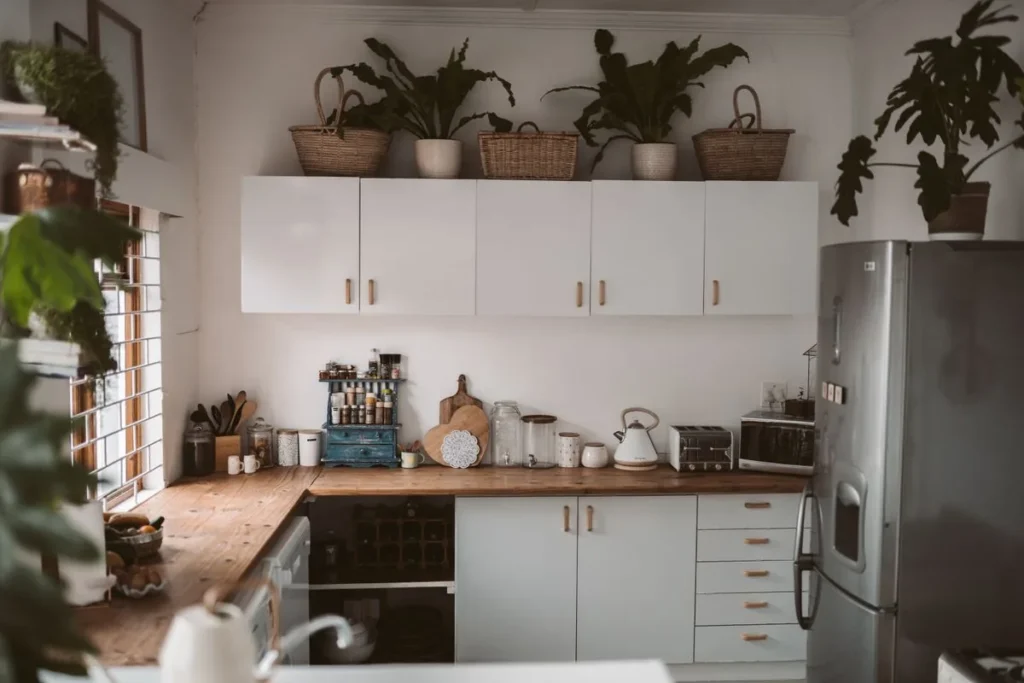
The strip of wall between the tops of your kitchen cabinets and the ceiling has started more decorating arguments than almost any other corner of the house. One person sees wasted space begging for baskets and trailing plants. The other sees a dust shelf that will never, ever be cleaned properly. Both of them are right — which is exactly why over kitchen cabinet decorating ideas inspire so much second-guessing.
Here’s the honest version: that gap can become the warmest, most character-filled layer of your kitchen, or it can look like a shelf where decor goes to die. The difference usually isn’t money — it’s knowing when the space is worth styling, what to put up there, and the handful of rules that keep it from sliding into clutter.
This guide covers it all — the leave-it-empty test, what actually works by kitchen style, lighting tricks, dust-management shortcuts, seasonal swaps, and the mistakes that turn a nice display into visual noise.
Quick Answer: The Short Version Of Decorating Above Kitchen Cabinets
If you’re scanning this while standing on a chair, here’s the verdict:
- Should you decorate up there? Yes — if the gap is roughly a foot or more tall and your kitchen leans traditional, farmhouse, or eclectic. Leave it empty if the gap is just a few inches, or if the kitchen is sleek and modern.
- What to put above kitchen cabinets: a few large pieces grouped in twos or threes — stoneware crocks, woven baskets, tall vases, framed art, cookbooks, or trailing greenery. Fewer, bigger items always beat a long row of small ones.
- The golden rule: leave generous empty space between groups. Breathing room is what separates “styled” from “cluttered.”
- Repeat what the kitchen already has: match decor to existing finishes — white pottery with white cabinets, wood tones with butcher block, brass with brass fixtures.
- Dust-proof it: line cabinet tops with shelf liner or wax paper, choose smooth pieces that wipe clean, and schedule one proper wipe-down when you clean the range hood filter.
The sections below unpack each of these — style-specific ideas, lighting options, and the clutter mistakes to dodge.
Should You Decorate Above Your Kitchen Cabinets, Or Leave Them Empty?
Before you buy a single basket, answer this question honestly. Not every kitchen benefits from decor up there, and skipping it is a legitimate design choice.
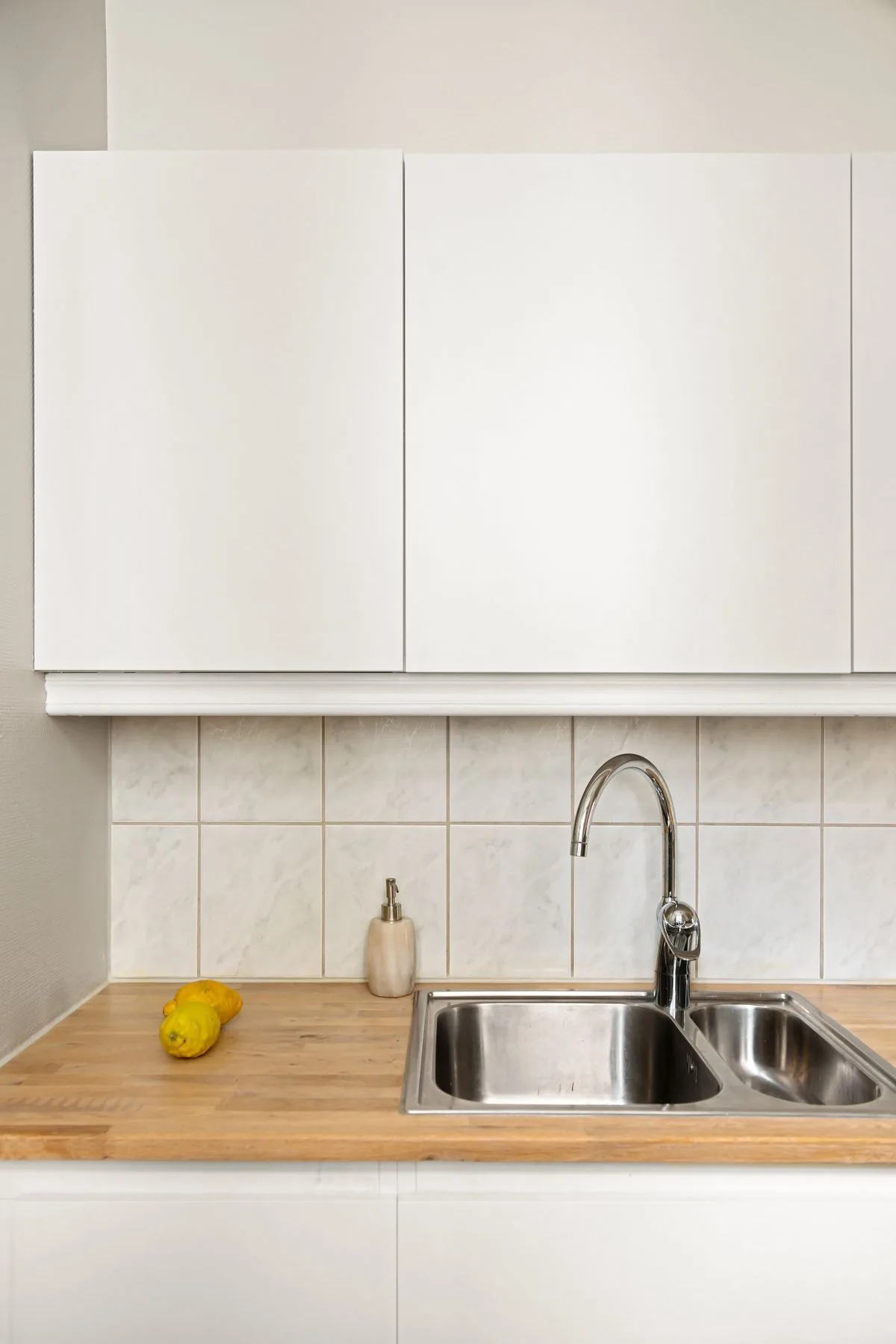
Measure the gap first. A gap of about a foot or more gives decor room to breathe. With just a few inches, anything up there looks squeezed in — the tidier move is crown molding, which draws the eye up and hides the cabinet-to-ceiling seam.
Read the room’s style. Over kitchen cabinet decorating ideas shine in kitchens with warmth to them — farmhouse, traditional, cottage, rustic, or anything eclectic and collected. In a crisp modern kitchen with flat-panel doors and minimal hardware, decor on top tends to fight the design rather than complete it. And if your cabinets look tired before you’ve even started styling, fresh paint may be the better first move — our guide to repainting painted cabinets covers how to do it right.
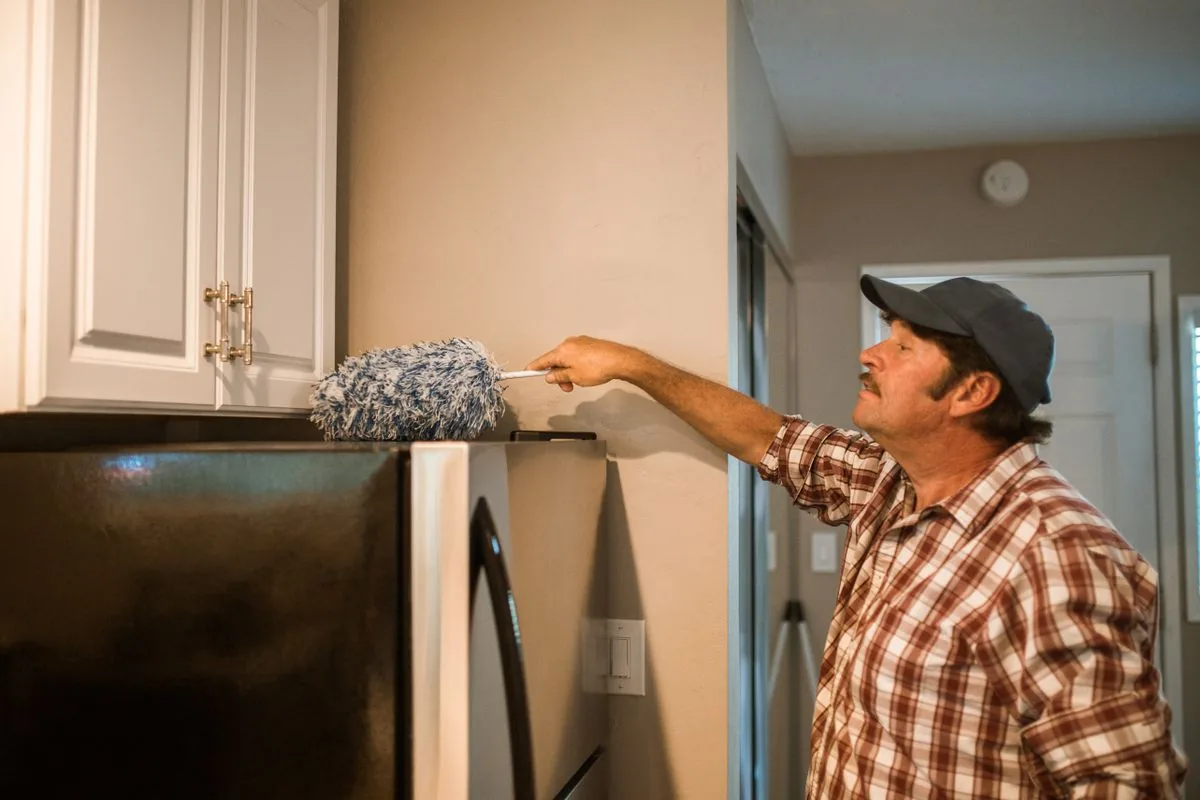
Be honest about maintenance. Anything up there collects dust, and kitchen dust turns sticky thanks to cooking grease. If hauling a step stool out twice a year fills you with dread, an empty ledge is the smarter call.
What To Put Above Kitchen Cabinets: The Ideas That Work
Think of the cabinet tops as one long display shelf, then style it like a mantel: a few edited vignettes, not a parade of objects. These are the pieces that consistently look good from floor level.
Greenery, real or faux. Nothing softens a row of hard cabinet boxes faster than something leafy — a trailing pothos spilling over one end, potted ferns flanking the range hood, or a simple garland along a long run. Real plants are awkward to water at that height, so high-quality faux stems are a perfectly respectable choice. Keep feathery pieces away from the cooktop vent; textured greenery near grease gets grimy fast.
Woven baskets. Baskets are the workhorse of above-cabinet decor: warm and textured without visual fuss, and lidded ones can stash rarely used items like holiday linens. Go for fewer, larger baskets in one or two tones so the display reads as a single idea.
Stoneware, pottery, and ceramics. Crocks, oversized pitchers, and big glazed vases are tailor-made for this spot — chunky enough to read from the floor and smooth enough to dust quickly. Group them in odd numbers and vary the heights. White or cream pottery is especially forgiving in light kitchens; terracotta suits warmer palettes.
Framed art and signs. A large framed print leaned against the wall above the cabinets gives the kitchen a collected, gallery-like feel. One big piece beats three small ones every time.
Cookbooks and boards. A short stack of beautiful cookbooks plus a couple of wooden cutting boards leaned at the back doubles as storage and decor — especially if they match the kitchen’s story.
Plates, platters, and serving pieces. A large charger plate on a stand, or a few serving platters leaned along the back wall, fills horizontal space elegantly — a good home for the pieces you love but rarely use.
Over Kitchen Cabinet Decorating Ideas By Kitchen Style
The same ledge asks for very different things depending on the kitchen below it. Matching your decor to the room’s existing language is the fastest way to make it look intentional.
| Kitchen style | Best above-cabinet decor | What to avoid |
|---|---|---|
| Modern | Nothing, or one sculptural vase plus concealed LED strip lighting | Rows of rustic items, word signs, faux ivy |
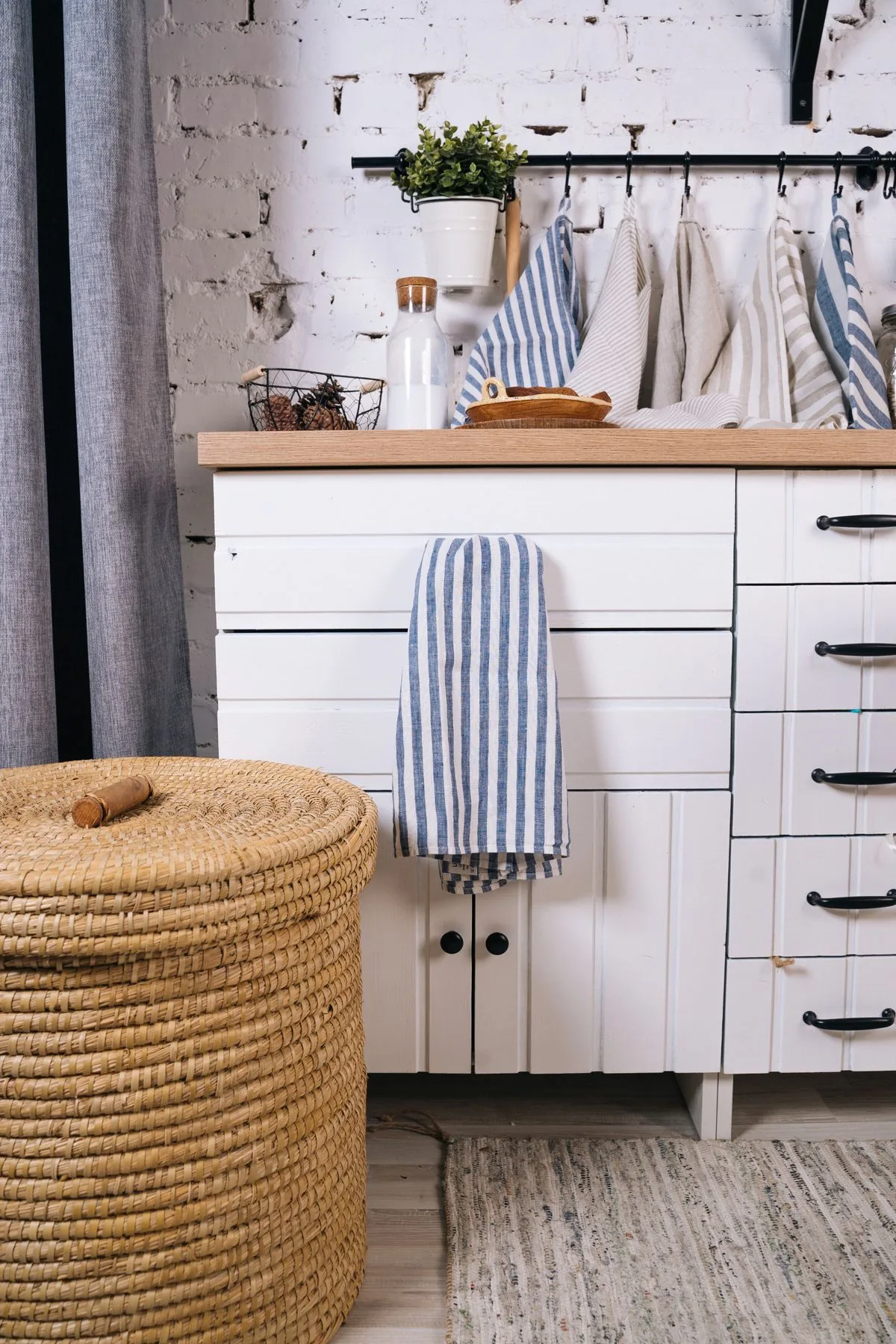
| Farmhouse | Woven baskets, stoneware crocks, vintage bread boards, simple greenery | Fussy small figurines, overly themed collections |
| Traditional | Matching pottery pairs, framed art, classic urns, silver or brass accents | Mixing too many materials at once |
| Cottage / coastal | Whitewashed frames, glass jars, driftwood tones, airy faux stems | Heavy dark pieces that dominate a light room |
| Rustic | Wooden crates, antique kitchen tools, enamelware, warm lantern-style light | Shiny modern metals that clash with the woods |
Notice the pattern: in every style, the winning formula is repetition of what the kitchen already contains. Brass hardware? Brass accents up there. Butcher-block island? Wood pieces on the cabinets echo it. Chunky decor sits beautifully above simple Shaker doors, while busier door profiles want quieter styling. If you’re planning around door profiles, our breakdown of kitchen unit door styles helps you see what you’re working with.
How Do You Light The Space Above Kitchen Cabinets?
Lighting is the secret weapon of decorating above kitchen cabinets — it turns a dim shelf into a feature. Even one or two pieces look dramatically better with a warm glow behind them.
LED strip lighting is the easiest win. A slim strip laid along the cabinet tops washes soft light up the wall and onto the ceiling, making the kitchen feel taller and cozier in the evening. Choose warm white (around 2700–3000K) over cool daylight tones, which can feel clinical. Battery-operated strips exist, but a plug-in set on a timer is more reliable — just plan where the cord will drop discreetly behind a cabinet side panel.
Don’t block existing recessed lights or vents with tall decor, never cover a smoke alarm, and keep cords clear of the range hood area, where heat and grease concentrate.
Lighting below the cabinets matters too. If your kitchen has an island, our guide to pendant lights for a kitchen island covers heights and spacing that pair well with the warm glow up top.
How To Keep The Dust Off (Without Dreading It)
Cabinet tops sit outside the normal cleaning circuit, so you need tricks that make the twice-a-year clean fast.
Line the tops first. Before you place anything, lay wax paper or shelf liner across the cabinet tops. On cleaning day, you lift the liner with its layer of grime, wipe once, and lay fresh liner down — no scrubbing caked-on dust.
Choose wipeable pieces. Smooth glazed pottery, glass, and metal wipe clean in seconds. Rough baskets, dried flowers, and feathery faux plants grab onto grease-laden dust. If you love baskets, pick tighter weaves and smooth finishes.
Schedule the clean with another chore. Tie the above-cabinet wipe-down to something you already do — like cleaning the range hood filter or the twice-a-year deep clean. Pairing it with an existing task is how it actually gets done.
For a thorough, step-by-step approach with designer-approved ideas, this guide on what to put above kitchen cabinets and how to keep it clean covers styling rules alongside dust and grease management.
How To Style Above Kitchen Cabinets For Each Season
One of the best things about this ledge is that it takes about ten minutes to refresh — the easiest seasonal styling spot in the house. You don’t redecorate; you swap one element while the base display stays year-round. Spring: fresh or faux branches. Summer: a glass jar of shells or a pale woven tray. Fall: small pumpkins or dried wheat stems. Winter: a strand of warm fairy lights with one evergreen garland. The discipline: change one or two things, not everything.
Mistakes That Make It Look Cluttered
Most failed above-cabinet displays break the same few rules. Run through this list before you call yours done:
Too many small items. A long row of little figurines and tiny frames reads as clutter from the floor — you can’t see what they are. Two or three substantial groups always beat a dozen small things.
No breathing room. Every group needs empty space around it. If the decor runs wall to wall, there’s no focal point and the eye has nowhere to rest.
Clashing styles. A farmhouse sign, a modern sculpture, and a beachy shell jar don’t belong in the same display. Pick one style language — the table above is your cheat sheet.
Ignoring scale. Small items vanish from six feet below. Everything up there should be noticeably larger than what you’d place on a countertop.
Blocking light and air. Tall pieces crowding recessed lights, vents, or the range hood look accidental and create real cleaning headaches. Keep decor clear of anything functional.
Frequently Asked Questions
Is It Outdated To Decorate Above Kitchen Cabinets?
No — but the crowded version is. A long row of small knickknacks reads as dated, while a few large pieces with generous empty space between them still looks current. Leaving the ledge bare, or closing the gap with crown molding, is an equally valid clean choice for minimalist kitchens.
How Do You Keep The Top Of Kitchen Cabinets From Getting Dusty?
Line the cabinet tops with wax paper or shelf liner before decorating, so cleaning day means lifting and replacing the liner rather than scrubbing. Choose smooth, wipeable pieces over textured ones, keep them away from the cooktop vent, and plan one proper wipe-down a couple of times a year — ideally alongside another scheduled chore like cleaning the range hood filter.
What Is The Best Thing To Put Above Kitchen Cabinets?
The safest all-rounders are large woven baskets, stoneware crocks or tall vases, and one piece of framed art — grouped in twos or threes with empty space between the groups. Repeat the kitchen’s existing colors and materials so the display feels connected to the room, and avoid lots of small items; they read as clutter from the floor.
How Much Space Do You Need To Decorate Above Kitchen Cabinets?
Roughly a foot or more of vertical clearance is the practical minimum for decor to look comfortable. With only a few inches, pieces look squeezed in — leave the gap bare or cover it with crown molding. Taller gaps of two feet or more can handle larger art, tall vases, or a short stacked row of display cabinets.
Can You Put Lights Above Kitchen Cabinets?
Yes, and it’s one of the highest-impact upgrades for this spot. A warm-white LED strip along the cabinet tops washes soft light up the wall and makes the display glow in the evening. Keep fixtures hidden behind the decor, choose warm color temperatures over cool ones, and keep cords clear of the range hood, vents, and smoke alarms.
The Bottom Line
Decorating above kitchen cabinets works when it follows one principle: less, bigger, intentional. A couple of substantial groups, breathing room between them, materials that echo the kitchen below, and a little warm light — that’s the whole formula. Measure your gap, pick your style, dust-proof it from day one, and that awkward strip of wall stops being a problem and starts being a feature.