

Curtains are the largest soft surface in most bedrooms, yet they are often chosen last, almost as an afterthought. That is a mistake, because bedroom curtains do three jobs at once: they control the light you wake up to, they guard your privacy, and they decide whether the room feels finished or still waiting for something. Get them right and the whole room calms down. Get them wrong and even good furniture and bedding cannot quite save the space.
The good news is that no renovation is needed. With the right fabric, length, and hanging height, a bedroom can feel taller, softer, and more restful in a single weekend. This guide walks through the main bedroom curtain ideas by fabric and style, explains lengths and colors in plain terms, and covers layering, small rooms, hanging, and care, so you can choose with confidence instead of guessing in the shop.
Start With What Your Bedroom Curtains Need To Do
Before looking at fabrics or colors, ask what the curtains must actually do in your room. A street-facing bedroom needs privacy first. A room that catches the early sun needs light control first. A light sleeper needs darkness first. A room that already feels calm may only need softness and finish.
When you rank those jobs, the fabric almost chooses itself. Privacy and darkness point toward lined or blackout fabrics. Soft morning light points toward sheers or linen. Warmth and drama point toward velvet or heavy cotton. A curtain that looks beautiful but leaves you awake at dawn has failed its main job, no matter how good it looks in daylight.
Also consider how the window is used. A window you open often needs panels that slide easily and clear the handle. A window above a radiator or a desk needs a shorter length. A window you rarely touch can carry a heavier, more decorative drape. Start with the job, and the rest of the choices get much easier.
Sheer Curtains For Soft Morning Light
Sheer curtains are the gentlest way to dress a bedroom window. They filter sunlight instead of blocking it, so the room stays bright while the harsh edge comes off the light. They also soften the hard lines of the window frame, which is why a room with sheers often feels calmer the moment they go up.
Sheers work best where daytime light matters more than nighttime privacy: upper floors, garden-facing windows, and rooms that do not face a street or a neighbor’s window. White, ivory, and pale grey are the safest colors, because they disappear into the light rather than competing with it.
There is one honest limit to know. At night, when the lights are on inside, sheer fabric becomes easy to see through from outside. So sheers alone are a poor choice for a street-facing bedroom. The fix is simple: pair them with a blind or a heavier drape that closes at night, which gives you soft light by day and real privacy after dark.

Blackout Curtains For Better Sleep
Blackout curtains are made from densely woven fabric, or from fabric with a light-blocking lining, so they shut out most incoming light. For a bedroom, that is often the single most useful feature a curtain can have. They suit light sleepers, shift workers, rooms facing streetlights, and any bedroom that gets bright very early in summer.
Fit matters as much as fabric here. Light leaks in at the edges, so blackout panels should cover the whole window with some overlap at the sides, and the rod should sit wide enough that the panels can close fully without gaps. A blackout curtain that leaves a bright stripe down each side will not do its job, however good the fabric is.
Blackout panels are heavier than sheers, so they need a sturdier rod and brackets fixed properly into the wall. If you love the darkness but miss daylight, layer them over sheers: sheers closed by day for soft light, blackouts closed at night for sleep. That combination is the most flexible setup a bedroom can have.

Linen Curtains For A Relaxed, Airy Feel
Linen curtains suit bedrooms that should feel relaxed rather than formal. The fabric has a visible natural texture and a soft, easy drape, and it filters light into a warm, even glow instead of shutting it out. That makes linen a good match for coastal, farmhouse, minimalist, and softly rustic bedrooms.
Linen does wrinkle, and that is part of its character rather than a flaw. If crisp, perfectly smooth panels matter to you, a linen-look synthetic will give a similar texture with easier care. Either way, linen-weight curtains filter light rather than block it, so they are not the answer for a bedroom that needs real darkness. Pair them with a lining or a blind if sleep matters more than softness.
Check the care label before buying. Pure linen usually wants gentler washing than cotton or polyester, and it dries best away from harsh heat. When cared for properly, linen softens with every wash and keeps its relaxed look for years.
Velvet Curtains For Warmth And Drama
Velvet is the most dramatic bedroom curtain fabric, and the warmest feeling one. Its dense pile catches light beautifully, holds rich color, and helps soften sound in the room, which suits a bedroom meant for rest. Deep green, navy, rust, and charcoal all look superb in velvet, while blush or dusty pink gives a softer version of the same luxury.
Velvet works hardest in rooms that need warmth: cold rooms, large rooms that feel bare, and formal bedrooms where the window should be a feature. Because the fabric is heavy and visually strong, the rest of the room should stay calm. Let the curtains be the star, and keep bedding and walls quieter around them.
Weight is the practical point. Velvet panels need a strong rod, solid brackets, and fixings that suit your wall type. Hung well, they fall in deep, even folds that instantly make a bedroom feel dressed. Hung on a weak rod, they sag and drag, which ruins the effect, so spend the effort on hardware, not just fabric.
Bedroom Curtain Colors That Work With Your Walls
Color is where most bedroom curtains go wrong, and the fix is a simple rule: one bold choice per room. If your bedding has a pattern, keep your curtains solid so the room does not feel busy. If your walls and furniture are mostly neutral, your curtains can carry a pattern or a stronger color without clashing.
A few pairings rarely fail. Warm white walls work with beige, oatmeal, and soft taupe. Grey walls work with white, charcoal, dusty blue, and sage green. White walls accept almost anything, but softer tones keep a bedroom restful rather than loud. If you want a color that still feels calm, look at muted versions of it: dusty blue instead of bright blue, sage instead of vivid green, blush instead of hot pink.
Plan curtains together with the walls, not separately from them, because the two share the same sightline all day. Our guide to Bedroom Wall Decor Ideas covers how wall color and art set the tone of the room, and the same thinking applies here: pick a palette first, then let the curtains sit inside it.
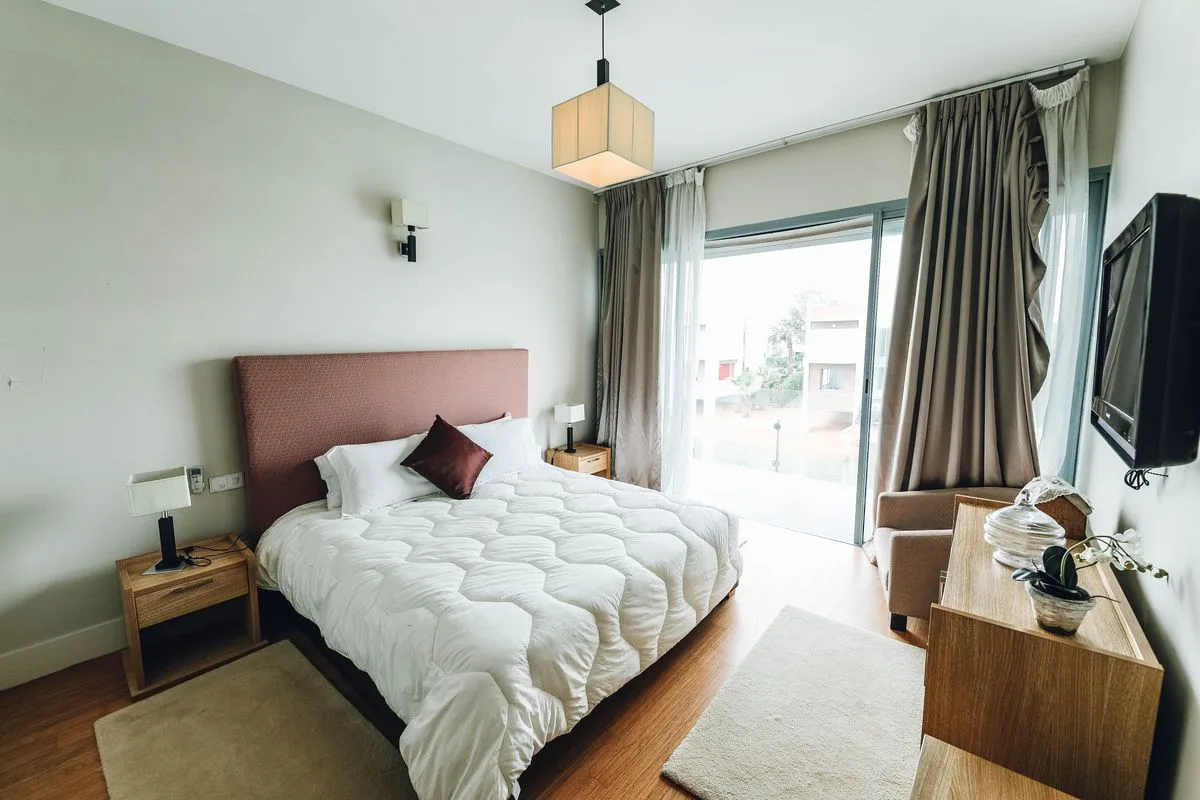
Curtain Lengths Explained: Sill Length, Apron Length, Floor Length, And Puddled
Length changes the whole character of a curtain, so it is worth knowing the four standard options before you measure.
Sill length ends at the windowsill. It is practical above radiators, desks, and storage, it is easier to clean, and it feels more casual. Apron length falls just below the sill, which gives a neater finish than sill length while staying practical.
Floor length just kisses the floor. It is the most polished bedroom choice, it makes windows look taller, and it suits most bedrooms, especially where the wall below the window is clear. Puddled length adds extra fabric that pools on the floor. It looks romantic and formal, but it collects dust, needs more cleaning, and can trip pets and small children, so it suits low-traffic, decorative windows best.
Whatever length you choose, measure from where the rod will sit down to your chosen endpoint, not from the top of the window. Rod position decides the finished length, and measuring from the wrong point is the most common reason curtains arrive too short.
Layering Sheers With Drapes For Day And Night
Layering is the most practical bedroom curtain idea of all, because it solves the day-night problem in one window. Hang a sheer panel closest to the glass on one rod or track, and a heavier drape on a second rod or track in front of it. By day, keep the sheers closed and the drapes open: light comes in softly and the room stays private. At night, close both layers for darkness and full privacy.
Layering also helps with drafts, because two layers trap more still air at the window than one. This Old House explains how layering window treatments such as sheers with heavier curtains can cut drafts and give better light control through the day.
The look works in any bedroom, but it is especially valuable on street-facing windows, where a single layer always forces a compromise. Choose a sheer in white or ivory, then let the outer drape carry the color and weight. The two layers together look richer than either one alone, and they give you real control instead of a single setting.
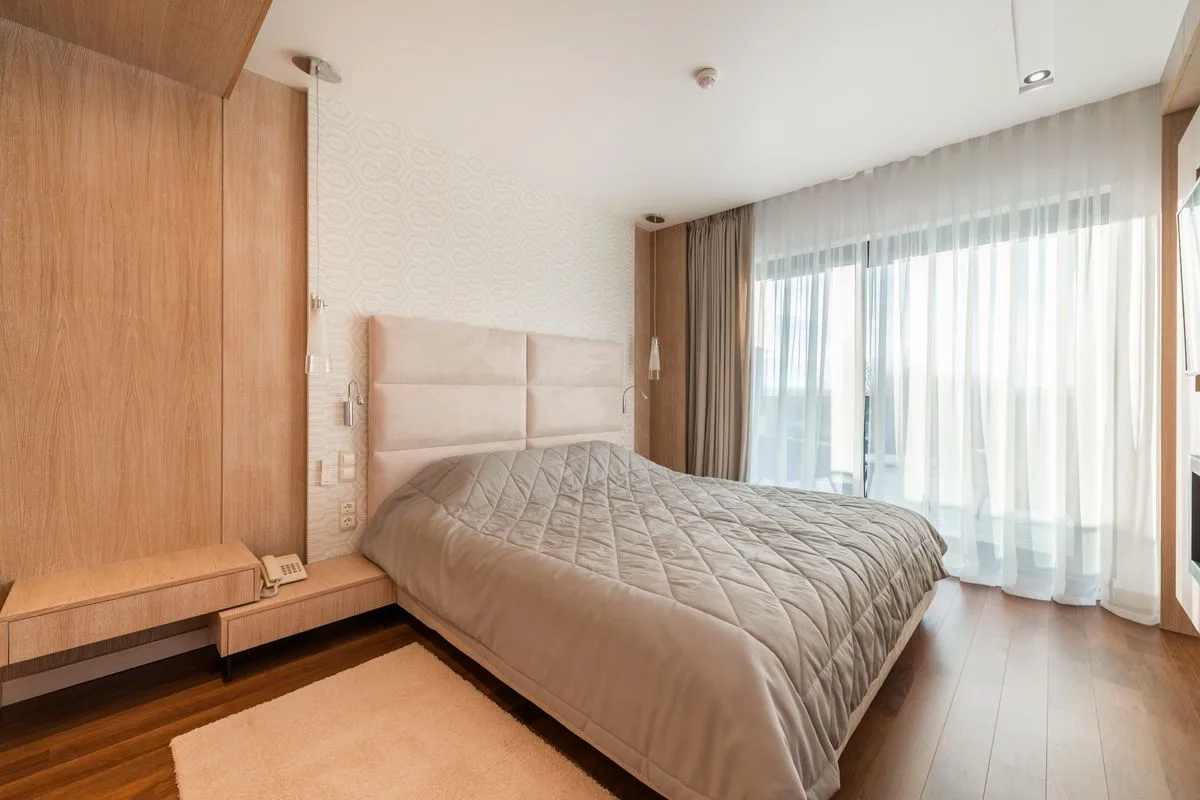
Curtain Ideas For Small Bedrooms
Small bedrooms benefit from curtains more than large ones do, because the window is often the largest visual feature in the room. The key trick is to hang high and wide: mount the rod close to the ceiling and extend it past the frame on both sides, so the panels stack on the wall rather than over the glass. The window reads larger, the walls read taller, and the room feels less cramped.
Keep the fabric light in a small room. Pale colors, sheers, and light linen keep the space airy, while heavy patterns can chop the wall into pieces. Floor length helps here too, because one long vertical line draws the eye upward. Avoid fussy valances and heavy trims that add visual weight where space is already tight.
Renters have good options that leave no damage. A tension rod fitted inside the window frame holds light panels without a single hole, and adhesive hooks rated for the weight can carry sheers if you test them first and follow the removal instructions. Our guide to small living room ideas for apartments uses the same small-space, renter-friendly thinking, and it transfers directly to bedrooms.
How To Hang Bedroom Curtains So They Look Custom
Hanging is where good curtains become great ones, and most of it comes down to measuring before you buy. Measure the window width, then decide how far the rod should extend past the frame so the panels can stack on the wall when open. Measure the drop from the planned rod position to your chosen length. Write both numbers down before ordering, and measure twice if the window is wide or the ceiling is uneven.
Choose hardware to match the fabric weight. Light sheers suit slim rods and simple brackets. Heavy blackout or velvet panels need a stronger rod, sturdy brackets, and wall anchors suited to your wall type, ideally fixed into studs where possible. A rod that bows in the middle will spoil even the best curtains.
When you hang them, set the rod level, let the panels fall naturally, and give them a day to settle before judging the length. Steam or iron out packaging creases first, because creases make new curtains look shorter and stiffer than they are. Small details finish the job: finials that suit the room, rings or grommets that slide smoothly, and panels that clear the glass fully when open so they never block daylight.
Caring For Bedroom Curtains So They Last
Curtains last far longer with a little routine care. Start with the care label, because it overrides every general rule. Most cotton and polyester panels can be machine washed on a gentle cycle, while linen and velvet usually need gentler handling or dry cleaning. Washing curtains with the wrong setting is the fastest way to shrink or dull them.
Between washes, vacuum panels with a brush attachment to lift dust, especially along the top folds where dust settles. If one window gets far more sun than the others, swap panels between windows now and then so fading stays even. Wash spare sets before storing them, and store them clean and dry so they come out fresh next season.
Common Bedroom Curtain Mistakes To Avoid
- Hanging the rod too low or too narrow, which makes the window look smaller than it is.
- Buying panels too narrow, so closed curtains look stretched flat instead of falling in soft folds.
- Using sheers alone on a street-facing window, where they give no privacy at night.
- Choosing floor-length panels above a radiator, where they can block heat and collect dust.
- Ordering before measuring, which is how curtains arrive too short or too narrow.
Frequently Asked Questions
Should Bedroom Curtains Touch The Floor?
Floor length that just kisses the floor is the classic bedroom choice and suits most rooms. Puddled length is a style choice for decorative windows, while sill length suits windows above furniture, desks, or radiators.
Are Blackout Curtains Good For Bedrooms?
Yes, especially for light sleepers, shift workers, and rooms facing streetlights or early sun. Pair them with sheers if you also want soft daylight, since blackout fabric alone gives you darkness or nothing.
What Color Curtains Go With Grey Walls?
White, charcoal, dusty blue, sage green, and blush all work with grey walls. Keep your bedding in mind too: if the bedding is patterned, choose a solid curtain, and if the bedding is plain, the curtains can carry more color.
Can You Hang Curtains Without Drilling Holes?
Yes. A tension rod fitted inside the window frame holds light panels with no holes at all, and adhesive hooks rated for the weight can carry sheers. Test adhesives in a hidden spot first and check your lease before drilling anything.
Conclusion
Good bedroom curtains start with the job, not the fabric: darkness for sleep, softness for mornings, privacy for street-facing windows. Once that is clear, choose a fabric that does the job, a color that sits calmly with your walls and bedding, and a length that suits the window. Hang the rod high and wide, let the panels fall in soft folds, and the room will feel finished in a way that no single piece of furniture can manage alone. Pick one of these bedroom curtain ideas, live with it for a week, and add more only if the room still asks for it.