Most backyards go dark the moment the sun drops, and that is a shame. Evenings are often when a yard is at its best: the heat eases off and there is finally time to sit outside. Good lighting is what makes that possible. It is not about flooding the yard with brightness, but placing small, warm pools of light where you walk, sit, and look, so the space feels safe and inviting.
This guide covers the backyard lighting ideas that work in a real yard: string lights, solar path lights, spotlights, deck and step lighting, and security lighting that does not ruin the mood. It also covers brightness, color temperature, budget ranges, and placement mistakes.
Quick Answer
- Layer three kinds of light: a soft overall glow, brighter light where you do things, and small accent lights on features.
- Start with the paths and steps: lit walkways make the whole yard feel cared for.
- Stick to one warm color temperature across the yard, roughly 2700K to 3000K, so the space feels designed instead of patched together.
- Solar lights are the easiest first step; low-voltage wired systems are brighter and more reliable for larger yards.
- Put lights where people walk, sit, and gather, not in a neat row along every edge.
Why Layered Lighting Beats One Bright Floodlight
A single bright floodlight is the most common backyard lighting mistake. One fixture, one switch, and the whole yard is lit. The problem is that it lights everything equally, which means nothing looks good. Faces look harsh, seating areas feel like parking lots, and gardens disappear into glare and shadow.
Layered lighting works the other way: a soft overall glow sets the mood, a little extra light lands on the dining table or grill, and one or two accent lights pick out a tree or planter. Each layer runs at a low level, so the yard feels calm rather than blasted. The Spruce’s collection of backyard lighting ideas shows these layers in real yards, alongside the landscape lighting ideas for backyard spaces covered below.
String Lights For Instant Atmosphere
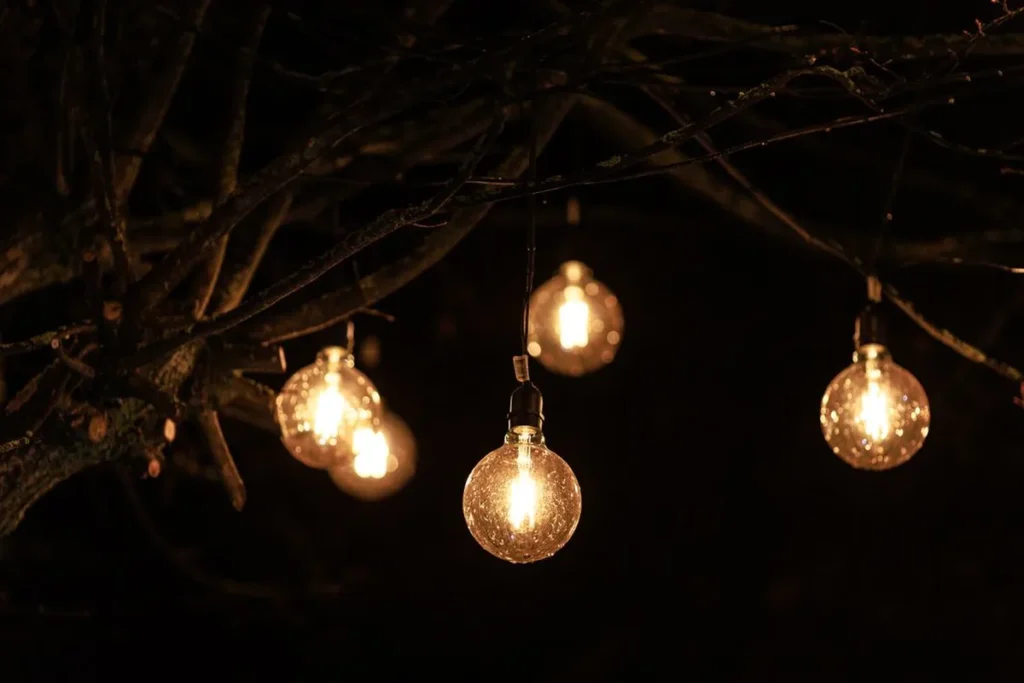
String lights are the fastest, cheapest way to change how a backyard feels after dark, and they suit almost every yard. Draped over a patio, strung between trees, or hung along a fence or pergola, backyard string lights ideas like these throw a soft, even glow that flatters people, food, and furniture in a way no spotlight can.
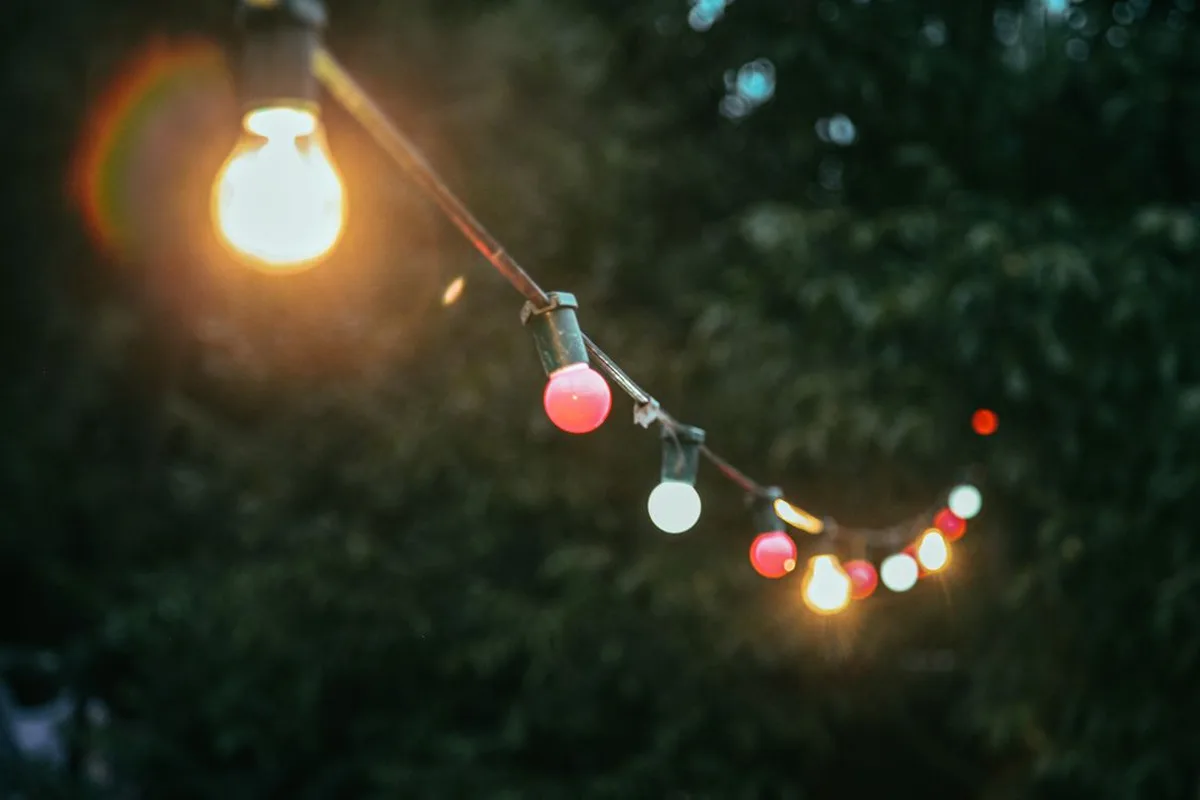
A few practical points make the difference between string lights that look magical and ones that look messy. Hang them high enough to walk under, and keep the lines taut so they do not sag by midsummer. Warm white bulbs suit most yards; cool white can look clinical outdoors. If your strings will stay up through rain, check that they are rated for outdoor use, and plug them into a weatherproof, covered outlet rather than running an indoor extension cord outside.
String lights give you the overall glow, while path lights and spotlights handle safety and features. The same principle applies on a porch: our guide to porch ideas uses several small warm sources instead of one harsh overhead light.
Solar Path Lights For Safe, Clearly Marked Walkways
Paths are where backyard lighting earns its keep: a dark walkway is a tripping hazard that quietly discourages people from using the yard at night. Solar path lights for backyard paths fix that without wiring, trenching, or an electrician, which is why they are the usual first purchase.
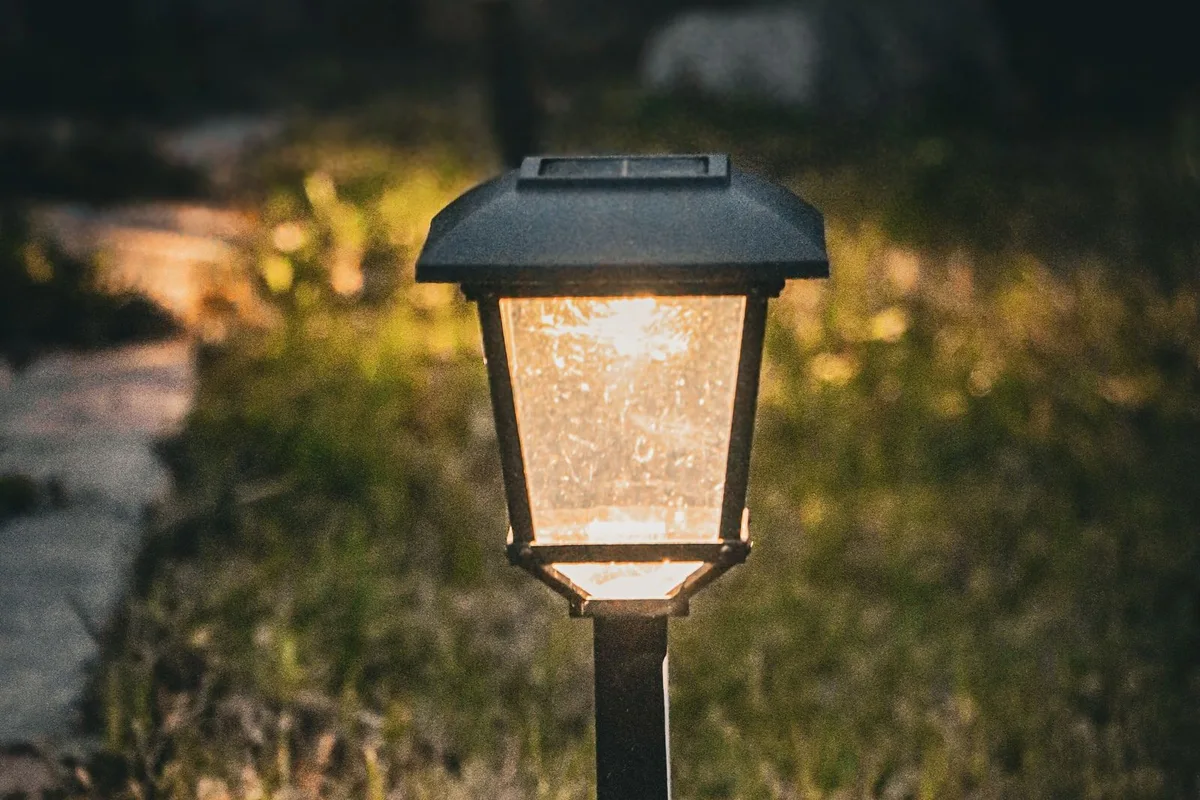
Place them where the path actually runs, not in a perfect line down both sides. Staggering them slightly looks more natural and avoids the runway effect. Push the stakes into soil, not the path itself, and keep the solar panel clear of leaves so it charges during the day. In shady yards, solar lights charge slowly and fade early. That is the main limitation to know before you buy.
Solar lights suit short paths, garden edges, and the steps up to a deck. They are less suited to the one place you need guaranteed brightness every night, like a long driveway or a stairway you use daily. For those spots, a wired light is the more dependable choice. Lit paths also show off planting at night: the beds in our guide to how to build a raised garden bed look completely different with a little light on them.
Spotlights And Uplighting For Trees And Features
If string lights are the background music of a backyard, spotlights are the solo. A single well-aimed spotlight can turn an ordinary tree into the best thing in the yard at night. Place the fixture at the base of the tree, a short distance out from the trunk, and aim it up through the branches. The light catches the leaves, and the tree reads twice as tall as it does by day.

The same trick works for anything with a shape worth noticing: a stone wall, sculpture, water feature, or interesting fence. The rule is restraint. One lit feature is a focal point; five lit features are a theme park. Pick the one or two things you genuinely like looking at, light those, and let the rest of the yard stay dark. Darkness is what makes the lit spots stand out.
Uplighting also helps a small yard feel bigger. When the eye travels up into a lit canopy, the yard stops feeling like a fenced box. Just aim the beam at your own tree, not over the fence or at bedroom windows.
Deck, Patio, And Step Lighting For Evening Living
Decks and patios are where backyard evenings actually happen, so they deserve light that lets people eat, talk, and move around without thinking about it. The most useful deck lighting ideas are the quiet ones: small lights in stair risers or deck posts, a warm pendant over the dining table, and low lights marking the patio edge so nobody steps off it in the dark.
Step lights matter more than they look: one missed step in the dark can end an evening badly, and lit risers solve it without glare. Post-cap lights give a gentle wash across the boards and make the whole structure read as finished. Under a pergola, a pendant or wall sconces over the seating area do the same job as an indoor ceiling light, at a much kinder brightness.
Keep the dining area a touch brighter than the lounging area. People need to see food and each other at the table, while chairs nearby can stay dim and relaxed. A dimmer, or simply two separate switches, makes that easy. Near the front of the house, our front porch ideas guide uses the same logic: mark the entrance, light the steps, keep the glow warm.
Security Lighting That Does Not Ruin The Mood
Security lighting has a reputation problem, and it is deserved: the classic bare floodlight that snaps on at full blast makes a yard feel watched rather than welcoming. The fix is to separate it from the mood lighting. Good outdoor security lighting ideas start with that separation.
Motion-sensor lights work best when they are aimed low and tight: at a gate, a side passage, a garage door, or the back steps. They should light the ground someone walks on, not the whole yard and the neighbors’ windows. Warm or neutral white reads far less alarming than harsh daylight-white, and adjustable sensitivity saves you from a light show every time a cat crosses the lawn.
A quieter second layer helps too: low boundary lights and a lit entry make a house look occupied, which is itself a deterrent. The goal is a yard that looks lived in after dark: paths lit, door visible, nothing pitch black. Total darkness is what burglars like; a calmly lit yard is not inviting to anyone sneaking around.
How To Choose Brightness And Color Temperature
Color temperature is the simpler choice. Warm white, roughly 2700K to 3000K, flatters skin, food, timber, and stone, and it is the safest default for a backyard. Cool white suits security lights and work areas, but it makes a seating area feel like a car park. Whatever you choose, keep it consistent: mixing warm and cool fixtures in one yard is the fastest way to make lighting look accidental.
Brightness is about placement, not power. Path and accent lights are meant to be gentle; they mark a route or pick out a feature. Seating and dining areas want enough light to see faces and food, spread across several sources. If you can read a book comfortably but the light never makes you squint, you are in the right range.
| Fixture | Typical Role | Feel It Gives |
|---|---|---|
| String lights | Overall glow over patios and seating | Warm, relaxed, festive |
| Solar path lights | Marking walkways and garden edges | Soft, guiding, low-key |
| Spotlights and uplights | Highlighting trees, walls, features | Dramatic, focused |
| Deck and step lights | Safe footing on stairs and edges | Quiet, practical |
| Motion-sensor lights | Gates, passages, entries | Bright, brief, functional |
Solar Vs Low-Voltage: Which System Suits Your Yard
Solar and low-voltage wired systems are the two realistic options for most yards, and they suit different situations.
Solar is the easy start. No wiring, no transformer, no electrician. A pack of solar path lights typically costs roughly $30 to $60, and a set of string lights roughly $15 to $60, so a small yard can be transformed for a few hundred dollars or less. The trade-offs are brightness and reliability: solar lights depend on daytime sun, fade on cloudy stretches, and last a few seasons before batteries weaken.
Low-voltage wired systems cost more and take more work, but they are brighter, steadier, and longer lasting. A starter kit with transformer, cable, and LED path lights typically runs roughly $150 to $350, while a professionally designed and installed system for a typical yard often lands roughly in the $2,000 to $5,000 range. If you want guaranteed light every night, or you are lighting a large yard with trees, steps, and a patio, wired is the better investment.
A practical middle path: start with solar on the paths and string lights over the seating area, then add a wired circuit later for the steps and the main tree. You do not have to choose one system for the whole yard.
Placement Mistakes To Avoid
Most bad backyard lighting is a placement mistake, not a buying mistake.
- Lighting every edge of the yard. A ring of lights flattens the space. Light the used areas and one or two features, and let the rest stay dark.
- Aiming lights at eye level. Fixtures that shine into people’s eyes cause glare and kill the mood. Aim down at paths and up at trees, never across a seating area.
- Mixing warm and cool bulbs. One cool white fixture among warm ones sticks out immediately. Check the color temperature before you buy, and keep it consistent.
- Forgetting the neighbors. Bright lights aimed over the fence or at bedroom windows cause complaints fast. Keep beams inside your own yard.
- Putting solar lights in shade. A solar panel under a tree or eave will not charge properly. Give each light a few hours of direct sun, or move it to a wired option.
- Running indoor cords outside. Outdoor lights belong on weatherproof, covered outlets. Indoor extension cords outdoors are a safety risk, not a shortcut.
Frequently Asked Questions
How Many Lights Does A Small Backyard Need?
Fewer than most people expect. A small yard usually needs three zones, not thirty fixtures: lit paths and steps, one warm glow over the seating area, and one accent light. Start with those, adding more only where you notice a dark patch you use.
Are Solar Lights Bright Enough For A Backyard?
For paths, garden edges, and atmosphere, yes. Solar lights are designed for gentle, guiding light, and that is exactly what those spots need. They are not right for bright task lighting, like grilling after dark, or security lighting that must work at full strength nightly. For those jobs, use a wired light. In a shady yard, expect solar lights to run dimmer and shorter.
Can I Leave Outdoor Lights On All Night?
You can, but a timer or dusk-to-dawn sensor is the better habit. It saves energy and avoids lighting up the neighborhood all night. Set mood lighting to switch off after the evening, keeping only the sensor security light active.
Do I Need An Electrician For Backyard Lighting?
Not for solar lights, plug-in string lights, or battery lanterns. Those are straightforward DIY. You do need one for new outdoor wiring, a new circuit, or any fixture wired directly into your home’s electrical system. If the job involves wiring rather than plugging in, hire a licensed professional.
Conclusion
A backyard that is lit well does not look lit at all. It just feels like a place you want to be after dark. Start with the paths and steps, add one warm glow over the seating area, and pick one feature to show off. Solar lights make the first step easy, wired lights make the result permanent, and a timer makes the whole thing effortless. You do not need dozens of fixtures or a large budget: a few well-placed lights beat a yard full of bright ones.