A front porch does two jobs at once: it’s the first impression your home makes from the street, and it’s the in-between space where you drink morning coffee and chat with neighbors. When a porch is neglected — cracked mat, bare bulb, one lonely chair — the whole house looks tired. The good front porch ideas start by fixing exactly that.
The good news: porches respond to effort quickly. Most of the front porch ideas below are weekend projects costing less than a family dinner out — for deep verandas and two-chair stoops alike.
Quick answer — start with these 3 changes:
1. Add real seating — two chairs and a small table say “people linger here.”
2. Layer the lighting — a warm sconce by the door plus lanterns or string lights.
3. Frame the door with plants — a grouped trio of pots each side (one side if space is tight).
These three do most of the work.
First, Get the Size Right: How Deep Does a Porch Need to Be?
Measure before you buy anything — depth decides which ideas will work.
- About 6 feet deep is the practical minimum. A chair fits, with room to walk past. Shallower is a stoop — style it like one (see the small-porch section).
- At 8 feet, a porch becomes a room: a real seating row plus a walkway.
- 12 feet and deeper is luxury territory, usually on wraparounds where furniture forms conversation groups — the depth on classic farmhouse house plans. Wonderful, but a furnished 8 ft porch beats an empty 12 ft one.
Two basics. Guards: if the porch floor sits 30 inches or more above the ground, codes typically require a guardrail (usually around 36 inches high) — check your local code, as rules vary. Ceiling fans: blades should sit at least 7 feet above the floor, so fans suit only porches with real ceiling height — but they make deep porches usable on hot evenings.
Seating & Furniture
1. Start with two chairs and a side table
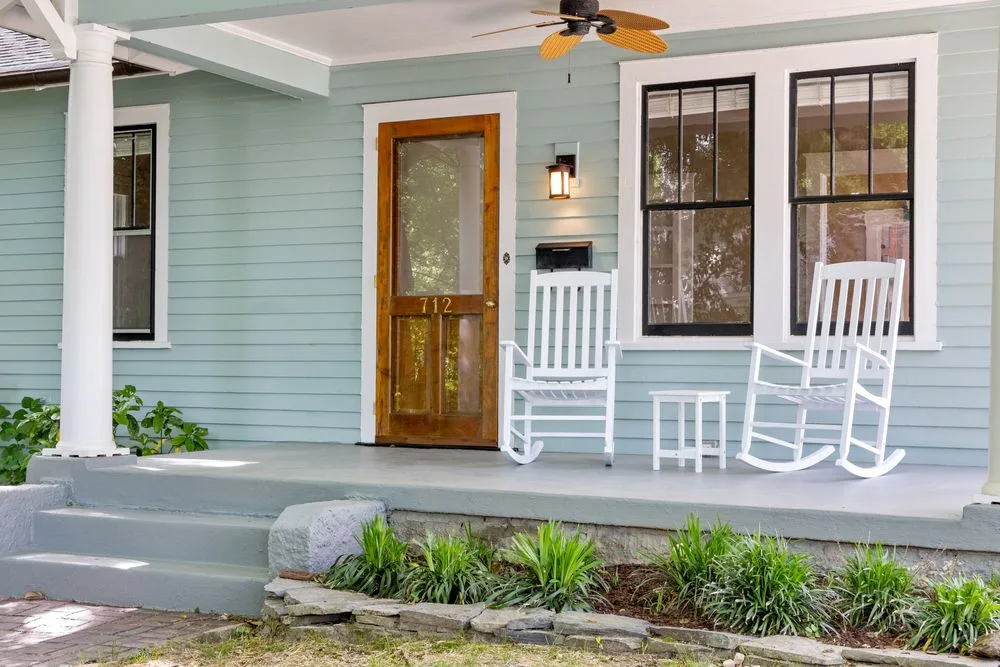
The most welcoming signal a porch can send is seating that looks genuinely used. Two comfortable chairs — rockers are the classic for a reason — angled toward each other with a small table between them beat a row of chairs lined up like a waiting room. Choose outdoor-rated materials (poly lumber, teak, powder-coated metal) so cushions can stay out in the rain. Skip bargain folding chairs: they read as temporary and rust fast.
2. Add a built-in bench with hidden storage
On a long, narrow porch, a bench built along one wall gives seating that doesn’t eat walkway space — and the hollow inside stores cushions and toys. A hinged top is the simple build; or top a deck box with cushions. Keep the seat around 17–19 inches high including cushion. Avoid untreated pine unless you’ll reseal it yearly; cedar or composite holds up far better.
3. Use a bistro set or glider on a medium porch
On an 8 ft porch that isn’t wide, a small bistro set — two slim chairs, one round table — makes a morning-coffee spot without blocking the door, and a two-person glider gives swing motion without strong beams. Metal sets are cheap and nearly indestructible; add seat pads, because bare metal at breakfast in spring is nobody’s friend. Measure the door swing first — a table it clips daily ends up in the garage.
Decor & Styling
4. Hang a porch swing — the classic for a reason
Few front porch decorating ideas beat a swing for charm. Hang it from solid ceiling joists (never the ceiling finish alone) with chain or rope rated well above the loaded weight, seat about 17–18 inches off the floor — or use a freestanding A-frame. Leave about 2 feet of swing room front and back; skip swings on shallow porches.
5. Dress the door: wreath, paint, matching hardware
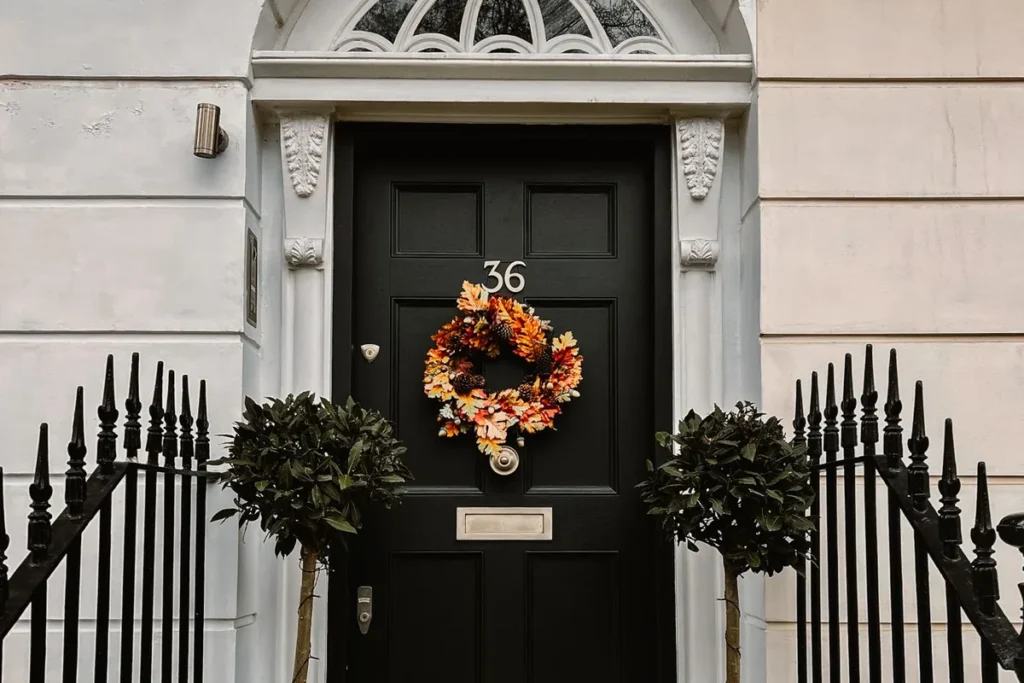
The front door is the porch’s focal point, so treat it like one. A seasonal wreath plus a door color that contrasts with the siding does most of the work. Fresh paint is a half-day job once prepped; swapping tired hardware for one consistent finish makes it look deliberate — mixed metals read as accidental. This cluster is the heart of modern front porch ideas: clean, and it works on every style, including the storybook entries on cottage house plans, where the door does the talking.
6. Layer the welcome: doormat, house numbers, one sign
A large coir doormat — bigger than you think, spanning most of the door’s width — layered over a flat outdoor rug looks styled rather than dropped. Bold, high-contrast house numbers are handsome and genuinely useful for guests and delivery drivers. Add one small welcome sign, then stop — three “welcome” messages in six feet reads as gift shop.
Lighting (Layer It — Never Rely on One Bare Bulb)
7. Flank the door with sconces
One overhead fixture casts shadows onto faces and leaves the corners dead. Two sconces at roughly eye height, either side of the door, light the entry evenly. Use warm-white bulbs (around 2700K) — they flatter skin, brick, and wood, while harsh daylight bulbs make a porch feel like a parking lot. No wiring at the door? Solar sconces work, provided they get real sun.
8. Run string lights for instant evening atmosphere
Café-style string lights are the fastest mood change on this list: fifteen minutes, a few screw-in hooks, done. Choose outdoor-rated, shatterproof LED bulbs on a heavy cord — cheap indoor strands fail fast outside. Zigzag them on deep porches, run one line on shallow ones, and use a timer. Just don’t drape them at head height over the walkway.
9. Set lanterns on the steps and floor
Lanterns add the third, low layer of light. Group two or three heights beside the door or on the steps, using battery candles or solar inserts instead of real flame — all the glow, no wax, no fire worry. Keep step lanterns at the edges — one clipped in the dark causes a trip.
Flooring & Rugs
10. Define the zone with an outdoor rug
Under a seating group, an outdoor rug pulls the furniture into a “room” and softens chair noise. Pick polypropylene or another outdoor-rated weave that hoses clean and dries fast, sized so the chairs’ front legs sit on it; patterns hide the pollen porches collect. Never move an indoor rug outside: it holds moisture against decking and can rot the boards beneath.
11. Refresh the floor itself: paint, stain, or stencil
If the floor is the eyesore, fix it before decorating around it. Porch-and-floor enamel in soft gray or sage transforms worn boards in a weekend; a stencil over sound concrete gives a tiled look for the cost of paint. Prep matters more than product: pressure-wash, dry fully (a day or two), prime bare wood — skipping prep is why porch paint peels. On the long, low porches typical of ranch house plans, fresh floor paint makes the whole facade look wider.
Plants & Greenery
12. Group pots in threes, at different heights
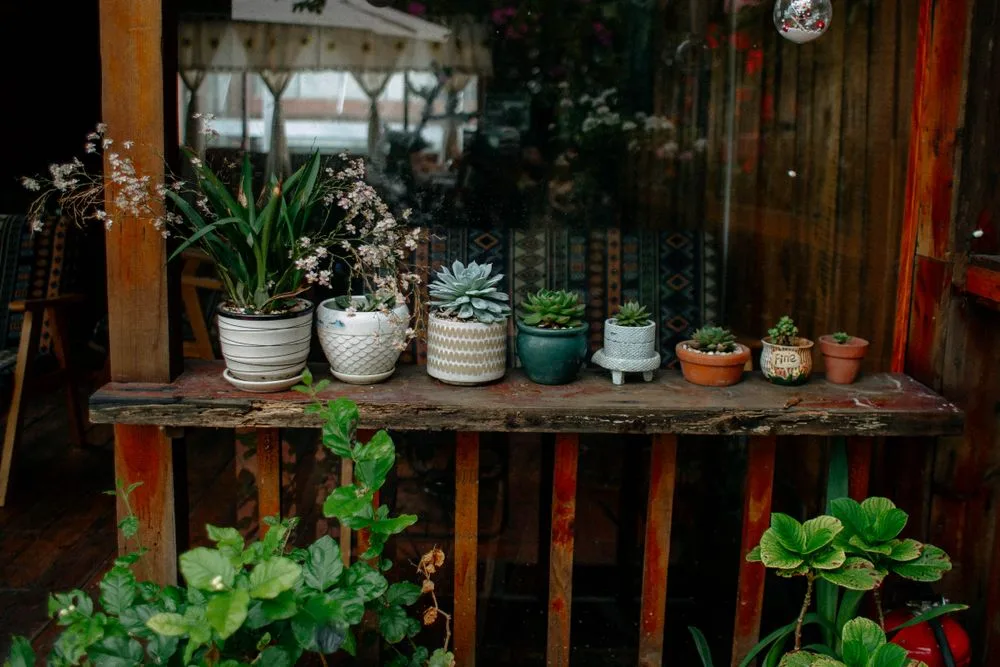
One pot by the door looks like an afterthought; a cluster looks like a design. Work in odd numbers — three is the classic — and vary the heights: tall on a stand, medium on the floor, small on a step. Ferns, hostas, and caladiums handle shade; lavender, geraniums, and ornamental grasses take sun. Match plants to your actual light, and size pots generously — soil volume keeps roots alive between waterings.
13. Hang baskets or add window boxes
When the floor is spoken for, go up. Hanging baskets of trailing petunias, ivy, or sweet potato vine soften the porch edge; window boxes tie it to the facade. The catch is water: baskets dry out fast, sometimes needing a daily drink in summer. If your follow-through is weekly at best, choose drought-tolerant plants or self-watering baskets — and hang them at the corners, out of the traffic path.
Small Porches & Tight Budgets
Small front porch ideas succeed by editing, not shrinking everything: two or three full-size pieces, well chosen, beat six tiny ones.
14. Go vertical and fold flat
On a stoop or 4–5 ft porch, use walls and railings instead of floor. A railing planter, a wall-mounted folding table, a slim bench against the house, or one statement chair keeps the walkway clear; fold-flat chairs hang on a wall hook. Keep the palette tight — two colors plus greenery — because on a small porch, clutter shrinks the space faster than furniture does.
15. The budget refresh: wash, paint, swap, plant
Most small front porch ideas on a budget follow this sequence: pressure-wash everything; paint the front door a strong color; swap in a bigger, layered doormat; replace yellowed fixtures or at least the bulbs; add one grouped plant cluster. Secondhand chairs and tables usually need nothing but spray paint — a mismatched pair looks intentional once they’re the same color.
Front Porch Ideas at a Glance: Effort vs. Budget
| Idea | Approx. effort | Budget level |
|---|---|---|
| Two chairs + side table | An afternoon | $$ (mid) |
| Porch swing | Half a day + hardware | $$ (mid) |
| Door paint + hardware | Half a day | $ (low) |
| Sconces by the door | 1–2 hours | $–$$ |
| String lights | Under an hour | $ (low) |
| Outdoor rug | Minutes to place | $ (low) |
| Potted plant clusters | An hour + watering | $ (low) |
| Paint/stencil the floor | A weekend (drying) | $ (low) |
| Full budget refresh | One weekend | $ (low) |
Refresh It With the Seasons
A porch that changes slightly four times a year always looks cared for — and each refresh is cheap. Spring: pressure-wash, fresh ferns, floral wreath, cushions out. Summer: color in the baskets, fan on. Fall: mums and pumpkins in odd-numbered groups, a plaid throw on the swing. Winter: evergreen branches in the pots, lanterns timed for dusk. Photograph it from the street each season — the camera shows clutter you miss.
Planning something bigger, like rebuilding the porch itself? Read This Old House’s porch advice first.
Porch Mistakes to Avoid
- Furniture blocking the door swing or walkway. Guests shouldn’t have to sidestep a planter.
- One harsh overhead light. Layer warm light at two or three heights instead.
- Indoor furniture and rugs moved outside. They mildew and can damage the decking beneath.
- Plants chosen for the photo, not your light. Shade plants scorch; sun plants sulk.
- Ignoring the guard rule. A porch floor 30+ inches up without a guard is a liability, not a style choice.
- Too many small things. Six tiny decorations read as clutter; two or three full-size pieces read as a porch.
FAQ
What is the minimum depth for a usable front porch?
About 6 feet — enough for a chair plus walkway. At 8 feet you get a real seating row; at 12 feet or more, furniture can be grouped like a wraparound sitting area.
How can I decorate a small front porch without it feeling cramped?
Edit hard: one statement chair or slim bench, a plant cluster, a layered doormat, good light. Use walls and railings for planters and a folding table, and hold the palette to two colors plus greenery.
What are the cheapest front porch ideas that still make a difference?
Pressure-washing, painting the door, a bigger layered doormat, warm bulbs or an inexpensive sconce, and one cluster of potted plants — usually a full transformation in one weekend, for less than a single new piece of furniture.
Do I need a railing on my front porch?
Typically, guards are required when the porch floor is more than 30 inches above the ground beside it, though details vary by local code — check with your building department before building or removing one. A handrail on the steps is worth adding regardless.
Which plants survive best on a porch?
It depends on light: ferns, hostas, and caladiums for shade; geraniums, lavender, and ornamental grasses for sun. Either way, bigger pots forgive a missed watering.
The Porch Is the Handshake
None of this needs to happen in one weekend. Start with the quick-answer trio — seating, layered light, plants by the door — and let the porch tell you what’s next. Done well, those first eight feet don’t just lift your curb appeal for some future sale; they improve every arrival home in the meantime. A porch is never just a porch.