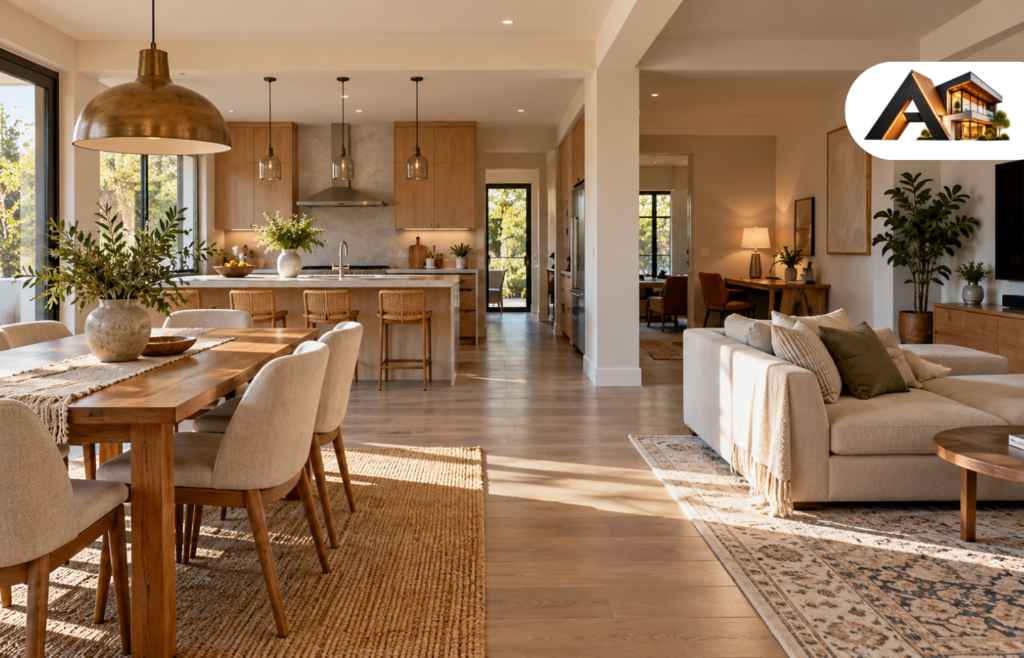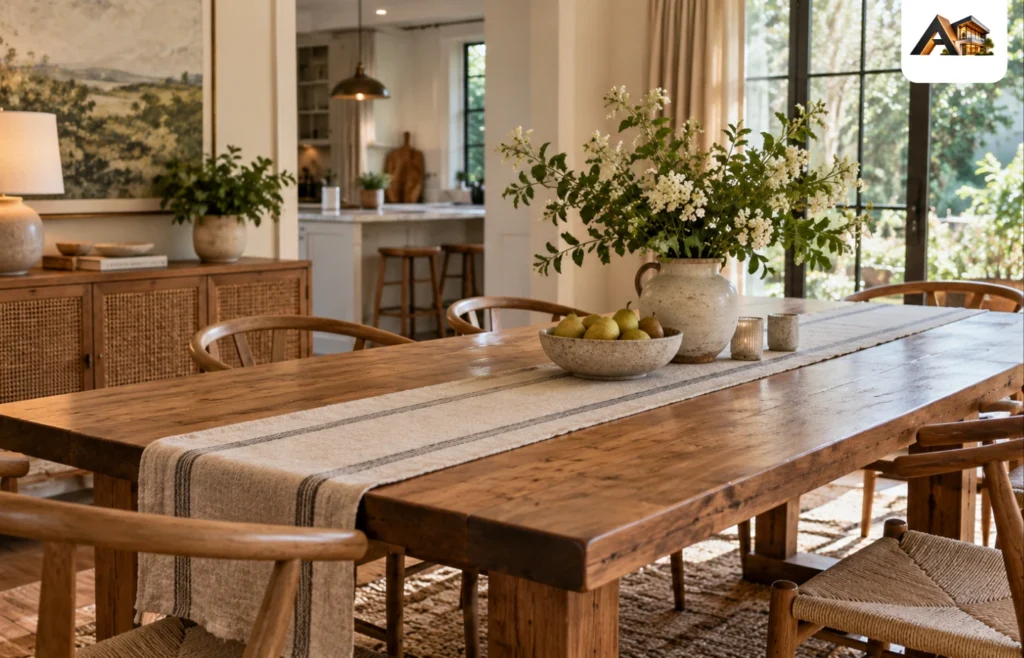
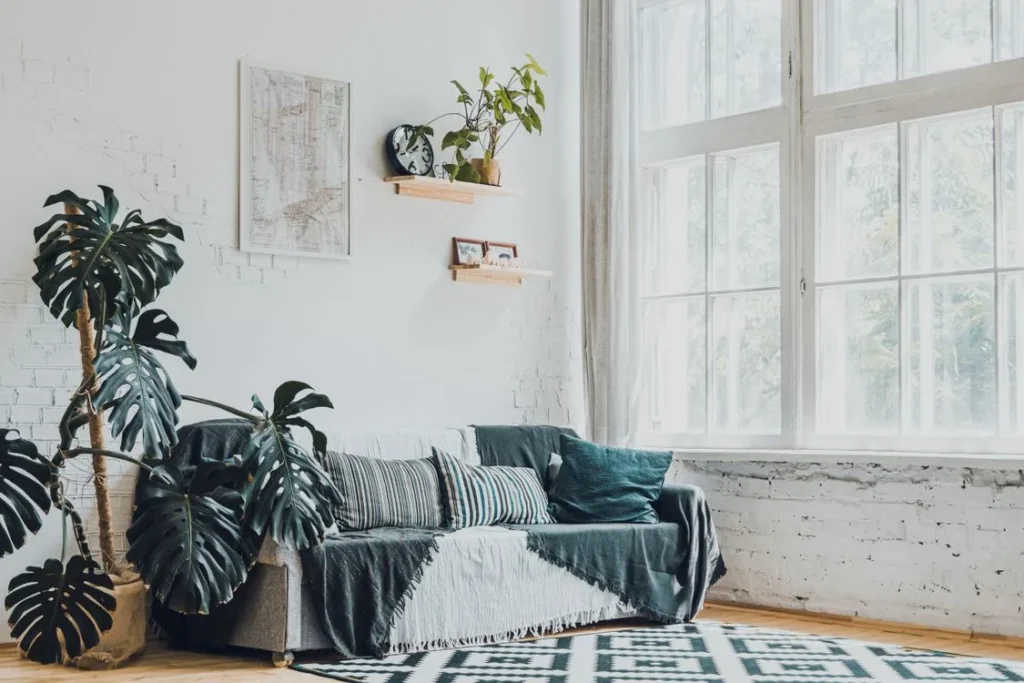
A living room has to do more than photograph well. It is where people talk, read, watch, work, and recover from the day, often all in the same evening. The rooms that fail usually fail in the same quiet way: they look finished, but the seating faces the wrong direction, the light is harsh at the hour people actually sit there, or there is nowhere to put a book, a cup, or a blanket without spoiling the look. Designing a living room well means deciding how the room will be used first, and then letting the furniture, light, and colour serve that use.
Start with an honest list of what happens in your room. A household that hosts friends every weekend needs different seating from one that mostly watches films as a family. A room that doubles as a home office needs a corner that can close away at night. A room with small children needs surfaces that forgive spills. None of these needs is a compromise on style. Each one is a design brief, and the best living rooms are the ones where the brief is visible in every choice.
Start With The Layout, Not The Shopping
The most expensive mistake in living room design is buying furniture before deciding the layout. Measure the room first, including doorways, window positions, radiators or vents, and the routes people walk through it. A living room that everyone must cross to reach the kitchen will never work as a closed conversation circle, however beautiful the arrangement looks on paper. Mark the traffic paths, then place seating inside the remaining space, not across it.
A useful rule is to build the room around one clear focal point and one conversation area. The focal point might be a fireplace, a large window, a television, or a piece of art. The conversation area is simply the group of seats that face each other closely enough for people to talk without raising their voices. In a large room, two smaller conversation areas often work better than one enormous arrangement that leaves everyone shouting across a rug.
Leave breathing room around the furniture. A coffee table needs enough space for people to walk around it and to sit down without shuffling. Side tables should be within arm’s reach of every seat, or people will put cups on the floor. These small distances are what make a room feel generous rather than cramped, even when the room itself is modest.
Seating That Invites People To Stay
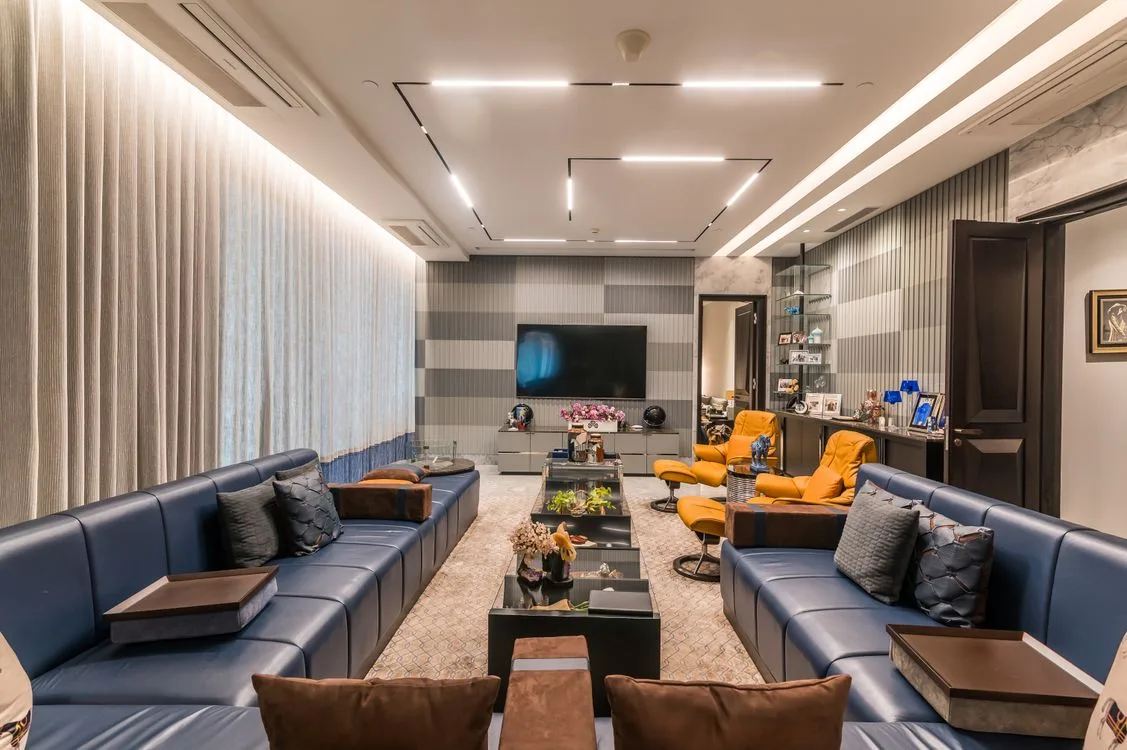
Seating is the heart of a living room, and its arrangement matters more than any single sofa. A sofa facing two chairs creates a natural conversation shape. A sectional can anchor a corner and suit a family that watches television together, but it can also block a room’s flow if it is too large for the space. Measure the sofa against the wall it will sit on, and check that its depth leaves room to walk past it comfortably.
Mix seat heights and depths with care. A deep, low sofa invites lounging but can be hard for older guests to get out of. A firmer, upright chair gives those guests a dignified seat and gives the room a visual contrast. Adding a chair that can be moved — a light armchair, a pouf, or a small stool — lets the room adapt when extra people arrive, without a permanent crowd of furniture.
Think about what each seat faces. A chair that faces a blank wall will stay empty. A chair angled toward the window, the fireplace, or the rest of the group will be used. And if television is part of the room, be honest about it: place the screen where it can be watched comfortably without dominating every other seat, and consider a cabinet or a wall treatment that lets it recede when it is off.
Light In Layers, For Morning And Evening
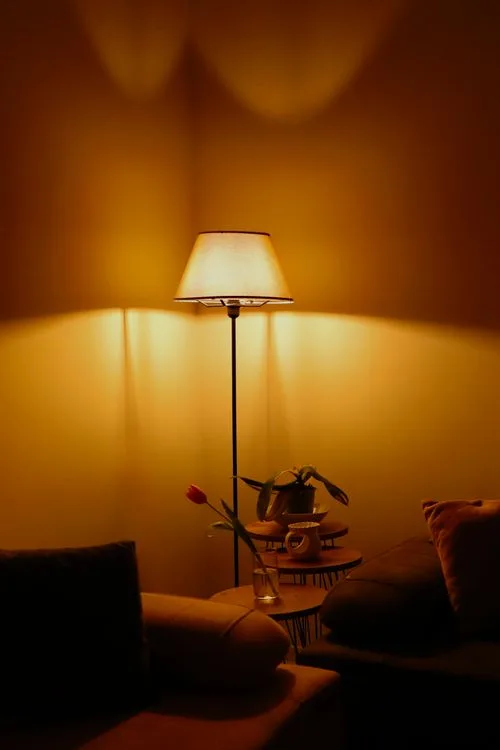
A living room lit by a single ceiling light will always feel flat. Good living rooms use light in layers: general light for moving around, task light for reading, and accent light for atmosphere. Overhead lighting, floor lamps beside reading chairs, table lamps on side tables, and a small light washing a wall or a piece of art each do a different job, and together they let the room change from bright daytime use to soft evening use without a single harsh switch.
Natural light deserves the same attention. Heavy curtains across a large window can darken a room all day, while sheer panels soften glare without blocking daylight. If the room faces west and fills with strong evening sun, a light-filtering blind or a sheer layer will keep the room usable at the hour people most want to sit in it. Mirrors can help bounce light into a darker corner, but they work best when they reflect a window or a pleasant view, not a blank wall or a cluttered shelf.
Pay attention to colour temperature as well. Warm light flatters a living room in the evening, while cooler daylight suits daytime work. The NKBA’s wellness design guidance makes the same point in a broader way, showing how circadian lighting that shifts through the day can support calmer routines at home. Where possible, choose lamps and bulbs that can be dimmed, so the room can shift mood without changing furniture.
Colour, Texture, And A Room That Feels Finished
Colour in a living room works best when it has a clear hierarchy. Choose one calm, dominant colour for the large surfaces — walls, sofa, rug — and then add one or two accent colours in smaller doses through cushions, throws, art, and smaller pieces. This keeps the room from feeling like a collection of unrelated purchases, and it makes future changes easy: swap the accents, and the room feels new without replacing the sofa.
Texture does much of the quiet work in a living room. A room with only smooth surfaces can feel cold, even in a warm colour. Mix materials deliberately: a woven rug under a smooth coffee table, a knitted throw on a leather chair, linen cushions against a velvet sofa, wood beside metal. These contrasts give the eye something to rest on and make the room feel layered rather than flat.
For a softer, more relaxed version of this approach, Archly Home’s guide to cozy living room ideas shows how warmth, layering, and low lighting can make a room feel inviting without clutter. And for the broader decorating principles behind colour and furniture choices, its guide to interior decorating ideas is a useful companion to this one.
Storage That Keeps The Room Calm
A living room without storage will slowly fill with the things people actually use: books, chargers, toys, blankets, and remote controls. The answer is not to hide everything, but to give each category a home. A closed cabinet or a basket beside the sofa holds blankets and games. A low console under the television hides cables and devices. Shelving with a mix of books and a few objects looks intentional; shelving crammed edge to edge looks like a warehouse.
Choose storage that matches the room’s scale. A tall, narrow bookcase suits a small room better than a wide, low unit that eats floor space. A coffee table with a shelf or a drawer earns its footprint twice over. And leave some empty space on shelves and surfaces on purpose: a room needs places for the eye to rest, and a surface that is completely full feels busy even when it is tidy.
Small Living Rooms Need Different Moves
Small living rooms reward discipline more than large ones do. Choose furniture with visible legs, which lets the eye travel underneath and makes the floor feel larger. Keep the rug large enough that the front legs of the seating sit on it; a small rug floating in the middle of the floor makes the room feel smaller, not larger. Use the walls: wall-mounted lighting frees floor space, and shelves above sofa height add storage without crowding the seating area.
Colour can help, but it is not magic. Light walls and a consistent palette make a small room feel calmer, but a single dark accent wall or a deep-coloured sofa can give a small room character without shrinking it, provided the rest of the room stays light and uncluttered. The real test is circulation: if you can walk through the room without turning sideways, the layout is working.
Frequently Asked Questions
Where Should The Sofa Go In A Living Room?
Place the sofa against the longest uninterrupted wall where possible, facing the room’s focal point, with a clear walkway behind or beside it. Avoid pushing every piece against the walls: pulling the sofa even slightly forward and adding a side table creates a more natural conversation area.
How Many Colours Should A Living Room Have?
A calm scheme usually has one dominant colour, one supporting colour, and one accent used sparingly. More colours can work, but they need to be repeated deliberately — the same accent appearing in cushions, art, and a throw — rather than appearing once each in unrelated objects.
How Do I Make A Living Room Feel Cosy Without Clutter?
Layer texture and warm light rather than adding objects. A soft rug, a throw, warm lamps, and a few well-chosen cushions make a room feel cosy. Clutter comes from objects without a home, so give blankets, books, and devices a basket, a shelf, or a drawer before adding anything decorative.
A Living Room That Earns Its Place
A well-designed living room is not the room with the most expensive sofa or the trendiest colour. It is the room where the seating faces the people you talk to, the light suits the hour you sit there, and everything you use has a place to go when you are done. Get the layout right, layer the light, keep the colour calm with texture for warmth, and give storage a real job, and the room will look good because it works — which is the only kind of good looks that lasts.