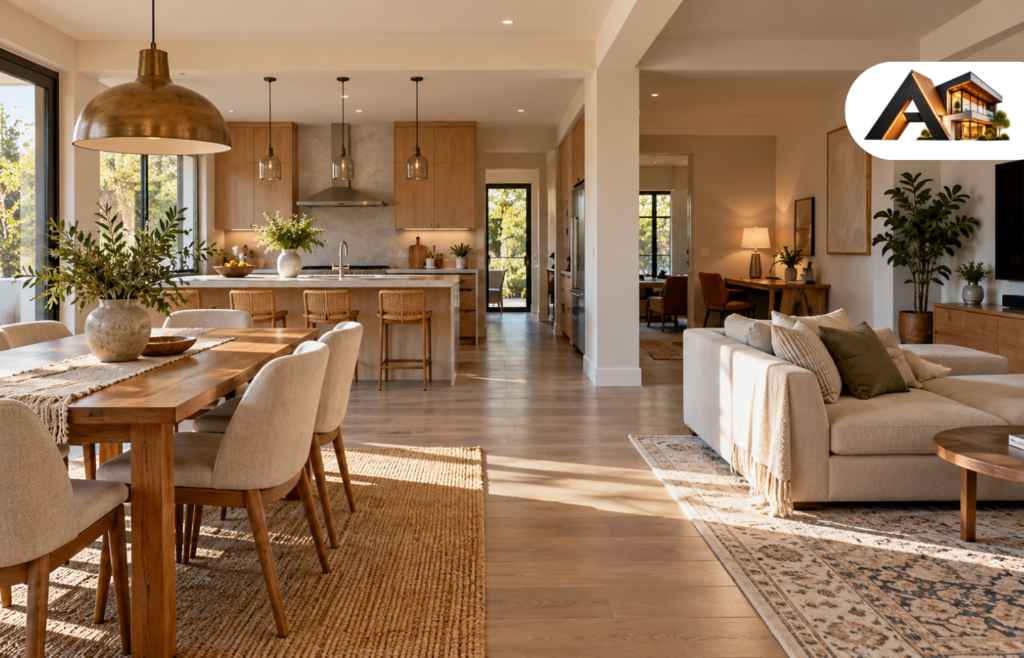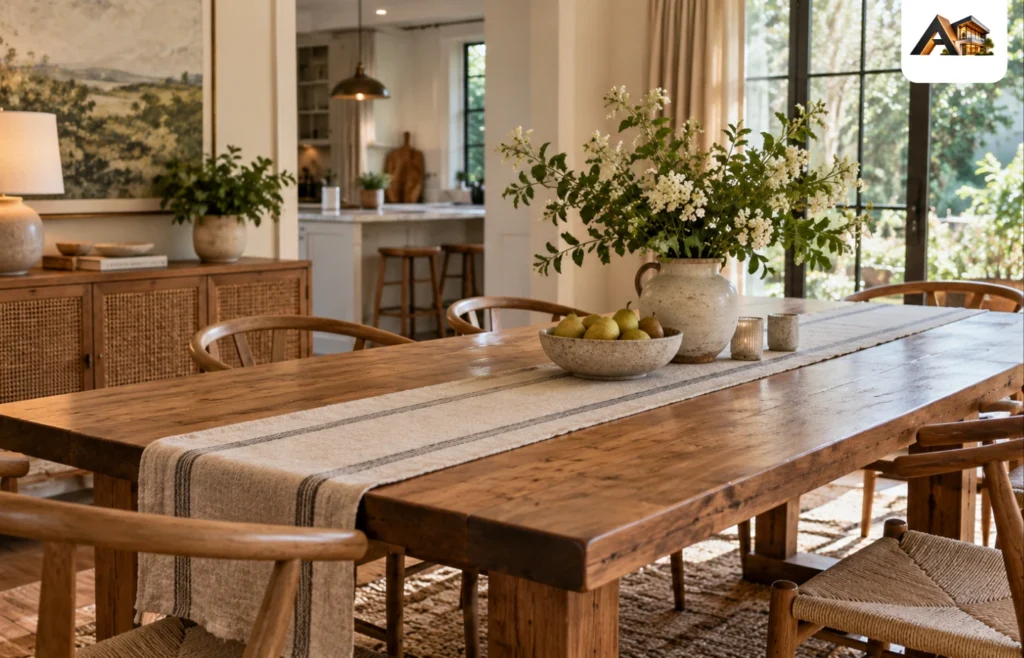

A small living room doesn’t mean a small screen — it means being smarter about where the TV goes and how the seating works around it. Small living room ideas with TV at their centre all share the same challenge: the screen is often the biggest visual object in the room, so getting its size, height and position wrong throws everything else off. Get it right, and a compact room can feel comfortable, stylish and every bit as cinematic as a big lounge.
The good news: this isn’t guesswork. There are well-established rules of thumb for viewing distance, screen size and mounting height, plus layout tricks designers reach for in tight spaces — so you can stop shuffling the sofa and start enjoying movie night.
Quick Answer: Small Living Room TV Placement At A Glance
If you just need the essentials:
- Screen size: a 43–55 inch TV suits most small living rooms — measure your seating distance first.
- Where to put it: the longest uninterrupted wall, wall-mounted above a slim console, saves the most floor space. A corner placement works when no full wall is free.
- Mounting height: the centre of the screen at seated eye level, roughly 40–42 inches from the floor for most sofas.
- Viewing distance: roughly 1.5–2.5 times the screen’s diagonal — closer than most people think.
- Clutter: a narrow media console with closed storage hides devices, remotes and cables.
- Biggest mistakes: too big a screen, mounted too high, furniture blocking walkways.
Everything below explains how these rules play out in a real small living room.
What Size TV Is Right For A Small Living Room?
Answer this before moving a single piece of furniture. The widely used guideline: your seating distance should be about 1.5 to 2.5 times the screen’s diagonal. Where the sofa sits 7–9 feet from the wall, that means 43 to 55 inches for most rooms.
| TV screen size | Approximate diagonal | Typical comfortable viewing distance |
|---|---|---|
| 40–43 inch | 43 in | 5.5–9 ft |
| 50 inch | 50 in | 6.5–10 ft |
| 55 inch | 55 in | 7–11.5 ft |
| 65 inch | 65 in | 8–13.5 ft |
These are typical ranges, not laws — a sharp modern 4K picture is forgiving if you sit a little closer. Measure properly: sit on the sofa and measure from your seated head position to the screen wall. At 8 feet, a 55-inch screen sits in the sweet spot; at 6 feet, 43–50 inches will feel more comfortable.
One more check: the TV’s width matters as much as its diagonal. A 55-inch screen is roughly 48 inches wide, so the wall — or the console beneath it — needs a few inches of breathing room on each side. A screen that swallows the whole wall dominates the room in the wrong way.
Where To Put TV In Small Living Room: The Best Spots Ranked
Not every wall is a candidate. Run through these in order — the first that fits is usually the answer.
1. The longest uninterrupted wall, mounted above a slim console. The classic solution and the most popular of all small living room TV wall ideas: the screen floats at eye level, the console holds the soundbar and streaming box, and no floor space is lost.
2. The corner. When doors, windows and radiators eat every long wall, use a full-motion bracket so the screen angles toward the sofa. Corner mounting frees the rest of the walls for seating or shelving.
3. On a low media console. A low, wide console — roughly 18–20 inches high — puts the screen near ideal eye level automatically and doubles as closed storage. Go narrower and lighter-looking rather than chunky.
4. Above furniture you already own. A credenza or low bookshelf can act as the base, as long as the screen’s centre still lands near seated eye level.
5. Part of a media wall. If the TV shares the wall with shelving or art, centre it within the arrangement instead of squeezing it into a gap — more on styling in the TV wall ideas section.
What about over the fireplace? In a small room the mantel is usually too high, leaving you craning your neck. If the centre would land much above eye level, pick another wall.
What Is The Best Small Living Room Layout With TV?
The TV sets the focal point; the seating arranges itself around it. These layouts work best when floor space is tight:
- The facing pair: sofa opposite the TV, two armchairs angled in from the sides. Keep at least 30 inches of walkway behind the chairs — if they won’t fit, drop to one chair or swap in a bench.
- The L-shape: sofa on the long wall, a loveseat or chaise running perpendicular. This is the natural small living room layout with TV on the main wall, leaving one corner free for a plant or floor lamp.
- The floating sofa: pull the sofa 3–4 inches off the wall behind it. That sliver of space stops the room feeling packed in and gives trailing cables somewhere to disappear.
- A compact sectional wrapping two walls often seats more people than a sofa-plus-chairs arrangement in a square-ish room. Keep it modest — a behemoth defeats the purpose.
And check traffic flow: make sure the main path through the room doesn’t cut through the viewing triangle between sofa and screen. If your small living room opens straight into the kitchen, the TV wall and the cooking zone share one footprint — the proportion sense that sizes an island for the room applies, which our guide to kitchen island dimensions covers for open-plan spaces.
How High Should You Mount A TV In A Small Room?
The rule doesn’t change for small rooms — if anything it matters more, because you’re sitting closer and a high screen forces a steeper neck angle. The widely used guideline: the centre of the screen at your eye level when seated, typically 40–42 inches from the floor for a standard sofa. It’s what most TV mounting guides recommend, and the fastest route to a setup you can watch for hours.
Two practical notes for compact rooms:
- Bigger screens mount lower. A 65-inch TV is over 30 inches tall, so with its centre at 42 inches the bottom edge lands around 26 inches off the floor. That’s correct, even if it looks low — trust the tape measure.
- Measure your own sofa. Seat heights vary — sit down, have someone mark your eye level on the wall, and use that number instead of a generic one.
If the TV has to sit slightly above ideal (over a tall console, say), a tilting bracket angled down a few degrees keeps viewing comfortable — a workaround worth knowing in a small room.
Small Living Room TV Wall Ideas That Look Intentional
A TV is a big black rectangle; the wall around it decides whether it looks like an eyesore or part of the design. The best small living room TV wall ideas make the screen look like it belongs there.
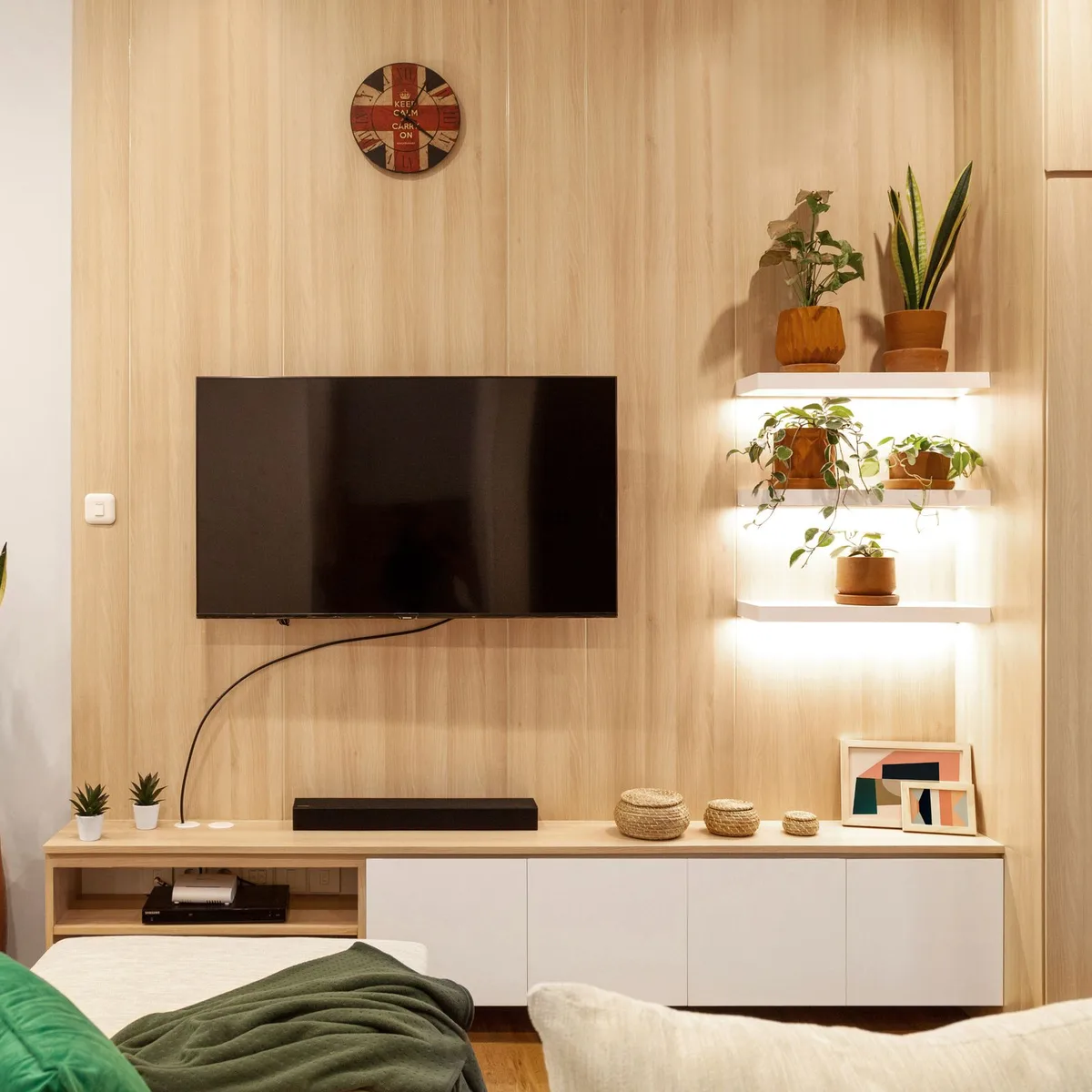
- Console + side art. Hang art — or a pair of prints — beside the screen rather than above it. It balances the black rectangle and keeps the eye moving across the wall. Keep frames slim on a small wall.
- Sparing floating shelves. One or two shelves beside (not above) the TV hold a few books and a plant. Three styled objects per shelf is plenty — cluttered display units shrink the space visually.
- A deeper paint colour behind the screen. Even one step deeper than the other walls makes the TV visually recede, so it looks smaller and the wall looks designed.
- Frame the TV. Slim moulding around the screen turns it into deliberate wall art — a weekend project with an outsized effect in a small room.
- Symmetry with storage. Flank the TV with two identical narrow bookcases or a pair of tall plants. Symmetry calms a small space — just keep the flanking units narrow.
One more styling thought: when the TV’s off, it reads as a dark void, so art around it means the room still looks finished most of the day. The same calm, curated approach we use for decorating a dining table applies to the console beneath — a few intentional objects, not a gift shop.
Cables, Consoles And Storage: Keeping It Tidy
Nothing shrinks a small living room faster than visible clutter — and a TV setup generates plenty. In a compact room, staying tidy keeps the space feeling bigger than it is.
- Hide the cables. A paintable cable raceway running from a wall-mounted TV down to the console takes ten minutes to fit and erases the spaghetti. If you own the place, an in-wall cable kit hides everything entirely.
- Choose a console with doors. Open shelving under a TV becomes a dust-collecting display of black boxes. A closed-door console — ideally 16–18 inches deep — swallows the router, remotes and spare leads without jutting into the room.
- Bracket the soundbar under the TV. It disappears, leaving the console top free for styling instead of equipment.
- Corral the remotes. A small lidded basket or drawer insert ends the era of four remotes on the coffee table.
One design-level point: a TV wall is a composition of focal points — screen, console, art, shelves — and composing them well is half of interior design. Our piece on what interior architecture really does to a home digs into the principles.

Mistakes To Avoid With A TV In A Small Living Room
- Buying a screen the room can’t support. Measure your viewing distance first, then buy the size the room allows — not the size the sale allows.
- Mounting it too high. The “above the fireplace because it fits” trap. If the screen’s centre lands much above 42 inches for sofa viewing, necks will complain within a week.
- Pushing all furniture against the walls. It feels spacious but reads as a waiting area. Pull seating slightly in and the room feels designed rather than parked.
- Ignoring glare. A TV opposite a big window is unwatchable half the day. Budget for proper curtains or reposition — no screen fully defeats direct sunlight.
Frequently Asked Questions
What Size TV Should I Get For A Small Living Room?
For most small living rooms, where seating sits 6–9 feet from the screen, a 43 to 55-inch TV is the sweet spot. Measure your actual viewing distance — from seated head position to the screen wall — and use the 1.5–2.5× guideline: at 8 feet, a 55-inch screen fits comfortably.
Where Is The Best Place To Put A TV In A Small Living Room?
The longest uninterrupted wall is usually best, with the TV wall-mounted above a slim console to save floor space. If doors, windows or radiators rule out every long wall, a corner placement with an articulating bracket angles the screen toward the sofa.
How High Should A TV Be Mounted On The Wall?
Aim for the centre of the screen at seated eye level — typically 40–42 inches from the floor for a standard sofa. Measure your own eye level while seated, since seat heights vary. If the TV must sit higher, use a tilting bracket angled slightly down.
Can You Put A 65-Inch TV In A Small Living Room?
Sometimes — if the seating is 8 feet or more from the screen. A 65-inch TV needs roughly 8–13.5 feet of viewing distance and about 57 inches of wall or console width. If either fails, 55 inches is the safer, better-looking choice.
How Do I Make A TV Look Good In A Small Living Room?
Treat the TV as part of a wall composition: centre it over a slim console, hang art beside it rather than above it, hide cables in a raceway or in-wall kit, and paint the wall behind it a touch deeper so the screen visually recedes. Closed storage beneath hides devices and clutter, which matters more in a small room than anywhere else.
Conclusion
Three decisions, in this order: size the screen to your viewing distance, put it on the longest clear wall (or a sensible corner), and mount it at seated eye level. Everything else — the slim console, the hidden cables, the art beside the screen — is polish on those foundations.
Tape the screen’s outline on the wall before you buy, check the height against your seated eye level, and confirm the distance from your viewing spot. An hour of measuring beats a year of neck strain and a screen that overwhelms the room.