A tomato plant in a pot can be generous, sometimes embarrassingly so, with a single healthy plant filling a kitchen bowl again and again through the season. It can also be frustrating in a very specific way: lots of leaves, a few split fruits, and a plant that dries out the moment you look away. The difference between those two outcomes is rarely luck. It is almost always the pot, the variety, and the watering routine, decided before the plant ever goes in.
Containers suit tomatoes well because you control the soil, you can move the plant to the sun, and you start with a clean growing medium instead of whatever the garden bed happens to hold. They also punish shortcuts faster than a bed does. A pot holds a small reservoir of water and food, so a plant that would forgive a missed watering in the ground will show it in a pot within a day. Get the setup right and the rest of the season becomes mostly a pleasant routine.
Why Tomatoes Do Well In Containers
Tomatoes are hungry, thirsty, sun-loving plants with deep roots, and a container lets you meet all three needs on purpose rather than by accident. You choose a mix that drains but still holds moisture, you place the pot where the sun actually lands for most of the day, and you feed little and often instead of hoping the soil has enough to last.
There is a second, quieter advantage. Soil-borne problems that build up in garden beds over years do not follow you into a fresh pot of potting mix. That does not make container plants immune to trouble, and leaves can still pick up disease from the air, but you start the season without the old problems already waiting in the soil.
The trade-off is scale. One tomato plant needs a genuinely large pot, not a decorative one, and it will drink far more water than a pot of herbs. If you only have room for a small pot on a shaded balcony, a tomato is the wrong plant for that spot, and a smaller crop will make you happier than a struggling tomato will.
Choose The Right Tomato Type For A Pot
This is the decision that shapes everything else, so make it before you buy the pot. Tomato varieties fall into two growth habits, and they behave very differently in a container.
Determinate Tomatoes Stay Compact
Determinate, or bush, varieties grow to a set height, flower and fruit in a concentrated flush, and then largely stop. They are the easiest tomatoes for pots because they stay manageable, need less pruning, and do not outgrow their support halfway through summer. If you want a straightforward plant for a patio or balcony, start here.
Indeterminate Tomatoes Keep Growing All Season
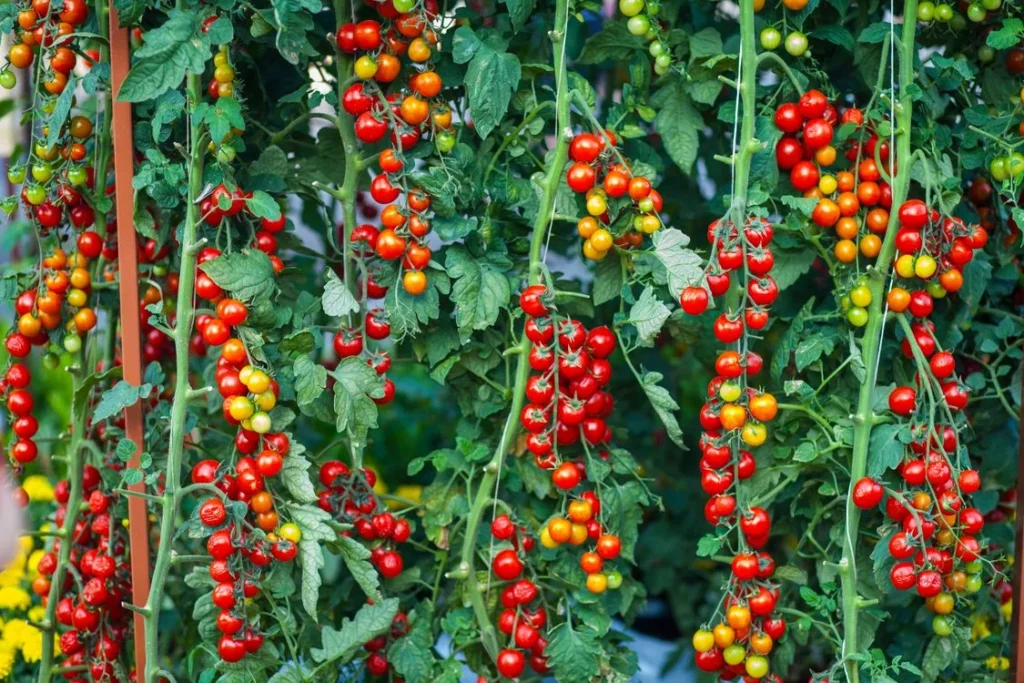
Indeterminate, or vining, varieties keep growing, flowering, and fruiting until frost stops them. They can produce over a much longer period, and many of the best-tasting slicing and cherry varieties grow this way, but they need a big pot, a tall sturdy support, and regular tying and pruning. They reward attention and punish neglect, so choose one only if you enjoy checking the plant a few times a week.
Dwarf And Cherry Types For Small Spaces
Dwarf and patio varieties are bred to stay small, sometimes under two feet tall, and they suit the smallest pots in this guide. Cherry and grape tomatoes are also excellent container candidates: the fruits are small, so the plant carries its crop without the heavy load that can snap a weak stem, and picking a handful every day or two keeps production going. For a first container tomato, a determinate cherry or a dwarf patio variety is the most forgiving choice you can make.
Pick A Container That Gives Roots Room
Size matters more than material. A cherry tomato needs at least a pot of about two gallons, roughly ten inches across, and a standard slicing tomato needs at least four to five gallons, roughly twelve to fourteen inches across. Larger is better in almost every case: more mix means more moisture reserve, steadier feeding, and a heavier base that is less likely to topple when the plant is loaded with fruit.
Whatever you choose, it must have drainage holes. Tomatoes hate sitting in water, and a pot without a way out will rot roots even when everything else is right. If a favourite pot has no holes, drill them, or use it as an outer cover with a drilled pot inside, and always empty the saucer after watering rather than letting the pot sit in a puddle.
Material is a practical choice, not a moral one. Plastic and glazed ceramic hold moisture longer and weigh less when you need to move the pot. Terracotta looks lovely and breathes well, but it dries out faster in wind and heat, so you will water more often. Fabric grow bags drain freely and air-prune roots, which suits tomatoes, though they also dry quickly on a hot patio. Dark pots in full sun can overheat roots, so in a very hot spot, a light-coloured pot or a pot shaded at its sides is worth the small effort.
Get The Soil Mix Right
Never fill a tomato pot with garden soil. Garden soil compacts in a container, drains poorly, and can carry disease and weed seeds into a pot that was meant to start clean. Use a good-quality potting mix instead, one that feels light and springy when squeezed, not heavy and cloddy.
A useful container blend is mostly potting mix with a generous share of mature compost worked through it, which adds nutrients and helps the mix hold moisture without becoming soggy. Some growers add a handful of perlite or coarse bark for extra drainage, which helps in a wet climate or with a pot that tends to stay damp. What you want, in plain terms, is a mix that lets excess water run out freely while still feeling damp a finger-length down a few hours after watering.
Do not reuse last year’s container mix for tomatoes without refreshing it. Old mix is usually depleted, compacted, and more likely to harbour problems. If you do reuse it, mix in fresh potting mix and compost, and do not reuse mix from a plant that was diseased.
Plant Tomatoes In Containers Step By Step
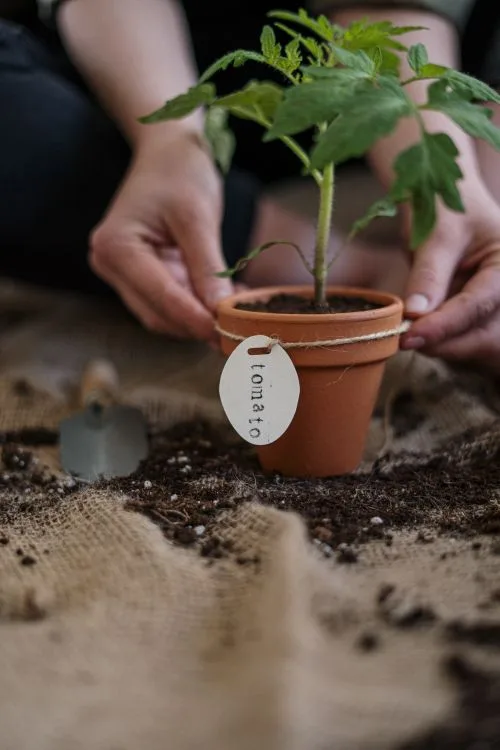
Wait until the risk of frost has passed and nights are reliably mild before moving a tomato outdoors for good. A plant put out too early will sulk, and a late frost can finish it, so patience here is worth more than any fertiliser.
- Fill the pot with damp potting mix, leaving a few inches of space at the top for watering.
- Set the plant in deeper than it sat in its nursery pot, burying part of the stem. Tomatoes form roots along a buried stem, which gives you a stronger root system for free.
- Firm the mix gently around the plant, water thoroughly until water runs from the drainage holes, and top up any mix that settles.
- Put the support in at planting time, not later. Driving a stake through established roots is a needless injury, and a cage placed early lets the plant grow into it.
- Place the pot in its final sunny spot before the plant gets heavy. A full, watered five-gallon pot is not something you want to drag across a patio every week.
One plant per pot is the rule worth keeping. Two tomatoes in one pot compete for water and food all season, and both will do worse than one plant on its own. If you want more tomatoes, add another pot rather than crowding one.
Sunlight, Water, And Feeding For Container Tomatoes
These three needs form the daily routine, and getting them steady matters more than getting any one of them perfect on a single day.
Give The Plant Full Sun
Tomatoes need at least six hours of direct sun a day, and more is better in most climates. A south-facing patio, a sunny balcony, or a spot against a warm wall usually works. If your only spot gets less sun, choose a cherry variety, which ripens more readily in lighter conditions than a large beefsteak type, and accept a smaller harvest rather than fighting the shade.
Water Deeply And Consistently
Container tomatoes dry out fast, sometimes daily in hot, windy weather, and inconsistent watering is the direct cause of the two most common container problems: blossom end rot, a dark sunken patch on the base of the fruit, and split fruit after a dry spell followed by a heavy watering. The fix is routine, not volume on any one day.
Water until it runs from the drainage holes, then check again the next day by pushing a finger an inch or two into the mix. If it feels dry at that depth, water again. Water the mix, not the leaves, and water in the morning where you can, so foliage dries during the day. A thick mulch layer on the surface, such as straw or bark, slows evaporation and keeps the moisture steadier, which is a small job with a large payoff.
Feed Little And Often
A pot holds limited food, and a tomato uses it quickly, so container plants need feeding more often than the same variety in the ground. Start with a potting mix that already contains slow-release fertiliser if you like, then feed with a balanced liquid feed or a tomato feed high in potassium once fruit starts to set, following the product’s rate rather than doubling it in hope of a bigger crop. Overfeeding produces lush leaves and fewer, poorer fruits, so steady and modest beats occasional and heavy. If leaves turn pale or growth stalls, that is usually a feeding or watering problem first, and a disease problem second, so check those two before reaching for a spray.
Support And Prune With A Light Hand
A tomato in a pot will outgrow a flimsy support at exactly the moment it is heaviest with fruit, so the support should be chosen for the mature plant, not the seedling. A sturdy cage, a tall stake tied loosely at several points, or a small trellis fixed to the pot all work, as long as the whole assembly is stable in wind and the ties do not cut into the stem.
Pruning depends on the type. Determinate and dwarf plants need little more than removing yellowed lower leaves and any broken stems. Indeterminate plants benefit from removing the small side shoots that form where a leaf meets the main stem, keeping the plant to one or two main stems that you can tie and manage. Do this little and often, with clean fingers or snips, rather than letting side shoots grow into a thicket and then hacking it back in one go. Always leave enough leaves to shade the fruit, because sunscald on exposed tomatoes is a real problem in strong sun.
Help With Pollination And Airflow
Tomatoes are largely self-pollinating, so you do not need bees for every fruit, but still air on a sheltered balcony or in a greenhouse can leave flowers unpollinated. A gentle daily tap of the flower clusters, or a light shake of the support, helps release pollen and noticeably improves fruit set in calm spots.
Airflow matters just as much. Space pots so air moves between plants, avoid crowding leaves against a wall, and remove lower leaves that sit on damp mix. Good airflow dries foliage faster after rain or watering, and dry foliage is simply less inviting to the leaf problems that trouble tomatoes most.
Keep Pests And Problems Under Control
Check the plant as part of watering, not as a separate chore. Turn a few leaves over, look at new growth, and notice changes early, when they are still easy to deal with. Aphids cluster on soft new growth and can be washed off with a strong jet of water or picked off by hand before they build up; for a fuller guide to dealing with them, see Archly Home’s guide to how to get rid of aphids.
Blossom end rot looks alarming but is usually a watering problem, not a disease: keep watering even, mulch the surface, and avoid letting the pot swing between bone dry and soaked. Cracking follows the same pattern, so the same steady routine prevents both. If leaves yellow from the bottom up while the plant is otherwise growing, check watering and feeding before assuming disease, and remove badly affected leaves so the plant puts its energy into healthy growth. For a deeper, research-based reference on container tomato care, Iowa State University Extension’s guide to growing tomatoes in containers covers pot size, growing media, and staking in detail.
Harvest Tomatoes At Their Best
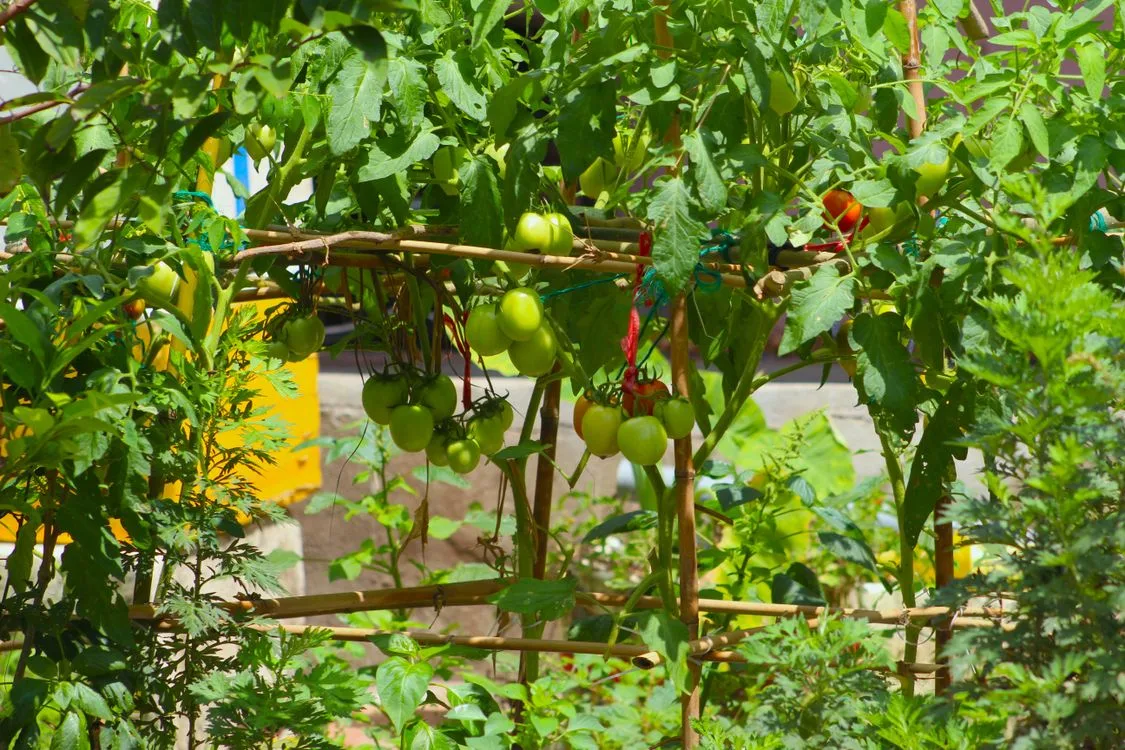
Pick tomatoes when they are fully coloured and slightly soft to a gentle squeeze, and taste one before deciding the plant is done. Colour alone can mislead you in very hot weather, when red varieties may stay orange-yellow, so softness and flavour are the better guides. Pick regularly, because a plant carrying overripe fruit puts less energy into new fruit, and a cherry plant picked every day or two will keep producing far longer than one left to load up.
Store picked tomatoes at room temperature, never in the fridge, which dulls their flavour and texture. If frost threatens at the end of the season, pick any fruit showing colour and let it ripen indoors, and compost the plant rather than leaving it to harbour problems over winter.
Frequently Asked Questions
How Many Tomato Plants Per Pot Should I Grow?
One. A single plant per pot gets the water, food, and root space it needs, while two plants in one pot compete all season and both produce less. Add another pot if you want more plants.
Can Tomatoes Grow In Containers Without Support?
Small dwarf varieties sometimes manage without support, but most container tomatoes need a stake, cage, or trellis. Without it, stems bend, break under fruit, and fruit resting on damp mix rots quickly.
Why Are My Container Tomatoes Splitting?
Splitting usually follows uneven watering: a dry period, then a sudden heavy watering, swells the fruit faster than its skin can stretch. Water deeply and regularly, mulch the surface, and pick fruit promptly once it colours.
Do Container Tomatoes Need Pruning?
Determinate and dwarf types need very little, beyond removing yellowed or damaged leaves. Indeterminate types do better with regular removal of side shoots, kept to one or two main stems, so the plant stays manageable and air moves through it.
A Pot, A Sunny Spot, And A Steady Routine
Growing tomatoes in containers comes down to three choices made well: a variety that fits the pot, a pot big enough for the roots, and a watering and feeding routine you can keep up in hot weather. Get those right and the plant largely takes care of the rest, with support, pruning, and harvesting as pleasant, small jobs along the way. Start with one plant, learn how fast your spot dries out, and add more pots next season once you know what your balcony or patio can really support.