Cucumbers have a reputation as sprawling plants that need a big patch of ground, but that is only half the story. Given a roomy pot, steady water, and something to climb, a cucumber plant can be just as productive on a patio, balcony, or sunny doorstep as in a garden bed. For anyone short on space, containers turn a once out-of-reach crop into one of the most rewarding vegetables to grow at home.
A pot is also portable. If a late cold snap threatens, it can move to a sheltered corner, and when the season ends it can be emptied and stored without digging over a bed. That flexibility is exactly why growing cucumbers in pots suits renters, beginners, and small-space gardeners so well.
This guide covers the whole process, from variety and pot to watering, feeding, pollination, and harvest. Nothing here needs fancy equipment — a decent container, good potting mix, sunshine, and regular attention carry most of the work.
Why Cucumbers Do So Well In Containers
Cucumbers are fast-growing warm-season plants whose roots adapt well to a generous pot. They love heat, drink a lot of water, and respond quickly to care, so problems usually show up early and can be fixed before real damage. In a container, the gardener controls soil, drainage, and position — three things that matter more to cucumbers than almost anything else.
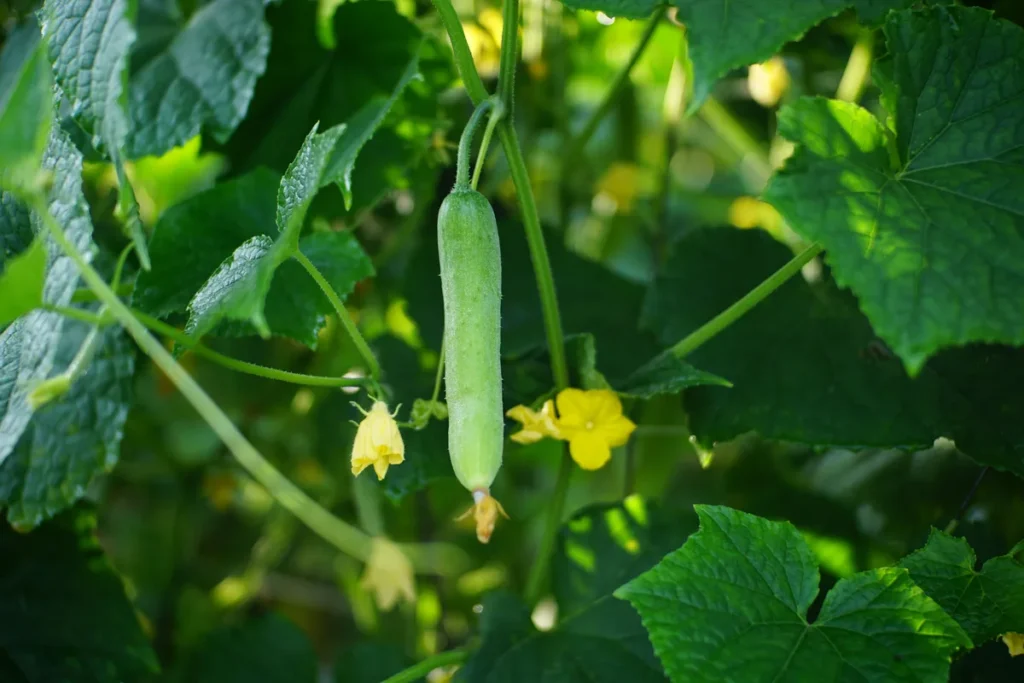
Containers also solve a classic headache: fruit sitting on damp soil, where sprawling vines let cucumbers rot underneath or pick up soil-borne problems. On a trellis, fruit hangs in the air, stays cleaner, is easier to spot at picking time, and gets better airflow against leaf disease.
Container cucumbers are not effort-free — pots dry out faster than beds — but a few minutes of watering most days buys fresh cucumbers steps from the kitchen door.
Choose The Right Cucumber Variety For A Pot
Variety choice matters more in containers than in open ground, because the pot sets a hard limit on root space. Read the seed packet before buying, and look for words like bush, compact, patio, or container — types bred to stay smaller and fruit well in limited space.
Bush Types For Small Pots And Balconies
Bush cucumbers grow as compact, tidy plants that spread only a short distance, suiting a single pot on a balcony or small patio. Many still benefit from a short stake or small cage, even though they do not climb as eagerly as vining types. Well-known bush types include Spacemaster, Salad Bush, and Patio Snacker, all commonly recommended for containers, and because the plant stays contained, harvesting is simple and the pot easy to move.
Bush types tend to produce over a shorter period than vining types. Sowing a second pot a few weeks after the first can stretch the harvest, provided the weather stays warm long enough — check local frost dates first, since cucumbers stop quickly once cold weather arrives.
Vining Types For Larger Pots And Trellises
Vining cucumbers grow long stems that can reach several feet and need a trellis, fence, or sturdy cage to climb. In return, they usually produce over a longer season, suiting gardeners who want a steady supply rather than one big flush. Their pot must be large enough to anchor roots and support, or the whole arrangement can topple once heavy with leaves and fruit.
If space is tight but a long harvest appeals, one vining plant on a tall trellis against a wall or railing often uses less floor space than a sprawling bush plant. Match the plant to its support from day one — wrestling a large vine onto a trellis late in the season usually damages stems and leaves.
Slicing, Pickling, And Specialty Types
Beyond growth habit, cucumbers fall loosely into slicing types for fresh eating, pickling types for preserving, and specialty types such as lemon cucumbers, round and yellow when ripe. Any can work in a container if the variety’s size fits the pot. Pickling types are often a smart pick because their smaller fruit puts less weight on the vine, and frequent young picking encourages the plant to keep producing.
One practical tip: on a high balcony where bees rarely visit, look for parthenocarpic varieties, which set fruit without pollination — the seed packet or catalog will say so. This one choice can remove the most common reason container cucumbers fail to fruit in sheltered spots.
Pick A Container That Gives Roots Room
The most common mistake in container cucumber growing is a pot that is too small. A cramped pot dries out between waterings, restricts roots by midsummer, and stresses the plant exactly when it should be fruiting. University extension guidance on container sizes commonly recommends a minimum five-gallon container for cucumbers — a sensible floor, not an ideal. Bigger is almost always better, as long as the pot can still be moved when wet.
Drainage holes are non-negotiable. Cucumbers like consistent moisture but will not tolerate waterlogged soil, which starves roots of oxygen and invites rot. If a decorative pot has no holes, drill several in the bottom or use a holed nursery pot as a raised insert, and empty saucers after watering rather than letting the pot sit in a puddle.
Pot material is mostly trade-offs. Plastic pots are light and hold moisture well, a real advantage in hot weather. Terracotta looks better and breathes, but dries out faster and can crack in freezing weather. Fabric grow bags offer excellent drainage, while dark-colored pots warm soil faster in spring but can overheat roots in extreme summer sun.
| Container Option | Best For | Watch Out For |
|---|---|---|
| 5-gallon plastic pot | One bush plant, or one vining plant with a trellis | Can blow over when top-heavy; secure the trellis |
| 10-gallon or larger pot | One vining plant, or two bush plants | Heavy when wet; place it in its final spot before filling |
| Fabric grow bag | Balconies and patios where drainage matters | Dries out faster than plastic; check moisture daily in heat |
| Half barrel or large planter | A showpiece pot with room for companions | Needs several drainage holes; very heavy once filled |
Place the container in its final position before filling: a large pot of wet mix is far heavier than expected.
Get The Soil Mix Right
Never fill a container with garden soil: it compacts in a pot, drains poorly, and can carry weed seeds and disease. A quality bagged potting mix made for containers is loose, drains well, and still holds enough moisture for thirsty roots. Mixing in mature compost — roughly one part compost to three or four parts potting mix — adds nutrients and moisture retention without making the mix heavy.
For comparison, a bed uses a very different blend — see Archly Home’s guide to how to fill a garden bed.
Before planting, mix slow-release balanced fertilizer into the potting mix per the product label. Container plants cannot reach beyond their pot for nutrients, and watering washes nutrients out through the drainage holes, so a fed mix gives a steady base. Do not overdo it: excess fertilizer, especially high-nitrogen types, pushes leafy growth at the expense of fruit and can burn young roots.
Surface mulch, such as straw or shredded leaves, slows evaporation, steadies soil temperature, and stops soil splashing onto leaves. Leave a gap around the stem.
Plant Cucumbers In Containers Step By Step
Cucumbers are heat lovers, and timing matters: seeds need warm soil to germinate, and young plants are killed by frost. Outdoors, wait until all danger of frost has passed and nights are reliably mild. In cooler climates, starting seeds indoors a few weeks before the last expected frost gives a head start, but harden seedlings off gradually before they move outside full time. Your local cooperative extension service can confirm frost dates and planting windows for your area.
- Fill the container with moistened potting mix, leaving a couple of inches at the top so water does not spill over the rim.
- If using a trellis, push it firmly into the pot now, before planting, so roots are not disturbed later.
- Sow two or three seeds about half an inch deep near the center of the pot, then water gently so the seeds are not washed out of place.
- Keep the mix evenly moist and warm until seedlings appear, which usually takes several days in warm conditions and longer when it is cool.
- Once seedlings have a couple of true leaves, thin to the strongest one per small pot, or one to two plants in a very large pot, snipping weaker seedlings at soil level rather than pulling them out by the roots.
- If planting a nursery transplant instead, set it at the same depth it grew in its original pot, firm the mix gently around it, and water thoroughly.
Handle seedlings by their leaves or root ball, never by squeezing the stem. And resist crowding: one strong plant in a roomy container outproduces three starved plants fighting for water and nutrients.
Sunlight, Water, And Feeding For Container Cucumbers
Give The Plant Full Sun
Cucumbers need at least six to eight hours of direct sunlight a day to grow strongly and fruit well. A south-facing patio, balcony, or wall usually provides this in summer, though the best aspect depends on hemisphere and local conditions. Fruiting vegetables need more sun than leafy crops, so a spot that suits lettuce may leave cucumbers leggy.
Watch for reflected heat: a pot hard against a light-colored wall or on paving can bake in the afternoon. Moving it a few inches out, or shading just the pot while leaves stay in sun, often solves this.
Water Deeply And Consistently
Water is where container cucumbers are won or lost: uneven watering causes bitter or misshapen fruit, so aim for evenly moist soil — never soggy, never bone dry. Push a finger an inch or two into the mix and water when it feels dry there. In hot, windy weather a large pot may need daily watering, even twice a day; in cooler spells, far less. Water at soil level where possible, keeping leaves dry.
Water slowly until a little runs from the drainage holes, which shows the whole root zone is wetted, not just the surface. Mulch stretches the interval between waterings, and self-watering pots can work well — just check the reservoir regularly in heat.
Feed Little And Often
Container soil holds limited nutrients, so cucumbers need regular feeding. Start with the slow-release fertilizer mixed in at planting, then add balanced liquid feed at half to full strength every week or two once growth is strong, per the product label. Some gardeners switch to a slightly higher-potassium feed once flowers appear. Whatever the product, the label rate matters: overfeeding damages roots and pushes soft growth that attracts pests.
Yellowing lower leaves often point to hunger, but they can also signal overwatering, so check soil moisture before reaching for fertilizer.
Train Vines Up A Trellis
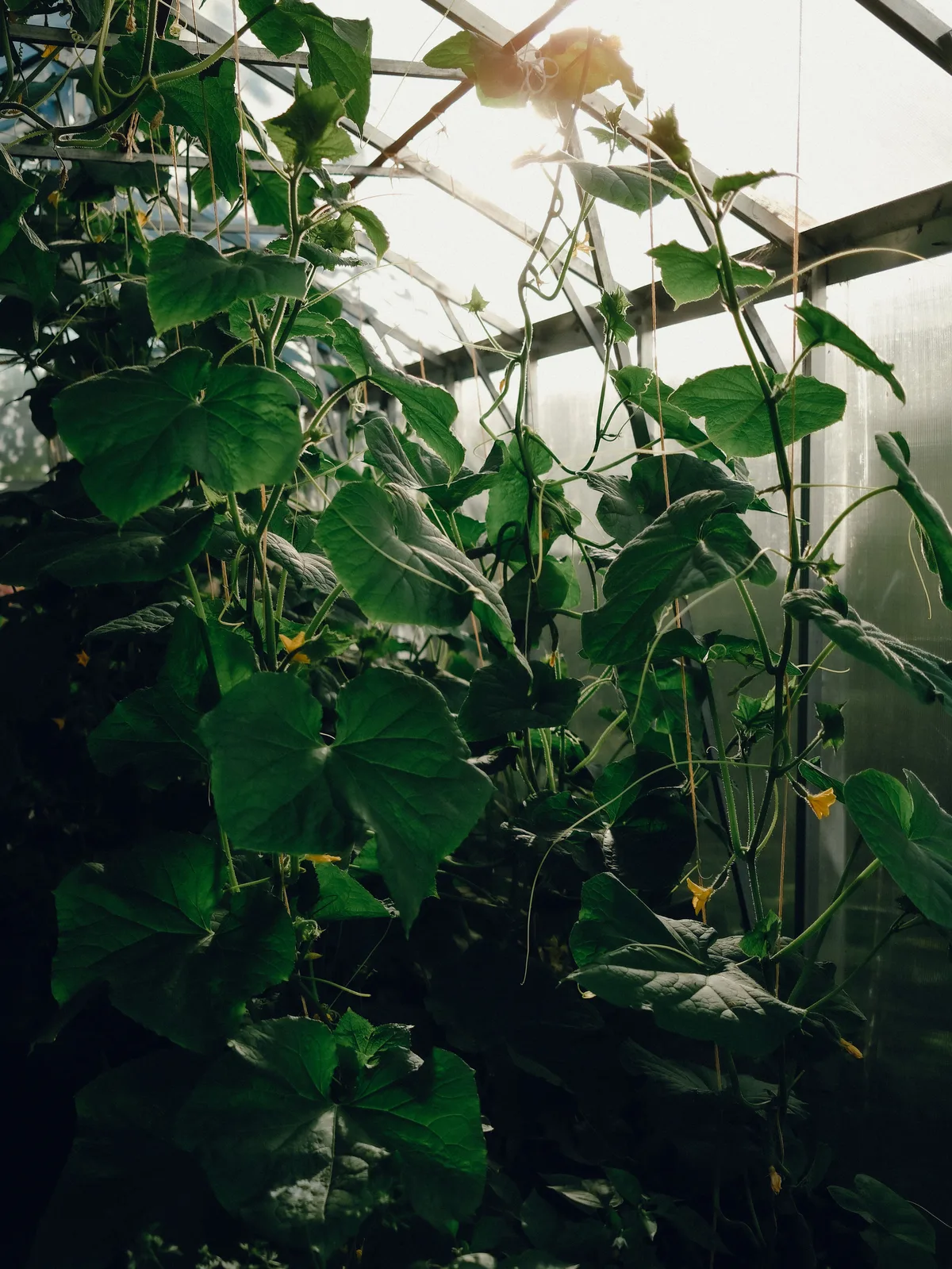
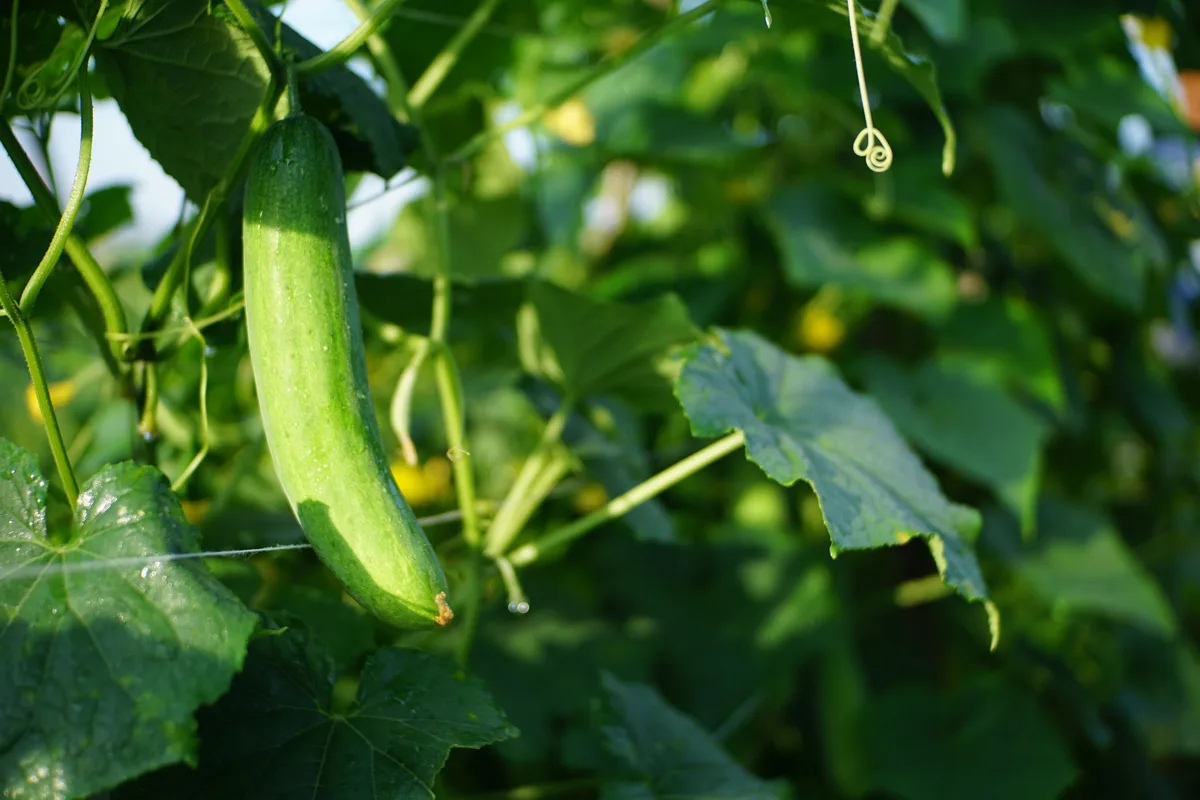
A trellis is not decoration for vining cucumbers in containers; it is what makes the setup work in a small space. Vertical growth saves floor area, improves airflow, keeps fruit clean and straight, and makes harvesting easier. A wire mesh panel, bamboo teepee, tomato cage, or netting fixed to a railing all work — what matters is that the support is strong, stable, and tall enough for a loaded, wind-catching vine.
Install the trellis at planting time, anchored deep in the pot or secured to a fixed structure. Guide new tendrils toward the support every few days; they grip on their own once they touch something, though a loose loop of soft twine can help a reluctant stem. Never tie stems tightly — it cuts into them as they thicken.
Fruit hanging from a trellis grows straighter than fruit resting on soil, and is easier to spot before it grows oversized and seedy. Check the vine every day or two in peak season — a cucumber can go from perfect to overgrown in a couple of warm days.
Help With Pollination On A Balcony
Cucumber plants produce separate male and female flowers: males appear first and carry only pollen, while females have a tiny cucumber-shaped swelling behind the petals. Bees normally move pollen between them, but on a high balcony or enclosed patio pollinators may be scarce, and flowers can drop without setting fruit.
A few simple steps help. Avoid spraying insecticides on open flowers or using broad-spectrum sprays during the day when pollinators are active, and plant flowers nearby if there is room to draw pollinators in. If fruit still fails to set, hand-pollinate: use a freshly opened male flower or a small soft brush to transfer pollen to a female flower’s center in the morning. It takes seconds and can rescue a balcony crop.
Parthenocarpic varieties, mentioned earlier, sidestep this issue entirely — if a previous container crop flowered well but never fruited, try one next season.
Keep Pests And Problems Under Control
Container cucumbers face fewer soil-borne problems than bed-grown plants, but they are not immune. Aphids cluster on shoot tips and leaf undersides, sucking sap; a strong jet of water often dislodges them. Cucumber beetles chew leaves and flowers and can spread bacterial wilt, incurable once established. Hand-pick beetles in the morning when sluggish, and net young plants until flowering begins, then remove the net so pollinators can reach the flowers.
Powdery mildew, a white dusty coating on leaves, is the most common container-cucumber disease, especially where airflow is poor or leaves stay wet. Good spacing, morning watering at soil level, removing badly affected leaves early, and choosing disease-resistant varieties all slow it down.
Bitter fruit surprises many first-time growers. It usually traces back to stress — most often uneven watering or heat — and concentrates in the stem end and skin. Consistent watering, mulch, and young picking all reduce the risk, and peeling a bitter cucumber and trimming the stem end often salvages it.
For all pest control, read product labels carefully and follow local rules, especially on a food crop. When in doubt, physical methods — hand-picking, water sprays, netting — are the safest first steps, and your local extension service can advise on approved treatments.
Harvest Cucumbers At Their Best
Most cucumbers taste best picked young, firm, and evenly colored. Slicing types are usually ready around six to eight inches, with smooth, dark green skin; pickling types are picked smaller, often three to four inches, while still crisp. A cucumber left too long turns yellow, seedy, and bitter — and signals the plant to slow production.
Cut fruit with scissors or a knife rather than twisting or pulling, which damages the vine and knocks off nearby flowers. Check every day or two in peak season, looking under leaves where cucumbers hide well. Regular picking keeps a plant productive — each fruit removed frees it to set more.
Freshly picked cucumbers keep best in the refrigerator, used within a few days. If the harvest outpaces the kitchen, preserve pickling types or turn slicing cucumbers into quick refrigerator pickles with a simple vinegar brine.
End-Of-Season Cleanup And Next Year
When cold ends the season, pull the spent plant and compost it only if healthy; bag diseased plants with household waste so problems do not carry over. Empty, scrub, and dry-store the pot. Last season’s mix is usually depleted and may harbor disease, so use fresh mix each year.
Before the next season, note what worked: which variety fruited best, whether the pot was big enough, whether watering kept up in the hottest weeks, and whether pollination was an issue. A few lines kept with the seed packets turn one season’s lessons into next season’s better crop.
Frequently Asked Questions
How Many Cucumber Plants Per Pot Should I Grow?
One plant per five-gallon pot for bush types, and one per ten-gallon or larger pot for vining types. Crowding rarely pays off — plants compete for the same limited water and nutrients.
Can Cucumbers Grow In Containers Without A Trellis?
Bush varieties can manage without one, though a short support keeps fruit cleaner. Vining varieties really need a trellis, or their stems sprawl across the patio and fruit rests on the ground.
Why Are My Container Cucumbers Bitter?
Bitterness most often comes from stress — uneven watering or heat — and is worse in oversized fruit. Water consistently, mulch, and pick young.
How Often Should I Water Cucumbers In Pots?
No fixed schedule fits all pots: check soil daily in warm weather and water deeply when the top inch or two feels dry. Pots in full summer sun often need daily watering.
Do Container Cucumbers Need Full Sun Or Partial Shade?
Full sun — six to eight hours of direct light a day — gives the best growth and fruiting. In extremely hot climates a little afternoon shade helps, but strong morning sun is still essential.
When Should I Start Cucumber Seeds For Containers?
Start seeds indoors a few weeks before the last expected frost, or sow directly outdoors after frost danger passes and soil is warm. Cucumbers dislike cold soil and nights, so spring patience pays off.