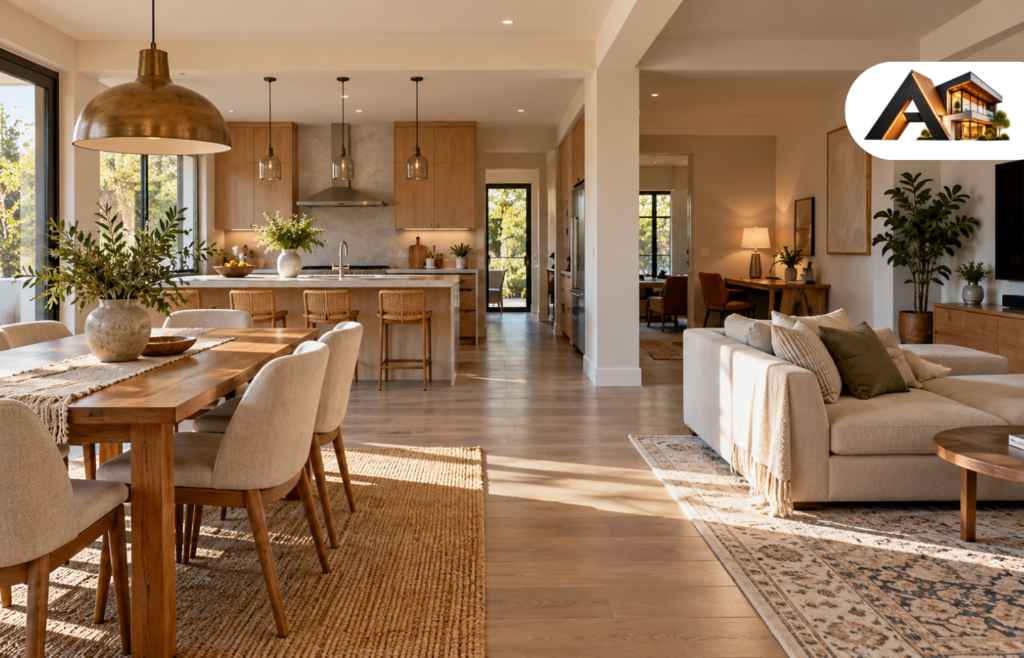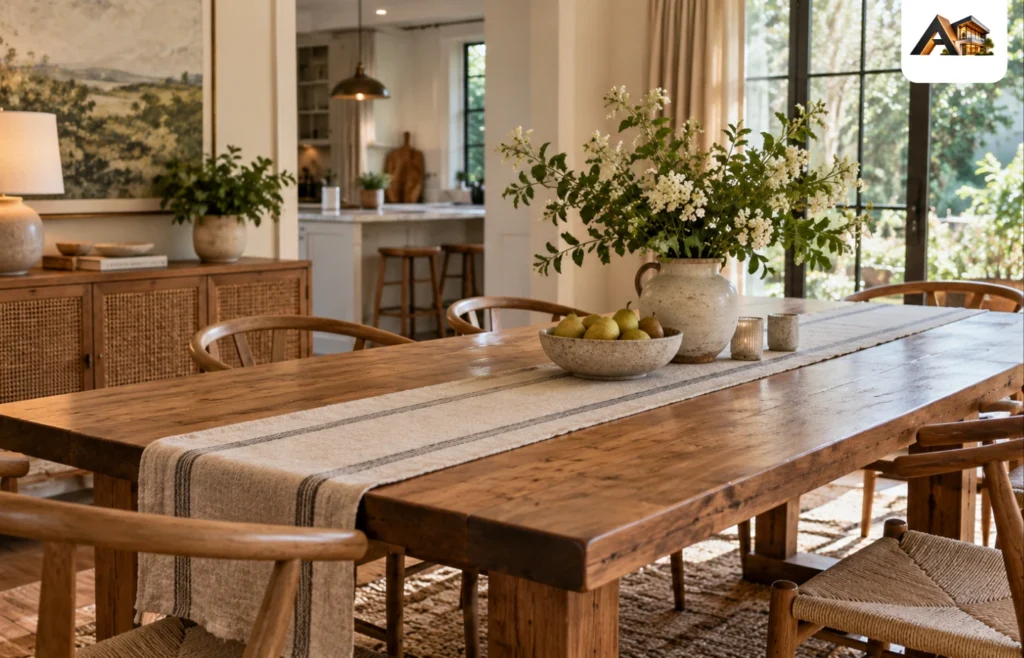
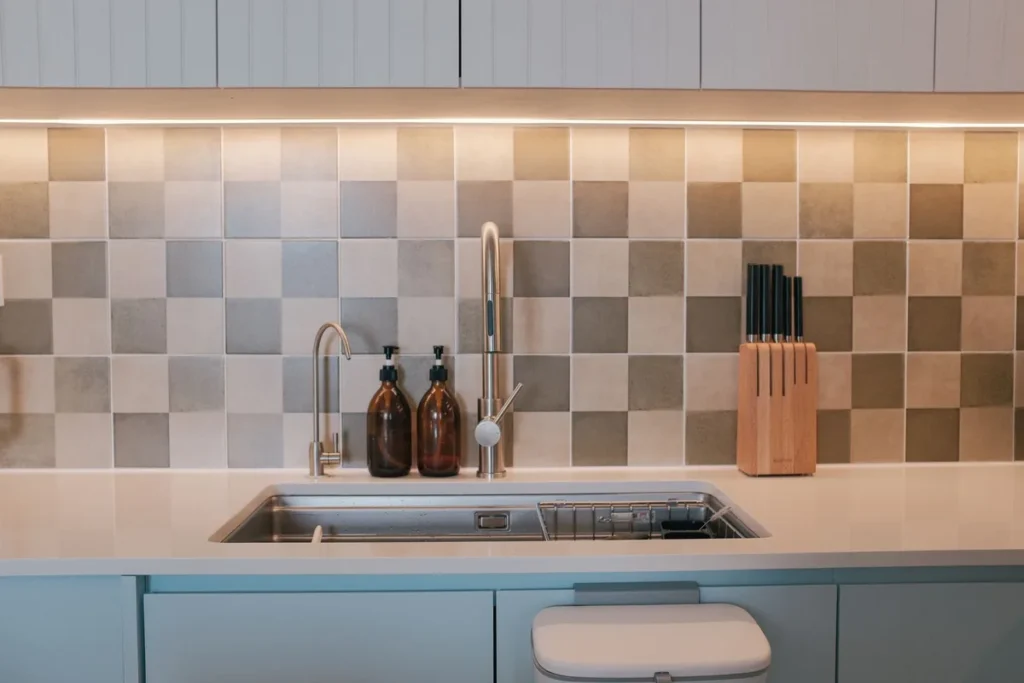
A modern kitchen backsplash has a harder job than it looks. It has to survive tomato sauce, steam, and daily wiping, and it also has to make the whole kitchen feel considered rather than thrown together. The kitchens that pull this off rarely have the most expensive tile on the wall. They have a backsplash that was chosen after the cabinets and countertops, not before them, and they get a few quiet details right: the height, the grout, the edges, and the light that falls on it in the evening.
That is the real difference between a backsplash that looks modern in a photograph and one that still looks good two years later. A showroom wall never gets splashed. Your kitchen does, so this guide starts with decisions, not shopping. Work through the material, the pattern, the height, and the finish in that order, and you will end up with a wall that suits the way you actually cook and clean.
What Makes A Backsplash Look Modern
Modern does not mean cold, white, or bare. It means restrained. A modern backsplash usually has one clear idea: one material doing the talking, one pattern repeated calmly, or one bold color held in check by quiet cabinets around it. When a wall tries to do all three at once, it stops looking modern and starts looking busy.
That restraint is also practical: fewer competing patterns mean fewer grout lines fighting for attention. If your cabinets are flat and handleless and your countertops are plain, the backsplash can afford to be the star. If your cabinets already have texture or a strong color, the backsplash should probably step back and let them lead.
Finish matters as much as color here. A glossy surface bounces light around and wakes up a dark corner, which is a gift in a kitchen with one small window. A matte surface hides fingerprints and water spots better and suits a calm, soft kitchen. Neither is more modern than the other. The modern choice is the finish that solves your kitchen’s actual problem, whether that problem is darkness, glare, or constant smudges from small hands.
Start With Your Cabinets And Countertops, Not The Tile
The most common backsplash mistake is falling in love with a tile sample in isolation. A tile that glows under shop lights can turn flat, green, or pink against your own cabinets, because kitchen light is warmer and your cabinets throw their own color onto the wall. Always hold samples against your cabinets and countertops in your own kitchen, in daylight and again in the evening, before you commit.
Think of the three surfaces as one composition. If your countertop already has strong veining or a busy pattern, a quiet backsplash in a single tone pulled from that stone will usually look more expensive than another pattern competing with it. If your countertop is plain, the backsplash is free to carry the pattern, the color, or the texture. Dark cabinets with a dark backsplash can look wonderfully moody, but only if the lighting is generous. Light cabinets with a dark backsplash give you contrast without much risk.
This is the same whole-room thinking that shapes the rest of a home. A backsplash is a wall treatment, not a standalone purchase, and it should follow the same principles as any other wall in the house — a calm base, one focal point, and colors that relate to each other. For the broader version of that thinking, see Archly Home’s guide to interior decorating ideas.
Modern Materials Worth Considering
Material decides how your backsplash feels to clean, how it ages, and how much of your budget it quietly eats. Each of these has a genuine place in a modern kitchen, and each has a trade-off worth knowing before you choose.
Ceramic And Porcelain Tile
Ceramic and porcelain remain the workhorses of the modern kitchen for good reason. They shrug off heat and splashes, they come in nearly every color and shape, and glazed versions wipe clean with little effort. Porcelain is the denser of the two, which makes it a sensible pick behind a cooktop where heat and grease are constant. The trade-off is grout: a small mosaic means a lot of grout to keep clean, while a large-format tile keeps the wall calmer. If low maintenance matters more to you than intricate pattern, choose a larger tile and a grout color close to the tile itself.
Natural Stone And Quartz Slabs
A slab backsplash runs the countertop material straight up the wall, with no grout lines at all. It is the most seamless modern look there is, and it makes a small kitchen feel larger because the eye is not stopped by a grid. Natural stone brings movement and variation that no two kitchens will share, but it needs sealing and a little more care around stains. Quartz slabs give a similar seamless look with a more uniform pattern and an easier cleaning routine. The catch is cost and weight: a slab usually needs professional templating and installation, since a wall that is even slightly out of square will show in a single piece.
Glass And Metal
Glass brings a clean, reflective surface that suits ultra-modern kitchens and dark corners alike. A single sheet of back-painted glass has no grout lines, so it wipes down in seconds, and its color can be matched closely to cabinets or a favorite accent. Metal does something different. Brushed stainless steel reads professional and practical, while warmer metals like aged brass or copper add a glow that softens an otherwise cool kitchen. Both show fingerprints more readily than matte tile, and metal behind a cooktop should always be checked for heat tolerance before it goes up.
Zellige And Handmade Tile
If a modern kitchen feels too perfect, handmade tile is the fix. Zellige tiles are glazed clay tiles with slight variations in color, thickness, and surface, so the finished wall shimmers instead of sitting flat. That imperfection is the point. It adds warmth and craft to a kitchen that might otherwise feel like a showroom, and it pairs beautifully with plain cabinets and warm wood. The price of that charm is variation: no two boxes will match exactly, so look at a laid-out section before installation rather than judging by a single tile.
Peel And Stick Options For Renters
Not every modern backsplash needs tile adhesive. Peel-and-stick tiles and panels have improved a great deal, and for a rental or a first kitchen they are a sensible way to test a look without committing to it. They suit smooth, clean walls best, and they struggle on textured paint or behind a very hot cooktop, so check the product’s heat guidance before placing anything near a range. Their real strength is reversibility: if you move, the wall underneath is still intact.
Patterns That Read Modern Without Trying Too Hard
Pattern is where many backsplashes go wrong, because a pattern that looks exciting in a small sample can feel frantic across a whole wall. The modern approach is to pick one pattern and let it repeat quietly. Stacked tiles, laid in a straight grid, look calm and architectural, and they suit large-format tiles especially well. Running a rectangular tile vertically instead of horizontally draws the eye upward, which helps a kitchen with low ceilings or short upper cabinets feel taller.
Herringbone and chevron add movement without adding color, and they work best when the tile itself is quiet — a plain ceramic or stone-look tile in a soft tone. Geometric shapes like hexagons bring a contemporary edge, but they demand careful setting out. Whatever pattern you choose, lay a section out on the floor first and step back.
How High Should A Modern Backsplash Go
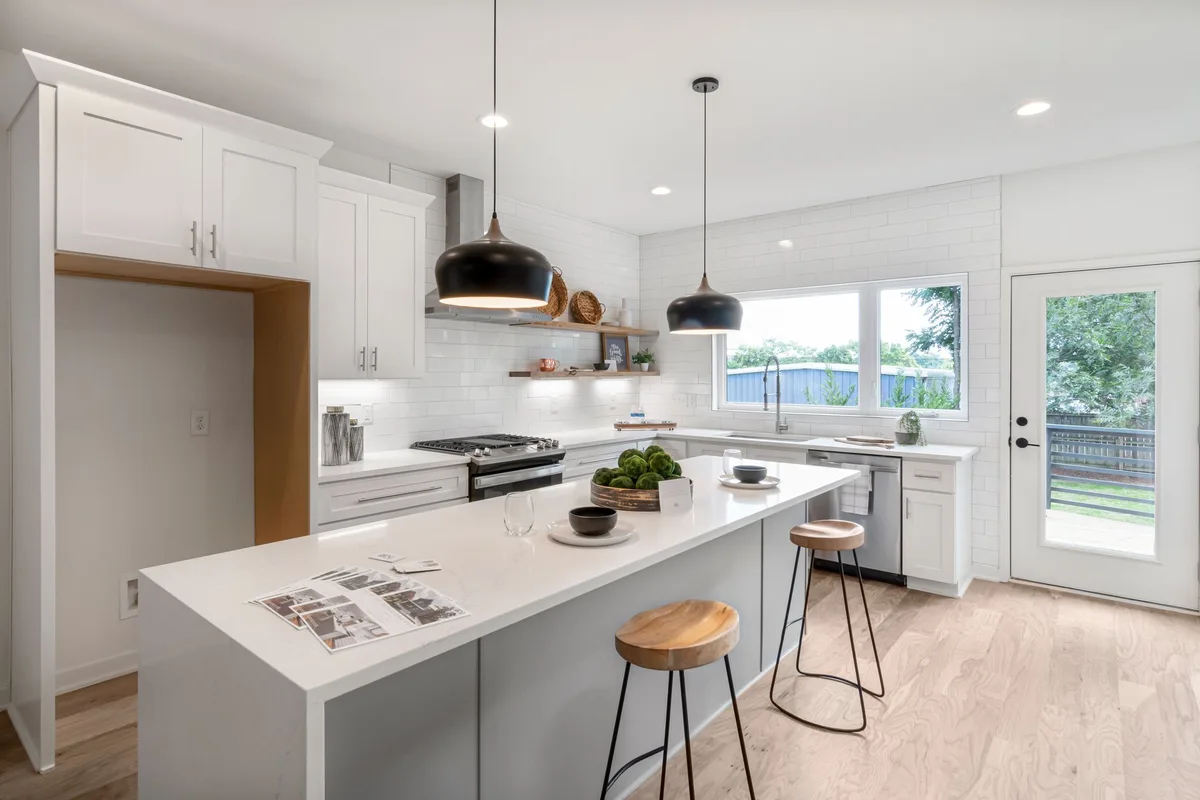
Height changes the whole feel of a kitchen, and it is worth deciding deliberately rather than accepting whatever the installer suggests. The standard run, from the countertop to the underside of the upper cabinets, is the safest choice. It protects exactly the zone that gets splashed, it keeps costs contained, and it works in nearly every kitchen. If your cabinets stop short of the ceiling, that standard band can leave an awkward strip of painted wall above it, so consider whether the paint color there still earns its place.
A full-height backsplash runs from the countertop all the way to the ceiling, or across an entire wall behind open shelving. It turns the backsplash into a feature wall, and it is particularly effective behind a range or on a window wall where there are no upper cabinets to interrupt it. It uses more material and it makes every cut and edge more visible, so the setting out has to be precise. Between those two sits the ledge-height option, where the backsplash rises a little above the cabinets or stops at a shelf line. That middle height looks intentional when it aligns with a window sill or a shelf, and accidental when it aligns with nothing.
Grout, Edges, And Outlets: The Details That Decide It
Grout is not an afterthought: it is the frame around every tile. A grout color matched closely to the tile makes the wall read as one calm surface, with the pattern emerging softly. A contrasting grout turns every joint into a line of its own, which can be striking with a simple subway tile but exhausting with an already busy pattern. Around a cooktop, a darker grout will forgive tomato sauce and grease far longer than a bright white one, and sealing the grout after installation makes that forgiveness last.
Edges deserve the same attention. An exposed tile edge at the end of a run or around a window needs a finished trim or a bullnose edge, otherwise the wall looks unfinished no matter how good the tile is. Outlets and switches are the other detail that betrays a rushed job. Plan their positions before tiling, not after, and keep the cuts symmetrical around them where possible. A single outlet floating in the middle of a pattern draws the eye every time you walk in, while outlets placed on grout lines or centered in a tile look deliberate. At the bottom edge, where the backsplash meets the countertop, use flexible caulk rather than grout, because the two surfaces move slightly against each other and rigid grout will crack there over time.
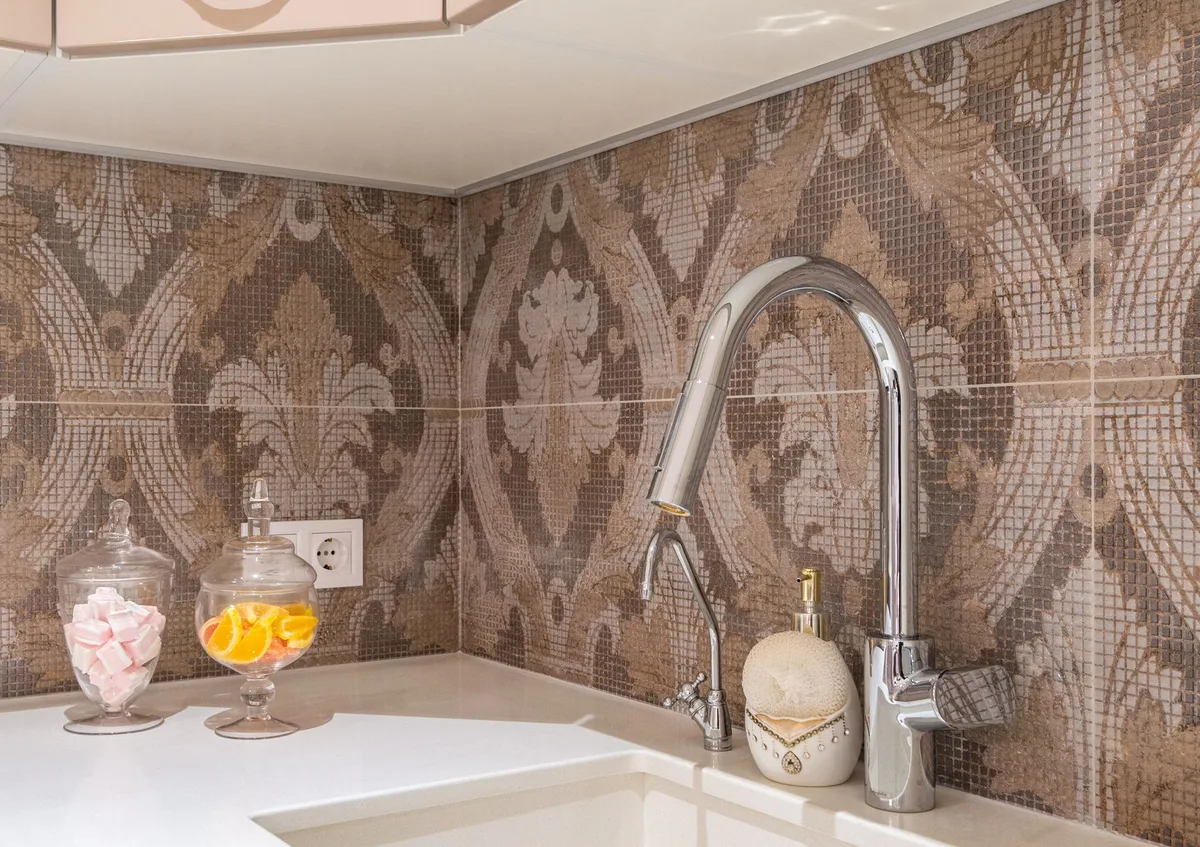
Color And Light: Making The Backsplash Work At Night
A backsplash chosen in daylight can disappoint in the evening, and kitchens are used hardest after dark. Under-cabinet lighting changes everything it touches, warming colors, deepening shadows between tiles, and turning a glossy surface into a glow. If your kitchen relies on under-cabinet lights, test your samples under that exact light, not just under the shop’s ceiling panels. A tile that looks crisp at noon can turn muddy under warm task lighting, and a dark tile that looked moody in the store can vanish entirely once the evening lights come on.
In a kitchen with little natural light, a light or reflective backsplash bounces what light there is back into the room. In a bright kitchen, you can afford a dark or saturated backsplash. And if your kitchen has both bright days and dim evenings, a mid-tone tile with a slight sheen is often the most forgiving choice.
Small Kitchens And Rental Kitchens
A backsplash in a light tone, with larger tiles and fewer grout lines, keeps a compact wall from feeling chopped up, and running it full-height behind a range can make a small kitchen feel taller rather than busier. Reflective finishes help too. What hurts a small kitchen is a small, busy mosaic in a dark color, which breaks the wall into hundreds of pieces and closes the room in.
Rental kitchens have a different constraint: reversibility. Peel-and-stick tiles, removable panels, and even a well-chosen painted finish can transform the wall without touching the landlord’s tile underneath, provided the surface is smooth and the product is rated for kitchen heat. Whatever route you take, photograph the original wall before you start, so returning the kitchen to its original state is straightforward.
Mistakes That Make A Modern Backsplash Look Dated
Most dated backsplashes were not bad ideas. They were good ideas pushed slightly too far, or finished slightly carelessly. Watch for these before you commit:
- Choosing the tile before the cabinets and countertops, then discovering the colors fight each other in your own light.
- Mixing two strong patterns — a veined countertop plus a patterned tile — so the eye has nowhere to rest.
- Letting the backsplash stop at a height that aligns with nothing in the room, leaving a stray strip of wall above it.
- Picking bright white grout behind a cooktop, where grease and sauce will stain it faster than anywhere else in the kitchen.
- Leaving raw tile edges exposed at the end of a run or around a window, with no trim to finish the line.
- Forgetting outlets and switches until tiling starts, so cuts land awkwardly and break the pattern.
- Chasing a trend so hard that the wall clashes with the rest of the home, instead of fitting the kitchen you actually have.
If a backsplash feels wrong but you cannot name why, it is usually one of these. Each one is fixable at the planning stage, and each one is expensive to fix after the tile is up.
Care And Cleaning By Material
Cleaning should influence the choice as much as looks, because a hard-to-clean backsplash will look tired within months. Glazed ceramic, porcelain, glass, and quartz slabs are the easiest walls to live with: a soft cloth and a mild cleaner handle most splashes, and there is little for grease to grip. Natural stone needs more attention, since it can stain if spills sit, so wipe it promptly and keep it sealed according to the sealer’s guidance. Matte and textured tiles hide water spots well but can hold grease in their texture behind a cooktop, so that zone deserves a smoother material or a more frequent wipe.
Grout care follows the same logic. Sealed grout resists stains far longer than unsealed grout, and a grout color close to the tile hides the marks that do appear. Whatever material you choose, wipe the cooking zone after heavy cooking sessions rather than leaving sauce and oil to set. That one habit does more for a backsplash’s lifespan than any sealant, and it keeps a modern wall looking modern for years.
Frequently Asked Questions
What Is The Easiest Modern Backsplash To Maintain?
A large-format glazed tile or a slab backsplash is usually the easiest to maintain, because both minimize grout lines, and grout is where most staining happens. Behind a cooktop specifically, a smooth, non-porous surface will always be easier to wipe than a textured one.
Can A Modern Backsplash Work With Traditional Cabinets?
Yes, and it often works beautifully. A modern backsplash does not require a modern kitchen. A simple stacked tile, a quiet slab, or a handmade tile in a soft tone can freshen traditional cabinets without clashing with them, because the backsplash is only one surface in the room. The trick is to let the cabinets keep their character and choose a backsplash that complements rather than competes with them.
Should The Backsplash Match The Countertop Exactly?
It does not need to match exactly, and an exact match is not always the best result. A backsplash that pulls one tone from the countertop — a fleck, a vein color, or a soft neutral from the stone — usually looks more designed than a perfect copy, because it gives the eye something related but not identical to look at. The exception is a slab backsplash, where using the same material as the countertop is the whole point, and continuity is the design.
Is A Dark Backsplash A Good Idea In A Small Kitchen?
A dark backsplash can work in a small kitchen, but it needs light to support it. With good under-cabinet lighting, a window nearby, or a glossy finish that reflects what light there is, a dark wall adds depth without closing the room in. Without those, a dark matte tile can make a compact kitchen feel smaller, so in a dim kitchen a mid-tone or light backsplash is the safer choice.
Choose One Idea And Let It Lead
A modern backsplash is not a collection of trends. It is one good idea, carried through with care: a material you like cleaning, a pattern that stays calm across a whole wall, a height tied to something real in the room, and grout and edges finished properly. Choose that one idea first, test it against your cabinets and your evening light, and let everything else support it. For the practical side of the job, when you reach installation, This Old House’s guide to installing a simple tile backsplash walks through tile choice, layout, and grouting in clear detail. Done this way, the wall behind your stove stops being a problem to cover and becomes one of the best-looking decisions in the kitchen.