A small outdoor kitchen is not a shrunken version of a big one. It is a different kind of cooking space altogether, and it works when every piece earns its place. A big kitchen can absorb a bad purchase. A tiny patio cannot. One oversized grill, one dead corner, or one cabinet that blocks a walkway, and the whole space feels cramped instead of clever.
The good news is that a small outdoor kitchen needs surprisingly little to cook well. One good cooker, one honest stretch of prep space, and one dry place for tools will cover most of what people actually cook outside: grilled meat and vegetables, burgers on a weeknight, something cold to drink, and a plate that does not have to travel far from grill to table. Everything beyond that is a bonus, not a requirement.
What Counts As A Small Outdoor Kitchen
Forget the showroom version with a pizza oven, a smoker, a bar, and a second fridge. A small outdoor kitchen is any dedicated cooking spot outside that lets you prep, cook, and serve without running back indoors for every single thing. That definition matters because it sets the bar at useful, not impressive.
A simple test sorts the essentials from the extras. Stand at your grill and ask what you reach for in a normal cookout: tongs, a tray for raw food, a tray for cooked food, seasoning, a cloth, and something to drink. If your setup handles those six things without a trip inside, it is already a working outdoor kitchen. If it does not, no amount of extra appliances will fix it, because the bottleneck is not equipment. It is flow.
That is also why the best small kitchens feel bigger than they are: food comes out, gets prepped, hits the heat, and lands on a plate, all within a few steps.
Measure First, Buy Second
The single most useful hour in this whole project costs nothing. It is the hour spent measuring the space before anything is bought, because a grill that looks compact in a store can swallow a small patio once its lid, side shelves, and the cook standing in front of it are all accounted for.
Start with the full footprint, not just the wall where the kitchen will sit. Note every door swing, step, post, and window that opens onto the patio. Then mark the real cooking zone on the ground with painter’s tape, including room for the grill lid to open and for a person to stand and turn comfortably. Walk the outline. Carry a tray through it. If the path feels tight now, it will feel tighter with hot food in your hands.
Two measurements deserve special attention: a clear walkway past the cooking zone, and the lid and door swings, which often overlap on a small patio. Tape shows that problem before money does.
Choose A Layout That Fits Your Shape
Small outdoor kitchens usually fall into three shapes, and the right one depends on the patio, not on taste.
A straight run suits narrow patios and long walls. Grill, prep counter, and storage sit in one line, which keeps the middle of the patio open and the walking path clear. Its weakness is counter space: with everything in a line, prep room competes directly with the grill, so a fold-down shelf or a rolling cart beside the run often makes the difference between workable and cramped.
An L-shaped corner station suits square patios with a dead corner. One leg holds the grill, the other becomes prep and serving space, and the corner itself turns into storage or a spot for a bin. Its weakness is the corner itself: deep corner cabinets are hard to reach into, so open shelving or a pull-out unit serves a small L shape better than a dark cupboard.
A mobile setup suits renters, balconies, and anyone who is not sure yet. A grill on wheels, a rolling cart for prep, and a storage box that doubles as a bench can be arranged for a cookout and tucked away afterwards. Nothing is fixed, so the patio keeps its other uses. The trade-off is capacity: mobile pieces hold less, and a cart that rolls is rarely as steady as a counter that does not.
Pick One Cooker And Make It Earn Its Place
In a small kitchen, the cooker is the biggest decision and the easiest place to go wrong. The temptation is to buy for the biggest meal of the year. The wiser move is to buy for the meals you cook most weeks, because the cooker that gets used every weekend beats the impressive one that gets used twice.
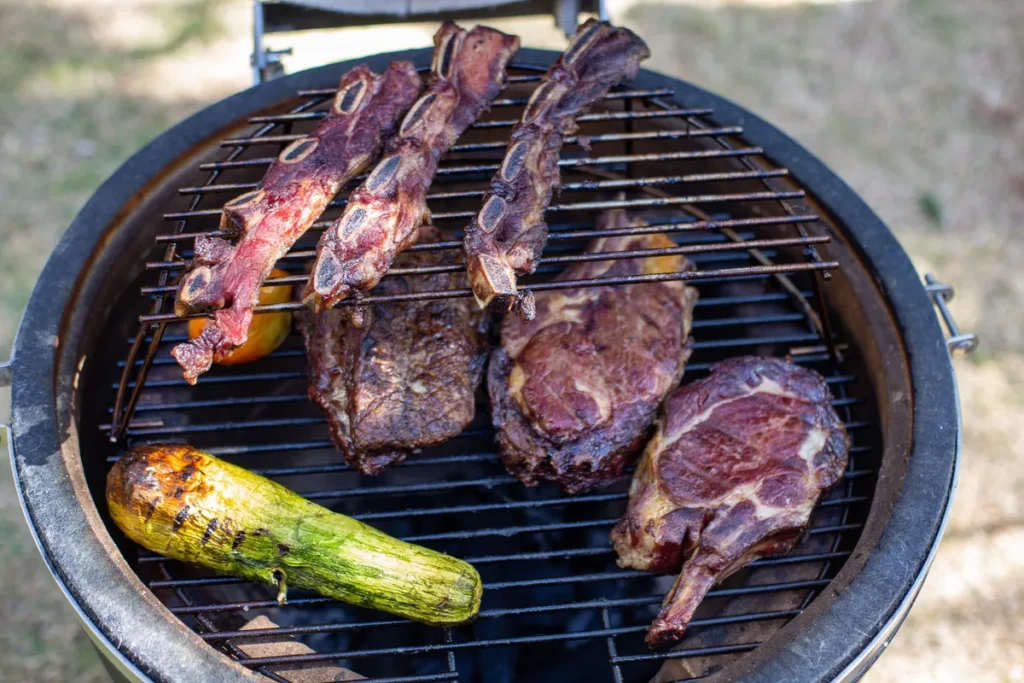
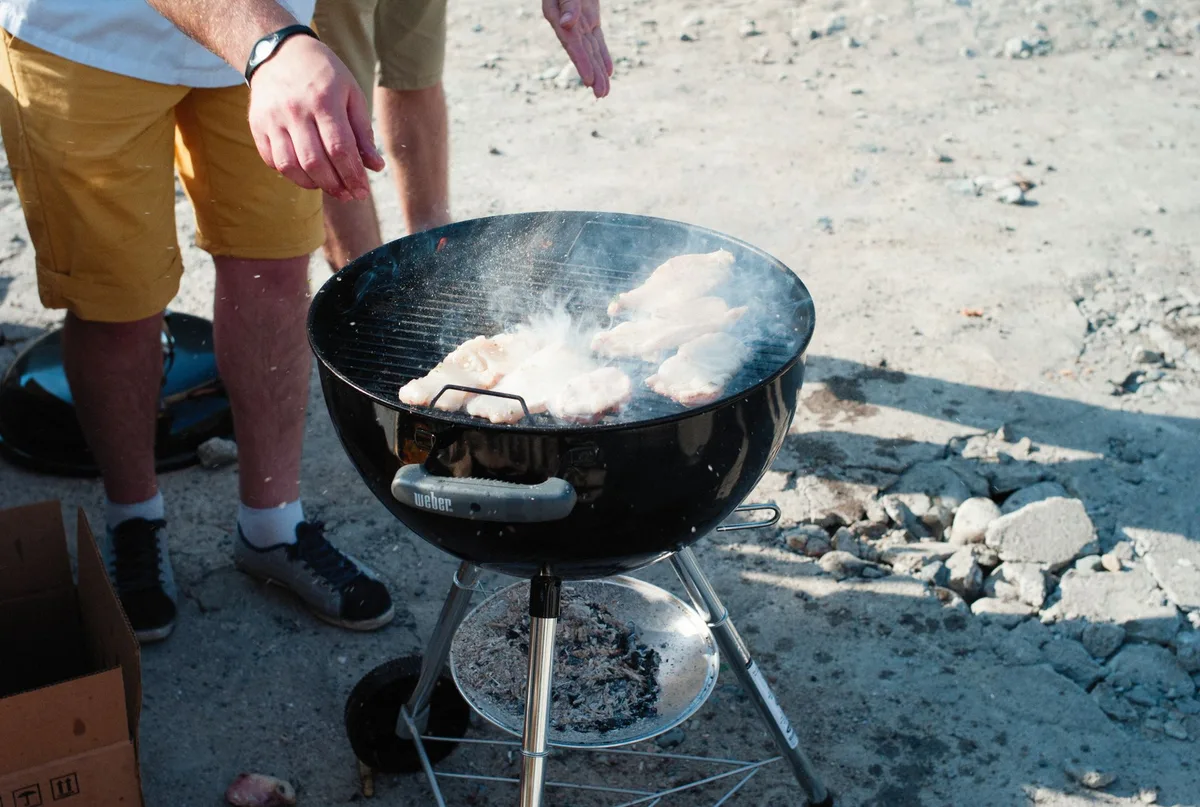
A compact gas grill suits weeknight cooking: fast to light, easy to control, and simple to clean. A charcoal kettle suits cooks who enjoy slower weekend sessions and the flavor of live fire, and it takes up very little floor space. A griddle suits households that cook breakfast outside or feed a crowd with burgers and vegetables, since its flat surface handles foods that fall through grill grates. A small kamado-style cooker suits the cook who wants one appliance to grill, roast, and bake, though it is heavy and needs a sturdy, level spot. A tabletop pizza oven suits pizza lovers, but it is a specialist: wonderful at one job, useless at everything else.
The honest question is not which cooker is best. It is which one you will light on an ordinary Tuesday. One versatile cooker, used constantly, is the heart of a small outdoor kitchen.
Whichever cooker you choose, respect its clearances. Every grill has manufacturer guidance on distance from walls, fences, railings, and overhead cover, and that guidance exists because heat and grease fires do not negotiate. Keep the cooker away from combustible surfaces, never grill under fabric cover, and check local rules before installing a built-in gas appliance. Gas, plumbing, and electrical work belong to licensed professionals.
Prep Space Is The Real Luxury
Ask owners of small outdoor kitchens what they would add, and the answer is rarely a bigger grill. It is more counter space. Prep space is where a small kitchen succeeds or fails, because grilling itself takes little room. It is everything around it — unwrapping, seasoning, resting, plating — that eats space.
A useful rule is to protect one uninterrupted stretch of counter beside the grill, long enough for a cutting board and a tray at the same time. That stretch matters more than total counter area spread across three awkward spots. A board balanced on a grill side shelf while raw chicken waits on a chair is not prep space. It is an accident waiting for a reason.
Where does that stretch come from on a tiny patio? Fold-down shelves fixed to a wall or fence give counter space that disappears when dinner is over. A rolling cart gives a movable prep surface that can park beside the grill during cooking and serve drinks afterwards. A storage bench with a flat, heat-safe top gives a landing spot for trays.
Storage That Keeps The Counter Clear
A small kitchen stays usable only if things have a home. Without storage, tools migrate to the counter, the counter fills up, and the prep space you worked so hard to create disappears under tongs, bottles, and charcoal bags.
Walls and vertical surfaces are the small kitchen’s best friend. Hooks, rails, and shelves keep tools visible and off the counter without taking a single square foot of floor. A back panel with adjustable hooks turns a blank wall into the whole tool station: tongs, brushes, and towels hung where the cook stands, not buried in a drawer. IKEA’s small outdoor kitchen ideas gallery shows this approach in practice, with fold-down side tables, rolling carts, and wall hooks doing the work that cabinets do in a bigger kitchen.
Weather decides what can live outside. Stainless tools, sealed containers, and covered storage boxes handle rain and sun. Spices, sauces, paper goods, and anything that attracts pests belong indoors and come out in a tote for each cookout. Covers matter more than they look: a grill cover and a cart cover cost little and add years to equipment that would otherwise rust, fade, or fill with rainwater.
The Sink Or Fridge Decision
At some point every small-kitchen plan hits the same fork: sink or fridge. Both are useful. Few small patios have room, budget, and utilities for both. Choosing well means being honest about which trip indoors annoys you more.
A sink sounds essential until you count how it is actually used. In a small outdoor kitchen, a sink mostly rinses hands and vegetables and holds a soaking grate. It needs a water supply and drainage, which means plumbing work, winter protection in cold climates, and a permanent spot. Near the house, a sink often earns its keep only a few times per meal.
A compact outdoor-rated fridge earns its keep differently. It keeps drinks cold, holds marinating food safely, and stops the constant indoor trips that break up a cookout. It needs a weatherproof outdoor power outlet and a model actually rated for outdoor use — an indoor mini-fridge left outside will struggle in heat and fail early. For most small patios near the house, the fridge wins this argument, and a washable basin or a simple outdoor tap covers the rest. Decide by your own cookouts, not by a showroom checklist.
Materials That Survive Rain, Sun, And Grease
Outdoor materials live a harder life than indoor ones. Sun fades, rain soaks, grease stains, and winter freezes, all on the same surface. Choosing materials for looks alone is how a small kitchen starts peeling and staining in its first year.
Stainless steel is the workhorse for grills, carts, and hardware: it wipes clean, resists heat, and handles weather with basic care. Stone and tile counters handle hot trays and scrub clean, though they are heavy and need solid support. Wood looks warm and natural, and it suits benches and tables beautifully, but it needs regular sealing and will weather to gray if left untreated.
Whatever the material, two habits protect it: cover what is not in use, and wipe grease and food spills promptly rather than letting them bake on in the sun.
Shelter And Shade Without Swallowing The Patio
A little cover makes a small outdoor kitchen usable far more often. Sun beats down on the cook, a sudden shower ends dinner, and a hot grill in full sun is miserable to stand beside. But shelter on a small patio is easy to overdo: a big roof can darken the space, trap smoke, and make the patio feel like a shed.
A compact hardtop grill shelter, sized to the cooking zone rather than the whole patio, is often the right scale. It shades the cook and the food, sheds rain, and leaves the seating area open to the sky. What never works is grilling under fabric: umbrellas, fabric gazebos, and canvas canopies are fire hazards over a grill.
Ventilation matters as much as shade. Smoke needs somewhere to go, so cover should sit high enough and open enough that smoke drifts away instead of pooling under a roof. On a small patio, a little shade in the right place beats a lot of roof in the wrong one.
Light It For Evening Cooking
Most outdoor cooking happens as daylight fades, which means lighting is not decoration in a small kitchen. It is part of the cooking equipment. The cook needs to see food clearly — whether meat is done, whether a marinade is burning — and guests need to move safely around a hot grill in the dark.
The practical setup is layered and simple. A bright, focused task light over the grill and prep area does the real work, while softer light over the seating area keeps the evening relaxed. Solar path lights or small step lights mark edges and changes in level so nobody trips near the cooking zone. Keeping one consistent warm tone across the patio makes the whole space feel designed rather than patched together. Our guide to backyard lighting ideas covers the layering in detail, from string lights to step lights, for the evenings when the grill is still going after sunset.
Mistakes That Shrink A Small Kitchen Further
Small kitchens punish the same handful of mistakes again and again, and all of them are avoidable with a little planning:
- Buying the biggest grill that fits, instead of the cooker that fits how you actually cook.
- Spending the budget on appliances before securing prep space and storage.
- Blocking the walkway with a cart, a bin, or a chair pulled up to the grill.
- Putting the grill where smoke blows straight into seating or through an open door.
- Choosing indoor-rated appliances or furniture and watching them fail outdoors.
- Skipping covers, then replacing rusted tools and faded cushions every year.
- Running gas, water, or power lines without a licensed professional.
- Forgetting where the cook will stand, and leaving no room to turn with a hot tray.
Notice what these mistakes share. None of them is about taste. All of them are about flow, clearance, and honesty about how the space will really be used. Fix those, and the kitchen almost designs itself.
Start Small And Add In Phases
The most forgiving way to build a small outdoor kitchen is in phases, and it suits renters and homeowners alike. Phase one is portable: a grill you already own or a compact new one, a rolling cart for prep, a storage box, and a cover. Cook with that setup for a season and notice what you keep running inside to fetch.
Phase two fixes what phase one revealed. If prep space was the bottleneck, add a fold-down shelf or a short counter. If storage was the problem, add wall hooks and a weatherproof cabinet. If drinks were the constant trip indoors, add an outdoor-rated fridge. Only phase three goes fixed: a built-in run, a plumbed sink, or a permanent shelter, and only once the layout has proven itself in portable form.
Frequently Asked Questions
Do I Need A Permit For A Small Outdoor Kitchen?
It depends on what you build. A freestanding grill and a rolling cart generally need no permit, while built-in gas lines, plumbing, electrical circuits, and masonry structures often do. Rules vary by area, and homeowner associations and landlords add their own rules, so check with your local building office and your lease or association before any fixed work begins. When in doubt, ask first: a short call now is far cheaper than redoing finished work later.
Can I Put An Outdoor Kitchen On A Balcony?
Sometimes, but balconies have strict limits. Many buildings and local rules restrict open-flame grills on balconies, and weight, smoke, and fire safety all matter more in a shared building. Electric grills and induction cooktops are often the permitted route where gas and charcoal are not. Check your building’s rules and local fire regulations before buying anything, and keep clearances generous: a balcony leaves no room for error.
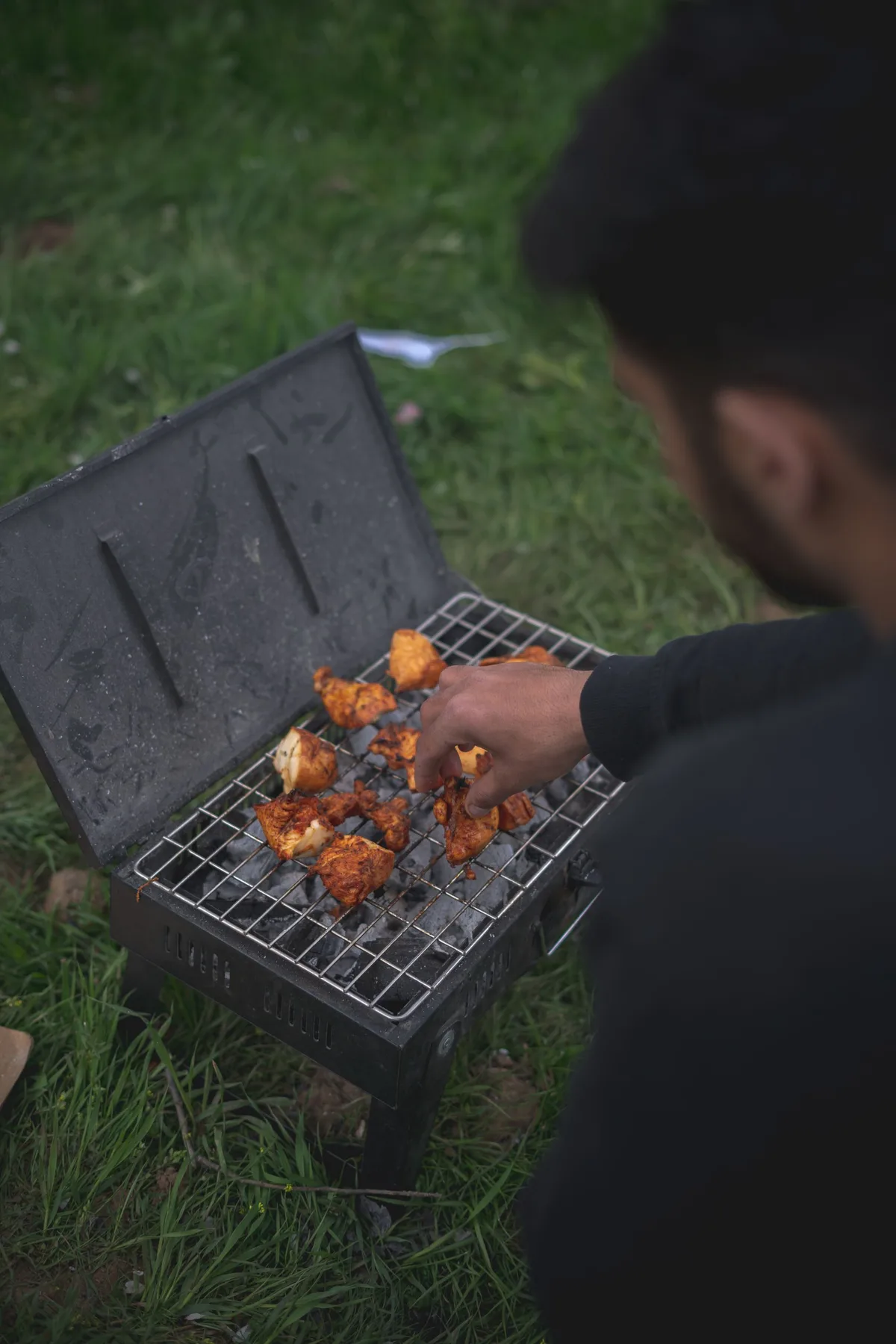
What Is The Cheapest Way To Start A Small Outdoor Kitchen?
Start with what you already have and add one piece at a time. A compact grill, a sturdy outdoor table for prep, a tote that carries tools and seasoning outside, and a cover for the grill will cook most meals well. Add a rolling cart next, since it adds prep space and storage in one purchase.
Conclusion
A small outdoor kitchen works when it is designed around real cookouts, not showroom dreams. Measure first. Pick the layout that fits your patio’s shape. Choose one cooker you will actually light every week. Protect prep space like it is the most valuable real estate in the yard, because it is. Give everything a dry home, choose the sink or the fridge deliberately, and build in phases so the layout proves itself before anything becomes permanent.
Done that way, a tiny patio stops feeling like a compromise. It becomes the place where weeknight dinners taste better, guests gather around the cook instead of waiting in another room, and the walk back inside is for dessert, not for the tongs you forgot.